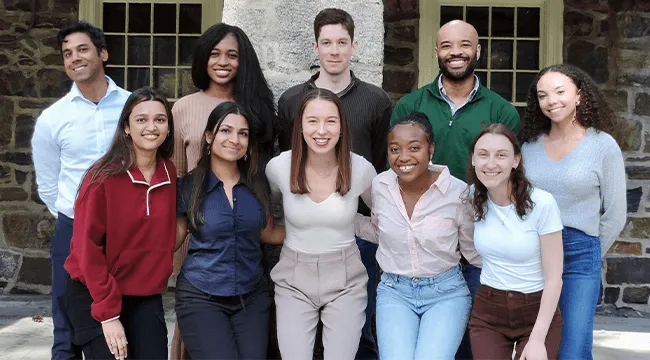
Five teams of UVM Larner College of Medicine Class of 2029 medical students, along with teams from the Geisel School of Medicine at Dartmouth College and Vermont Law and Graduate School, have been selected to participate as 2026–27 Schweitzer Fellows through the New Hampshire / Vermont (NH/VT) Schweitzer Fellows Program. As fellows, the students will spend hundreds of hours over the next year completing projects with community partners that focus on addressing existing health disparities throughout the region.
For 30 years, Schweitzer Fellows have contributed over 75,000 hours of transformative service to local communities, and this year’s cohort continues that legacy. Schweitzer Fellows are driven by a strong commitment to health equity, pursuing their own passions in collaboration with local partners to develop sustainable, evidence-based projects that address health disparities in local communities.
At the Larner College of Medicine, Molly Rideout, M.D., professor of pediatrics, and Tim Lahey, M.D., M.M.Sc., professor of medicine and director of ethics at the UVM Medical Center, serve as faculty co-directors, providing fellows with mentorship and support throughout their fellowship year. Dr. Lahey, who is also a Schweitzer Fellow for Life and Secretary of the National Albert Schweitzer Fellowship board, brings both a personal and national perspective to his role. “Every time I hear from our fellows about the ways they are changing lives through community collaboration, it reminds me that the more equitable future we are working toward is already taking shape.”
The following Larner students and projects were selected:
Leah Kratochvil and Michael McLaughlin
Kratochvil and McLaughlin aim to combat social isolation and loneliness in older Vermonters of Chittenden County through community-based musical programming. They plan to regularly visit older adult living communities to play music for, make music with, and facilitate discussions about music among their residents. They hope that with consistency and flexible programming, they can foster lasting relationships within communities of older adults as well as between those communities and medical students.
Community Partner: Cathedral Square
Elle Hill and Romoye Sohan
Hill and Sohan are working to support students of color in Burlington by combining standardized test preparation with community-centered mental well-being programming. Through weekly sessions focused on academic skills, mentorship, and peer connection, they aim to build confidence, resilience, and equitable access to educational opportunities. They are especially committed to creating a supportive space that addresses both academic pressure and the broader social and emotional challenges students face, ensuring that participants feel empowered to succeed.
Community Partner: Richard Kemp Center
Miranda Graves and Stanley Dunwell
Graves and Dunwell will develop and facilitate a series of structured dinner dialogues to support formerly incarcerated individuals transitioning back into the community. These sessions will integrate guided discussions on mental health, health literacy, and navigating health care systems, while fostering peer connection in a supportive, communal setting. By creating a space for open dialogue and shared experiences, they aim to reduce stigma, strengthen social support networks, and improve overall well-being during the reentry process.
Community Partner: Dismas House of Burlington
Sithara Nambiar and Sree Korivi
Nambiar and Korivi aim to expand the BIPOC Youth Mentorship Program for immigrant and refugee youth in the Winooski School District by increasing access to affinity-matched mentorship and introducing a diversified curriculum focused on cultural identity, health literacy, and career exploration. Their work centers on fostering belonging, empowering youth voices, and supporting students as they navigate identity and future pathways.
Community Partner: BIPOC Youth Mentorship Program
Ella Whitman and Dev Saha
Whitman and Saha aim to build practical skills that help students and families reduce preventable environmental risks. They will deliver interactive environmental-health lessons to third- and fourth-graders, focusing on preventing lead exposure and protecting children during climate-related air-quality events. Their goal is to strengthen environmental-health literacy in communities disproportionately affected by aging housing and worsening air quality while simultaneously preparing the next generation of leaders.
Community Partners: Burlington School District and Champlain Valley School District