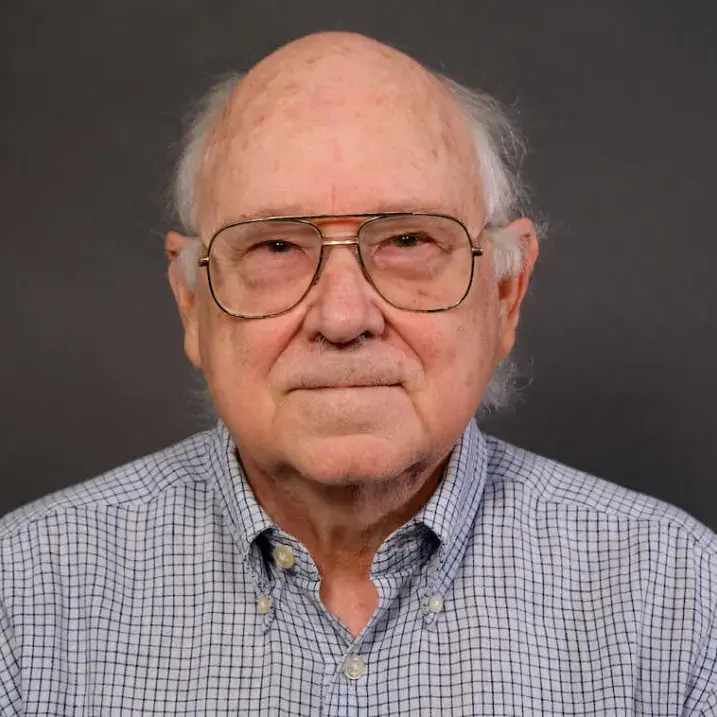
- D.V.M., University of Tennessee College of Veterinary Medicine, Knoxville, TN
- Ph.D., Experimental Pathology, Duke University, Durham, NC
- Residency, Comparative Pathology, Comparative Medicine Department, College of Medicine and Dentistry, University of Alabama at Birmingham, Birmingham, AL
- Residency, Veterinary Pathology, College of Veterinary Medicine, Auburn University, Auburn, AL
- Fellowship, Molecular Genetics, School of Medicine, University of North Carolina, Chapel Hill, NC
- Postdoctoral Trainee Veterinary Pathology, Chemical Industry Institute of Toxicology, Research Triangle Park, NC
Department of Pathology and Laboratory Medicine
University of Vermont Cancer Center
Areas of expertise
disease mechanisms across species, toxicologic pathology, identification and validation of biological markers that are suitable for investigating genotoxic mechanisms, development of a new class of anticancer drugs for use in binary combinations.
BIO
The overall goal of ongoing research is to develop a platform of drug constructs (designated BRG therapeutics) to overcome drug resistance in cancer by delivering fixed-ratio, chemically integrated combinations of FDA-approved active components that generate emergent anti-tumor pharmacology. The program’s goal is to produce broadly active candidates that remain effective across diverse tumor types and molecular backgrounds, including both TP53-mutant and TP53-wildtype disease, while maintaining a strong selectivity window in normal cells. Vernon's laboratory is conducting work to evaluate differing drug candidates where the intracellular release of the aminothiol 2-[(3-aminopropyl)amino]ethanethiol (abbreviated APAET) from a PEG-thiol polymer is required for activity, to validate broad anticancer effects of candidates across multiple human cancer cell line panels, to test normal primary cells to define safety margin behavior, to map mechanism at the stress-response/p53 network level, and to pursue rational combinations (including synthetic-lethality-style strategies) to deepen responses without unsafe dose escalation. The near-term objective is to convert strong in vitro efficacy and selectivity findings into an in vivo de-risked preclinical package (providing pharmacokinetic/pharmacodynamic, tolerability, and efficacy data) that leads to partnering and IND approval for clinical trials to treat of drug-resistant cancers.
The problem of cancer drug resistance has been addressed initially in collaborations with other pathology department researchers and scientists at The Burlington HC Research Group, Inc., MedChem Partners, and the National Cancer Institute to generate in vitro evidence of anticancer activity of two different BRG therapeutics across a broad panel of human cancer cell lines spanning seven tissue types, with activity seen in both TP53-mutant and TP53-wildtype contexts. The lab will use these datasets to: (1) identify which tumor classes show the strongest sensitivity and the cleanest selectivity window, (2) look for response patterns consistent with a platform effect rather than a one-off compound effect, and (3) prioritize lead indication paths where resistance is a primary clinical problem (e.g., aggressive disease and relapse settings). The findings in normal cells will be used to support the hypothesis that BRG constructs can produce a therapeutic window based on differential tumor vulnerability rather than indiscriminate cytotoxicity. The mechanistic work is aimed at mapping: (1) p53 network modulation (with attention to why mutant TP53 tumors may be more sensitive, while activity is still seen in wildtype TP53 tumors), (2) the relationship between redox stress, DNA damage/repair dynamics, and survival signaling, and (3) how these effects translate into phenotypes tied to cancer hallmarks (growth control, death resistance, genomic instability tolerance, metabolic adaptation, and immune-relevant stress signaling). The lab approach includes testing rational combinations where BRG biology should amplify standard-of-care mechanisms—particularly in resistant disease. Combination work will be used to: (1) improve depth of response without requiring unsafe dose escalation, (2) potentially open multiple indication paths from a shared platform mechanism, (3) build partner interest (since combination positioning often fits pharma development strategies).
Publications
Bio
The overall goal of ongoing research is to develop a platform of drug constructs (designated BRG therapeutics) to overcome drug resistance in cancer by delivering fixed-ratio, chemically integrated combinations of FDA-approved active components that generate emergent anti-tumor pharmacology. The program’s goal is to produce broadly active candidates that remain effective across diverse tumor types and molecular backgrounds, including both TP53-mutant and TP53-wildtype disease, while maintaining a strong selectivity window in normal cells. Vernon's laboratory is conducting work to evaluate differing drug candidates where the intracellular release of the aminothiol 2-[(3-aminopropyl)amino]ethanethiol (abbreviated APAET) from a PEG-thiol polymer is required for activity, to validate broad anticancer effects of candidates across multiple human cancer cell line panels, to test normal primary cells to define safety margin behavior, to map mechanism at the stress-response/p53 network level, and to pursue rational combinations (including synthetic-lethality-style strategies) to deepen responses without unsafe dose escalation. The near-term objective is to convert strong in vitro efficacy and selectivity findings into an in vivo de-risked preclinical package (providing pharmacokinetic/pharmacodynamic, tolerability, and efficacy data) that leads to partnering and IND approval for clinical trials to treat of drug-resistant cancers.
The problem of cancer drug resistance has been addressed initially in collaborations with other pathology department researchers and scientists at The Burlington HC Research Group, Inc., MedChem Partners, and the National Cancer Institute to generate in vitro evidence of anticancer activity of two different BRG therapeutics across a broad panel of human cancer cell lines spanning seven tissue types, with activity seen in both TP53-mutant and TP53-wildtype contexts. The lab will use these datasets to: (1) identify which tumor classes show the strongest sensitivity and the cleanest selectivity window, (2) look for response patterns consistent with a platform effect rather than a one-off compound effect, and (3) prioritize lead indication paths where resistance is a primary clinical problem (e.g., aggressive disease and relapse settings). The findings in normal cells will be used to support the hypothesis that BRG constructs can produce a therapeutic window based on differential tumor vulnerability rather than indiscriminate cytotoxicity. The mechanistic work is aimed at mapping: (1) p53 network modulation (with attention to why mutant TP53 tumors may be more sensitive, while activity is still seen in wildtype TP53 tumors), (2) the relationship between redox stress, DNA damage/repair dynamics, and survival signaling, and (3) how these effects translate into phenotypes tied to cancer hallmarks (growth control, death resistance, genomic instability tolerance, metabolic adaptation, and immune-relevant stress signaling). The lab approach includes testing rational combinations where BRG biology should amplify standard-of-care mechanisms—particularly in resistant disease. Combination work will be used to: (1) improve depth of response without requiring unsafe dose escalation, (2) potentially open multiple indication paths from a shared platform mechanism, (3) build partner interest (since combination positioning often fits pharma development strategies).