- M.D., Columbia University College of Physicians and Surgeons, New York, NY
- B.A., Dartmouth College, Hanover, NH
- Internship, General Surgery, Dartmouth-Hitchcock Medical Center, Lebanon, NH
- Residency, Neurosurgery, Dartmouth-Hitchcock Medical Center
- Fellowship, Spine Surgery, Cleveland Clinic, Cleveland, OH
Areas of expertise
spinal degeneration, spinal deformity, spinal trauma, spinal tumors, neurosurgical education.
BIO
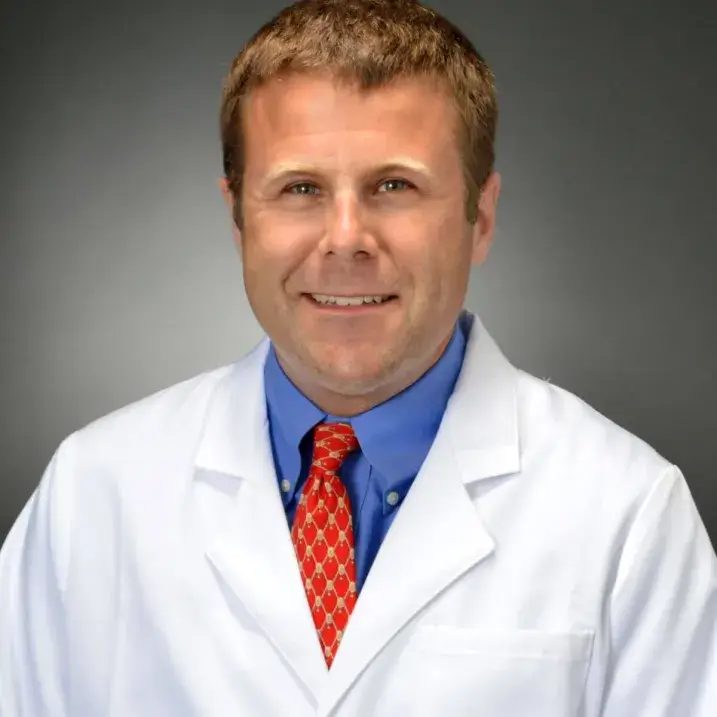
Stuart Scott Lollis is an Associate Professor of Neurosurgery at the UVM Larner College of Medicine. His clinical focus is on complex spine surgery, in particular the surgical treatment of spinal degeneration, spinal trauma, and spinal tumors. His research interests include clinical outcomes research related to spinal disorders, trauma systems of care, and neurosurgical resident education. He is the author of four highly-rated iPhone applications pertaining to neurosurgery, spine surgery, brain tumor treatment, and stroke/cerebrovascular surgery.
Courses
- Diagnosis & Management for Neurosurgical Residents
Publications
Awards and Achievements
- Nominee for H. Gordon Page, MD Clinician Award, University of Vermont Department of Surgery, 2025
- Alpha Omega Alpha, Columbia University, 2003
Academic Appointments
- Associate Professor, Division of Neurosurgery, Department of Surgery, The Robert Larner College of Medicine at University of Vermont, Burlington, VT
Bio
Stuart Scott Lollis is an Associate Professor of Neurosurgery at the UVM Larner College of Medicine. His clinical focus is on complex spine surgery, in particular the surgical treatment of spinal degeneration, spinal trauma, and spinal tumors. His research interests include clinical outcomes research related to spinal disorders, trauma systems of care, and neurosurgical resident education. He is the author of four highly-rated iPhone applications pertaining to neurosurgery, spine surgery, brain tumor treatment, and stroke/cerebrovascular surgery.
Courses
- Diagnosis & Management for Neurosurgical Residents
Publications
Awards and Achievements
- Nominee for H. Gordon Page, MD Clinician Award, University of Vermont Department of Surgery, 2025
- Alpha Omega Alpha, Columbia University, 2003
Academic Appointments
- Associate Professor, Division of Neurosurgery, Department of Surgery, The Robert Larner College of Medicine at University of Vermont, Burlington, VT
Select Publications
- Poroelastic Mechanical Properties of the Brain Tissue of Normal Pressure Hydrocephalus Patients During Lumbar Drain Treatment Using Intrinsic Actuation MR Elastography. Solamen LM, McGarry MDJ, Fried J, Weaver JB, Lollis SS, Paulsen KD. Acad Radiol. 2021 Apr;28(4):457-466. doi: 10.1016/j.acra.2020.03.009. Epub 2020 Apr 22. PMID: 32331966
- Reducing Radiation and Lowering Costs With a Standardized Care Pathway for Nonoperative Thoracolumbar Fractures. Hanson G, Lyons KW, Fournier DA, Lollis SS, Martin ED, Rhynhart KK, Handel WJ, McGuire KJ, Abdu WA, Pearson AM. Global Spine J. 2019 Dec;9(8):813-819. doi: 10.1177/2192568219831687. Epub 2019 Mar 5. PMID: 31819846 Free PMC article.
- Differential Patterns of Referral to Neurosurgery: A Comparison of Allopathic Physicians, Osteopathic Physicians, Nurse Practitioners, Physician Assistants, and Chiropractors. Gelinne A, Thakrar R, Tranmer BI, Durham SR, Jewell RP, Penar PL, Lollis SS. World Neurosurg. 2019 Jun;126:e564-e569. doi: 10.1016/j.wneu.2019.02.095. Epub 2019 Mar 1. PMID: 30831280
- Prehospital Predictors of Emergent Intervention After Helicopter Transfer for Spontaneous Intraparenchymal Hemorrhage. D'Agostino E, Hong J, Sudoko C, Simmons N, Lollis SS. World Neurosurg. 2018 Dec;120:e274-e281. doi: 10.1016/j.wneu.2018.08.050. Epub 2018 Aug 22. PMID: 30142435
- Stereovision Co-Registration in Image-Guided Spinal Surgery: Accuracy Assessment Using Explanted Porcine Spines. Evans L, Olson JD, Cai Y, Fan X, Paulsen KD, Roberts DW, Ji S, Lollis SS. Oper Neurosurg. 2018 Dec 1;15(6):686-691. doi: 10.1093/ons/opy023. PMID: 29518246 Free PMC article.