Authors
Jessica A. Balerna, PhD
Hannah Peplinski
Kacey LaBonte
About
Recommended citation for chapter
Balerna J.A., Peplinski, H., LaBonte, K., 2026, Process. In Galford, G.L., Balerna, J.A., Turner, H., Sardonis, A., Peplinski, H. (Eds), The Vermont Climate Assessment 2025. Burlington, Vermont: Climate Measurements Center of Excellence, Gund Institute for Environment at the University of Vermont. DOI: 10.5281/zenodo.20272849. Accessed online at https://vtclimate.org.
Author Contributor Roles Taxonomy (CRediT) statement
Jessica A. Balerna: Conceptualization, Methodology, Formal Analysis, Investigation, Data Curation, Writing – Original Draft, Writing – Review & Editing, Visualization, Supervision, Project administration; Hannah Peplinski: Conceptualization, Methodology, Formal Analysis, Data Curation, Writing – Original Draft, Writing – Review & Editing, Visualization, Supervision; Kacey LaBonte: Methodology, Formal Analysis, Investigation, Writing – Review & Editing
Acknowledgements
We thank Liz Amler and Amanda Sardonis whose thoughtful reviews and contributions helped refine and strengthen this chapter.
Downloads
Please use the following accessible downloads for your own needs.To find downloads of other chapters in VCA 2025, please go to Downloads.
- Process (high resolution PDF)
- Process (low resolution PDF)
- Process chapter brief (PDF)
- Process slidedeck (PPTX)
- alt-text is attached to each figure.
1.0 Executive summary
This chapter provides a summary of the creation and design process of the Vermont Climate Assessment (VCA) 2025. This is the third VCA, following the first (Galford et al., 2014) and second (Galford et al., 2021) editions. The goals of the VCA are to describe Vermont-specific climate impacts and inspire action from Vermont decision-makers. Subnational (e.g., state-level) assessments, such as this, are important because national assessments can underrepresent small, rural states like Vermont. The VCA centers local issues, uses statewide datasets, and explores climate impacts in multiple sectors that are essential to Vermont’s economy and people.
To ensure the VCA meets the needs of Vermonters, we conducted a survey-based needs assessment with knowledge brokers across the state (i.e., individuals who represent broader networks and can both articulate information needs and disseminate findings). We asked about knowledge gaps related to understanding and addressing climate change impacts in Vermont that directly informed the research agendas of each chapter within this report. We gathered perspectives from knowledge brokers (n=101) from each sector covered within the report, who we recruited from different industries (e.g., government, academia, non-profits) and geographies (i.e., each Vermont county).
The writing of the VCA was primarily led by authors enrolled in the “Vermont Climate Corps”, who participated in a year-long, team-based practicum along with authors who were academics, government employees and community partners. Each chapter team consisted of 2–4 individuals, with at least one graduate student in each chapter team. Throughout the year-long practicum, authors were tasked with writing their chapter based on research guides developed as summaries of fundings from the needs assessment. Student-authors also received mentoring in team-based science, risk communication, data visualization, accessibility, and more.
As each chapter team worked on their chapter, they collaborated with knowledge brokers that self-identified in the needs assessment as willing to engage through chapter co-authorship, chapter review, student mentorship, data provision, and more. Authors also reached out to collaborators and mentors within their own networks (e.g., advisors, previous course instructors, internship supervisors), as well as experts across the state who could provide specific expertise or data as needed. In total, authors collaborated with over 100 knowledge brokers during the process, strengthening the VCA’s relevance to the needs of Vermonters. Each chapter was iteratively reviewed by peers within the Vermont Climate Corps, VCA editors, and external knowledge brokers across the state before completion.
With each edition, we aim to improve our credibility, and the salience, transparency, and accessibility of the VCA. When asking knowledge brokers to evaluate the second edition of the VCA (2021), they stated that they agreed or strongly agreed that the report was credible and relevant but were less likely to agree with the statement that the report was transparent and accessible. In response to this feedback, we created this Process chapter to better explain how the VCA is developed and how, in the VCA 2025, the team co-developed the chapters with the insight and contributions of more knowledge brokers than ever before. To improve accessibility, we worked with the University of Vermont’s Office of Accessibility Services to make products more accessible (e.g., adding alt-text and color-blind friendly color palettes to all figures). Authors created communication products beyond the report, such as chapter briefs, for diverse audiences across Vermont based on the requests submitted in the needs assessment.
While completing the report, we faced multiple challenges, including constrained timelines for the needs assessment, seasonal availability of knowledge brokers, and gaps in outreach to certain sectors and regions. Authors encountered many data limitations, such as incomplete long-term monitoring datasets or discontinued federal and state datasets. As a result, authors estimated that the chapters address approximately 70% of the topics requested in the needs assessment, and approximately 40% of these topics are supported by quantitative metrics. In the next edition of the VCA, we plan to engage with even more knowledge brokers through an expanded needs assessment. Between assessment cycles, we hope to develop more region- or municipality-specific products to help explain location-specific climate impacts across sectors and help communities identify and prioritize climate adaptation measures.
1.1 Key messages
The Vermont Climate Assessment (VCA) is a subnational climate assessment (SCA) designed to provide actionable information on climate impacts to local decision-makers. To ensure usability of the report, VCA authors centered credibility, salience, legitimacy, and accessibility, and conducted a needs assessment and outreach with knowledge brokers.
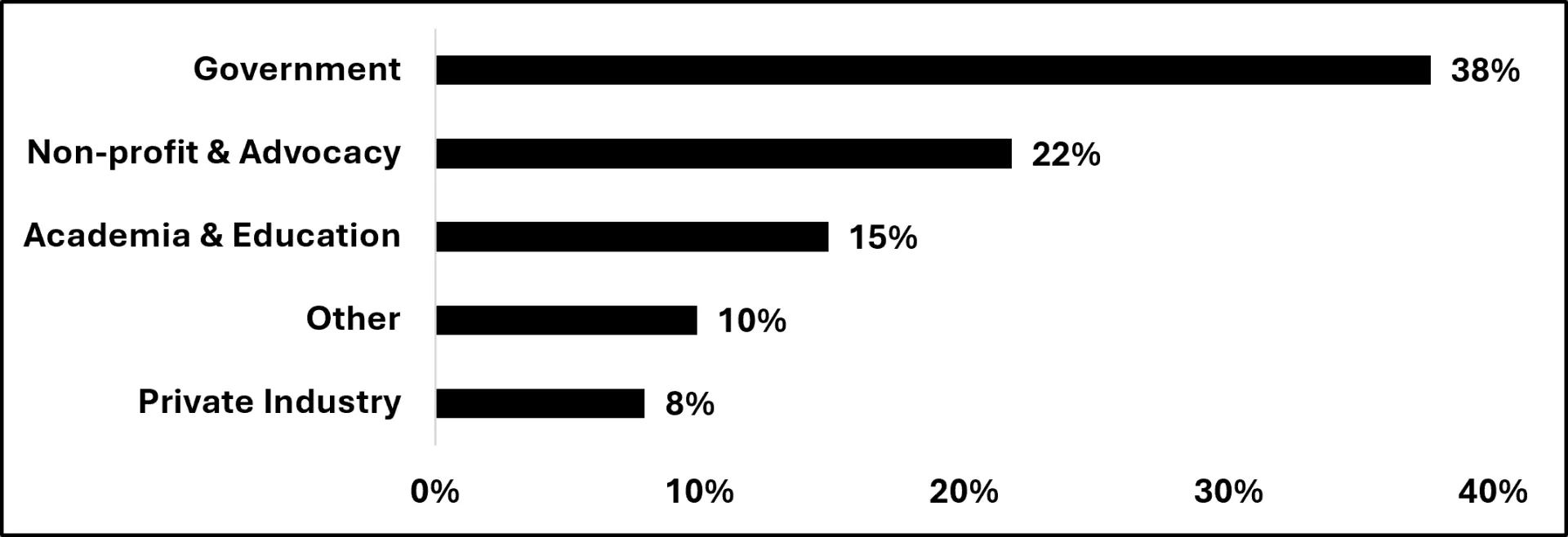
The first step in the VCA process was a survey-based needs assessment to identify research and knowledge gaps related to current or future climate impacts within Vermont. We used input from knowledge brokers who completed the needs assessment survey (n=101) to create a research agenda for each VCA chapter. Knowledge brokers who completed the survey self-identified as working for academic institutions (15%), government agencies (38%), non-profit organizations (22%), and private industries (8%) and work in all counties of Vermont.
- A team of 12 faculty and staff, 3 postdocs, and 27 graduate and undergraduate students from the University of Vermont served as co-authors. This team brought expertise from diverse academic disciplines, including environmental science, biology, engineering, mathematics, community development and applied economics, and more. Students engaged in a year-long team-based learning course that offered multiple benefits—mentorship, community engagement, skill-building, and guidance on future career paths—as they developed the VCA.
Knowledge brokers contributed to various stages of writing and disseminating the VCA, including refinement of the research agenda, reviewing first and subsequent chapter drafts, creation of data visualizations, and/or dissemination of the report, and additional communication products (e.g., chapter briefs). Authors collaborated with over 100 knowledge brokers throughout the writing stage; some of these were part of the initial needs assessment but many joined later in the process.
VCA authors addressed approximately 70% of topics identified in the needs assessment and provided metrics for approximately 42% of the topics. Common reasons why topics were excluded include lack of time or expertise needed to address the topic (e.g., create Vermont-specific climate models), and lack of data availability (e.g. lack of credible, statewide, long-term datasets).
We aimed to improve transparency in VCA 2025 by adding this “Process” chapter and engaging with more knowledge brokers. Twenty-eight knowledge brokers completed the 2025 needs assessment and also engaged with VCA 2021. Of these, 78% (n=22) stated that they agree or strongly agree that VCA 2021 was believable and 86% (n=24) stated that it was relevant. However, only half (n=14) of those knowledge brokers expressed that they agree or strongly agree that VCA 2021 was transparent/fair.
1.2 Background
The Vermont Climate Assessment (VCA) is a subnational (e.g., state-level) climate assessment (SCA) that assesses and centers climate impacts on Vermonters. We know that the impacts of climate change are already disrupting the lives and livelihoods of Vermonters (Galford et al., 2021). Our decision-makers need actionable information for understanding and addressing these impacts at scales that matter to them. From this need, the first VCA was created in 2014 and then updated in 2021 (Galford et al., 2014, 2021). Here, we aim to update information from previous reports, as well as discuss recent relevant topics such as impacts from the “Great Vermont Flood” in July 2023, or the statewide drought in the summer of 2025.
The state’s needs are not wholly met through national and international assessments, as they often lack the local scale relevancy to be useable by the state and municipalities for decision support. For example, key messages from the fifth, and latest, National Climate Assessment (NCA) for the Northeast U.S. highlight the risks of extreme weather events and sea level rise (Whitehead et al., 2023). Since this region contains many large cities (e.g., Boston, New York City, Philadelphia, Washington, D.C.), the NCA’s key messages focus on impacts and adaptations for urban populations. As a landlocked and primarily rural state, the NCA’s main focus has less relevance for decision-makers in Vermont (USGCRP, 2023).
The VCA aims to address this gap and meet the needs of Vermonters by focusing on four target aspects: a) credibility, b) salience, c) legitimacy, and d) accessibility (Table 1-1). Authors primarily compiled and analyzed state-level data, relevant peer-reviewed literature, and local narratives to summarize climate impacts at state, county, town, and watershed scales in Vermont. They engaged closely with knowledge brokers across economic sectors, public/private interests, and geographies early via a needs assessment and continued outreach throughout report writing.
Target aspect | Definition | Processes for achieving this target aspect |
|---|---|---|
Credibility | Audience perceives the report as authoritative, believable, and meeting scientific standards |
|
Salience | Audience perceives the report as relevant to them |
|
Legitimacy | Audience perceives that the report was produced fairly and considers diverse values and perspectives |
|
Accessibility | Audiences of all abilities can access and interact with the report |
|
Source: This chapter
Needs assessment
A needs assessment is an essential aspect of SCAs, in general, and of the VCA, specifically. Needs assessments, also called vulnerability assessments (Scherhaufer, 2014), identify knowledge gaps and needs of its constituents, thereby engaging them in the early stages of SCA development. They are a form of knowledge co-production and require community engagement via surveys, interviews, listening sessions, among other forms of engagement (Howarth et al., 2022; Rosemartin et al., 2023).
A needs assessment helps ensure that SCAs are not just useful but usable. There is a persistent gap in climate change research whereby the science never reaches decision-makers (Lemos et al., 2012; McNie, 2012). By conducting a needs assessment and reaching out to decision-makers first, VCA authors identified the information that decision-makers needed and then compiled and presented that information in the way that they needed.
A needs assessment helps meet the VCA’s goals to be credible, salient, legitimate, and accessible. By working with decision-makers early and often, they are more likely to trust and see value in the products created. By asking decision-makers the questions that they want answered up front, they will find relevant content within the report. By purposefully considering diversity, equity, and inclusion, the VCA is more legitimate and fair. Finally, by asking decision-makers how they want information presented and then following through, the VCA becomes more accessible. Together, these factors contribute to making the VCA usable, not just useful, for decision-makers in Vermont.
Knowledge brokers
To complete the needs assessment, we engaged with knowledge brokers across the state. Knowledge brokers are people who represent large groups of individuals and can speak to the needs and challenges of these groups (Galford et al., 2016). For example, the Northeast Organic Farmers Association of Vermont can speak to the needs and challenges of organic farmers across the state of Vermont. Similarly, the Lamoille County Planning Commission can speak to the needs and challenges of residents in Lamoille County. Knowledge brokers can therefore identify needs and information gaps in their networks as well as help communicate the findings of the VCA back to those networks (Figure 1-1).
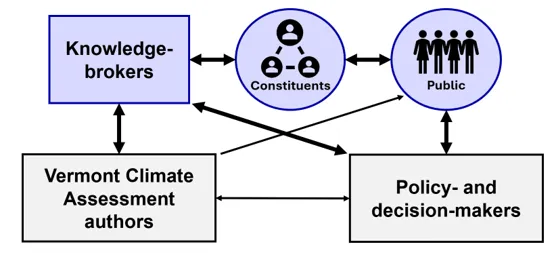
Source: This chapter
1.3 The needs assessment
The VCA needs assessment consisted of three main steps: 1) designing a survey to collect input from knowledge brokers, 2) identifying and recruiting knowledge brokers to take the survey, and 3) analyzing survey responses from knowledge brokers.[1]
[1] A list of all survey questions asked in the needs assessment can be found in 1.6.1. The needs assessment survey was approved by the University of Vermont’s Institutional Review Board on March 14, 2025 (STUDY00003325).
1.3.1 Survey design and results
We used an online survey format to reach a diverse set of knowledge brokers with minimal constraints (e.g., long turn-around window, self-paced, no public speaking). Using a survey allowed us to consider all input through mixed methods analyses.
Our survey began by identifying knowledge gaps about climate change that persist among the networks that our knowledge brokers represent. We asked four open response questions:
- What information would you find useful for understanding climate change in Vermont?
- What information would you find useful for addressing climate change in Vermont?
- What climate change-related topics do you feel well-informed about?
- Are there aspects of previous VCA that you think are essential to include in VCA 2025? Are there any aspects that were previously missing that you would like to see addressed?
Responses to those questions served as the basis for creating the research agenda for each chapter of this assessment (see 1.3.4).
Knowledge dissemination
We were interested in how knowledge brokers planned to share information from the VCA 2025 to their networks. We asked the following questions:
- What groups do you anticipate sharing information with from VCA 2025?
- What types of products would be beneficial when acting on, or sharing, information from VCA 2025?
Knowledge brokers responded with many groups that they anticipated sharing VCA 2025 with. We coded the groups provided into different themes (Table 1-2). Practitioner groups (e.g., farmers, sustainability experts, foresters, real estate professionals) were most frequently mentioned (14%), followed by practitioner and mission coalitions (12%), non-profit and for-profit organizations (11%), municipalities (10.2%), the public (9%), commissions (8%), professional networks (7%), policymakers (6%), state agencies (6%), land managers (6%), and committees (5%). All other group themes (15) represented 1–5% of groups shared. In total, knowledge-broker respondents provided authors with a combined list of 19 affiliate organizations representing for-profits, land trusts, non-profit organizations, and general organizations, and a combined list of 20 practitioner and mission coalition groups.
Theme | Frequency mentioned (%) | Example organizations |
|---|---|---|
Practitioner groups | 14% | Farmers, foresters, stormwater engineers |
Practitioner and mission coalitions | 12% | Conservation districts, Deep Root Organic, Renewable Energy Vermont, THRIVE Accountable Community for Health |
Non-profit and for-profit organizations | 11% | The Nature Conservancy, Friends of Mad River, New England Forestry Foundation |
Municipalities | 10% | Town selectboards, city staff, electric utilities |
Public | 9% | Social media, Tribal members, website |
Commissions | 8% | Planning, conservation |
Professional network | 7% | Staff/colleagues, stakeholders, affiliated organizations |
Policymakers | 6% | Advisory groups, legislators, elected leaders |
State agencies | 6% | Department of Environmental Quality, Agency of Natural Resources, Agency of Transportation |
Land managers | 6% | Landowners, state land managers, forest managers |
Committees | 5% | Municipal, energy, climate, zoning |
Other | 1–5% | Students, community groups, business owners, research, recreation, emergency management, personal networks |
Source: Needs Assessment Survey (2025)
The most desired products for our knowledge brokers were high-resolution figures and summary infographics (84% of respondents), followed by executive (81%) and chapter (62%) summaries (Figure 1-2). A few knowledge brokers requested products beyond those shown in Figure 1-2, such as news stories in VT Digger or Vermont Public, as well as “issues” briefs that integrate cross-sectoral perspectives on complex issues like flooding.
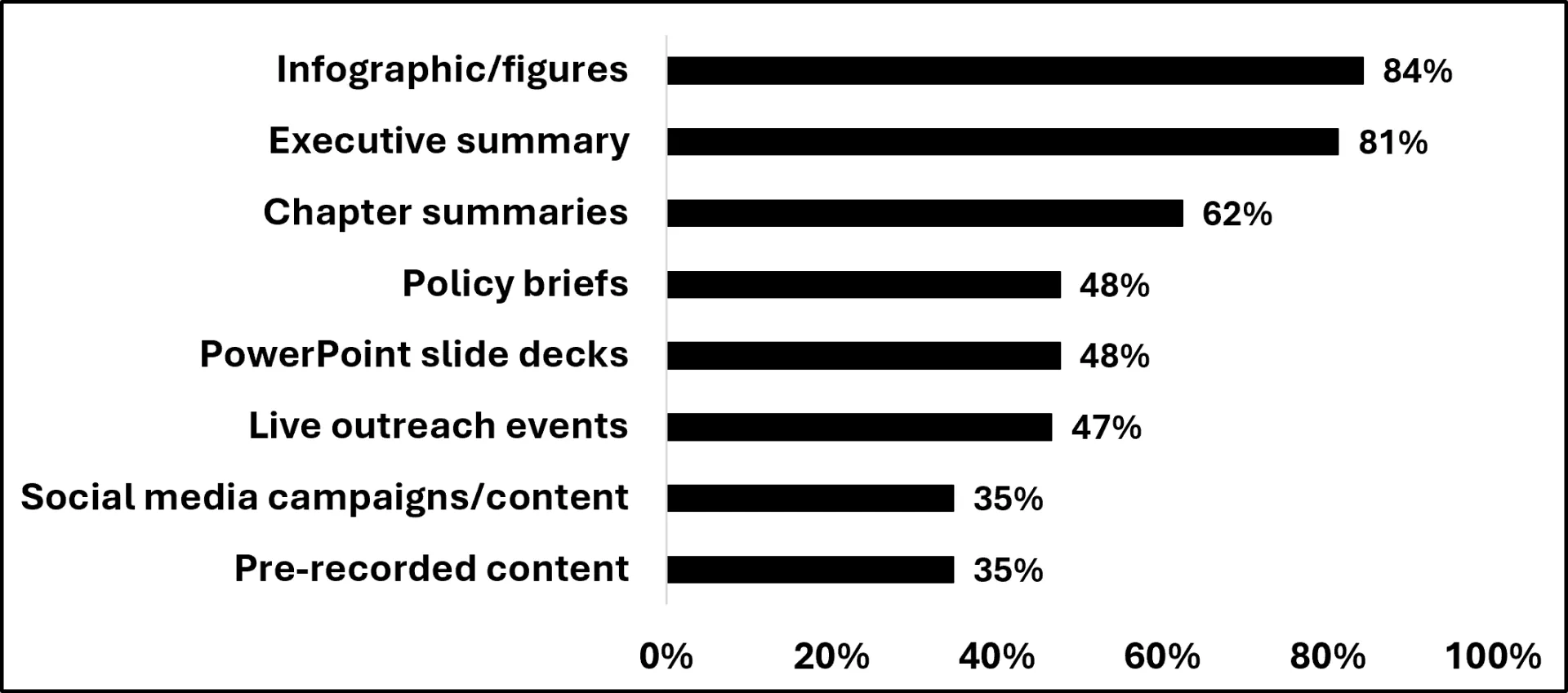
Source: Needs Assessment Survey (2025)
Knowledge co-production
In the needs assessment, we invited knowledge brokers to contribute to the content generation and iterative feedback phases of VCA 2025 through a series of questions:
- Do you want to be involved with the VCA team on the conception, research, writing, or dissemination of VCA 2025 (yes/no)?
- If yes, how would you like to be involved with the VCA team in the creation of VCA 2025?
Involvement options included reviewing chapters, providing data, or mentoring authors (Figure 1-3). In total, 43% of the 101 knowledge brokers self-identified to participate in some aspect of VCA creation or dissemination, with most knowledge brokers wanting to review chapters written by the authors or provide data for the chapters. Any knowledge brokers that elected to participate further were asked for their contact information, which was provided to authors. See 1.4.5 for detailed information about the process of continuing author-knowledge broker interaction in the development of the VCA.
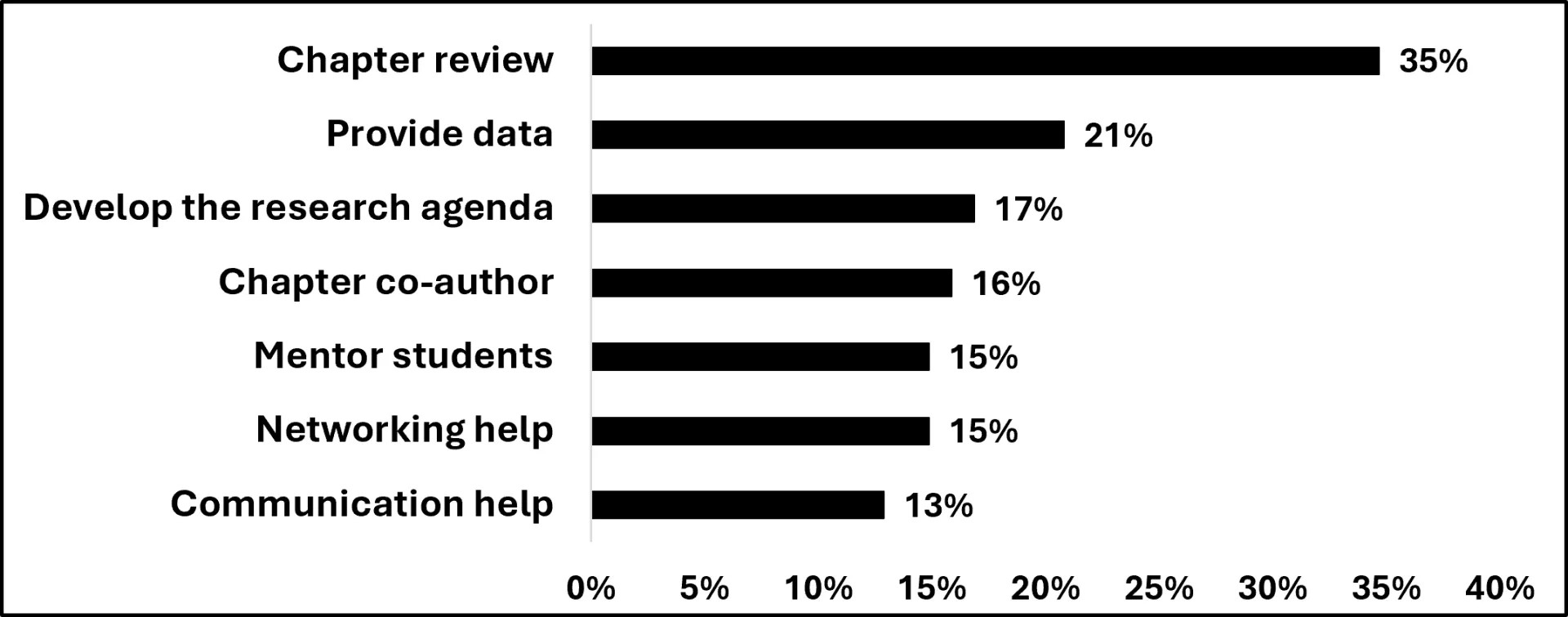
Source: Needs Assessment Survey (2025)
Impact evaluation
As we continue to write and produce VCAs, we intend to make them increasingly impactful. We asked knowledge brokers in our needs assessment whether they interacted with VCA 2021. If the knowledge broker stated that they had interacted with VCA 2021, we then asked them to evaluate how that assessment aligned with the concepts of credibility (i.e., believability), salience (i.e., relevance), legitimacy (i.e., transparency/fairness), and accessibility as standards of creating impactful climate assessments (Figure 1-4). Of the 28 knowledge brokers that had interacted with VCA 2021, 78% (22/28) stated that they agree or strongly agree that VCA 2021 was believable and 86% (24/28) stated that they agree or strongly agree that VCA 2021 was relevant.
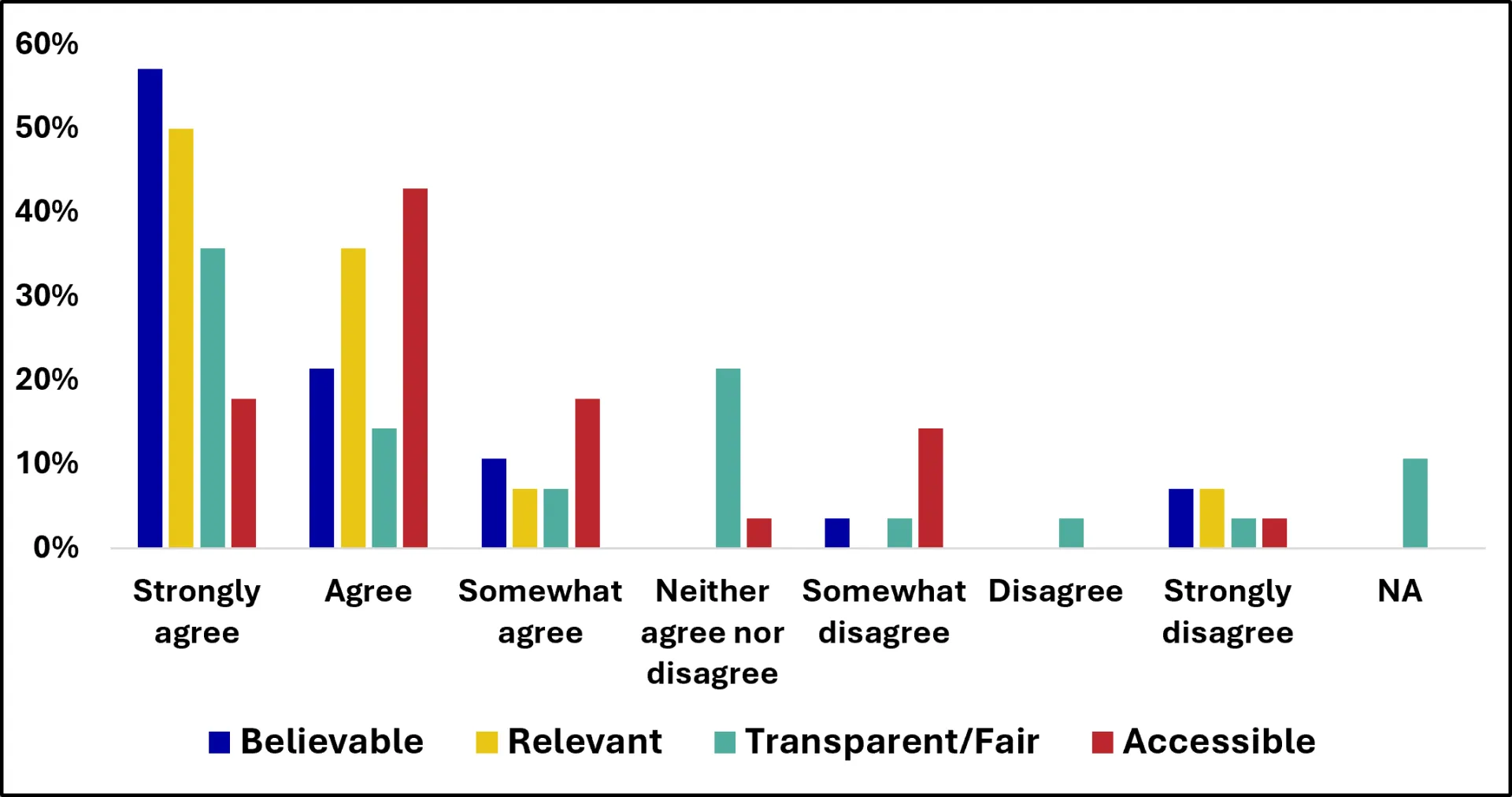
Source: Needs Assessment Survey (2025)
However, only half (n=14) of knowledge brokers that both completed the 2025 needs assessment and engaged with VCA 2021 stated that they agree or strongly agree that VCA 2021 was transparent/fair. We aim to improve upon this evaluation of VCA 2021 in multiple ways: 1) we are including a “Process” chapter in this VCA to help inform readers about how we designed, wrote, and published VCA 2025, including how authors interacted with knowledge brokers throughout that process (see 1.4.2) We purposefully expanded the knowledge broker network from VCA 2021 to engage with more diverse people across a spectrum of sectors, geographies, and industries (see 1.3.2). Finally, 3) we are publishing the representation of knowledge brokers that we engaged with and how they vary across sectors, geographies, and industries (see 1.3.3).
Slightly more knowledge brokers (61%, 17/28) stated that they agree or strongly agree that VCA 2021 was accessible. In 2025, we aim to improve accessibility by engaging with the Office of Accessibility Services (University of Vermont), particularly the Web & Digital Accessibility Specialist (Audrey Clare Homan). Homan provided training to all authors about Web Content Accessibility Guidelines (WCAG) and creating accessible visualizations. We created and used an author’s style guide to enhance consistency across chapters, as well as define guidelines for creation of alternative text, color-blind friendly color palettes, and more.
After the release of VCA 2025, we aim to reach out to knowledge brokers that completed the needs assessment to evaluate the 2025 report as they interact with and disseminate it to their networks.
Socio-demographic information
Finally, we requested voluntary socio-demographic information from our knowledge brokers to better understand the sectors, geographies, and industries they work in and support. These questions helped us determine how representative our results are for the larger Vermont community, as well as whether we reached knowledge brokers for every sector discussed in this assessment (see 1.3.3).
1.3.2 Identification and recruitment of knowledge brokers
Knowledge brokers for the needs assessment survey were recruited first from those that interacted with VCA 2014 or VCA 2021. Those participants included knowledge brokers who were interviewed for the VCA 2021 (n=74), as well as participants who co-authored or reviewed one of the chapters in VCA 2021 (n=39). Participants were then classified in three ways: 1) the industry they work in (i.e., academia/education, non-profit organizations, government, or private industry), the 2) region they serve (e.g., state, county, municipality), and 3) the sector that they work in (Figure 1-5). Participants were classified by sector based on the chapters included in VCA 2025, such as Agriculture & Food Systems, Energy, or Forestry. If participants worked in multiple sectors, all relevant sectors were noted. These classifications were determined based on publicly available job titles and descriptions.
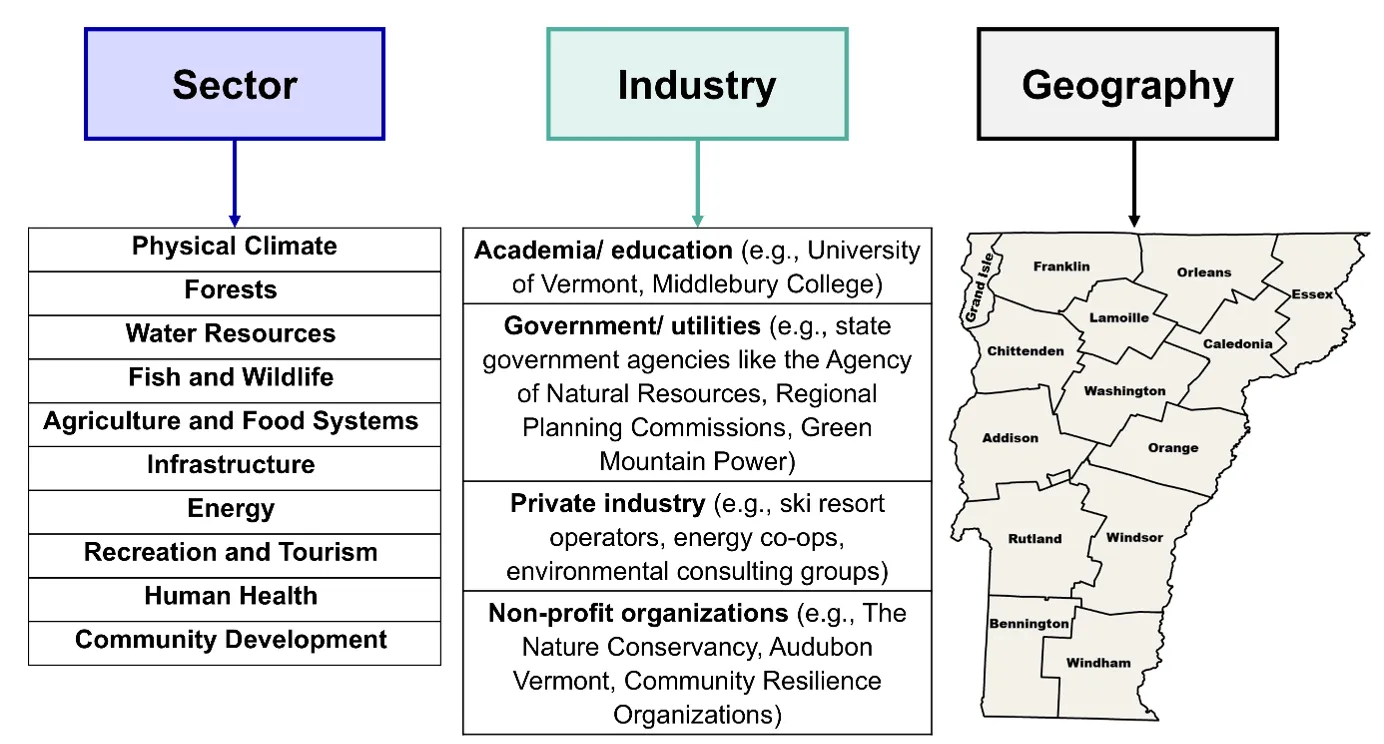
Source: This chapter
We expanded the survey participants by searching for people who were underrepresented in one of the three classifications (i.e., industry, region, and sector). Industry was important to diversify, as many people who interacted with previous VCAs worked at, or with faculty, from the University of Vermont. Furthermore, different industries will have distinct needs in terms of climate change impact information. Many employers, including the University of Vermont, are located in Chittenden County, so an effort was made to reach participants in other regions of the state, particularly because climate change impacts each region of Vermont differently (see Climate Change in Vermont 2.10). Finally, expansion based on sector was necessary to ensure that each chapter included in the VCA had needs assessment information to build their research agendas.
Through this process, the VCA team compiled a list of diverse and representative participants (n=325) and emailed each participant an individualized survey link to complete the needs assessment. A follow-up e-mail was sent to participants that had not yet responded to the survey one week after they received their first e-mail. A second follow-up e-mail was sent if there was no response by two weeks after the participant received their first e-mail.
Within the needs assessment, participants were asked if there were any other people or groups that should complete the needs assessment (snowball sampling). Those participants were contacted when enough information was provided (e.g., e-mail address, company, or agency). When a group of people were requested (e.g., middle-class Vermonters), efforts were made to find a knowledge broker that represented those groups, but this was not always successful. The VCA team contacted 131 participants through snowball sampling in addition to the initial list, for a total of 456 participants. Survey recruitment began on March 19, 2025 and concluded on May 2, 2025.
1.3.3 Meet our knowledge brokers
Socio-demographic information
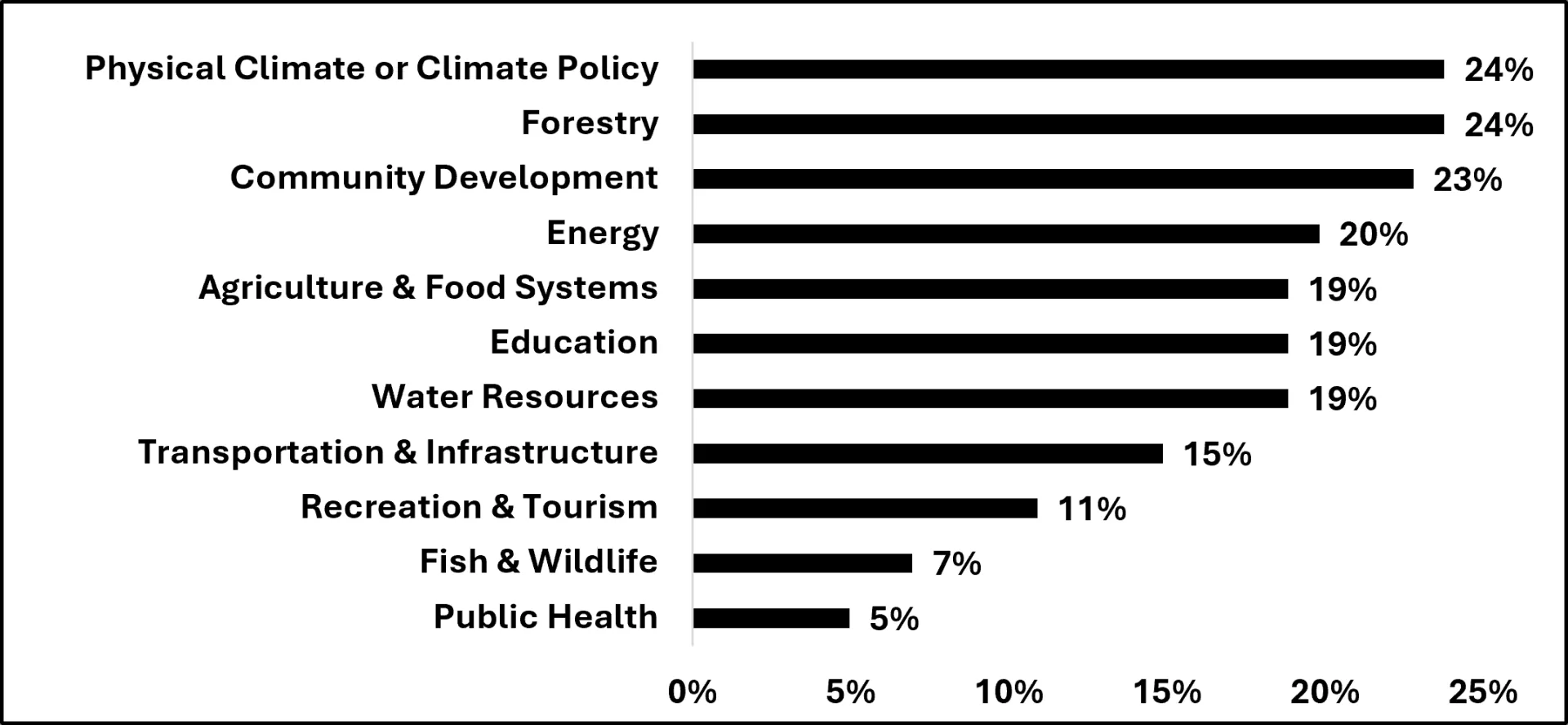
As stated above, we attempted to reach knowledge brokers across each sector of the VCA. Since approximately 100 knowledge brokers responded to the survey, even representation across all sectors would be approximately 10%. Sectors underrepresented by the needs assessment include Fish and Wildlife (7%), and Public Health (5%; Figure 1-6). Outdoor Recreation and Tourism was the only sector with expected representation (10%). All other sectors had greater than 10% representation. Forestry and Physical Climate (24%), had the greatest representation, followed by Community Development (23%) and Energy (20%). Water Resources and Agriculture and Food Systems both had slightly lower representation (19%), as did Infrastructure (15%). Respondents were allowed to select all sectors representative of their work.
Source: Needs Assessment Survey (2025)
Respondents were asked to classify their current or most recent employment into the following categories: academia and education, government, non-profit and advocacy, private industry, or other (Figure 1-7). Employment with a government agency was the most represented, with 38 respondents (38%), including 24 state, three federal, nine municipal, and two tribal government employees. Employment with a non-profit organization was the next most represented with 22 respondents (22%), followed by employment at a university, college, or educational institution (n=15; 15%). Eight respondents (8%) identified as employed in the private industry, including two respondents who identified as being self-employed, freelance, or a consultant.
Source: Needs Assessment Survey (2025)
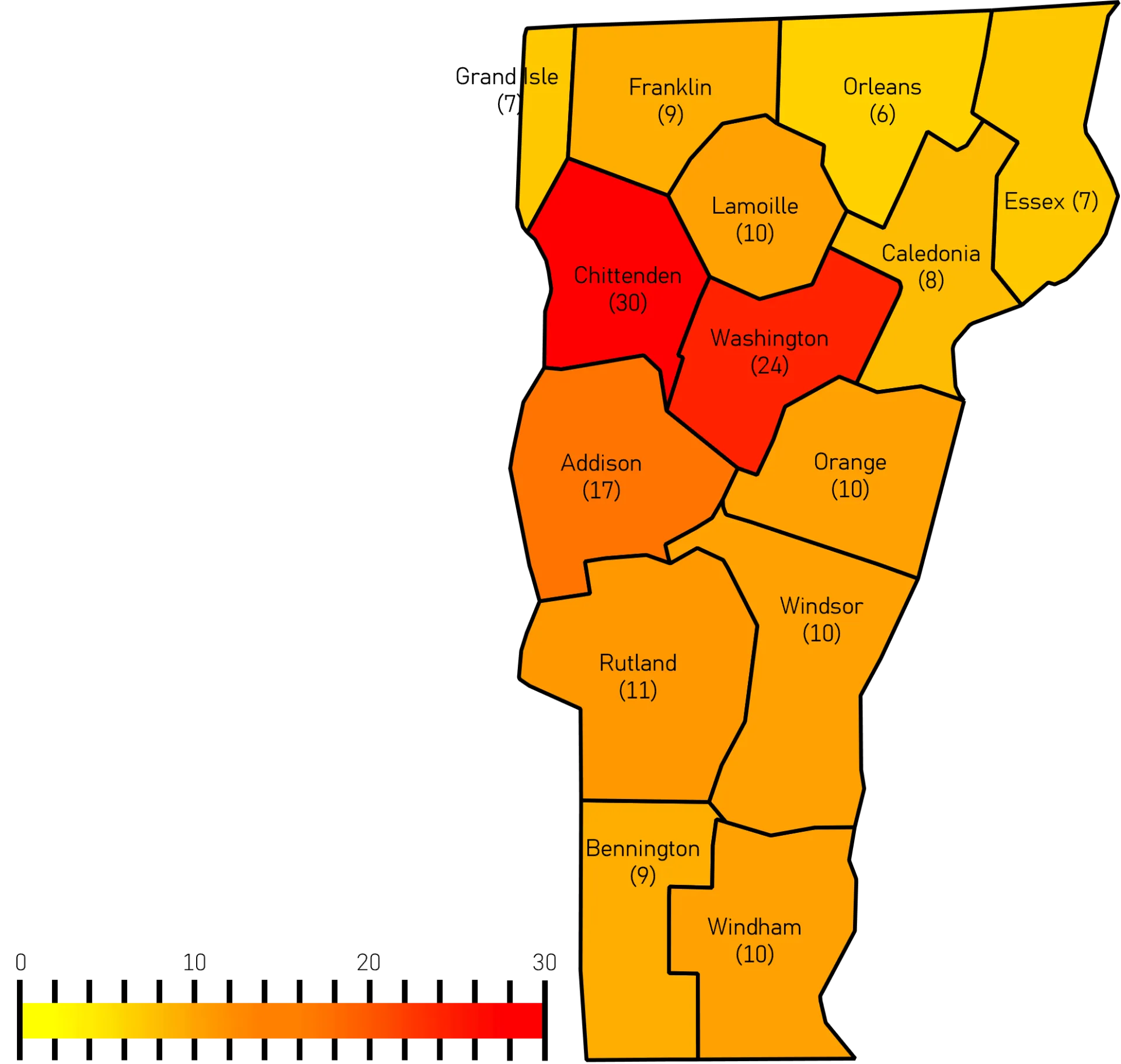
Knowledge brokers were asked to self-identify their race and ethnicity, gender, and county that they work in. Of the 86 respondents that reported their racial and ethnic identity, 97% identified as White or Caucasian. This is 4% higher than in the general Vermont population (U.S. Census Bureau, 2024). Of the knowledge brokers that shared their gender identity, approximately half (n=47, 53%) self-identified as female, the remaining self-identified as male (n=40, 45%) or as other (n=1, 1%), similar to the Vermont population. The counties in which knowledge brokers reported working corresponded with population distribution—the majority worked in Washington (n=24) and Chittenden counties (n=30; Figure 1-8). For this question, knowledge brokers were allowed to select all counties that they worked in (i.e., could select more than one option).
Source: Needs Assessment Survey (2025)
Note: Knowledge brokers were allowed to select more than one county. Not displayed are the 14 knowledge brokers that reported working outside of Vermont, and the 42 knowledge brokers that reported they worked across the state
1.3.4 Using knowledge broker input to craft chapter research agendas
For each chapter of the VCA, we created research agendas using responses from knowledge brokers to questions 1–4 of the needs assessment (see 1.4.1 and 1.6.1). Questions one and two were used for the initial construction of the research agenda, while three and four were used to highlight and rank topics according to the reported needs of knowledge brokers.
Since these questions were open responses, we used NVivo-14 and the Collaboration Cloud (Lumivero, Denver, CO) to qualitatively code each response. This process involves labeling or "tagging" the text from participants’ responses to categorize it thematically. When respondents provided more than one idea, each individual idea was coded separately but attributed to the same respondent. Two of the chapter co-authors (J.A. Balerna and H. Peplinski) coded responses separately until an inter-rater consistency of >80% was reached (i.e., both coders assigned at least 80% of the responses to the same codes). Responses were coded in the following order: first to a given sector (e.g., Water Resources, Community Development, Forests), then into one of two groups within each sector: metrics or policies. Responses that did not fit within a sector covered by the VCA were coded as “sector non-specific.” Responses that were coded as “metrics” included trends in climate change impacts (e.g., the growing season, ranges of pollinator species, wildfire incidence), while responses that were coded as “policies” included asks for current state or local mitigation/adaptation policies, best management practices, and planning tools. Finally, responses were coded into themes within the “metrics” and “policies” codes (Table 1-3). These thematic codes were used to help organize results from the needs assessment into a research guide for chapter authors.
Chapter name | Metric themes | Policy themes |
|---|---|---|
1 Process | NA | NA |
2 Climate Change in Vermont | climate metrics, seasonal changes, geographic variability | communication, emissions, modeling |
3 Forests | wildfire, forest health, emissions, sequestration | emissions, risk mitigation, land use |
4 Water Resources | flooding, surface water monitoring, water availability | adaptive planning, water management |
5 Fish and Wildlife | non-invasive species, invasive species | non-invasive species, invasive species |
6 Agriculture & Food Systems | extreme weather, production, food security | emissions, management/ resilience |
7 Infrastructure | emissions, impacts, urban development | awareness, design/ adaptation, urban development |
8 Energy | emissions, impacts, transition | adaptation, emissions, transition, local planning |
9 Outdoor Recreation and Tourism | rainfall/temperature, snow, tourism industries, wildlife | planning/budgeting |
10 Human Health | impacts, data, disease, mental health, temperature, vulnerable populations, wildlife/ air quality | connection, education, investments |
11 Community Development | impacts, vulnerable populations, economics, adaptation, town planning | adaptation, development, economics, local planning, vulnerable populations, migration |
Source: Needs Assessment Survey (2025)
The research guide for each chapter was refined and prioritized for authors in two ways. First, we highlighted topics that were more important to include in the chapter because either multiple knowledge brokers requested that topic or because knowledge brokers noted it was essential to include in question four of the needs assessment. Second, we underlined topics that knowledge brokers stated they felt well-informed about in question three of the needs assessment. It is important to note that biases from imbalances in stakeholder representation likely influenced which topics were highlighted or underlined. Therefore, we did not remove topics, regardless of weight, but instead presented them to authors as high or low priority. Authors received these research agendas during the first week of the Climate Assessment Practicum course (see 1.4.2).
1.4 Writing VCA 2025
1.4.1 Structure of VCA 2025
Chapters as impact sectors
Each chapter of the VCA reflects an economic, cultural, social, or natural resource sector in Vermont impacted by climate change. These chapters, or impact sectors, were selected based on previous VCA editions (2014 and 2021), as well as based on the sectors most important to Vermonters determined by the needs assessment. The order of chapters reflects a gradient from predominantly environmental impacts (e.g., Forests, Water Resources, Fish and Wildlife) to a mix of environmental and social impacts (e.g., Agriculture and Food Systems, Infrastructure, Outdoor Recreation and Tourism). Each chapter begins with an executive summary and key messages that highlight the climate change impacts most important to that sector. The executive summaries and key messages are written for a general audience, while the remainder of the chapter may include more technical information relevant to our knowledge brokers.
Traceable accounts
Each of the subsequent chapters concludes with a traceable accounts section that describes the confidence level for each key message of that chapter (USGCRP, 2023). The confidence level is determined based on two parameters: the evidence level and consensus level (Table 1-4). The evidence level describes the status of available scientific literature on the topic, while the consensus level describes the level of consensus among researchers studying the topic.
Confidence level | Very high | High | Medium | Low |
|---|---|---|---|---|
Evidence level | Strong evidence: established theory, multiple resources, confident results, well-documented and accepted methods, etc. | Moderate evidence: several sources, some consistency, methods vary, and/or documentation limited, etc. | Suggestive evidence: a few sources, limited consistency, models incomplete, methods emerging, etc. | Inconclusive evidence: limited sources, extrapolations, inconsistent findings, poor documentation and/or methods not tested, etc. |
Consensus level | High consensus | Medium consensus | Competing schools of thought | Disagreement or lack of opinions among experts |
Source: USGCRP (2023)
In addition to the confidence level, chapters provide the following information for each key message in their traceable accounts subsections: 1) a description of the evidence base, and 2) any major uncertainties within the evidence base. The evidence base description includes information about where data came from for each key message (e.g., raw data source, references from the literature, anecdotal information, news stories). The major uncertainties description includes information on any limitations of the evidence base used (e.g., spatial or temporal gaps in the data, outliers of consideration, description of differences in consensus). These pieces provide necessary context for the confidence rating as well as transparency of where to find the data used to determine the confidence rating.
1.4.2 Introducing VCA 2025 authors
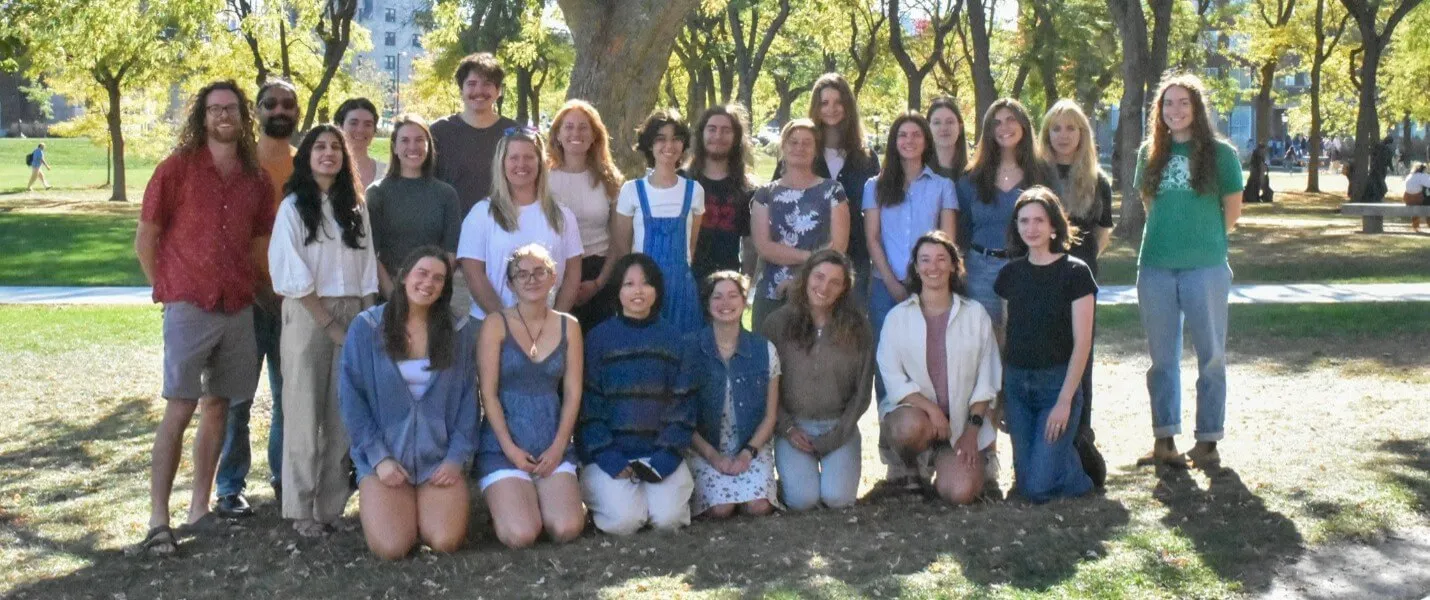
Most chapters in the VCA were led by authors who were graduate and undergraduate students at the University of Vermont (Figure 1-9), though many knowledge brokers contributed to sections of the chapters as co-authors, contributors, or reviewers. Authors were selected among a pool of applicants for the Vermont Climate Corps (VCC), a new training initiative sponsored by the Climate Measurements Center of Excellence (CMeC) housed within the University of Vermont’s Gund Institute for Environment.
Source: Lauren Milideo (2025)
VCC trainees are from various degree programs across the University of Vermont including the natural sciences (e.g., environmental science, natural resources, parks, recreation & tourism, biology, plant and soil sciences, food systems, conservation biology, ecology, geosciences), math and engineering (electrical engineering, mathematics, statistics, data science, computer science), and the social sciences (community development and applied economics, philosophy, sustainable development, policy, economics and governance).
Students in the VCC enrolled in a 3-credit University of Vermont course (Climate Assessment Practicum) in Fall 2025 and a 1–3 credit University of Vermont course in Spring 2026 (Climate Assessment Outreach). When possible, VCC graduate student members received 0.25 full-time equivalent (FTE) graduate research assistantships.
Climate Assessment Practicum Course (Fall 2025)
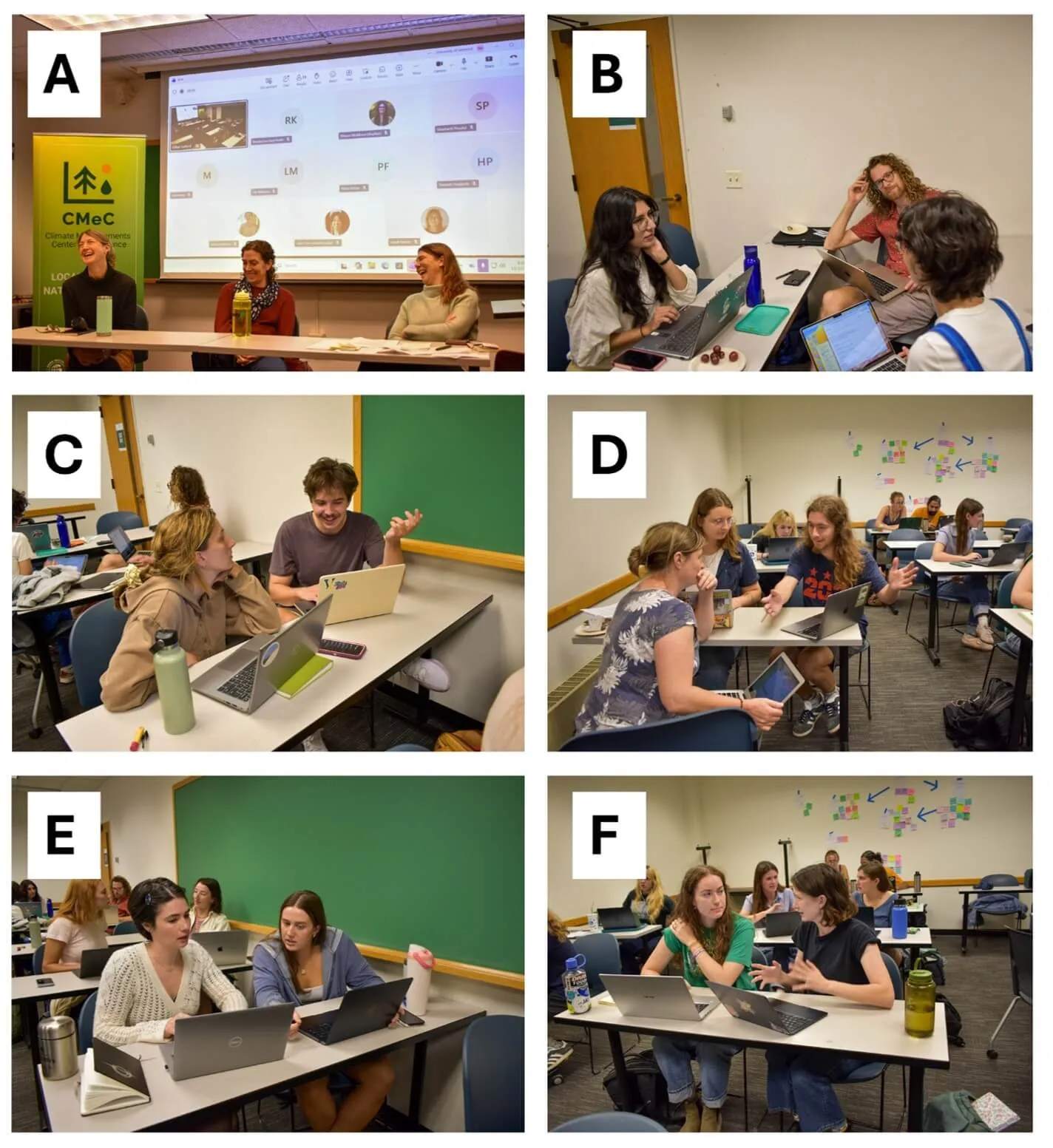
In Fall 2025, Dr. Gillian Galford and Dr. Jessica Balerna co-led a team-based, community-engaged 3-credit learning course where VCC trainees met to develop skills, interact with their peers, and discuss their VCA chapter drafts (Figure 1-10). Based on their applications to the VCC, graduate and undergraduate students were assigned to chapter teams at the start of the semester (August 2025) and were expected to write a complete draft of their chapter by the end of the semester (December 2025). Each chapter had 1–2 graduate students as lead authors and 1–3 undergraduate students as co-authors. Together, the authors collected and analyzed data from literature, publicly accessible federal, state, and municipal data sources, and through discussions with knowledge brokers.
Source: Lauren Milideo (2025)
To prepare the VCC for conducting the team-based research necessary to create the VCA, several presenters were invited to attend class to share their insights and backgrounds. They covered skills such as how to create effective meeting agendas, facilitate team meetings, find grey and scientific literature, manage group citation libraries, translate complex scientific messages into memorable stories, produce message-driven, and accessible, data visualizations, and reach policy- and decision-makers (Table 1-5).
Skills | Presenter |
|---|---|
Team-based science: Working effectively and collaboratively on an interdisciplinary team | Dr. Jessica Balerna, Climate Impacts Postdoctoral Fellow with the Climate Measurements Center of Excellence; Former Graduate Fellow with the Socio-Environmental Synthesis Center |
Crisis and risk communication: Translating complex climate change impacts and uncertainty into memorable stories | Dr. Rodrigo Soares, Crisis and Risk Communication Postdoctoral Fellow with the Water Resources Institute |
Systems thinking: Mapping climate change impacts to specific and salient metrics | Dr. Kate Brauman, Deputy Director of the Global Water Security Center at the University of Alabama |
Literature review and citation management: Conducting reviews for report writing and team citation management | Laurie Kutner and Dan Desanto, Information & Instruction Librarians with the Howe Library |
Data visualizations and accessibility: Creating message-driven visualizations that meet the needs of all readers | Kristin Florian, Data Visualization Specialist with the Howe Library Audrey Clare Homan, Digital Accessibility Specialist with the Office of Accessibility Services |
Reaching policy- and other decision-makers: Connecting the Vermont Climate Assessment to state policy- and other decision-makers | Liz Amler, Climate Planning Administrator with the Vermont Climate Action Office, Agency of Natural Resources |
Translating the VCC to the job market: How to leverage experiences writing the VCA in future career and research opportunities | Ann Telep, VCA 2014 Chapter Author, Senior Program Manager, The Climate Pledge for Amazon Dr. Jess Wikle, VCA 2021 Chapter Author, Research Forests Manager, University of Vermont Dr. Kristen Underwood, VCA 2014 Chapter Author, Research Assistant Professor, University of Vermont |
Crafting communication products: Creating and disseminating communication products designed for diverse audiences | Marsha A. Branch, School of the Arts, University of Vermont; Former Producer, BBC and United Nations Brittany Patterson, Director of Communications, Gund Institute for Environment Lauren Milideo, Strategic Communications Manager, Gund Institute for Environment Amanda Sardonis, Director of Policy and Partnerships, Gund Institute for Environment |
Source: This chapter
Mentorship was a critical component of the VCC. Chapter teams were tasked with creating and signing a mentorship agreement at the start of the Fall 2025 semester to help them determine their working styles and hours, their preferred communication methods, and more. Graduate students were expected to provide mentorship to the undergraduate students co-authoring their chapter. Both undergraduate and graduate students were also mentored by knowledge brokers who wished to engage beyond the needs assessment (see 1.4.5).
1.4.3 VCA 2025 chapter outlines
As chapter teams started working together to create their chapter outlines, they were instructed to consider multiple sources: 1) their chapter’s research agenda created from the needs assessment (see 1.3.4), 2) previous VCA chapters (Galford et al., 2014, 2021), and 3) the NCA’s Northeast Chapter (Whitehead et al., 2023). Once they completed an analysis of those sources, they were asked to do a feasibility assessment to determine what was within or out of scope. When reflecting on this process, one student shared:
"The needs assessment helped us frame our chapter outlines…the feedback provided helped us understand what people wanted to see included. That was important to us as we want to create a chapter that is informative and fulfills what Vermonters want to see in a report."
Many authors shared that the needs assessment topics were similar to those seen in previous iterations of the VCA. One student wrote, “[Most] of the needs mentioned were topics we were already planning on covering, as they were very much a continuation of what previous VCAs had done, just with more specifics about what would be helpful.”
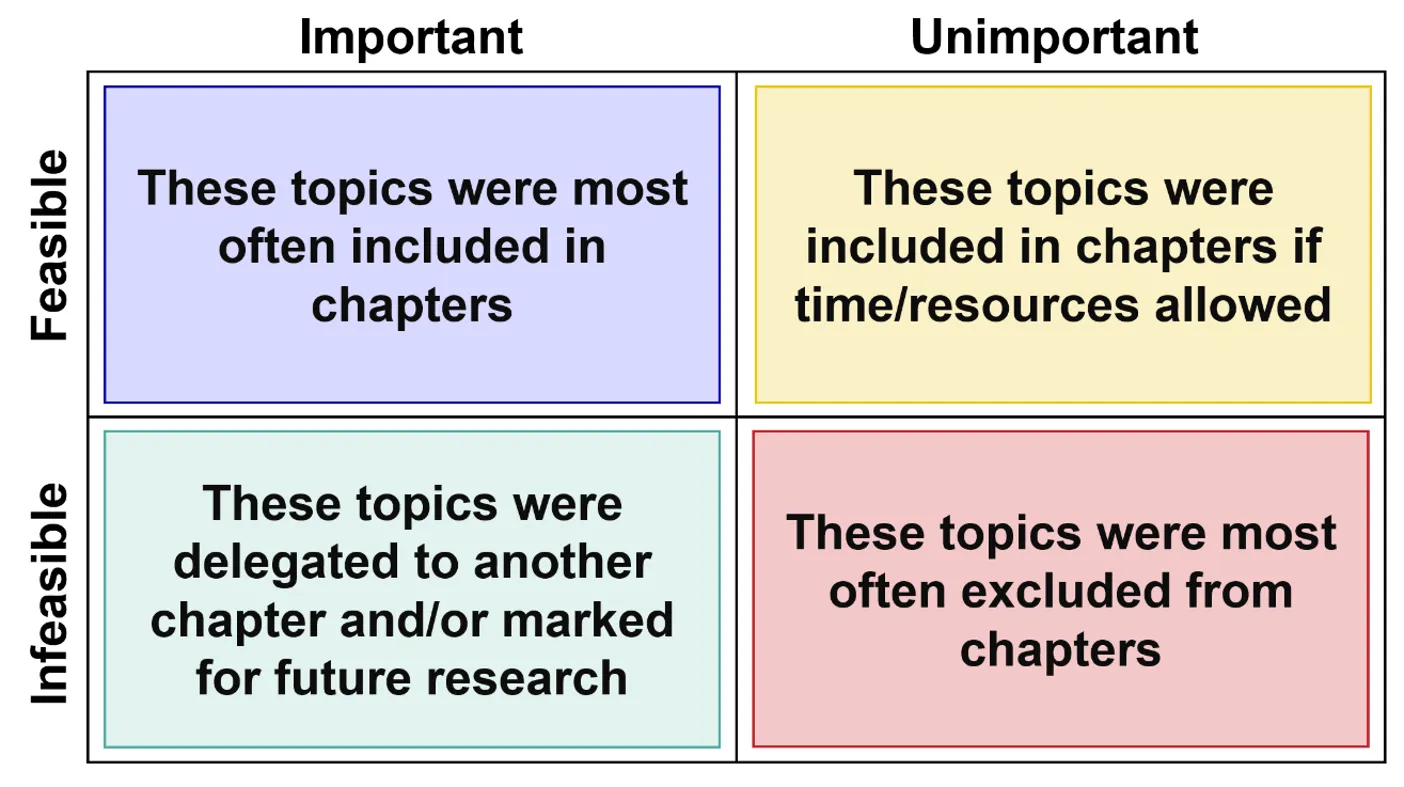
As chapter teams finalized their outlines, they were asked to consider the feasibility and importance of each topic within their outline. Authors labeled topics as “important” if they were requested in the needs assessment or were an update to indicators presented in previous VCAs. Authors labeled topics as “feasible”, if authors, University of Vermont partners, or engaged knowledge brokers had the expertise and data to investigate a given topic, and if the topic could be investigated in the time allotted for producing the VCA. Some topics that were infeasible for one chapter could be delegated to another chapter, especially if those topics were requested in the needs assessment. A selection of topics that were unable to be included in the final chapters but were requested in the needs assessment are included in 1.5.2. Chapter teams used a matrix to help prioritize their chapter outlines (Figure 1-11).
Source: This chapter
1.4.4 VCA 2025 chapter drafts
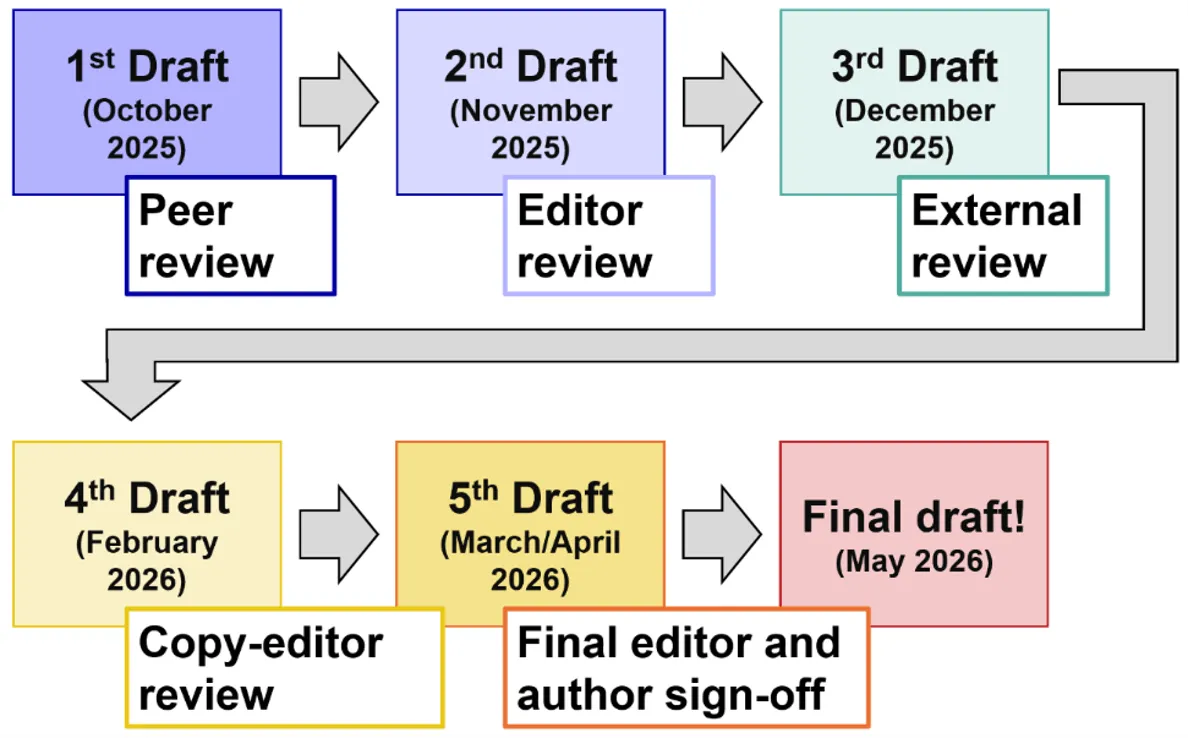
Following the creation of their chapter outlines, students were encouraged to complete a full draft of their chapter by mid-October to be reviewed by their peers, a second draft by mid-November to be reviewed by editors of the report, a third draft to be reviewed by external experts sometime between December 2025 and February 2026, and a final draft to be reviewed by professional science copy-editors between March and April 2026 (Figure 1-12). All editors reviewed and revised the final drafts prior to publication.
Authors used many approaches to ensure the topics highlighted in the needs assessment were integrated into their chapter as they developed the draft (Box 1-1).
Source: This chapter
Box 1-1: Author reflections* on the process of integrating the needs assessment into their chapter drafts
- Going into planning [our chapter], we gave ourselves two goals: the first of which was to update the 2020 VCA and the information within it (where relevant), the second was to adapt the chapter to better/more specifically cover topics mentioned in the needs assessment.
- Not all topics requested in the needs assessment were within scope, but some of the topics that were within scope sparked some of the most fruitful content that we wrote.
- As our outline and research agenda evolved, we made sure to mark the topics that came directly from the needs assessment so that they did not get lost or dropped in the editing process.
- The topics most desired in the needs assessment were what we focused on most, but it also seems like some topics people wanted or had not been able to find on their own, were also challenging for us to find data on.
- As many of the Needs Assessment topics were policy-based, many of them ended up in the ‘Opportunities for Adaptations’ sections.
*Quotes are lightly edited for conciseness and clarity
1.4.5 Knowledge broker engagement
Authors were encouraged to reach out to knowledge brokers who could help them find primary data sources, create or refine data visualizations, review specific content, and/or provide general advice and mentorship. In total, author teams engaged with 116 knowledge brokers (Table 1-6). Approximately 20% (n=22) of those knowledge brokers participated in the needs assessment (see 1.4.1). Students collaborated with an additional 94 knowledge brokers (81%) beyond the needs assessment.
Chapter name | Number of knowledge brokers engaged |
|---|---|
1 Process | 2 |
2 Climate Change in Vermont | 2 |
3 Forests | 10 |
4 Water Resources | 17 |
5 Fish and Wildlife | 21 |
6 Agriculture & Food Systems | 29 |
7 Infrastructure | 13 |
8 Energy | 6 |
9 Outdoor Recreation and Tourism | 8 |
10 Human Health | 10 |
11 Community Development | 14 |
Source: This chapter
Note: Some knowledge brokers engaged with multiple chapters and are counted in each chapter they contributed to
Approximately 52% (n=60) of the knowledge brokers that authors engaged with work at the University of Vermont and were primarily professors known to student-authors prior to joining the VCC. Another 19% (n=22) of those knowledge brokers work in the Vermont state government, with the remaining knowledge brokers (29%, n=34) working for other levels of government (e.g., local, federal), a variety of non-profit organizations, or private industries.
Authors shared that knowledge brokers pushed them to consider different perspectives and emphasize or de-emphasize certain topics. Knowledge brokers provided more current data and helped students parse out impact attribution between climate change and other anthropogenic sources like urbanization and pollution (Box 1-2).
Box 1-2: Student reflections* on collaborating with external partners
- Talking to [knowledge brokers] helped us understand the on-the-ground realities of planners, policy makers, [and] state employees that need to prepare communities for the impacts of climate change… talking to so many of them really polished our understanding of the needs of knowledge brokers.
- [For the health chapter, one knowledge broker] emphasized the desire for a focus on health vulnerabilities that was reflected in the needs assessment and informed us about the multisolving framework for health and climate change. In response to that, we gave both a larger emphasis in the chapter.
- …Meeting with people across Vermont who are experts in many different fields helped us gain new perspectives on how climate change is impacting species, and how it is sometimes difficult (or rather just complex) to quantify if the changes a species is experiencing is really due to climate change, or some other [source].
- We got some great data from our [knowledge brokers] that we were able to use to update [our chapter] with more current numbers.
- One of the major things we got feedback on from [knowledge brokers] was having a larger water systems section than there was in VCA 2021. This was not requested in the needs assessment.
*Quotes are lightly edited for conciseness and clarity
1.4.6 Communication products beyond the VCA report
Climate Assessment Outreach Course (Spring 2026)
In Spring 2026, authors finalized their drafts incorporating external feedback and began to create additional communication products which could be used to spread the key messages of the VCA to different audiences. For each chapter, the authors wrote a chapter executive summary, created a visual/graphical abstract, and created a slide deck of high-quality versions of each of the figures and tables that appear in their chapter. This was directly in response to the requests made by knowledge brokers in the needs assessment for different visualization products (see 1.4.1; Figure 1-2).
Authors were encouraged to participate in an outreach event to help disseminate results from their VCA chapter. Some examples included presenting across the University of Vermont’s campus, such as at the annual Student Research Conference, the Gund Institute for Environment’s annual “Gund Slam,” and at the Rubenstein School of Environment and Natural Resources’ “bagel breakfast” events.
1.5 Report limitations and calls to action
1.5.1 Limitations on knowledge broker recruitment for needs assessment
While our goal when completing the needs assessment was to engage with diverse knowledge brokers across sectors (e.g., Community Development, Forestry), industries (e.g., government, non-profit organizations), and geographies (e.g., counties, municipalities), we faced multiple challenges that limited the total number of knowledge brokers we were able to engage. First, our needs assessment timing was constrained to only a couple of months in late Spring 2025. For certain sectors, like Outdoor Recreation and Tourism, Agriculture and Food Systems, and Fish and Wildlife, this was a challenging time of year as many people were offline and/or in the field. Winter months or a span of two seasons might be better timing. Second, we expanded our list of knowledge brokers primarily through online searches, but many private companies and non-profit organizations do not have publicly listed e-mail addresses.
To increase our engagement with knowledge brokers in future needs assessments, we will expand the time that the needs assessment occurs. One chapter author recommended tapping into each of the authors’ networks. For this report, while our authors were not engaged with the project when the needs assessment was conducted, they are a great resource for future needs assessments. Prior authors (2014, 2021) did receive the needs assessment as survey participants and shared knowledge brokers to contact from their networks.
1.5.2 Gaps in needs assessment topics and calls to action
Not all the topics requested in the needs assessment could be incorporated into the final report (Table 1-7). When discussing this with authors, the top reason was scope. Many topics, such as cost-benefit analyses of existing and recommended policies, were beyond the scope of what authors could reasonably complete in the timeline of this report. While many chapters in this report highlight state, regional, and municipal policies and programs relevant for mitigating and adapting to climate change impacts, many knowledge brokers are looking for detailed evaluations of what is and is not working both in Vermont and for nearby New England states. The Vermont Climate Council has recently released an updated Vermont Climate Action Plan (2025) that outlines priority action items to mitigate carbon emissions and adapt to existing climate impacts; however, more detailed cost-benefit analyses of existing and proposed policies as well as an evaluation of what other states are doing that might be compatible for Vermont remain as key research gaps.
Chapter name | Topics covered (%) | Topics with metrics (%) |
|---|---|---|
Climate Change in Vermont | 75% | 70% |
Forests | 45% | 27% |
Water Resources | 70% | 55% |
Fish and Wildlife | 70% | 20% |
Agriculture and Food Systems | 85% | 30% |
Infrastructure | 75% | 50% |
Energy | 70% | 50% |
Outdoor Recreation and Tourism | 60% | 25% |
Human Health | 80% | 80% |
Community Development | 70% | 12% |
Average across chapters | 70% | 42% |
Source: This chapter
Another commonly mentioned reason that requested topics were excluded from chapters was lack of data availability, including due to data taken offline during the government shutdown (October 1–November 12, 2025 in the core of the writing phase) or due to the priorities of the current federal administration. One author shared, “some of the sources used in the previous VCA have been discontinued, and we found it really hard to find recent data on primary sources in Vermont.” Another author stated, “the recent government shutdown [made] it harder to contact and have time with those working professionals.”
Some data were not available across the entire state of Vermont or for long enough time periods to discern trends based on climate change. Other data sets would require advanced modeling or computational skills beyond the scope of this review. Examples of data authors wanted to use in their chapters but could not access or compile included:
- Long-term wind and air quality data (implications for Climate Change in Vermont, Outdoor Recreation and Tourism, and Human Health chapters)
- Information on cold water fisheries (implications for Fish and Wildlife chapter)
- Changes in lake surface temperatures and water quality beyond Lake Champlain (implications for Water Resources, Fish and Wildlife, and Outdoor Recreation and Tourism chapters)
- Heat exposure or heat stress incidents tied to outdoor laborers (implications for Human Health chapter)
- Emissions data for specific places like the Burlington International Airport (implications for the Energy chapter)
- Closures and disruptions to retail supply chains and charitable food distributors (e.g., food banks and pantries; implications for Agriculture and Food Systems, Human Health, and Community Development)
Prioritizing resources for long-term monitoring data can help the state better detect and address climate impacts.
Some knowledge brokers requested topics that required skills beyond those of our chapter author and editing team. For example, forecasting state-wide or region-specific emissions scenarios and downscaling of global climate models to estimate historical and projected temperature and precipitation trends across the state. The Climate Change in Vermont chapter, instead, relies on data from 19 weather stations across Vermont, which are all part of the National Weather Service Cooperative Observer Program network (see Climate Change in Vermont 2.3.1).
Finally, many knowledge brokers requested region or town-specific impacts and recommendations. Many chapters include geospatial data and maps that can help communities identify impacts specific to them, but town- or region-specific products are something that we aim to create in the future between climate assessments.
1.6 Resources
Identifying Knowledge Gaps
- What information would you find useful for understanding climate change in Vermont (e.g., causes, effects, certain sectors, scales, or geographies)? [Open Response]
_________________________________________________________________________________
_________________________________________________________________________________
_________________________________________________________________________________
- What information would you find useful for addressing climate change in Vermont (e.g., policies in place, policy recommendations, current management practices, recommended changes in management practices)? [Open Response]
_________________________________________________________________________________
_________________________________________________________________________________
_________________________________________________________________________________
- What climate change-related topics do you feel well informed about and don’t need additional information on? [Open Response]
_________________________________________________________________________________
_________________________________________________________________________________
_________________________________________________________________________________
- Are there aspects of previous Vermont Climate Assessments (VCA) that you think are essential to include in VCA 2025? Are there any aspects that were previously missing that you would like to see addressed? [Open Response]
_________________________________________________________________________________
_________________________________________________________________________________
_________________________________________________________________________________
- We seek input from a wide range of perspectives and voices. Are there any voices that you think should be involved in VCA 2025 in some way? Please provide names and email addresses if you can. [Open Response]
_________________________________________________________________________________
_________________________________________________________________________________
_________________________________________________________________________________
- What sources do you currently use for climate information, particularly regarding climate change impacts in Vermont or the Northeast? [Open Response]
_________________________________________________________________________________
_________________________________________________________________________________
_________________________________________________________________________________
Knowledge Dissemination
- What groups do you anticipate sharing information with from VCA 2025? [Open Response]
_________________________________________________________________________________
_________________________________________________________________________________
_________________________________________________________________________________
- How might those groups use information from VCA 2025 in decision-making? [Open Response]
_________________________________________________________________________________
_________________________________________________________________________________
_________________________________________________________________________________
- How would you share information with these groups? Please select all that apply. [Checkboxes]
- Email them a link to the VCA or an attachment of the VCA (e.g., PDF)
- Link the VCA to my organization’s website
- Discuss the VCA in my organization’s newsletter
- Create and share my own presentation about the VCA
- Share presentations about the VCA created by others
- Host or participate in panel discussions about the VCA
- Create and share a policy brief generated from information in the VCA
- Other, please specify ___________________________
- What types of products would be beneficial when acting on, or sharing, information from VCA 2025? Please select all that apply. [Checkboxes]
- Executive summary
- Chapter summaries
- Infographics/figures
- Live outreach events including panel discussions, presentations, or webinars
- Pre-recorded content including panel discussions, presentations, or webinars PowerPoint slide decks
- Policy briefs
- Social media campaigns/content
- Other, please specify ________________________________________
Co-production of Knowledge
- Do you want to be involved with the VCA team on the conception, research, writing, or dissemination of VCA 2025? [Multiple Choice]
- Yes
- No
- [Only show this question if they answered “Yes” to question 11] How would you like to be involved with the VCA team in the creation of VCA 2025? Please select all that apply. [Checkboxes]
- Provide funding
- Network to help find data or authors
- Help develop research agenda
- Co-author a sector-specific chapter
- Review and comment on a sector-specific chapter
- Provide relevant data or analysis for a sector-specific chapter
- Mentor graduate students writing sector-specific chapters
- Participate in the development of communication products for the VCA
- Other, please specify _____________________
- [Only show this question if they answered “Yes” to question 10] Thank you for offering to help with VCA 2025! Please provide your name and e-mail address so that we can follow-up. If you’re interested in helping with a sector-specific chapter, please mention that here. [Open Response]
_________________________________________________________________________________
_________________________________________________________________________________
_________________________________________________________________________________
Evaluation of VCA 2020
- What was your engagement with VCA 2020? [Checkboxes]
Provided funding
Networked to help find data or authors
Contributed to the needs assessment
Co-authored a sector-specific chapter or subsection
Reviewed a sector-specific chapter
Provided relevant data or analysis for a sector-specific chapter
Mentored graduate students writing sector-specific chapters
Participated in the development of communication products for the VCA
Emailed a link to the VCA or an attachment of the VCA (e.g., PDF)
Linked the VCA to my organization’s website
Discussed the VCA in my organization’s newsletter
Presented on VCA findings or shared presentations about the VCA created by others
Hosted or participated in panel discussions about the VCA
Created and shared a policy brief from information in the VCA
Changed rules, decisions, or common practices based on information in the VCA
Cited the VCA in my work (e.g., grant proposal, research paper, report)
Other, please specify ___________________________
- I found VCA 2021 overall to be: [Likert Scale]
Statement | Strongly disagree | Somewhat disagree | Disagree | Neither agree nor disagree | Agree | Somewhat agree | Strongly Agree | NA |
|---|---|---|---|---|---|---|---|---|
Believable and trustworthy | 1 | 2 | 3 | 4 | 5 | 6 | 7 |
|
Relevant to me, my community, or my work | 1 | 2 | 3 | 4 | 5 | 6 | 7 |
|
Created through a transparent and fair process | 1 | 2 | 3 | 4 | 5 | 6 | 7 |
|
Accessible for a general audience | 1 | 2 | 3 | 4 | 5 | 6 | 7 |
|
- How did you hear about VCA 2020? Please select all that apply. [Checkboxes]
UVM website
Press release or new story
Colleague or peer
Social media post
Presentation or panel discussion
Other, please specify ___________________
Demographic Questions
- What industry or sector do (or did) you work in? Please select all that apply. [Checkboxes]
Agriculture and Food Systems
Climate
Community Development
Education
Energy
Fisheries/Wildlife
Forests
Policy
Public Health
Tourism and Recreation
Transportation and Infrastructure
Water Resources
Other, please specify______________________
- Which of the following best describes your current (or former) employer? [Multiple choice]
Academic
Education
Federal government
Local government
State government
Tribal government
Non-profit organization
Private business
Self-employed, freelancer, or independent consultant
Other, please specify __________________
- What counties in Vermont do you live and work in? Please select all that apply [Checkboxes]
Addison
Bennington
Caledonia
Chittenden
Essex
Franklin
Grand Isle
Lamoille
Orange
Orleans
Rutland
Washington
Windham
Windsor
My work is considered state-wide
I work beyond or outside the state of Vermont
- Which of the following best describes your career stage? [Multiple-choice]
Entry-level (0–2 years in your field)
Mid-Career (3–15 years in your field)
Senior-Level (More than 15 years of experience in your field)
Retired
Other, please describe________________________
- Which of the following best describes your ethnicity? Please select all that apply [Checkboxes]
Asian or Asian American
Black of African American
Hispanic or Latino
Native American Indian
Native Hawaiian or Pacific Islander
White or Caucasian
Other, please specify ______________________
Prefer not to answer
- What is your gender? [Multiple choice]
Female
Male
Transgender
Nonbinary
Prefer to self-describe: ______________________
Prefer not to answer
1.7 References
Galford, G. L., Faulkner, J., Dupigny-Giroux, L.-A., Posner, S., & Edling, L. (Eds.). (2021). The Vermont Climate Assessment 2020 (No. 2; p. 524). Gund Institute of Environment, University of Vermont. https://site.uvm.edu/vtclimateassessment/files/2022/08/VCA-entire-8-3-22-web.pdf
Galford, G. L., Hoogenboom, A., Carlson, S., Ford, S., Nash, J., Palchak, E., Pears, S., Underwood, K. L., & Baker, D. V. (Eds.). (2014). Considering Vermont’s Future in a Changing Climate: The First Vermont Climate Assessment(No. 1; p. 219). Gund Institute of Environment, University of Vermont. https://scholarworks.uvm.edu/items/044d1c56-47db-4b09-83d0-2211729dd786
Galford, G. L., Nash, J., Betts, A. K., Carlson, S., Ford, S., Hoogenboom, A., Markowitz, D., Nash, A., Palchak, E., Pears, S., & Underwood, K. L. (2016). Bridging the climate information gap: A framework for engaging knowledge brokers and decision makers in state climate assessments. Climatic Change, 138(3–4), 383–395. https://doi.org/10.1007/s10584-016-1756-4
Howarth, C., Lane, M., Morse-Jones, S., Brooks, K., & Viner, D. (2022). The ‘co’ in co-production of climate action: Challenging boundaries within and between science, policy and practice. Global Environmental Change, 72, 102445. https://doi.org/10.1016/j.gloenvcha.2021.102445
Lemos, M. C., Kirchhoff, C. J., & Ramprasad, V. (2012). Narrowing the climate information usability gap. Nature Climate Change, 2(11), 789–794. https://doi.org/10.1038/nclimate1614
McNie, E. C. (2012). Delivering Climate Services: Organizational Strategies and Approaches for Producing Useful Climate-Science Information. Weather, Climate, and Society, 5(1), 14–26. https://doi.org/10.1175/WCAS-D-11-00034.1
Rosemartin, A., Crimmins, T. M., Gerst, K. L., Posthumus, E. E., Ramirez, A. R., Wallace, C. S., & Morelli, T. L. (2023). Lessons learned in knowledge co-production for climate-smart decision-making. Environmental Science & Policy, 141, 178–187. https://doi.org/10.1016/j.envsci.2023.01.010
Scherhaufer, P. (2014). Bridging the Gap Between the Theory and Practices of Stakeholder Participation in Integrated Vulnerability Assessments of Climate Change. Systemic Practice and Action Research, 27(5), 449–463. https://doi.org/10.1007/s11213-013-9294-8
U.S. Census Bureau. (2024). U.S. Census Bureau QuickFacts: Vermont. https://www.census.gov/quickfacts/fact/table/VT/PST045224
USGCRP. (2023). Fifth National Climate Assessment (No. 5th). U.S. Global Change Research Program. https://nca5.climate.us/downloads/NCA5_2023_FullReport.pdf
Vermont Climate Council. (2025). Vermont Climate Action Plan 2025. https://outside.vermont.gov/agency/anr/climatecouncil/Shared%20Documents/VermontClimateActionPlan2025.pdf?_gl=1*r9dtnm*_ga*MTM4…
Whitehead, J. C., Mecray, E. L., Lane, E. D., Kerr, L., Finucane, M. L., Reidmiller, D. R., Bove, M. C., Montalto, F. A., O’Rourke, S., Zarrilli, D. A., Chigbu, P., Thornbrugh, C. C., Curchitser, E. N., Hunter, J. G., Law, K., Crimmins, A. R., Avery, C. W., Easterling, D. R., Kunkel, K. E., … Maycock, T. K. (2023). Chapter 21: Northeast. Fifth National Climate Assessment. U.S. Global Change Research Program. https://nca5.climate.us/downloads/NCA5_Ch21_Northeast.pdf