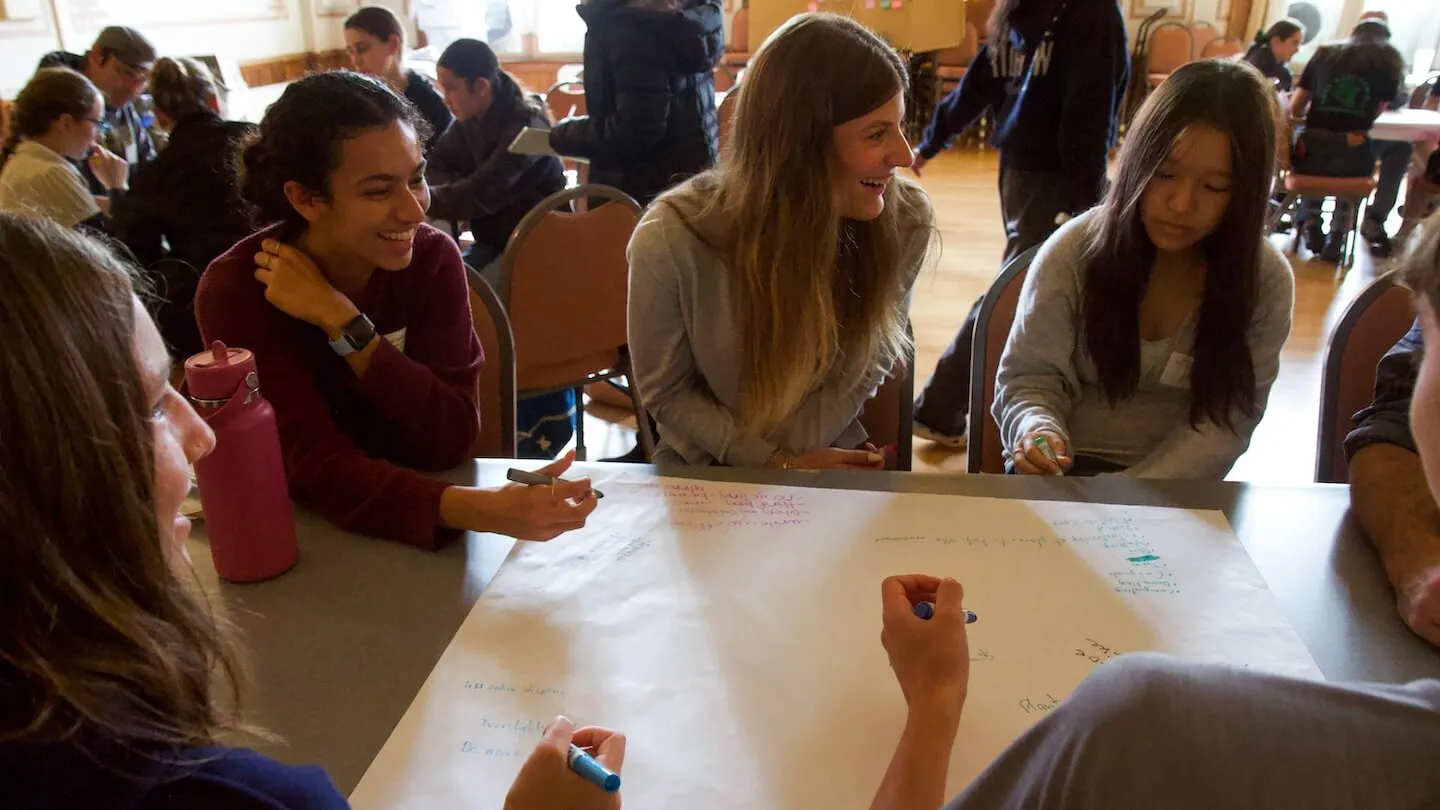
Walking more. Holding clothing swaps instead of buying new outfits. Putting up more solar panels. Educating others. These are a few of the many projects that Vermont high schoolers want to implement in their communities to combat greenhouse gas emissions.

Some 72 students representing 14 schools, homeschools, 4-H clubs, and community-based organizations across Vermont came up with these ideas at the Youth Environmental Science (YES!) Summit. Vermont 4-H brought back the event this year on Friday, Oct. 16, at the Montpelier Performing Arts Hub.
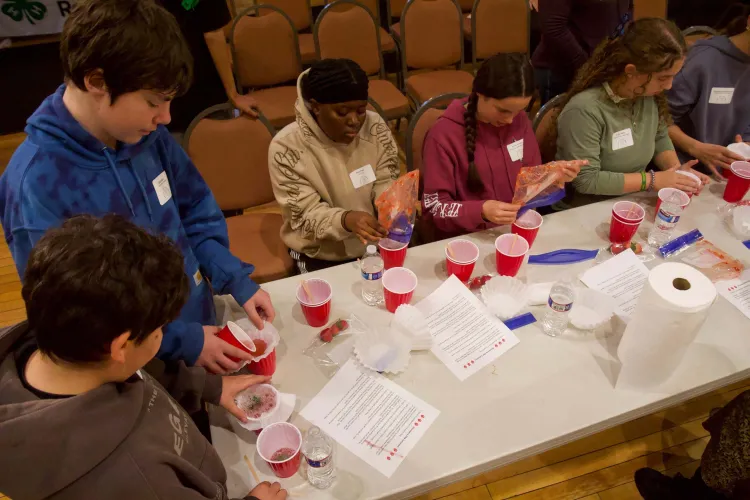
Young people sit around a table with red solo cups, into which they're squeezing crushed strawberries from ziplock bags.
YES! Summit students learn how to extract DNA from strawberries during a workshop led by UVM Plant Biology graduate students Hannah Shafer and Rei Jia. Photo by Elodie Reed.

The day offered a full schedule of networking, discussion to generate action steps, and hands-on workshops. Topics included: growing your own, nutritious food; extracting DNA from strawberries; drawing birds; and building circuits and sensors to detect and measure changes in their surroundings, just like Norwich University’s water-quality monitoring project.
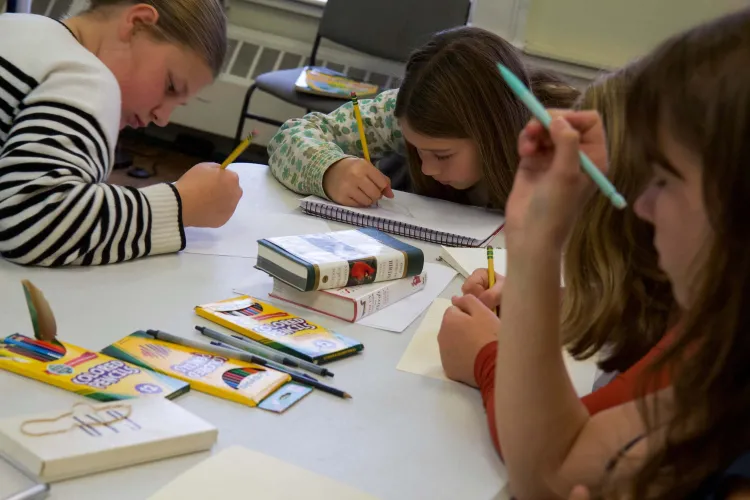
 

Young people around a table draw the body shape of birds with colored pencils.
Students practice drawing birds with guidance from Audubon Vermont. Photo by Elodie Reed.

Washington County State Sen. Anne Watson also spoke at the summit about how it takes a broad coalition of people, high schoolers included, to make a difference for Vermont's environment.
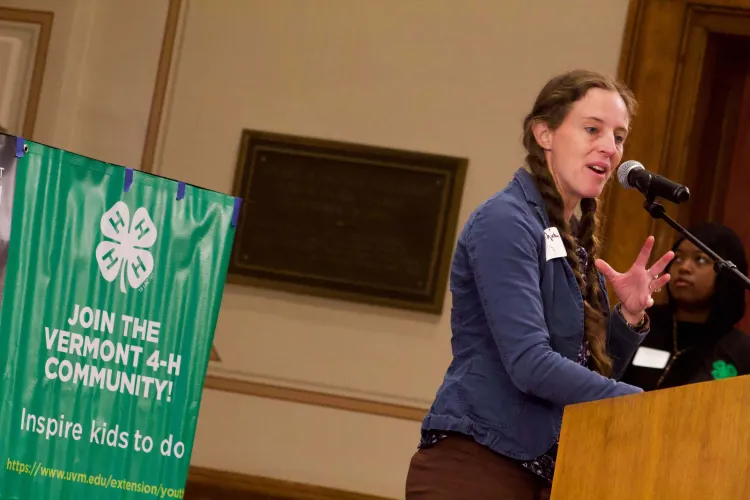
A white woman with long dark blonde braids speaks at a podium with a green Vermont 4-H poster in the background.
Washington County Sen. Anne Watson speaks to the 72 attendees of the YES! Summit about the collective power they hold to influence their peers and communities. Photo by Elodie Reed. 

"Everybody needs to know environmental science, and that's helpful in making the world a better place," Watson said.
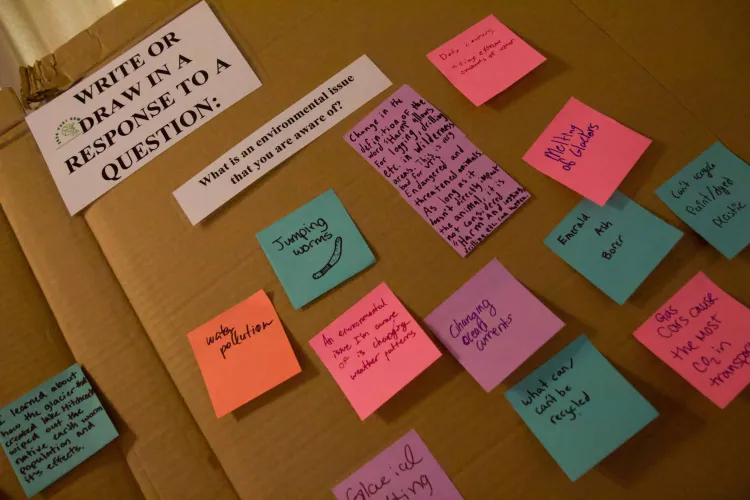
A set of pink, purple, blue and orange post-its on a cardboard surface. The post-its have answers to the question: what is an environmental issue that you are aware of?
Youth participating in the YES! Summit could create a mosaic with ideas about environmental challenges and solutions. Photo by Elodie Reed.

Vermont 4-H Youth Ambassador and South Burlington High School Junior Ayush Kyasa said participating in the YES! Summit was a chance to dig into not only his interest in environmental science, but also practice leadership skills.
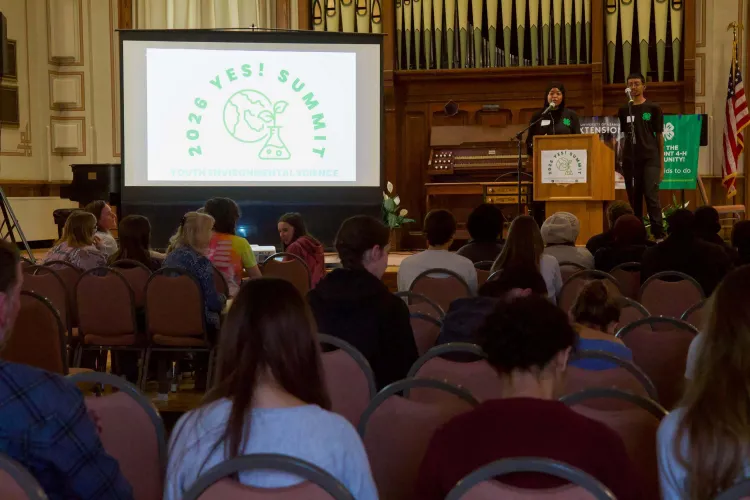
Two teenagers stand at a podium next to a screen reading 2026 YES Summit in front of a room full of people.
Vermont 4-H Youth Ambassadors facilitate and lead the YES! Summit on Friday, Oct. 16. Photo by Elodie Reed.

"I haven't had that many leadership roles in the past," he said. "This is a chance for me to have a leading presence and try to help people, support people and guide people to have more fun."
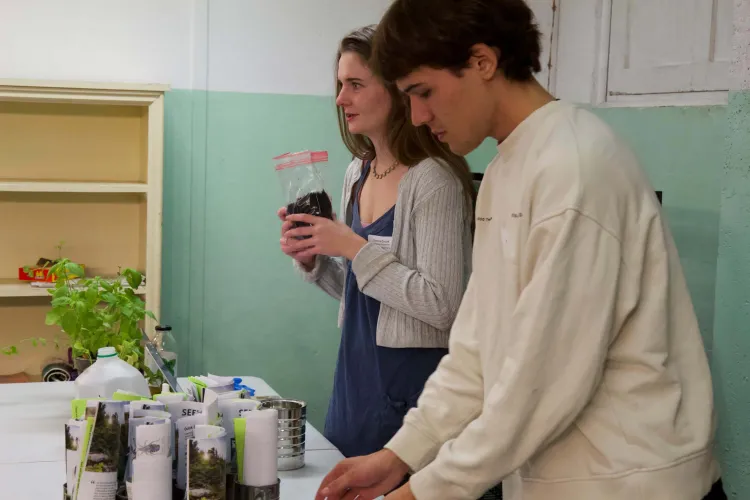
Two college students stand by a table with a bag of soil, potted plants and cans with papers curled up inside them
UVM Rubenstein School of Environment and Natural Resources undergraduate students Hayden Raithel, right, and CJ Crook provide a "Seed to Supper" YES! Summit workshop about growing food and making nutritious, affordable meals. Photo by Elodie Reed.

In taking on this role, Kyasa and his six fellow Youth Ambassadors have already accomplished one of the action steps that YES! Summit participants came up with to combat greenhouse gas emissions: educating others.
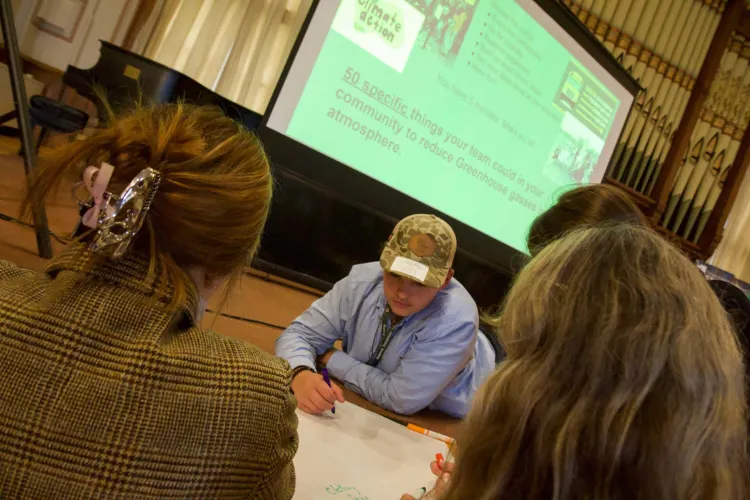
Young people gather around a giant piece of paper underneath a large screen providing instructions to list 50 things students could do to reduce greenhouse gases in their communities.
Vermont Energy Education Program ran a session at the end of the YES! Summit focused on the action steps Vermont high schoolers could take in their own communities to reduce greenhouse gas emissions. Photo by Elodie Reed.

"4-H was excited to bring back the much-loved YES! Summit because it is a reminder that youth aren't just the future of environmental change in Vermont, they are actively leading it right now," said Windham and Windsor Counties 4-H Educator Camille Kauffman. "It is important to give youth the space to learn, share ideas, ask questions, and get creative about climate related solutions in their own communities. YES! is an opportunity to uplift youth voice, and I think it was evident that YES! participants left with a feeling of inspiration about environmental science and connectedness."
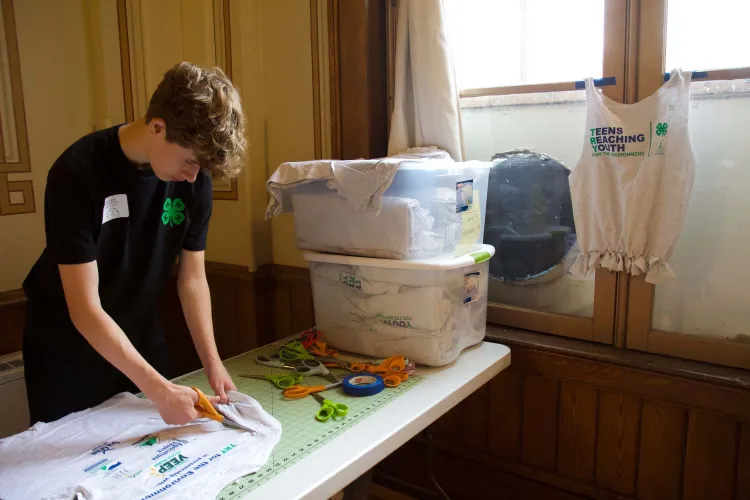
A young man in a black shirt with a green four leaf clover on it, cutting up a t-shirt by a window where another t-shirt hangs and reads: "teens reaching youth."
Vermont 4-H Youth Ambassador Zach Sisk prepares a lunchtime activity, where students could make bags from t-shirts, at the YES! Summit on Oct. 16. Photo by Elodie Reed. 

UVM Extension extends a big thank you to the Youth Ambassadors, to YES! Summit 4-H organizers Camille Kauffman, Liz Kenton, and Molly McFaun, to all the workshop leaders and participants, and to event sponsors Generac Power Products and the 4-H State Foundation.