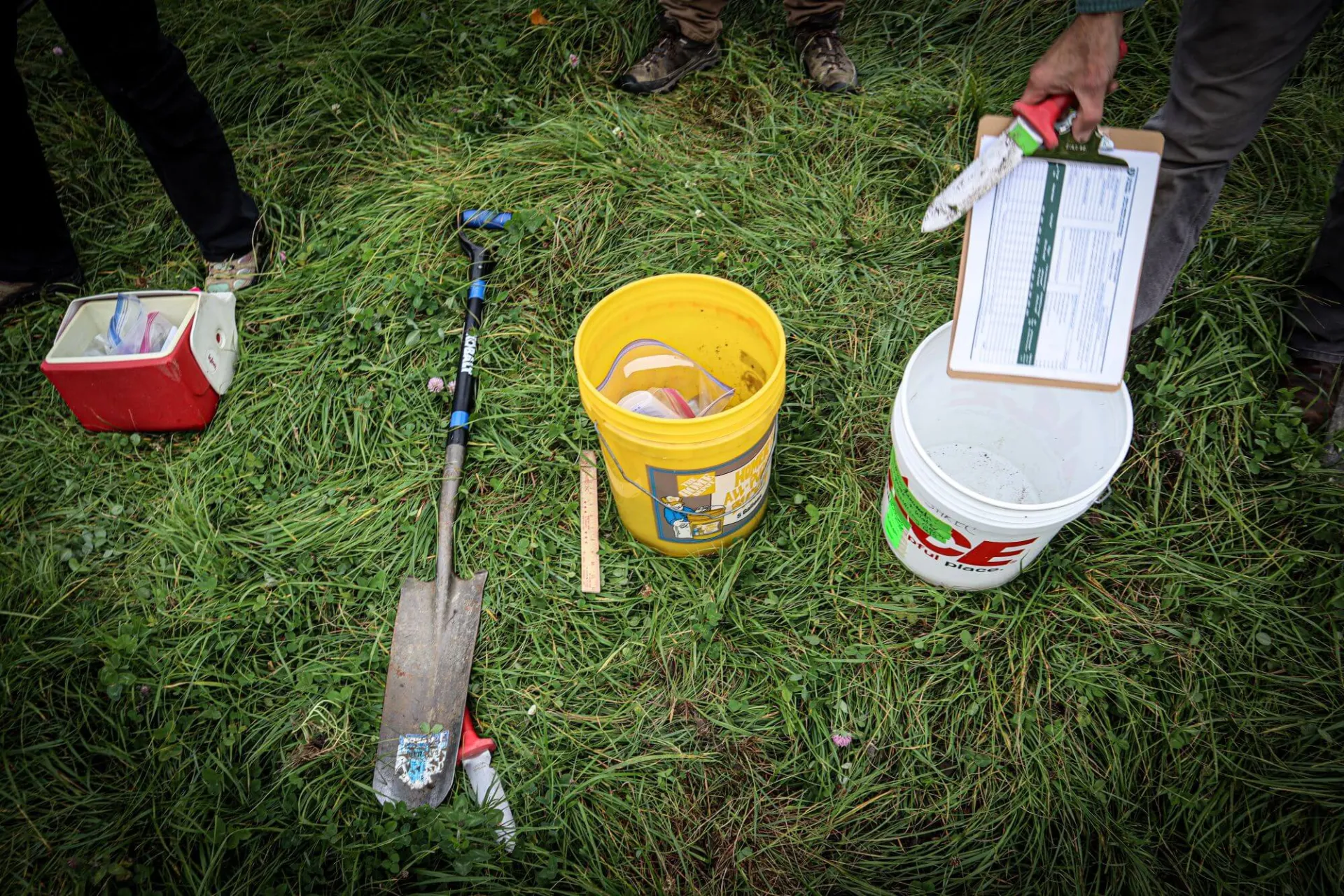
In October, forty agricultural service providers attended a hands-on training at Shelburne Farms to improve their understanding and ability to administer soil health sampling on Vermont farms. The training was hosted by UVM Extension, UVM Soil Health Research and Extension Center (SHREC) and the Vermont Natural Resources Conservation Service (NRCS). The training was focused on helping service providers meet the NRCS CEMA 216 standard, a Conservation Evaluation and Monitoring Activity (CEMA) that allows farmers evaluate and monitor soil health.
What is CEMA 216?
CEMA 216 is one of many Conservation Evaluation and Monitoring Activities (CEMAs) established by the USDA NRCS under the Environmental Quality Incentives Program (EQIP) and the new Regenerative Pilot Program (RPP), a conservation program that provides technical and financial assistance to help farmers implement conservation practices on their operations. These conservation practices can address a range of resource concerns, including improving water and air quality, conserving ground and surface water, increasing soil health, reducing soil erosion and sedimentation, improving or creating wildlife habitat, and building resilience against drought and increasingly variable weather conditions.
CEMAs allow eligible farmers to hire service providers to conduct specific evaluations, tests, or assessments of their land. These activities provide valuable information about a farm and its soil that helps farmers and TSPs track changes over time and demonstrate the effectiveness of a conservation practice.
Many farmers in Vermont participate in EQIP, so it is important that local service providers have the knowledge and skills to help farmers complete required tests and evaluations.
CEMA 216, specifically, establishes standardized guidelines for farmers to evaluate soil health using biological, chemical, and physical characteristics. These tests are more comprehensive than standard soil tests, providing detailed data on a farm’s soil health. UVM’s SHREC laboratory is an NRCS-approved testing facility for CEMA 216 soil samples.
According to NRCS guidelines, CEMA 216 assessments must be conducted and documented by a qualified individual (QI). QIs are responsible for overseeing the testing process, ensuring that soil samples are collected and submitted according to NRCS requirements, interpreting results, and documenting and reporting findings. QIs can include certified crop advisers, extension and conservation district staff, and other individuals who meet the QI requirements.
UVM Extension Training
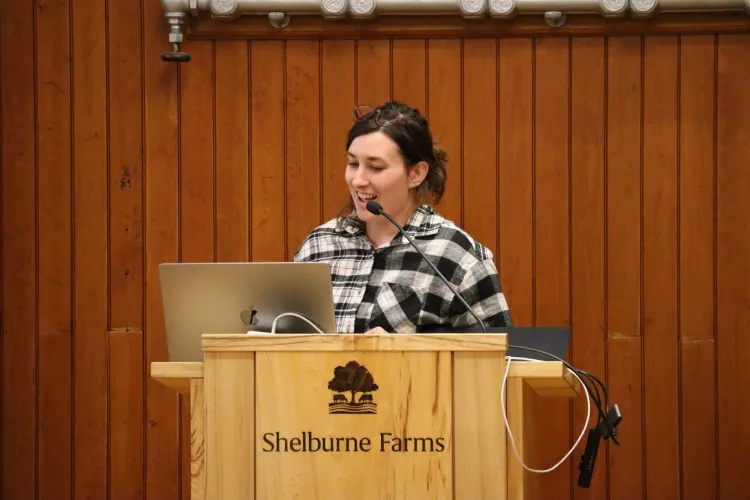
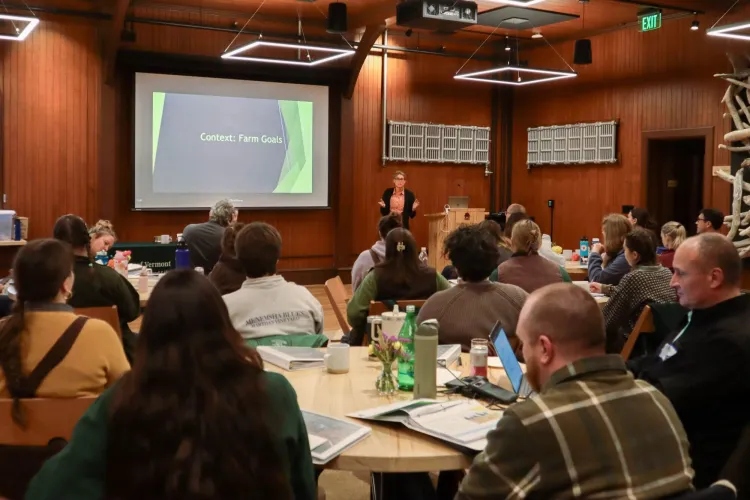
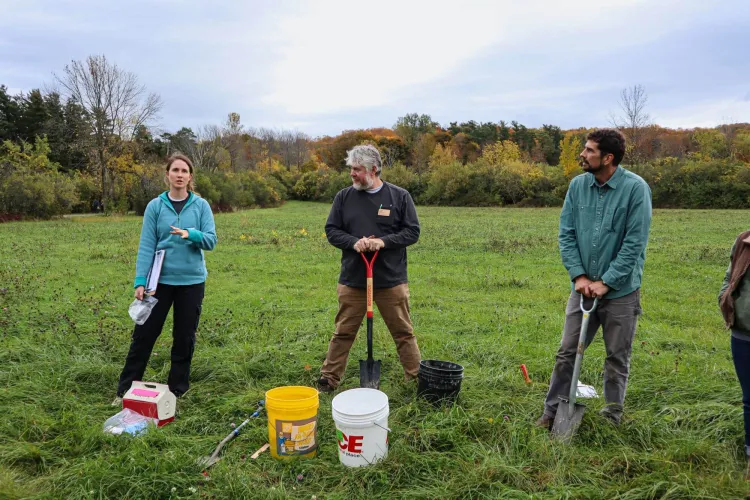
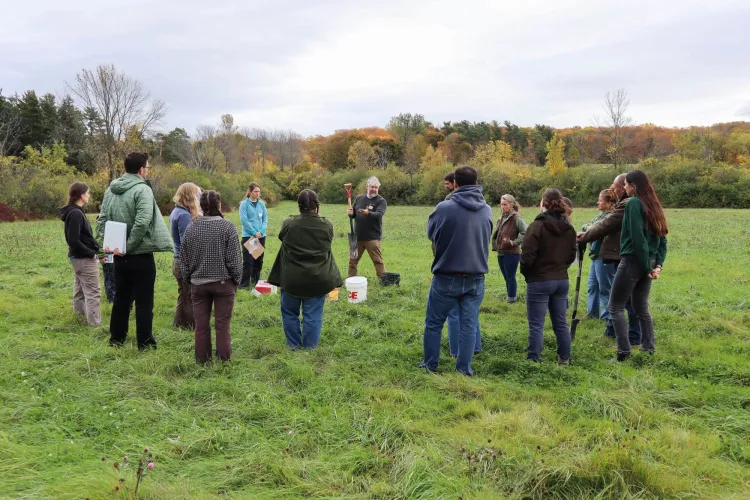
At the training, service providers spent the morning listening to presentations from NRCS and UVM Extension staff about the purpose of CEMA 216, the importance of soil health testing (Image 1), and how to interpret a soil health test report (Image 2). Participants learned about NRCS guidelines and gained practical experience taking soil samples to meet CEMA 216 requirements and in-field soil health assessments while receiving answers to their questions throughout the day (Image 3).
Marie English and Joshua Faulkner from SHREC highlighted best practices for storing soil samples to preserve their condition and ensure accurate laboratory testing results. Chadd Cupit, NRCS resource soil scientist, conducted an NRCS In-Field Soil Health Assessment (IFSHA) and showed participants how to use the NRCS Pasture Condition Scoring Guide. During his explanation of the IFSHA, he noted which observations would be important to document, such as ground cover, crop residue, soil color, and soil texture.
“These types of trainings help service providers build new skills and knowledge, so they can provide the best most accurate service to the farming community,” said Heather Darby, UVM Extension agronomist. She emphasized the importance of spreading awareness and strengthening the capacity of service providers in Vermont.
Overall, attendees gained knowledge and skills to confidently conduct CEMA 216 soil health tests for farmers. The results will help farmers better understand their soils and get funding to implement conservation practices that improve overall soil health in Vermont.
Want to learn more about CEMA 216? Click here to read NRCS’ newest fact sheet.
To learn more about soil health sampling and CEMA 216 soil health testing packages, visit
SHREC’s website at go.uvm.edu/shrec.