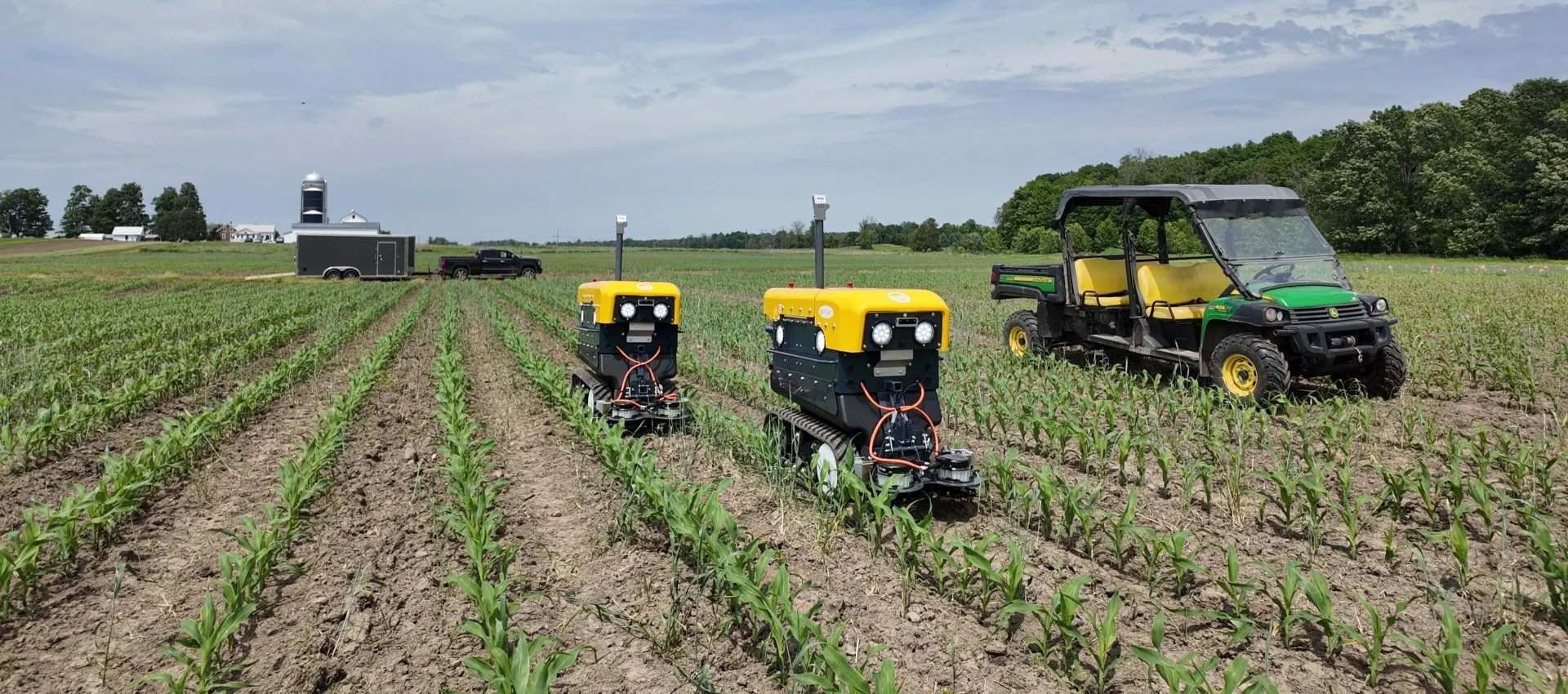
The delivery truck driver climbed onto the truck's rear platform and pulled open the door, revealing six large robots lined up inside. Each robot featured a bright yellow hood emblazoned with “BOTONY” in white across the side.
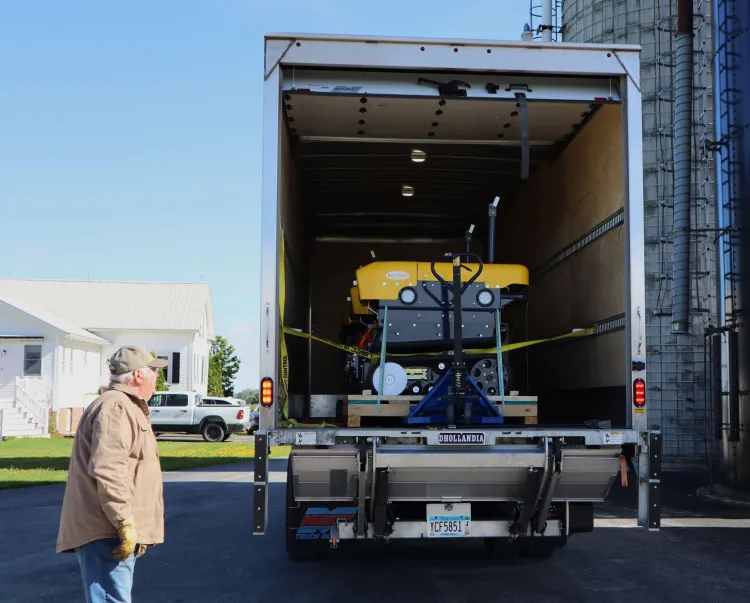
“Awesome!” exclaimed Roger Rainville, owner of Borderview Research Farm.
“All shiny and new,” said Daniel Bliss, UVM Extension Precision Ag Specialist.
On May 20, six BOTONY™ autonomous weeding robots from Greenfield Robotics arrived at Borderview Research Farm in Alburgh, VT. The fleet was purchased by the UVM Extension Northwest Crops and Soils (NWCS) program with support from the Vermont Agency of Agriculture, Food and Markets; Stonyfield Organic; and various donors.
Developed by Greenfield Robotics, the BOTONY™ robotic farming system is designed to reduce herbicide use through autonomous weed management. Founded in 2018 by third-generation Kansas farmer Clint Brauer, the company aims to help farmers produce crops with fewer chemical inputs while improving soil health and supporting more sustainable farming practices.
Why bring these robots to Vermont? In a nutshell, NWCS conducts research to answer farmers’ questions. Many farmers are interested in autonomous technology, asking questions such as, “Could this improve my operation? Can this help with work-life balance? Will this improve sustainability on my farm?”
To answer these questions, UVM Extension Professor Heather Darby and her team will pilot test these robots on six farms in northern Vermont with a variety of management practices, landscapes, and crops.
On the day of the robots’ arrival, the zip ties and straps securing them were snipped and removed to free them for setup. Adam Reck, Northeast Territory Leader for Greenfield Robotics, came to Alburgh to conduct initial configuration and provide guidance to Bliss and Jeff Sanders, a UVM Extension agronomy specialist. Sanders and Bliss are the NWCS team overseeing the robot project, assisted by Addison Gates, a recent graduate of Missisquoi Valley Union High School, who’s interning with NWCS over the summer before pursuing an engineering degree.
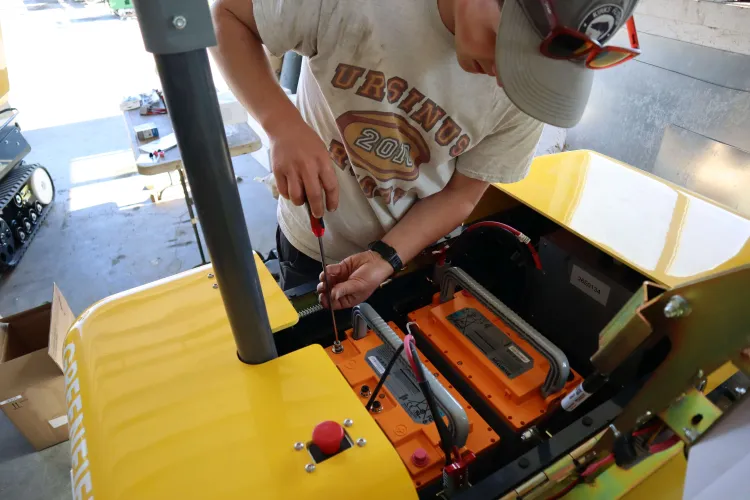
Adam showed the group how to open a robot's hood and locate the compartment that houses two rechargeable lithium-ion batteries, which provide approximately three hours of operating time. When the robots are running autonomously in the field and detect a low battery, they will drive back to the nearby charging station.
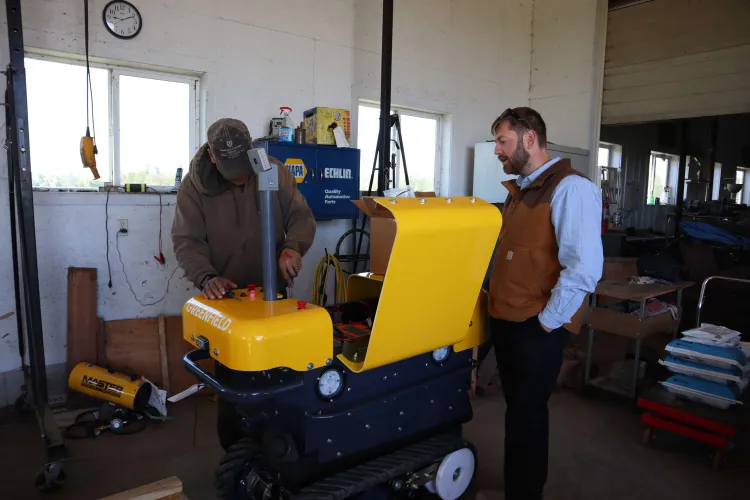
A camera is mounted on a pole two feet above each robot to detect large obstacles in front of it such as people, animals, and rocks so it can stop itself before impact.
Mowing weeds between crop rows is the BOTONY robots’ main function. To complete this mission, a mowing deck is attached to the front of each robot that can be raised or lowered depending on how tall or short a farmer wishes to mow the weeds.

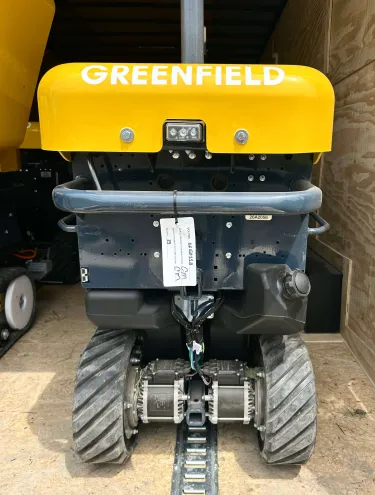
In addition to the mowing deck, each bot is equipped with a 30-gallon integrated foliar fertilizer spray tank. Foliar fertilizers are applied directly to crop leaves for fast, targeted absorption to mitigate nutrient deficiencies.
On the day of arrival, Sanders and Bliss maneuvered the robots using controllers like those used for a remote-controlled car.
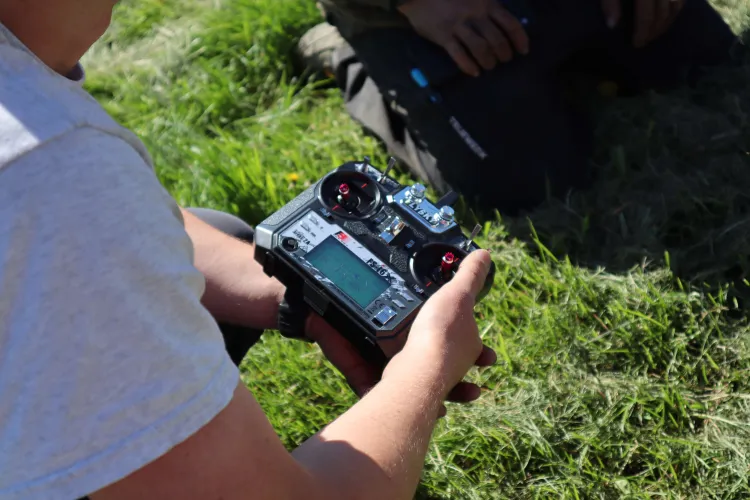
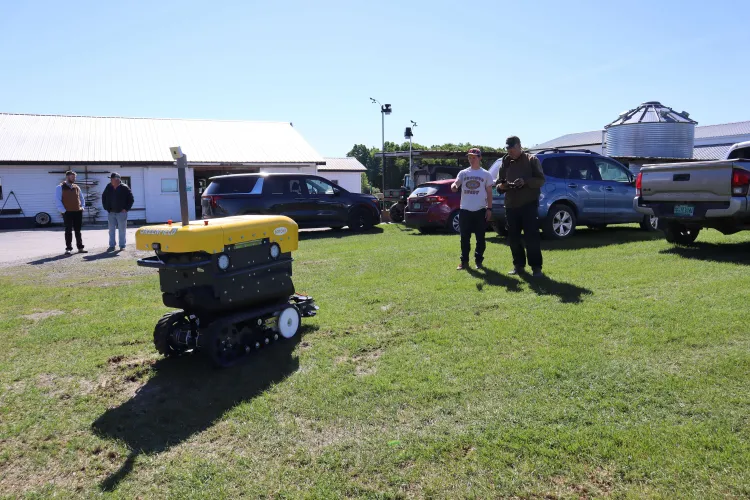
Holding one of these remotes, Bliss places a thumb on one of the joysticks and slowly pushes it forward. The bot obeys.
“Very easy to maneuver. Turns on a dime,” Bliss notices.
The bots can travel at up to 6 mph, but they won’t be driven manually for long.
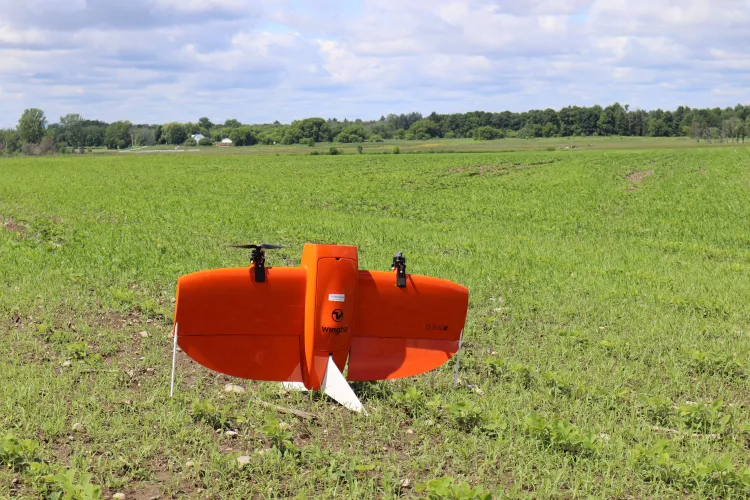
What’s next? To operate autonomously, each robot requires that a virtual field map be uploaded to it. To create these maps, Greenfield Robotics flies a rigid-wing drone 350 feet over the field and creates a high-contrast map. Technicians such as Reck fly the drone when the crop is 4 to 6 inches tall to capture data for a very high-contrast map that will determine precise paths the robots will follow through the field. Once they are up and running, each robot will be able to cover about 7 acres per day.
Want to see the robots in person? Observe live demos at the Future-Ready Dairy Farm Tour on Tuesday, June 30, at Henry Bros. Wolf Ridge Dairy in Alburgh, VT, and at the Annual Crops and Soils Field Day on July 23 at Borderview Research Farm in Alburgh, VT.
Our team will continue to provide updates as we pilot test the robots throughout the growing season. Stay up-to-date by subscribing to our Northwest Crops and Soils monthly email newsletter. Read past newsletters here.