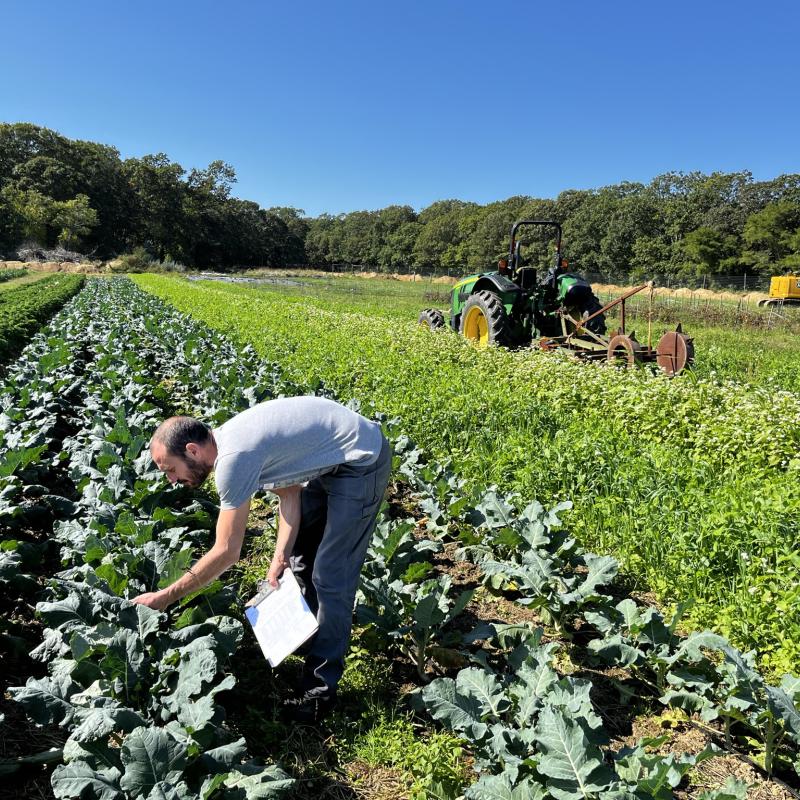
Adapting to Climate Change: Upinngil Farm
Learn about how folks at Upinngil Farm in Massachusetts are working to manage climate risks, specifically with crop diversifiication and high tunnel production.

Filter by subtopic. Click here to search all resources with more filters (e.g. production type, state, issue).
Learn about how folks at Upinngil Farm in Massachusetts are working to manage climate risks, specifically with crop diversifiication and high tunnel production.
This informative document explains the ways in which farmers can adapt to climate change, the potential current and future impacts of climate change on their farm, and how adapting will help them.
This beautiful case study profiles Big River Chestnuts, a 75-acre agroforestry operation located in Sunderland, Easthampton, and South Deerfield, MA. The report details the climate impacts experienced by Big River Chestnuts, and how Jogo Niger and his team has addressed them
Visit with the researchers at West Virginia University who are working with McConnell’s Berry Farm to study the impacts of increasing temperatures on blueberry pollination and production.
The emphasis of this webinar will be placed on dairy, beef, small ruminants, and horses and the impacts that extreme heat, cold snaps, weather shifts, droughts, and excessive rain will have on the animal’s health and diet.
This page collects research around reduced tillage topics for vegetables, including living mulch under organic acorn squash and Brussel sprouts, tarps to terminate cover crops, sorghum sudan grass residue as mulch for tomatoes, and more....
A fact sheet on how climate change is impacting agriculture in the Northeast, primarily through increased incidence of drought, warmer winters and colder springs, and extreme rainfall.
Cover crops are a useful tool in managing the soil erosion and nutrient runoff problems caused by increasingly frequent heavy rains across the Northeastern U.S.
Demonstrates drought projections for the week, as well as historical context from varying time frames, specified for the Northeastern region of the U.S.
Rainfall intensity is increasing in the Northeastern U.S. Stabilizing gullies is one strategy for adapting to this changing climate. This case study evaluates the costs and benefits of restoring gullies at Last Resort Farm.
This checklist helps employers identify their job-related risk factors for heat exposure, assess their preparedness, determine where challenges exist, and develop effective ways to control their heat-related risk and make their workplaces safer.
All farms need a plan for managing energy - these 'best practice' guides help farm businesses understand the opportunities they have to implement various energy management strategies on the farm. This improves resiliency and reduces emissions for farms of any scale.
Farmer-Led Innovations for Reduced Tillage (FLI) cultivates co-learning and innovation among organic vegetable farmers in New England. This site features the trials of a small cohort of innovative farmers trialing reduced tillage practices.
New Hampshire farmer Pooh Sprague discusses climate adaptation: high tunnels, extreme weather, and soil-building practices to support resilient crop production.
Andy Jones of Intervale Community Farm shares strategies for floodplain farming, including water management, soil protection, cover crops, extended wet periods, irrigation, and climate adaptation.
This two-page research summary addresses the trade-offs rural communities face when increased flooding damages public and private land, and makes farming more risky. The authors also provide a link for teaching resources on this topic.
This USDA website provides forecasts for heat stress on cattle to inform livestock managers on when preventative action should be taken to protect their animals.
This webinar explores reduced tillage practices, equipment, and techniques that improve soil health and save labor at all farm scales. Speakers: Julie Fine, American Farmland Trust; Natalie Lounsbury, University of New Hampshire.
When considering new practices, you need a way of knowing if the effects that you observe are a result of changing practices. This resource sheet will guide you through setting up on-farm research projects to demonstrate new practice effectiveness.
Outlines best management practices to reduce heat stress in dairy cattle, helping maintain milk production, fertility, and animal welfare during hot weather.
This recording features a talk by Sara Keleman, who shares current data exploring climate trends and projected impacts on agriculture. At minute 1:10:10 Sara reviews several tools available for monitoring weather and implementing adaptive practices.
This series of articles covers key topics for launching a new agroforestry project with a guided step-by-step process to evaluate your goals, assess the opportunities on your site, and get your trees off to the best possible start.
Slides from a New York focused presentation on managing flood risk for farmers, including the mechanics and effects of flood damage as well as funding and mitigation resources.
Illustrated design guidelines for multifunctional buffers are synthesized and developed from a review of 1,900+ research publications. These guidelines are presented as easy-to-understand rules of thumb for facilitating the planning and designing of multifunctional buffers.