College of Engineering and Mathematical Sciences

Type of Degree

mCGS

School or College

College of Engineering and Mathematical Sciences

Area of Study

Science, technology, engineering and mathematics

Program Format

On-campus

Credit hours to graduate

6 Credit Hours

The Graduate Micro-Certificate in Biomedical Innovation is an interdisciplinary program designed to bridge a critical gap in biomedical research, where promising discoveries often struggle to advance from early-stage development to real-world clinical application.

Program Overview

A graduate student presents his project proposal in the Center for Biomedical Innovation

Developed in partnership with the UVM Center for Biomedical Innovation, the Graduate Micro-Certificate in Biomedical Innovation provides a hands-on, team-based learning experience in which students from engineering, clinical, and research backgrounds collaborate to identify unmet clinical needs, design innovative solutions, and navigate the complex pathways of regulatory approval and commercialization. Guided by UVM’s proven CBI Design methodology, you’ll gain practical skills in needs assessment, project management, entrepreneurial strategy, and pitching—culminating in a capstone presentation at the annual Biomedical Engineering Symposium.

This 6-credit certificate offers a flexible, high-impact opportunity to develop the skills needed to bring biomedical innovations to life. Students work in multidisciplinary teams, drawing on UVM’s integrated health sciences campus and robust innovation ecosystem—including CBI prototyping facilities, the UVM FabLab, and CEMS core resources. You’ll gain hands-on experience in proposal development, including preparing a Small Business Innovation Research (SBIR) application, building real-world expertise in securing funding and advancing new technologies. By connecting clinicians, engineers, and researchers, the program fosters a collaborative environment that prepares graduates to lead innovation efforts in healthcare—whether advancing translational research, launching new ventures, or driving change within established organizations.
Curriculum

The Graduate Micro-certificate in Biomedical Innovation requires completion of two 3-credit courses (BME 6010 and BME 6020), as well as participation in assessments outside of the required coursework.

Core Courses

Course Number

Title

Credits

BME 6010

Core Innovation I

3.0

BME 6020

Core Innovation II

3.0

Admissions

Admission to the Graduate Micro-Certificate in Biomedical Innovation is open to non-degree and degree-seeking graduate students across UVM colleges. Students may apply by submitting a brief Letter of Intent to the Program Director describing their academic background, motivation for pursuing the certificate, and how training in innovation and entrepreneurship aligns with their career goals.

Instructor permission is required for enrollment in the Core Innovation course sequence to ensure appropriate cohort composition across engineering, health, and clinical disciplines.

All engineering graduate students are eligible to participate pending review and instructor approval. BME graduate students, while eligible to enroll in the courses, will not be eligible to earn the micro-certificate once these courses are formally integrated into their degree requirements, in accordance with Graduate College policy.

Program Director

Kaitlin McCreery

Assistant Professor, Department of Electrical and Biomedical Engineering

kaitlin.mccreery@uvm.edu

Outcomes

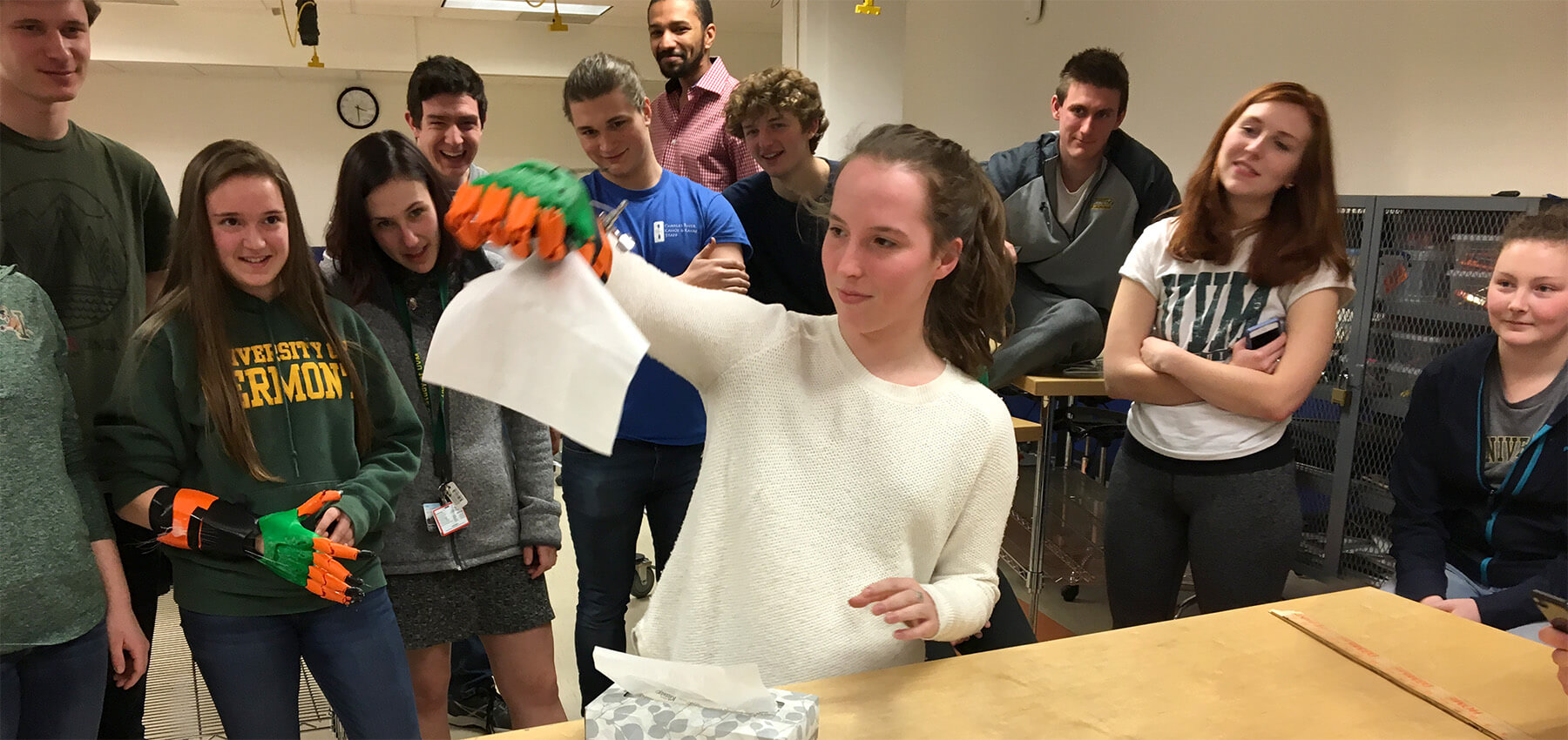
Student collaborate on an engineering design project in UVM's Center for Biomedical Innovation

Student Learning Outcomes

  • Identify and validate unmet clinical needs through direct observation, conducting market research, interviews with end-users in clinical settings, and analysis of healthcare workflows and patient experiences.
  • Apply biomedical innovation frameworks and methodologies, including design thinking, needs-driven innovation processes, and stage-gate development models, to transform clinical problems into viable solutions.
  • Collaborate effectively across disciplinary boundaries by communicating MedTech concepts to clinical audiences, engineers, and entrepreneurs, while navigating differences in professional cultures and priorities.
  • Evaluate regulatory, reimbursement, and commercialization pathways for medical technologies, including FDA approval processes and intellectual property considerations.
  • Design and conduct feasibility assessments that consider technical viability, clinical utility, user acceptance, and implementation barriers in real-world healthcare settings.
  • Build and leverage innovation networks by engaging with stakeholders across the healthcare ecosystem, including clinicians, patients, industry partners, and regulatory experts.
Loading...