College of Engineering and Mathematical Sciences

Type of Degree

B.S.CS.

School or College

College of Engineering and Mathematical Sciences

Area of Study

Science, technology, engineering and mathematics

Program Format

On-campus

Credit hours to graduate

A minimum of 120 credit hours are required.

Program Information:

Program Overview

Computer science has never been just about writing code. At its core, computer science is about building solutions to real-world problems, probing the bounds of what can and cannot be computed, and applying engineering and formal disciplines to problem solving in the form of code. As artificial intelligence, automation, and other emerging technologies reshape nearly every industry, the world needs people who can design, build, evaluate, and improve the systems behind them. UVM's Bachelor of Science in Computer Science prepares you to be one of them.
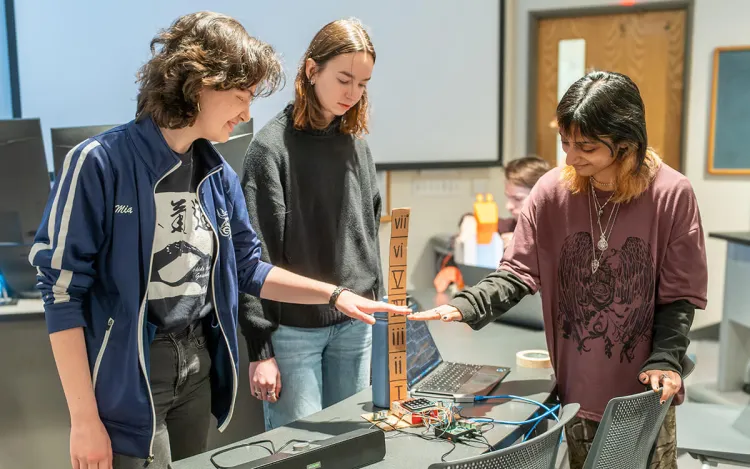
Three students demonstrating a computer science project


Our B.S. in Computer Science gives you a strong foundation in computer science, mathematics, and statistics, while leaving plenty of room for electives. You'll learn through a mix of lectures, active learning, and hands-on projects, gaining a solid grounding in both the theory and practice of computing. That foundation is what lets you keep up as technology changes. You'll graduate with strong problem-solving skills, the ability to evaluate and reason about programs and make informed decisions, and an understanding of technology's impact on the world and on society at large. Our graduates are well prepared for careers in industry or for graduate study in computer science.

B.S. in Computer Science Catalogue Listing

Curriculum

A student presenting at a lectern in a classroom with a projection of computer code on screens behind him

What You'll Study

You'll begin by building the core skills every computer scientist needs: reading and writing code, reasoning about how programs work, and designing and analyzing algorithms. From there, you'll learn how computers work from the hardware up, explore the limits of what can be computed, and study foundational areas such as artificial intelligence and operating systems. Coursework in calculus, linear algebra or discrete mathematics, probability, statistics, and the natural sciences supports your computing work.

In your senior year, you'll complete a project-based capstone that brings together everything you've learned, usually in some real-world application, in an area you choose.

The degree is also built for flexibility. Along with 15 credits of computer science electives, you'll have roughly 30 credits of free electives to explore other interests, pursue a minor, or go deeper in computing. A minor is encouraged but not required.

Link to Curriculum Checksheets (PDFs)


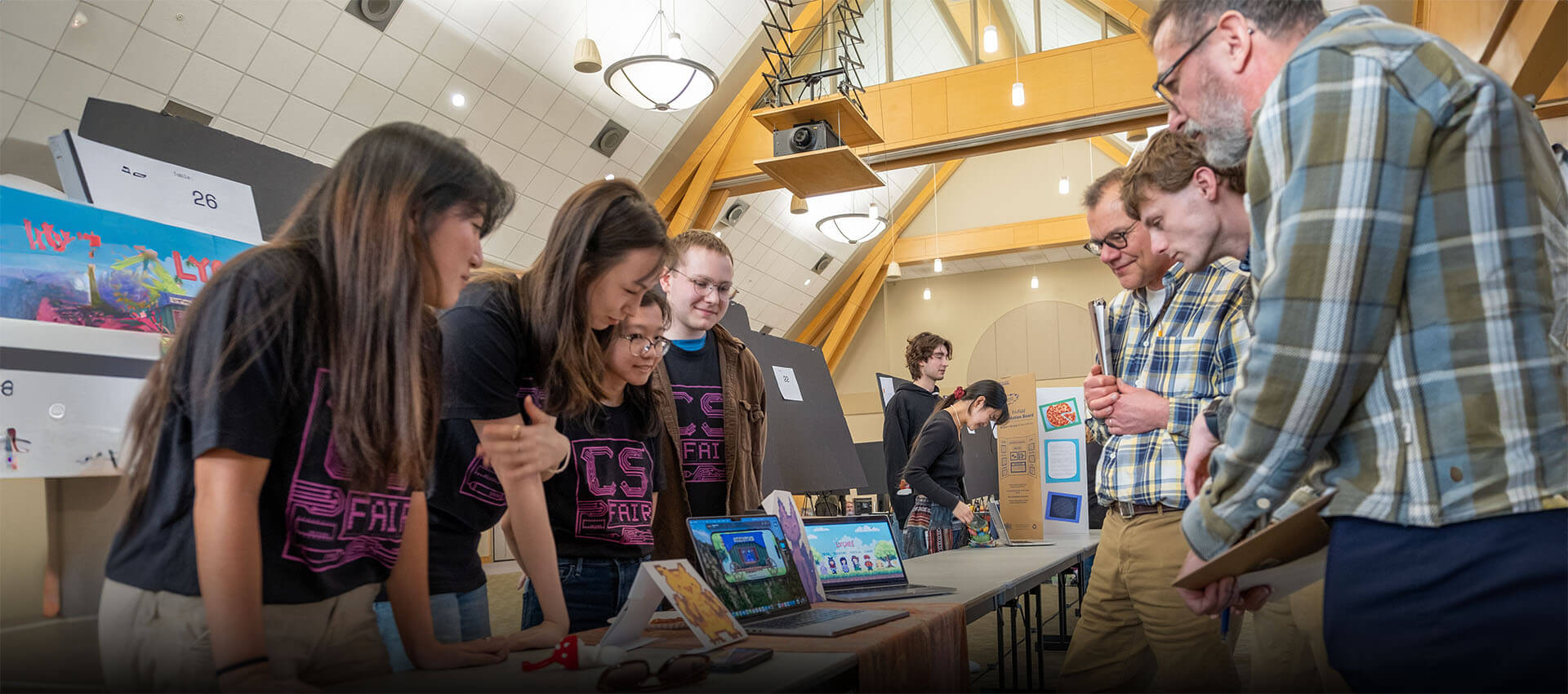
A group of students share their computer science fair project with faculty judges

Beyond the Classroom

Many Computer Science students complete paid summer internships, with support from CEMS career services and a dedicated internship coordinator. Through CAT Coders, students get paid to build software for clients in UVM's research community and the wider business community. Student groups such as the Computer Science Crew (CS Crew) and the Society of Women in Computer Science (SWiCS) help you find community, and the annual Computer Science Fair is your chance to show off your projects.

Undergraduates can also take part in faculty research, including work with the Center for Computer Security and Privacy and the Vermont Complex Systems Institute. If you want to go deeper into a topic that interests you, you can work one-on-one with a faculty member through an independent study and earn course credit.


Outcomes

A student joins a professor at a whiteboard where they are writing an equation

Where It Leads

Our graduates work in AI and machine learning, cybersecurity, data science, systems architecture, software and firmware development, and robotics and automation. Others go on to graduate school. Through our Accelerated Master's Program, qualified students can apply during their junior year and earn a master's degree in Computer Science or in Complex Systems and Data Science with just one additional year of study.

More

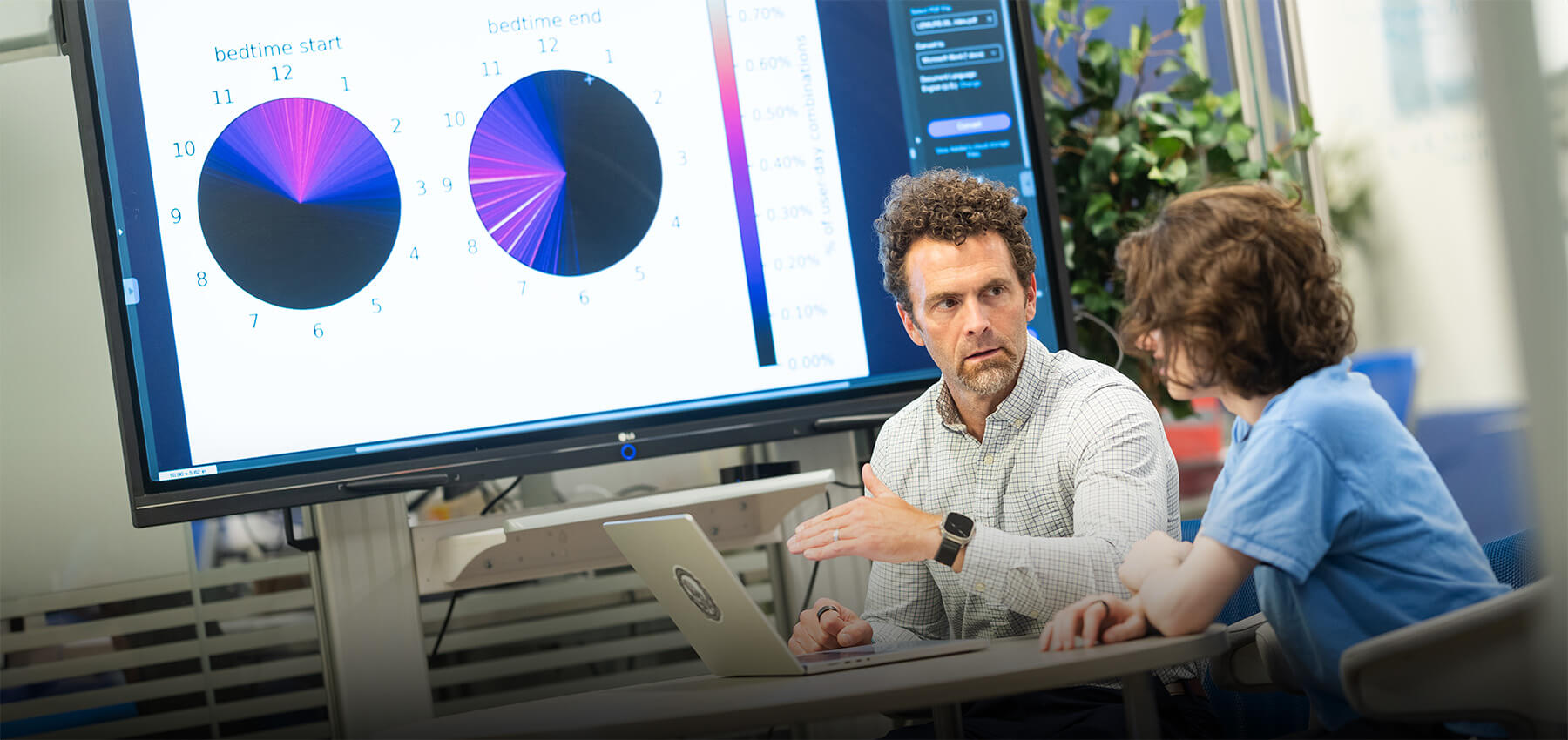
A professor speaks with several students around a table with open laptops

Getting Started

New students usually begin with CS 1210, Computer Programming. If you already have programming experience, you can take an exam to place out. Not sure yet whether the B.S. in Computer Science, Computer Science and Information Systems, or Data Science is right for you? Our recommended first-semester courses keep all of those options open, and a CS advisor can help you decide.


This chart shows the prerequisites for Computer Science courses (PDF)

If you have trouble understanding this chart or want more information, please speak directly with your advisor or CEMS Student Services.

Loading...