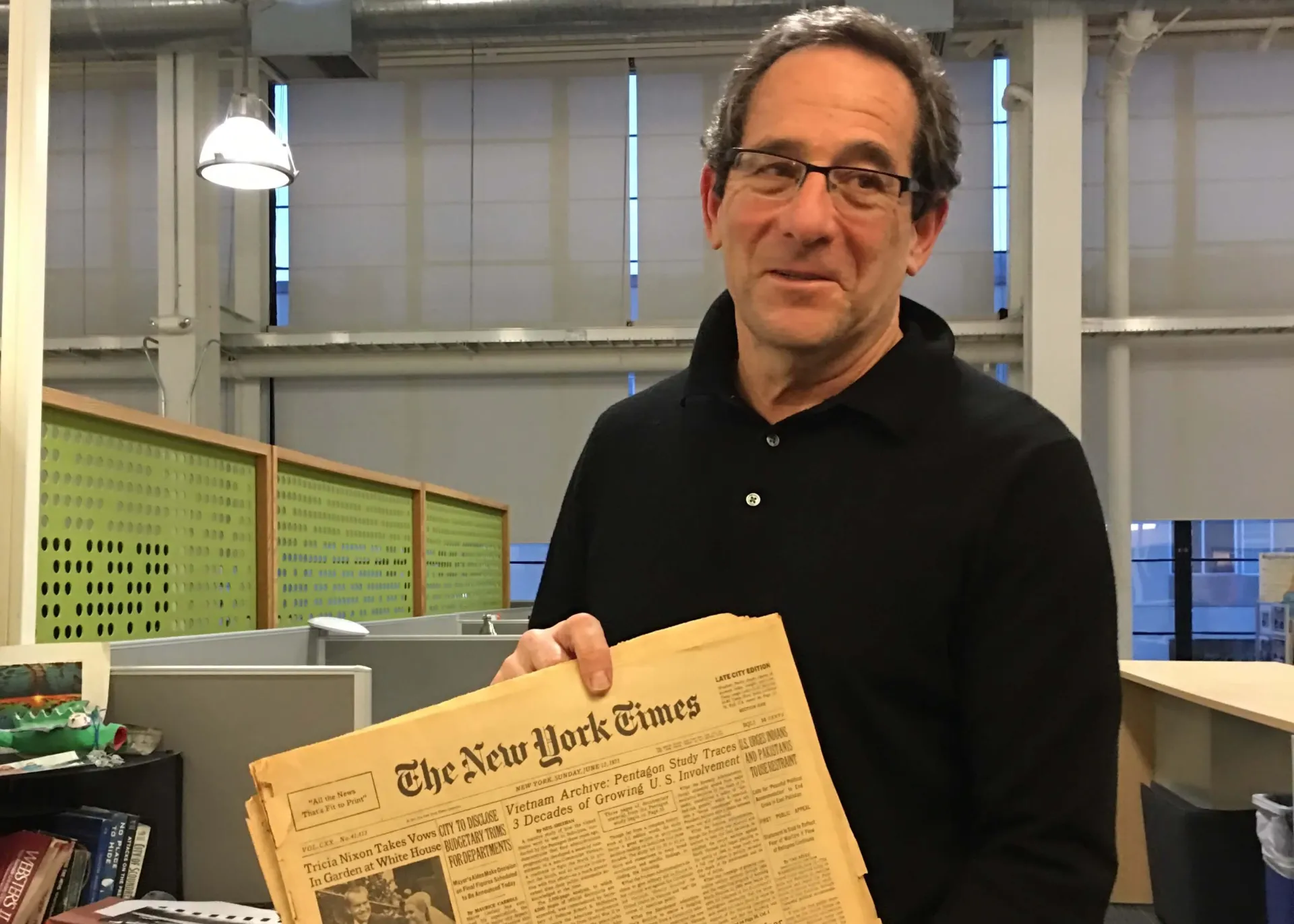
Our time at college is often weighed by our academic standings, when, in reality, it’s our time spent outside the classroom where we truly learn and grow best. This is the case for Robert Jon Rosenthal, or “Rosey” to the UVM hockey team, whose college years are best measured by his personal connections, experiences, and days on the ice.
On a team of Canadians, and prep school players practically born in skates, Rosenthal's days of playing roller hockey on Long Island didn’t exactly compare. He admits he was never the most skilled person on the team, but that didn’t mean he wasn’t a key member. His senior year at UVM, when the team won the ECAC division II championship he received the Coach’s award, because, even when he wasn’t playing, Rosey was someone who could unite players. Looking back, Rosenthal remarks, “hockey really was the glue” that brought his UVM experience together.
In turn, Rosey’s reporting career began when he started writing a column for the Cynic called The Insider, all about UVM’s hockey team. Rosey still hangs onto some of his pieces now, some 50 years later. During his four years of college, the most important thing he came to understand was “that everybody had value, and when you have an organization or a team where everybody feels valued and respected, everybody does value and respect each other.” Rosey knew what it meant to really work together, and it proved to be vital to his career down the line.
Three months after graduating from UVM, Rosenthal landed a job as a copyboy at The New York Times. Five months later, in the publisher's office after hours, he found himself photocopying documents marked; Top Secret, For Your Eyes Only. He worked on what would soon become the Pentagon Papers. Holed up in suits at the Hilton Hotel, the team worked 10–14-hour days together, sharing meals to debrief the day's discoveries. Rosenthal developed his foundational training in the values of journalism, watching these reporters relying on each other for endurance and creativity, pushing towards the highest quality of work. He witnessed reporters risk it all to stand up to power; in doing so, he discovered the effect the press can have in democracy.
At age twenty-two, Rosenthal was surrounded by the most accomplished journalists in the field working on a project that would shake the world. The team “knew [they] were sitting on piles of classified top-secret documents that could get [them] all arrested,” Rosenthal said. The risk “was really clear from the beginning, because they told [him], you don't have to do this.” However, in a career chasing adventure, the danger was never a deterrent for Rosey, who classifies himself as a “Major League Risk Taker.”
Rosenthal spent 1982 to 1986 working as a foreign correspondent across Africa and the Middle East, where he repeatedly risked his personal safety to cover stories behind the lines of war. Reporting with
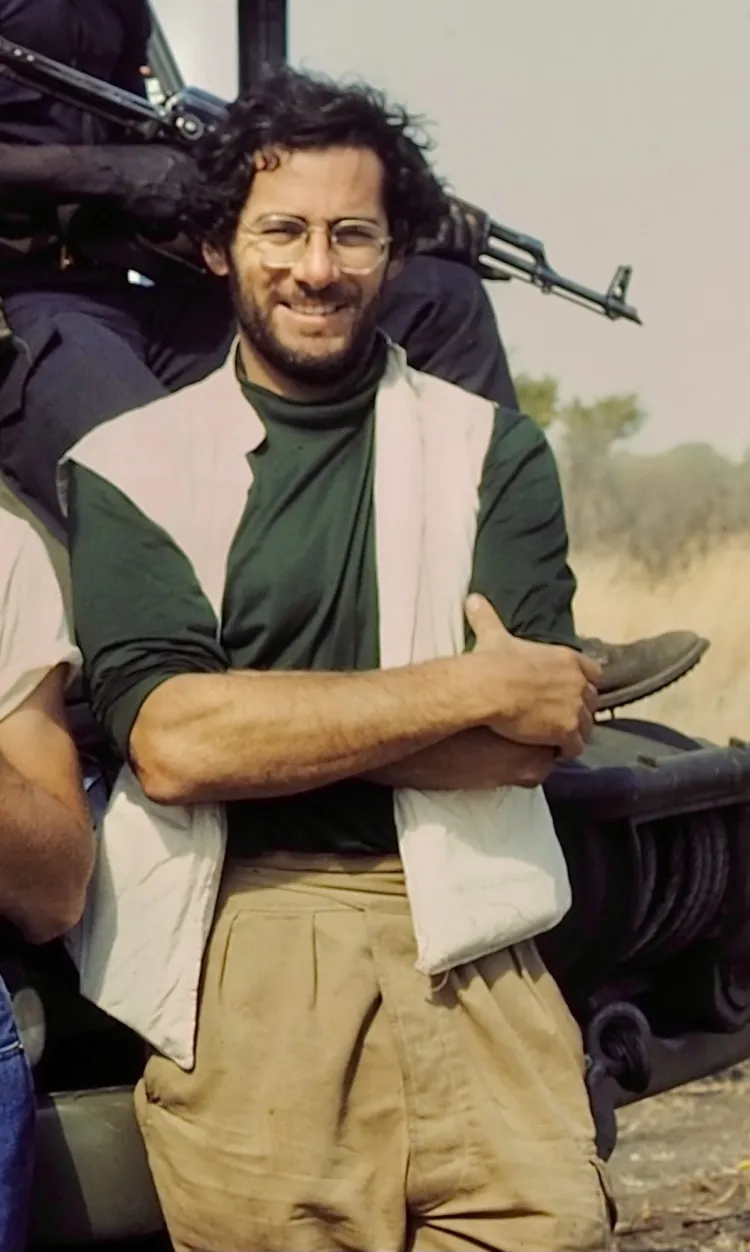
a pen and paper or, if he was fortunate enough, a tape recorder. Rosey could be gone for months with no way to reach his employers and no contact to his life at home. No stranger to the sacrifice of storytelling, he reflects that, “Helplessness you feel when faced with tragedy, can only be combated with the hope that the stories you write will make a difference.”
Rosenthal, who was taken prisoner and held by the Ugandan Army at the start of his days overseas, and has contracted dysentery on the job more times that he can recall, knows the grim reality of reporting. In roles like these, reporters are brought face to face with forces of good and evil, challenged with writing a story that will make it all digestible. As a foreign correspondent he learned to appreciate the effort it takes to draw a narrative together under the most intense circumstances. His greater appreciation for stories and his knowledge of the physical and emotional sacrifice they require ultimately made him a natural leader when he later returned to the office.
Rosenthal knew he belonged in the newsroom, from the first moment he ever stepped inside, explaining, “I just loved the energy and the chaos and the sense of deadline every day.” Over the course of his lifelong career, he's also worked at The Boston Globe, The Philadelphia Inquirer, The San Francisco Chronicle, and was the executive director of the Center for Investigative Reporting. He’s currently retired and on the board of many journalism non-profits. In that time, he’s held just about every title that you can in news, from copy boy, or feature writer, to investigative journalist, and chief editor. Rosenthal understands what it’s like to be on the other side of the desk, a perspective that helped establish his credibility in the field.
When Rosenthal later moved into management positions, he became known as a “Reporter's Editor”; one who was willing to take a chance on a story and trust his writer's passions. He aims to build a culture of support in the workplace. “It's a gift to understand what people do really well,” he explained, “and what motivates them, and what they're most passionate about. Because if you can plug people into those positions, you're going to be successful.” With this strategy, Rosenthal was able to match up the strengths and weaknesses of his teams to create a cohesive and powerful force of storytellers.
Working in the world of news, Rosenthal learned to respect people living vastly different lives than himself; in doing so, he was able to acknowledge diversity, while seeking out the similarities that tie us all to each other. This is the reason Rosey remains such a passionate and hopeful reporter decades after entering the field. When you become a journalist, “Your goal is not cumulation of wealth; your goal is driven by your creative passion, frequently the desire to try and make a difference through storytelling.” With advancement of technology, the way we share stories no longer looks the same. While we may be moving away traditional reporting, our stories still have the power to unite us. Highlighting our shared humanity, Robert Jon Rosenthal emphasizes, will help us we develop a deeper understanding of ourselves, our neighbors, our systems, and our planet.