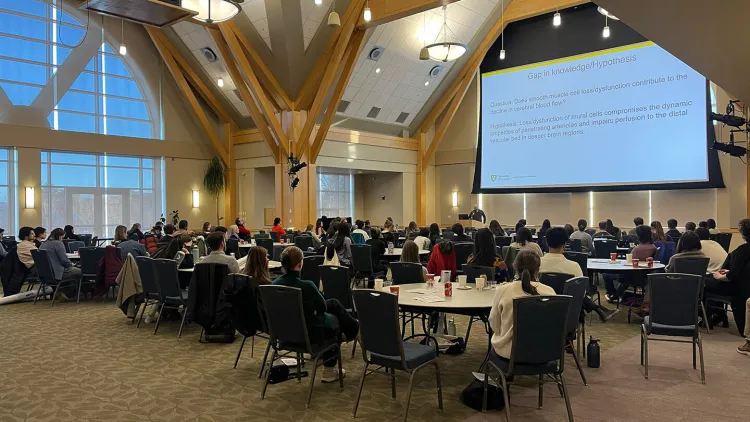
Despite the harsh winter weather, more than 200 students, faculty, and guests gathered in the Maple Ballroom on January 30-31 for the 16th Annual Neuroscience, Behavior, and Health (NBH) Forum.
Hosted by the Vermont Chapter of the Society for Neuroscience, this year’s event was the largest in the forum’s history and showcased the remarkable breadth of neuroscience research happening at UVM and beyond. Researchers from both McGill University and Dartmouth College made notable contributions. The annual forum brings together researchers from across disciplines to share discoveries, build collaborations, and celebrate student scholarship. This year’s program featured platform talks, rapid “data blitz” presentations, a large poster session, and a keynote address from a remarkable scientist breaking ground in defining the relationship between our brain and our immune system.
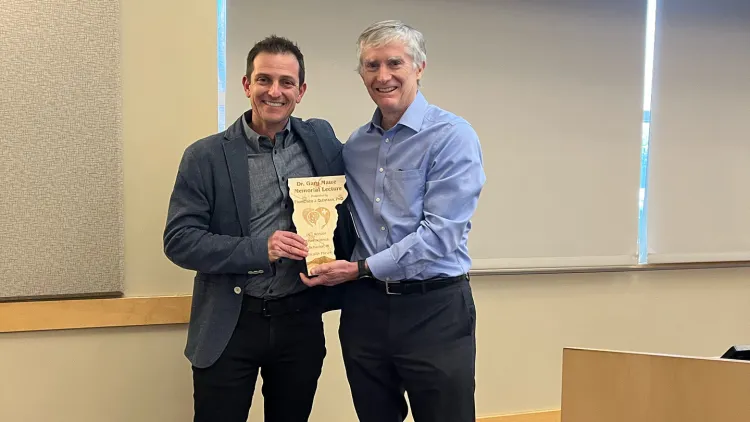
The forum’s keynote speaker for the 2nd Annual Dr. Mawe keynote lecture, Dr. Francisco Quintana of Harvard Medical School, delivered an engaging presentation on the connection between the brain’s support cells, astrocytes, the immune system, and brain tumors. These experiments have revealed that these cells in our brain are capable of two-way communication with our immune system. Dr. Quintana’s lab has discovered that these cells can become ‘hijacked’ by brain tumors to reduce the efficacy of immunotherapy treatments.
Dr. Quintana’s research has implications for many different aspects of neuroscience and cancer research, but even evaluating the effects of a single molecule required multiple experiments, each needing to be peer-reviewed and rigorously tested by a team of scientists. Dr. Quintana’s talk showcased a more human side of research that can be frustrating and emphasized that big breakthroughs happen incrementally. The forum and Dr. Quintana’s keynote speech both emphasized the importance of community in the research field across all disciplines.
A hallmark of the NBH Forum is its focus on the accomplishments of undergraduate, graduate, and postdoctoral researchers presenting innovative work alongside professors in disciplines that span across molecular biology, psychology, neurodevelopment, and clinical science. The NBH Forum offers an introduction to research advancements and opportunities, from studies at the smallest scales in petri dishes, to various animal models and human disorders. For many undergraduates, the forum provided an early opportunity to connect with neuroscience experts and share their research publicly. For many in this year's forum, it was their first time showcasing their own research in this way. The chance to get feedback, recognition, and practice presenting their experimental results was an essential part of the forum experience for many students.
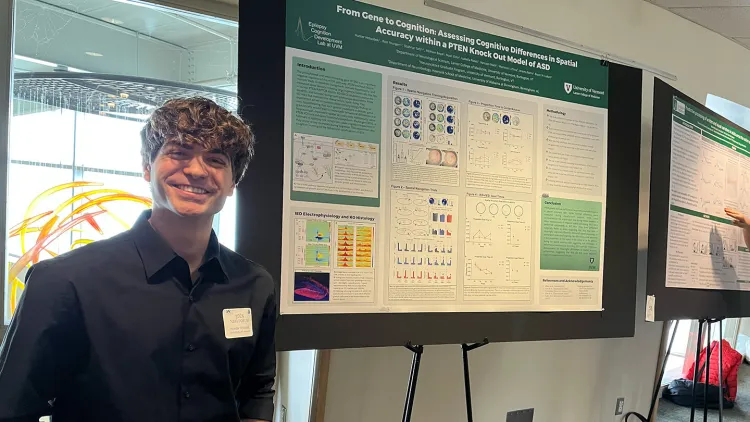
There was no end to the support and kindness extended to all members at the forum. Notably, the sight of two participants swing dancing in front of their poster entitled, “Temporal Inflammatory and Behavioral Outcomes of Experimental Brain Injuries” highlighted how researchers manage to find joy even when studying somber topics. The forum provided a third space that allowed for new connections between many students from different departments.
When asked about their process to participate in the forum, many student researchers emphasized the importance of reaching out to professors. John DePlama, a speaker who shared research about cognitive bias, discussed how he came to join the Psychology Accelerated Master Program here at UVM. “I had psych research methods, and after talking to my professor just shot my shot.” It can be quite nerve-racking to email a professor about research, but many presenters had a similar experience to John. While the forum was an exceptional example on how you can break into the neuroscience community, there are opportunities to get involved year-round. The neuroscience club is a great resource that was mentioned many times by student presenters at the forum, as undergraduate presenter Isabella Carrara said, “It’s so important and rewarding, [...] take advantage of your peer mentors.”
Elizabeth Mai-Ling Hua (McGill University) presented groundbreaking work on promoting central nervous system axon regeneration. She has been identifying novel molecules that could be administered to the brain to effectively improve regrowth and healing. When asked about her experience in entering the field, she reiterated that, “There’s nothing better than starting that conversation, even if they only stay as a connection”, to identify potential opportunities.
The Data Blitz session provided a unique platform to summarize a research project in only five minutes. The fast-paced format gave a great opportunity for these upcoming researchers to focus on effectively communicating their research and makes for what Sarah Van Horn described as a, “nerve-racking but really rewarding process.” Communication has always been a crucial part of science. In the era of social media, there are many new tools that can be used to broadcast important scientific findings. The Data Blitz presentations required efficient delivery without compromising content, an important skill in the current media landscape.
Organizers emphasized that the goal of the NBH Forum is to unite departments across neuroscience, psychology, biology, engineering, and clinical sciences. By creating space for collaboration and conversation, the forum continues to strengthen the scientific community at UVM and beyond. Bridgette Lavoie, president of the Society of Neuroscience Vermont chapter, shared, “We want to bring all the departments together, we want to expand and expose ourselves to all the different methods and disciplines to learn about the brain.”
With record attendance, an inspiring keynote, and an impressive display of student scholarship, the 16th Annual NBH Forum demonstrated the power of interdisciplinary research that exists in UVM and beyond. This neuroscience community is extremely welcoming and the forum can be an incredible launchpad for advancing a student’s career or journey into scientific learning and professional development. Whether finding peer or professional mentors or just getting exposure to the community for the first time, the forum offers a setting to explore every possibility.
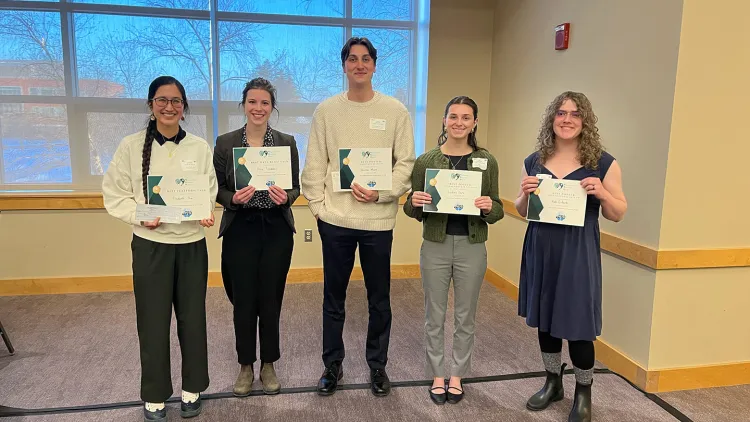
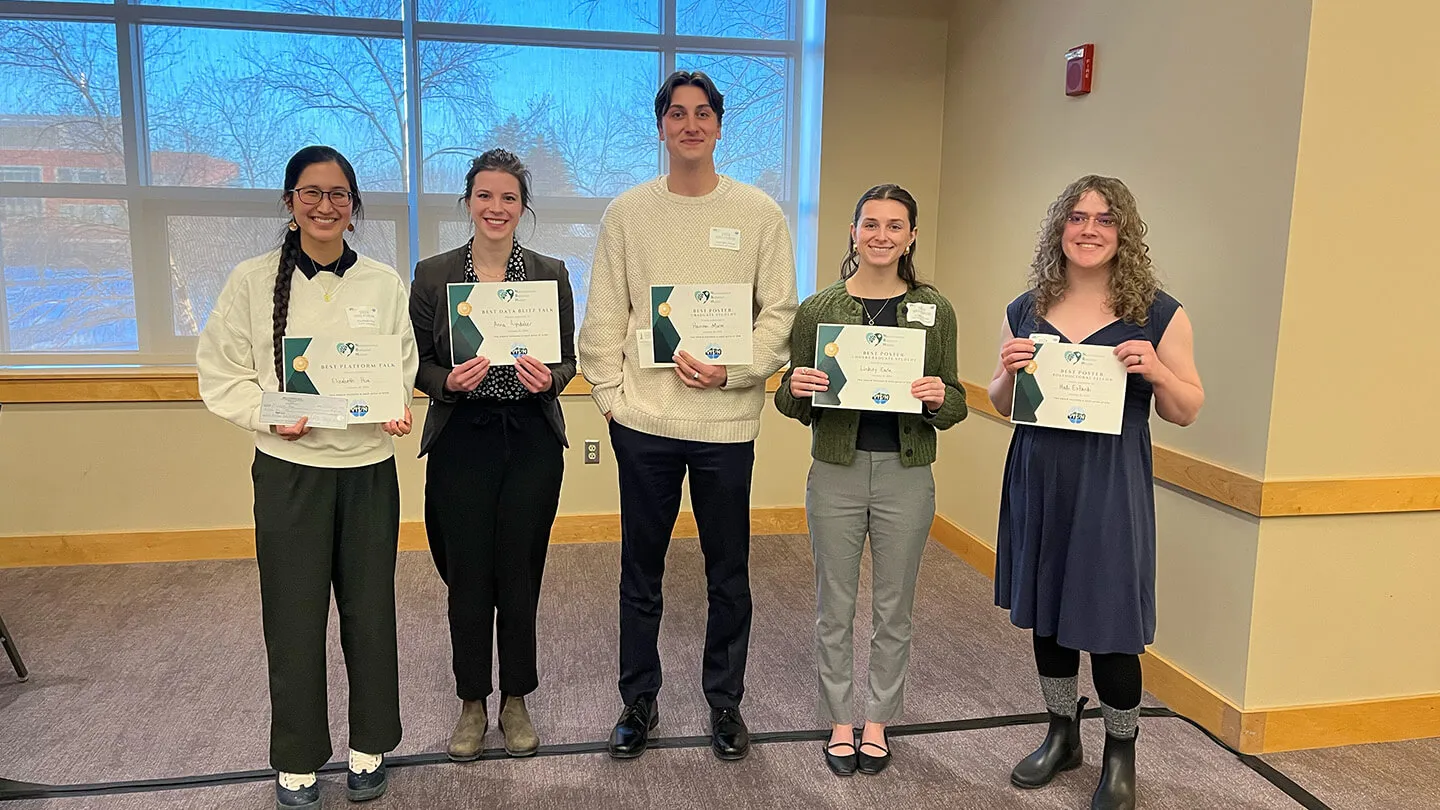
A special congratulations to the following presenters who were awarded for their presentations and posters.
Best Platform Talk: Elizabeth Mai-Ling Hua, Rain Younger
Best Blitz Talk: Anna Lyndaker
Best Graduate Student Poster: Harrison Morse
Best Undergraduate Student Poster: Lindsey Earle
Best Postdoctoral Poster: Hadi Esfandi