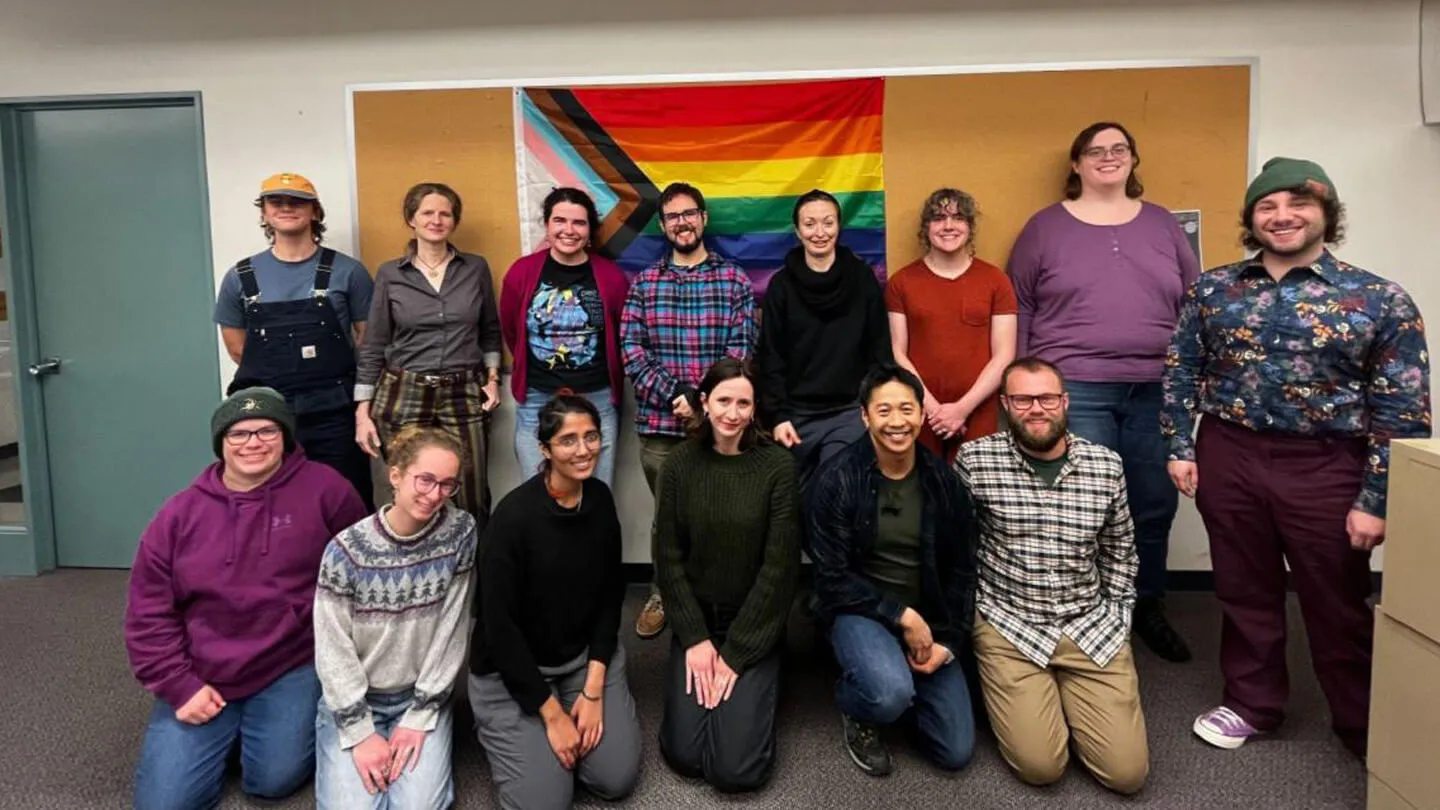
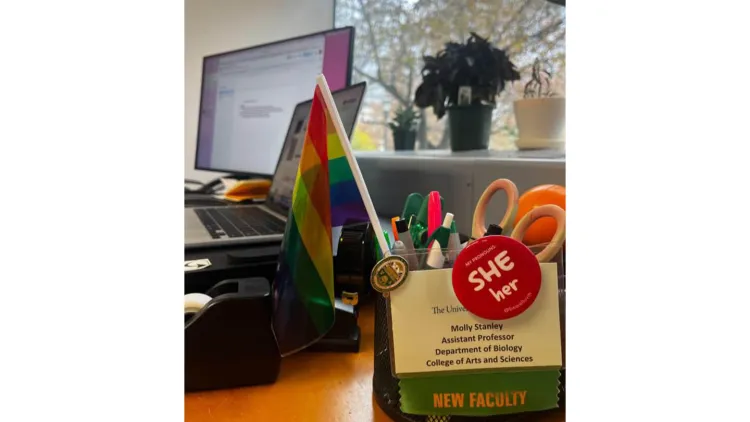
Science as a discipline encourages an innate curiosity and a growth mindset that markets itself to those with an openness to discovery. However, the individuals who participated in this discovery process were often from similarly privileged backgrounds and scientists with marginalized identities were not as celebrated. But this history is changing at UVM, as more LGBTQ+ faculty, graduate students, and undergraduates than ever have joined programs in biology and related fields. Assistant Professor, Dr. Molly Stanley, notes that “it only took one notable neurobiologist, Dr. Ben Barres, who was open about his experience as a transgender scientist to make me feel more comfortable in expressing my LGBTQ+ identity in the lab. Now, as a faculty member, I continue to see how individuals openly sharing their identities can help reduce fear around bringing our authentic selves to our scientific communities”. This idea is what brought LGBTQ+ students and staff together in discussion of visibility and their lived experiences and studies, and how those overlapped and intersected in our programs at UVM.
Dr. Daniel Peipert is among faculty representing the LGBTQ+ community in the UVM sciences. As a Lecturer in the Biology Department and Neuroscience Program, Dr. Peipert has a unique perspective of visibility at UVM, since he spent both his undergraduate and graduate years in Burlington as well. He mentions that “as an undergraduate student, I always felt like part of what made being gay so difficult was simple statistics, creating inherent challenges for growing community [and] visibility breaks down some of that barrier”. This bolstering of LGBTQ+ visibility is what has led to a new normal, where Dr. Peipert says “my sexuality does not put me in a place where I need to seek out community, and instead, have many members of the queer community down and across the hall”. Community built from visibility exists on a national scale, too. For the past 20 years, movements have been growing to increase visibility for LGBTQ+ scientists, including 500 Queer Scientists, a visibility campaign for LGBTQ+ people in STEM which has now well surpassed only 500 individuals, and Out in STEM, a chapter-based professional organization for LGBTQ+ individuals in science.
This is also true for Dr. Joaquin Nunez, an Assistant Professor in the Biology Department who first joined UVM as a fellow, back in 2023. He noted that “it was incredibly encouraging to see so many queer members of the department” when he was first interested in joining as a population geneticist. It was visibility that impacted Dr. Nunez’s decision to join the program, and what he inherently gives to the next generation. He says that LGBTQ+ members of the department “bring our authentic selves to the table, which naturally fosters a positive and welcoming workplace”, meaning those looking for role models now will find even more examples of talented, authentic, LGBTQ+ scientists at UVM.
This same idea carried through with Biology Department Graduate Student, Gwen Ellis. Studying the effects of disease introductions in amphibian populations, Gwen noted that living authentically was key to encouraging a safe and visible environment. When asked why visibility was important for LGBTQ+ people in STEM she said, “I want my colleagues and the students I work with to feel like they can come into the department as they are. I think this is why representation and queer visibility in STEM and other disciplines is so important. How can you know what all the different ways to show up are if you don’t have examples?”.
Visibility and support for the trans community is especially pivotal in the face of current social-political turmoil. For Neuroscience Ph.D. student, Rain Younger, visibility and reception from fierce allies and fellow LGBTQ+ individuals at UVM created an environment where Rain felt safe to live and accept herself as a trans woman. Now, she is incredibly involved in building and protecting the community as an activist. She is a role model at the Neuroscience interview weekend, connected with GSU to ensure protection against discrimination and harassment for graduate workers, and was a key part in organizing the Trans Day of Visibility rally held earlier in the year. She says that “having experienced it firsthand, I understand the importance of an accepting and affirming environment, so I do what I can to ensure those spaces exist for others”.
Another Neuroscience Ph.D. student, Jamie Reulbach, expressed how visibility is not just a beacon for LGBTQ+ people but a commanding strength of the LGBTQ+ community. To inspire more faculty, graduates, and undergraduates to join the sciences at UVM, she noted that we need to simply be “brazenly open about who we are and how we came to be part of science, what science means to us, and most importantly, showing that we can be strong and happy in the face of oppressive fear”. With the LGBTQ+ community under threat from many angles, visibility is crucial in fostering optimism, joy, and encouragement to pursue science without worry.
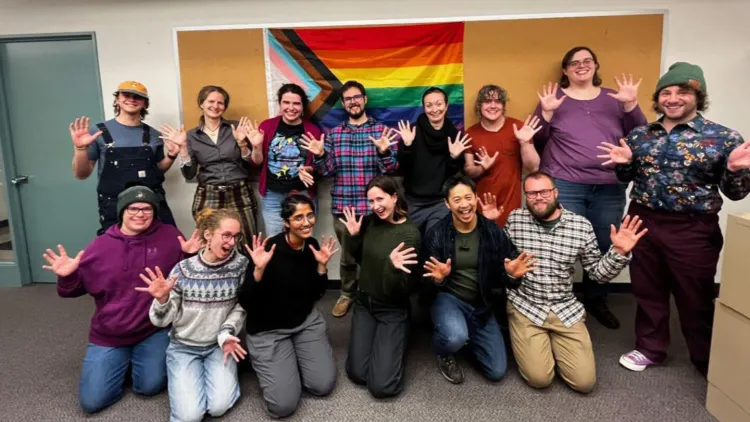
Again, Dr. Molly Stanley offered wisdom as an LGBTQ+ role model at UVM, saying that “LGBTQ+ scientists still undoubtedly face challenges. For example, those doing field work must consider the social and political climate of the region where they are working. But within departments and at conferences, I have seen a growth in community building and support for queer scientists, and I hope that students across disciplines will now have visible role models like Dr. Ben Barres was for me in neuroscience”. If we can amplify voices and encourage support through increased visibility, the repercussions to follow affect our entire community. Now more than ever, it's important to enhance visibility to strengthen the LGBTQ+ community, which will foster an environment for the advancement of elevated biological study.