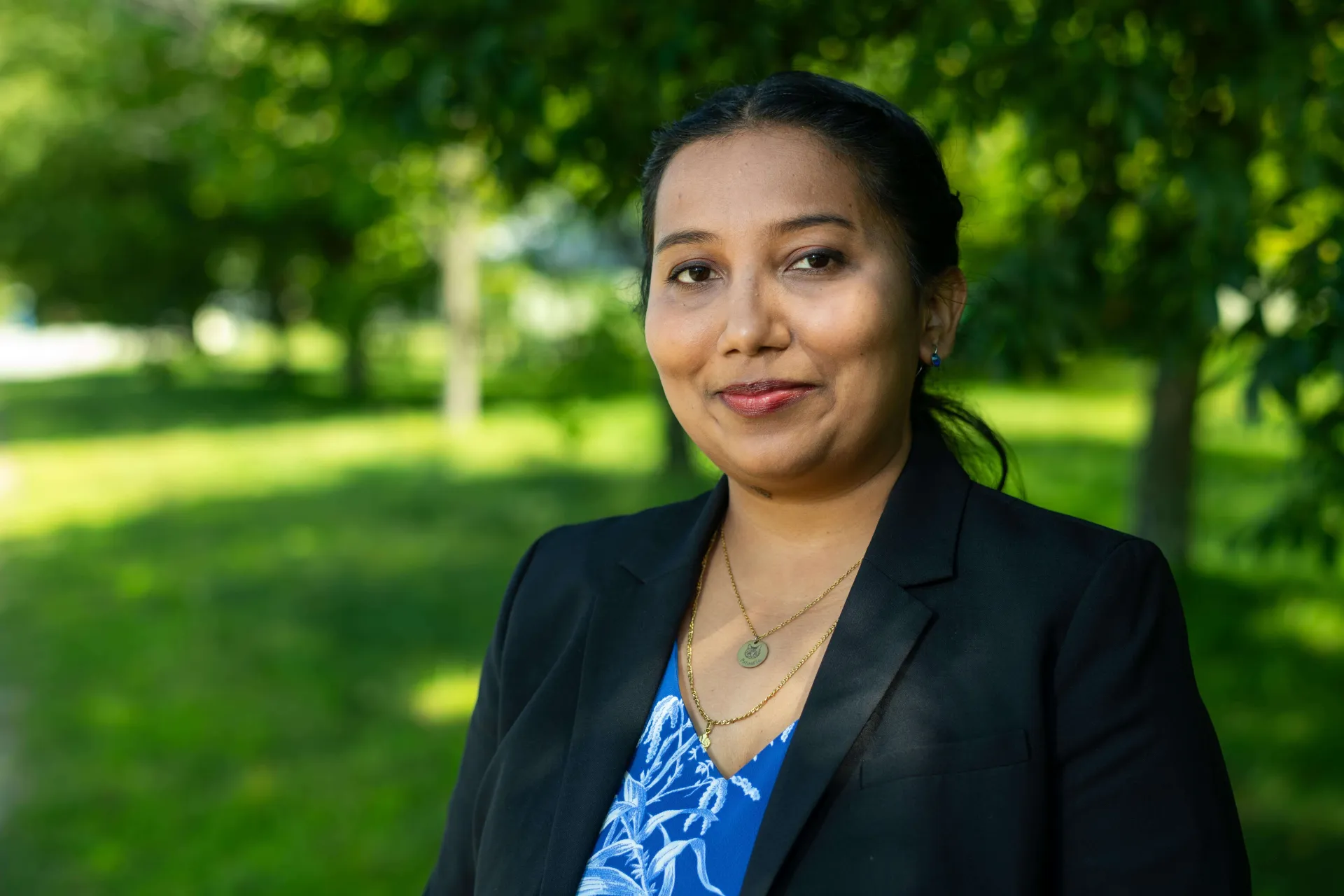
The award recognizes Mbaya’s commitment to advancing food security, community engagement, and research that improves the lives of vulnerable populations.
A public health advocate and food systems researcher, Mbaya has dedicated his academic and professional career to understanding and addressing food insecurity in underserved communities. His work spans veterinary medicine, public health, humanitarian response, and One Health, all connected by a common goal: ensuring equitable access to nutritious food.
Originally from Nigeria, Mbaya’s interest in food systems emerged through his work investigating foodborne illnesses linked to animal products and poor hygiene practices. He later helped develop programs supporting communities displaced by conflict and cut off from their ancestral farmlands, experiences that revealed the deep and often overlooked challenges of food insecurity.
“Throughout my work, food insecurity emerged repeatedly as one of the most pressing issues people faced,” Mbaya said. “What struck me most was how frequently the issue was overlooked or inadequately addressed.”
Those experiences inspired him to pursue advanced training in One Health and eventually brought him to the United States, where he continued exploring food insecurity through research, service-learning, and policy development. As a graduate student, he collaborated with Dr.Trishnee Bhurosy and authored a memo on food insecurity among international students and produced a policy brief to improve access to fresh produce in university food shelves serving food-insecure students. Pindar also received mentorship from Dr. Bhurosy on assessing gaps in nutrition assistance programs for international students in the US.
When the opportunity arose to study food systems at UVM, Mbaya said the decision was easy.
“I love rural communities; it reminds me of my roots and humanitarian field work,” he said. “Participatory action research is vital for my research, and UVM has provided me with a great platform to conduct research that I strongly believe will be impactful.”
Today, Mbaya is a graduate fellow at both the Food Systems Research Institute and the Gund Institute for Environment, and a graduate trainee at the UVM Cancer Center. His doctoral research focuses on food security among older adults, examining the socioeconomic factors that influence access to nutritious food and identifying sustainable pathways to support healthy aging.
His research comes at a critical time. As the U.S. population ages, and with Vermont among the states with a growing older adult population, food insecurity among seniors is becoming an increasingly urgent concern. Older adults often face unique barriers to obtaining healthy food and are disproportionately affected by chronic health conditions, including increased cancer risk.
Rather than creating entirely new programs, Mbaya seeks to strengthen existing systems. Using systems-thinking approaches, he identifies leverage points within current food assistance programs and community interventions where targeted improvements can have the greatest impact. His work incorporates qualitative and quantitative research, program evaluation, stakeholder mapping, community asset assessment, policy development, and advocacy.
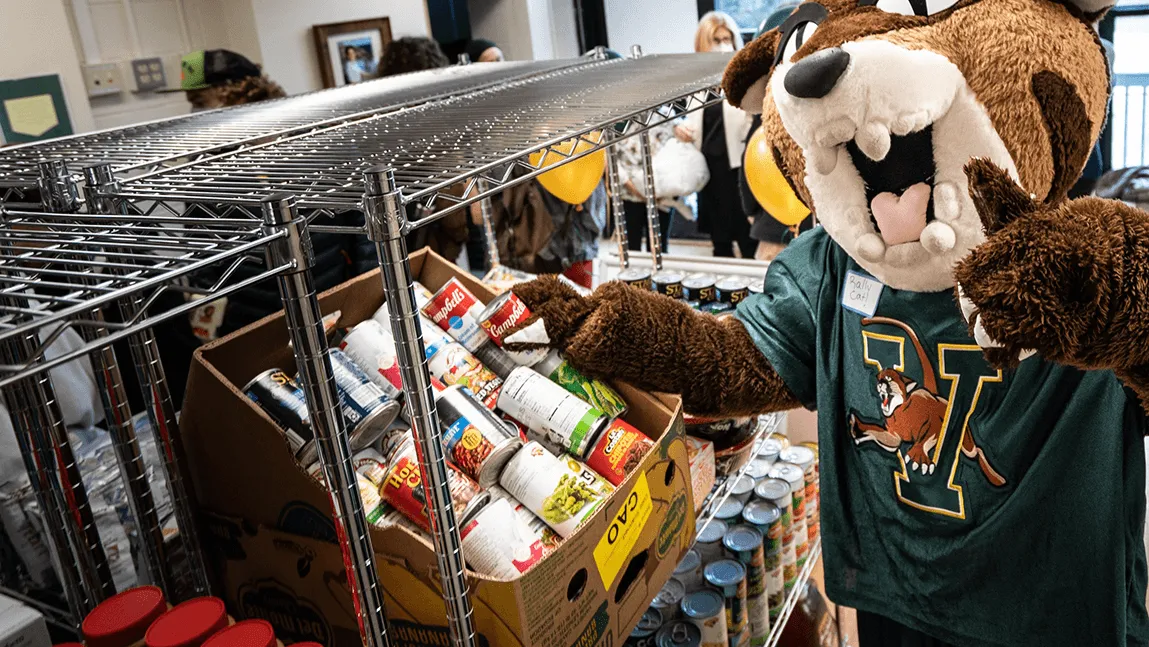
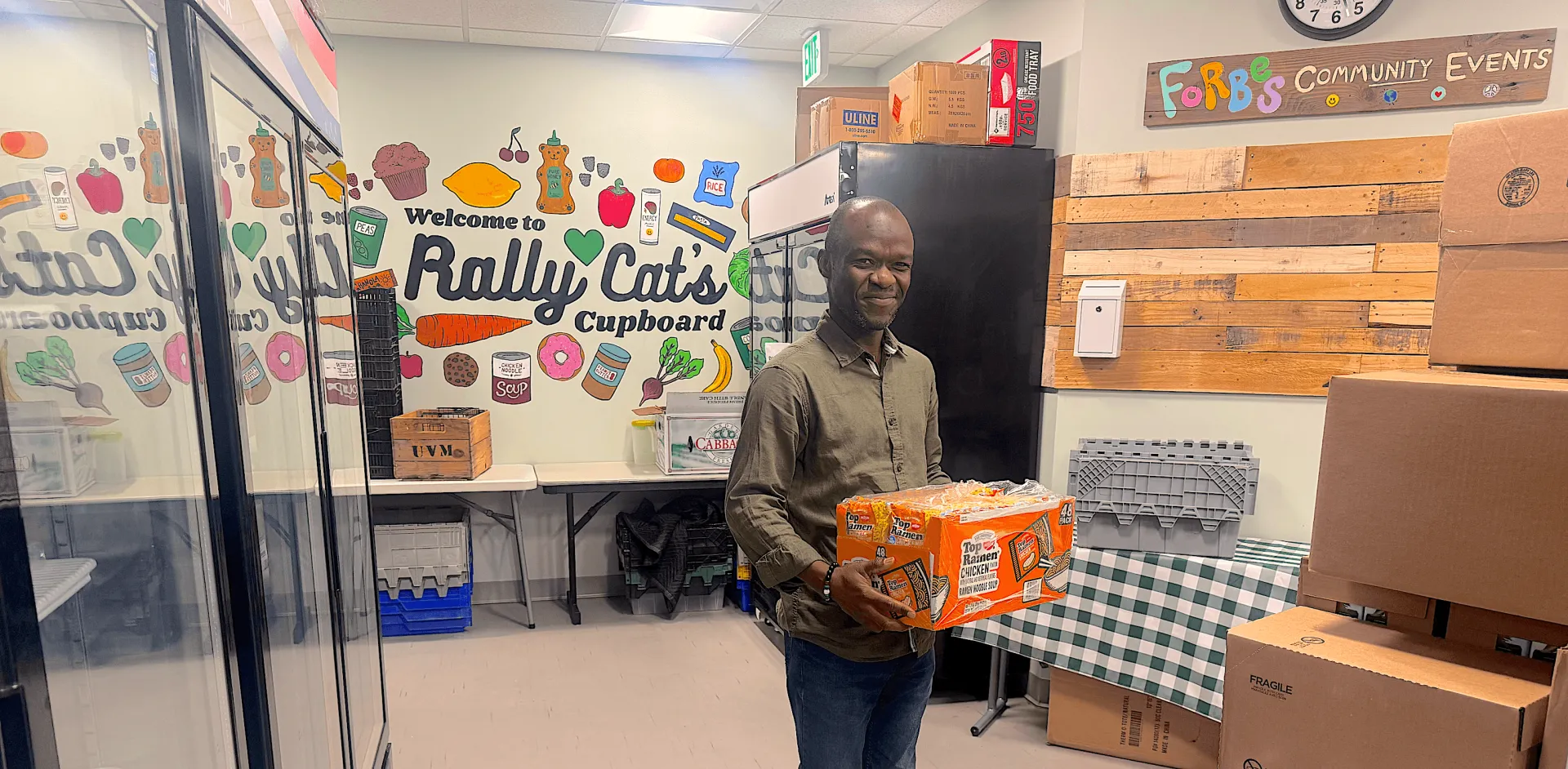
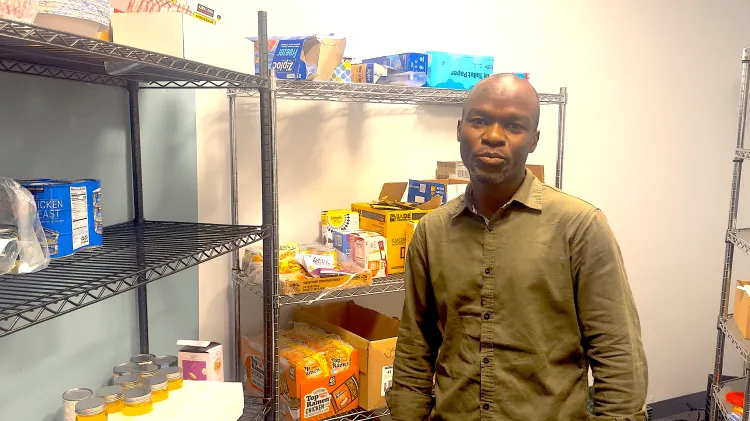
Outside the classroom and research setting, Mbaya remains closely connected to the communities he studies. He volunteers at the Rally Cat’s Cupboard, a campus food resource available to students, employees, and community members.
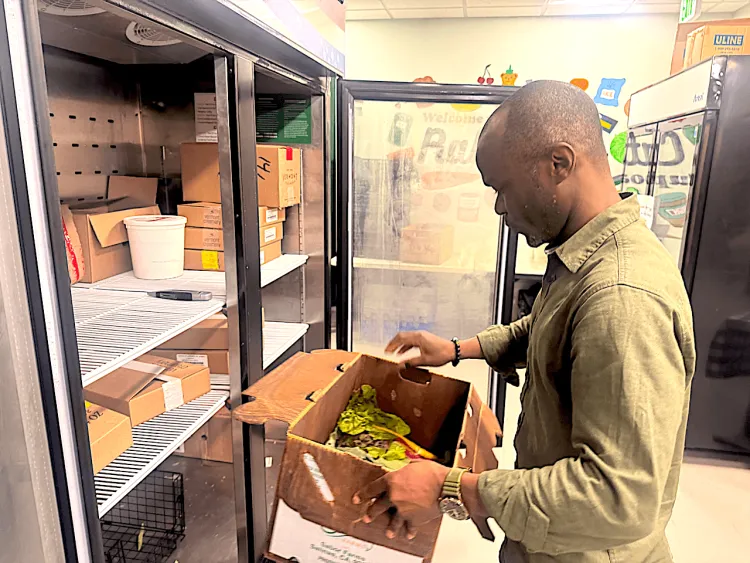
“The need I see at Rally Cat Cupboard reinforces what I consistently find in research,” he said. “It is overwhelmingly true that food insecurity is a reality in Vermont.
Mbaya credits much of his success at UVM to the mentorship and support he has received from faculty, particularly his advisor, Dr. Trishnee Bhurosy.
“She has provided me with all these resources that has made my research journey a great experience. She encourages me to set interim goals, develop research skills, build confidence, and to think outside the box.”
When he learned he had been selected for the 2026 CALS Graduate Student Our Common Ground Award, Mbaya said he was deeply moved.
“I was overwhelmed. I came to realize that no matter how invisible you are, working passionately behind the scenes, one day the spotlight will shine on you.”
Looking ahead, Mbaya plans to continue researching food insecurity among older adults and other vulnerable populations.
“My research interests still remain firmly fixed in the complexities of food systems, specifically, on addressing the challenges of food insecurity among vulnerable populations. Considering that US population is aging, solutions to improving food security among this demographic should be considered a high priority. Through collaborations with other researchers, I intend to find solutions that would inform policy changes reforming food security among seniors. My aim is to continue building from my years of fieldwork, graduate studies, and community engagements. I intend to also explore and examine further the socioeconomic determinants of food insecurity among older adults across different contexts, recognizing that these issues, though widespread, would be different from one community to the other. Solutions to improving food security among this demographic should be considered a high priority,” he said. “I look forward to building collaborative relationships with researchers and community stakeholders who are advancing food systems research that supports the future of food security among vulnerable communities.”
The CALS Graduate Student Our Common Ground Award recognizes graduate students who embody the university’s values through scholarship, service, and community engagement. Through his research, advocacy, and commitment to improving outcomes for vulnerable populations, Mbaya exemplifies those ideals while helping shape a more equitable and resilient food system for the future.