Proctor Maple Research Center - Underhill Center - Vermont
Recent Publications
- Chemical Composition of Scale
- Sustainable Tapping Guidelines
- Tubing Cleaning - Methods Used in the U.S.
- High Vacuum in Gravity Tubing
- Tubing System Age and Sap Yield
- Estimating Twig Starch
- Leader Check-Valve Adapters
- Tubing System Aging
- Sap and Vacuum Dynamics
- UVM PMRC Survey - all respondents
- UVM PMRC Survey - respondents who used CV adapters
- PMRC Research Update 2010
- Antimicrobial Silver in Maple Sap Collection
- Check-Valve Spout Adapter
- 2009 Tapping Survey Results
- 2010 Tapping Survey Results
- Air Injection
- Metabolism Off-Flavor in Maple Syrup: Part I
- Metabolism Off-Flavor in Maple Syrup: Part II
- Guidelines for the Improvement of Combustion Efficiency for Maple Producers
- Timing of Tapping
- Vacuum Sap Collection: How High, or Low, Should You Go?
- Temperature Patterns within an Oil-Fired Maple Evaporator
- Sugar Profiles of Maple Syrup Grades
- Comparison of the "Small" Spout with the Traditional 7/16" Spout
- Wilmot columns from Farming Magazine
Proctor Maple Research Center Staff

Dr. Timothy Perkins, Director
Timothy Wilmot, UVM Extension Maple Specialist
Brian Stowe, Research Technician
Mark Isselhardt,
Research Associate
Dr. Abby van den Berg,
Research Assistant Professor
Miriam Pendleton,
VMC Site Operator
Timothy
Perkins, Director
Ph.D. Botany 1991, University of Vermont
Telephone: (802) 899-9926 Email: Timothy.Perkins@uvm.edu
Department of Plant Biology Faculty Research Profile
As Director of the Proctor Center, I determine
the type and course of scientific studies conducted here. My primary role, aside
from conducting my own research, is to ensure that the PMRC staff has adequate resources
to conduct their work, and that the research is pertinant to the PMRC mission,
funding, and interesting to the maple industry. To this end, I am responsible for writing and
managing grant proposals,
reporting our progress to funding agencies, and serving as budget manager and overall
station supervisor.
My personal research interests involve long-term monitoring of forest
health, and the relationships among tree health, growth, stress, and nutrition. I am
currently investigating the effects of air pollution and global change on
forests,, as well as several other projects aimed at improving sap and syrup
production. I have also
been involved in the
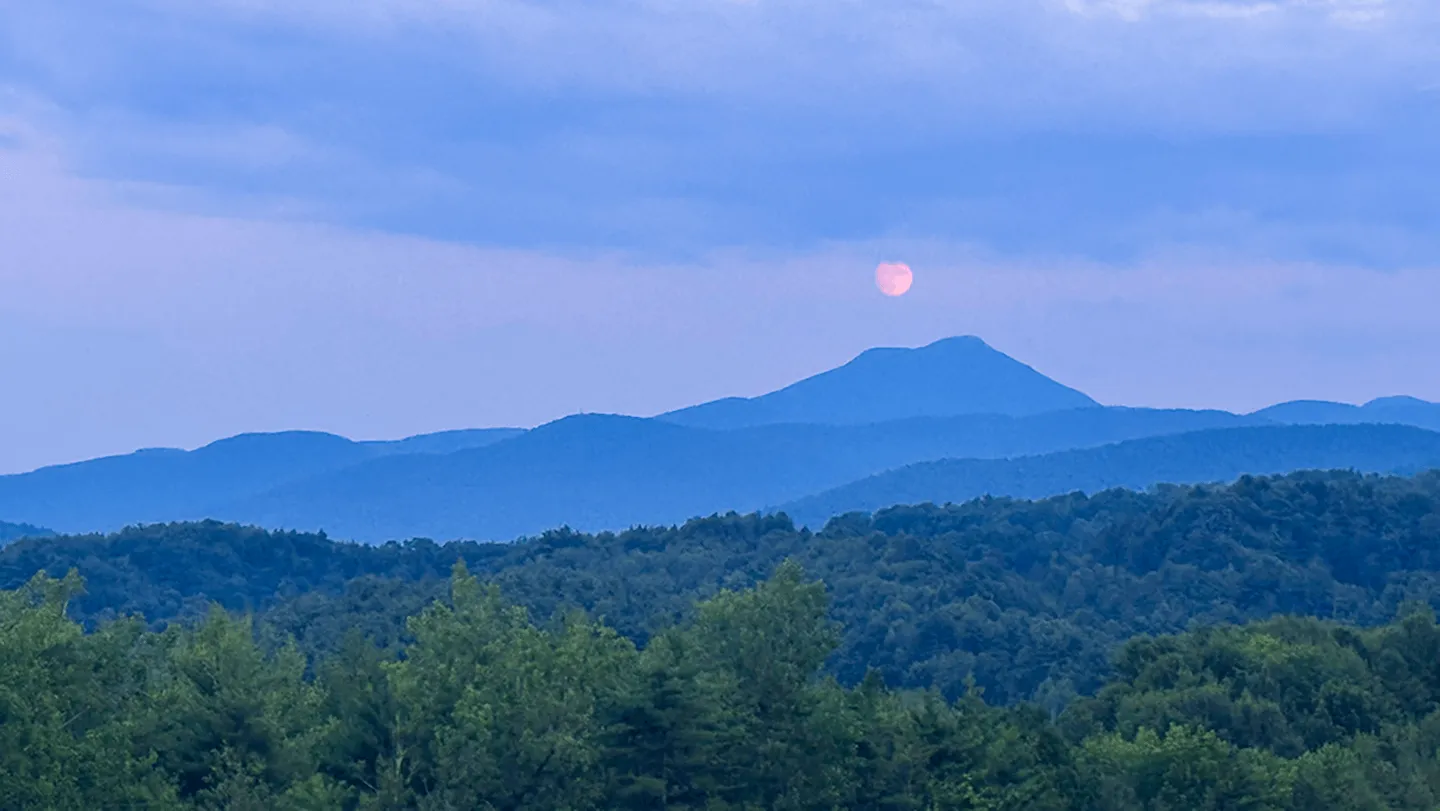
Camels Hump
Vegetation Survey, a project to monitor the long-term health of forest communities.
Timothy Wilmot,
UVM Extension Maple
Specialist 
M.S. Botany 1987, University of Vermont
Telephone: (802) 899-9926 Email :
Timothy.Wilmot@uvm.edu
My position with UVM
Extension combines research with outreach and education. As one of two Extension
Maple Specialists, I work closely with UVM Extension
Maple Specialist George Cook to plan and facilitate educational events for sugarmakers, such as the January Vermont Maple Conferences. Another of my
responsibilities is writing and talking about maple research, both my own and
that of my colleagues at the Proctor Maple
Research Center; as well as reporting on successful methods, innovations, and
discoveries by other sugarmakers. Persons with maple questions can reach me by
calling the Proctor Center, where my office continues to be located, or by
e-mailing me at
Timothy.Wilmot@uvm.edu. If I do not have an answer to your question, I can
usually put you in touch with someone who does.
One of my principal research interests is the sap flow mechanism in sugar maple,
and the interactions among temperature, sap pressure, and sap flow rate. During
the sugaring season I conduct experiments related to these phenomena, (a portion
of which can be seen on our webpage “TREEMET”) as well as on related issues,
such as the effects of vacuum on sap flow, and optimal timing of tapping for
sugarmakers.
A second research interest is forest nutrition and relationships among soil and foliar chemistry, tree growth and vigor, and sap sugar production in maple stands. Additionally, the efficacy of fertilizing maple stands, a topic of considerable interest to many forest managers in the northeast, has been the subject of several of my experiments.
Several of my recent publications, on topics such as sugarbush fertilization, vacuum system maintenance, and lead abatement, can be found elsewhere on this website.
Brian Stowe,
Woodlands & Sugaring Operations Manager
B.S. Forestry 1985, University of Vermont
Telephone: (802) 899-4923 Email: Brian.Stowe@uvm.edu
I am the woodlands and sugaring operations manager at the Proctor Maple Research Center. My position emphasizes sugarbush management, maple tubing layout, upgrades, repairs, and the annual production of maple syrup. I am also involved in designing, building, and maintaining various studies centered around maple sap collection and maple syrup production techniques and assisting in many of the studies on forest growth, health, and nutrition.
The Proctor Center is in a unique situation in that we have a state of the art research facility smack dab in the middle of a production sugarbush. This allows the rapid transfer of theory and new techniques between maple production and pure science. Running a sugarbush allows us to encounter the same problems and issues that other sugarmakers are dealing with. In this way, we can relate to the maple community and better serve their needs.
I encourage everyone to come pay us a visit.
Mark
Isselhardt,
Research Associate

Telephone: (802) 899-9926 Email: mark.isselhardt@uvm.edu
My research interests include the dynamics of nonstructural carbohydrate in sugar maple (Acer saccharum Marsh.), how modern production methods impact flavor and chemistry of maple syrup improving the efficiency of sap collection equipment. As a research associate at the Proctor Maple Research Center my duties include the design and execution of experiments related to the practice of maple syrup production. I am also involved with experiments related to white birch (Betula papyrifera Marsh.) syrup production.
I have published articles and technical pamphlets related to my work, presented to professional maple groups in the US and Canada and fielded sugaring related questions from preschoolers on up.
I work closely with Drs. Tim Perkins and. Abby van den Berg on experiments related to the long term sustainability of syrup production, maintaining high yields of sap collection and how modern processing technology impacts the quality of pure maple syrup.
Selected Publications
Isselhardt, M.L., van den Berg, A.K., and Perkins, T.D. Chemical Composition of Scale in Maple Syrup Evaporators, Maple Syrup Digest, December 2012 (pp. 23-28).
Isselhardt, M.L., Carbohydrate reserves and growth response in Sugar Maple (Acer saccharum Marsh.) under two levels of spring xylem sap extraction. October, 2012. M.S. Thesis, University of Vermont, Burlington Vermont.
van den Berg A.K., Perkins, T., Isselhardt, M.L., Godshall, M.A. and Lloyd, S.W. 2011. Effects of producing maple syrup from concentrated and reconstituted sap of different sugar concentrations. Int. Sugar J. 113: 35 44.
Isselhardt, M.L. 2011. Estimating Twig Starch Content in Sugar Maple (Acer saccharum Marsh.): Evaluation of the Visual Technique. Maple Syrup Digest (pp. 13-17).
Abby van den Berg,
Research Assistant Professor
Ph.D. Botany 2006, University of Vermont
M.S. Forestry 2000, University of Vermont
B.S. Forest biology 1999, University of Vermont
Telephone: (802) 899-9926 Email: avan@uvm.edu
Since beginning to work at PMRC in 2001, I've focused on research projects in the areas of maple syrup chemistry, contamination and adulteration and maple physiology. Much of our current research is focused on identifying the effects of equipment and technology used to process sap into syrup on the chemistry and flavor of maple syrup. We are also conducting experiments to identify methods of cleaning maple evaporator pans which use smaller amounts of hazardous chemicals. Some of our other recent work includes identifying and developing rapid tests for novel methods of syrup adulteration or sources of contamination, identifying the compound(s) responsible for 'metabolism' off-flavor in syrup and developing techniques to remediate off-flavored syrup.
I'm also fascinated by the question 'why do maple leaves turn red?' and have been conducting research on the physiological function of red anthocyanin pigments in autumn and spring maple leaves since 1999.
Selected publications
van den Berg, A.K. and Perkins, T.D. 2007. Contribution of anthocyanins to
the antioxidant capacity of juvenile and senescing sugar maple (Acer
saccharum) leaves. Functional Plant Biology 34, 714-719.
van den Berg, A.K. and Perkins, T.D. 2005. Nondestructive estimation of
anthocyanin content in autumn sugar maple leaves. HortScience 40(3):685-686.
Murakami, Paula, F.; Turner, Michelle, R.; van den Berg, Abby, K.; Schaberg,
Paul, G. 2005. An instructional guide for leaf color analysis using digital
imaging
software. Gen. Tech. Rep. NE-327. Newtown Square, PA: U.S. Department of
Agriculture, Forest Service, Northeastern Research Station. 33 p.
van den Berg, A.K. and Perkins, T.D. 2004. Evaluation of a portable chlorophyll meter to estimate chlorophyll and nitrogen contents in sugar maple (Acer saccharum Marsh.) leaves. Forest Ecology and Management 200:113-117.
Schaberg, P.G., van den Berg, A.K., Murakami, P.F., Shane, J.B. and Donnelly, J.R. 2003. Factors influencing red expression in autumn foliage of sugar maple. Tree Physiology 23:325-333.
Miriam Pendleton,
VMC Technician
B.A. Art 1978, University of
Vermont
Telephone: (802) 899-9926 Email:
Miriam.Pendleton@uvm.edu
I'm the Vermont Monitoring Cooperative (VMC) site operator. My responsibilities include collecting samples, field analysis and preparation of samples for shipment, and maintenance of the equipment.
There are two VMC sites at PMRC; one is an air quality (A.Q.) site and the other is a forest canopy tower. The tower site is being reconstructed after some intense winds tipped it from its base last winter. The tower had been the site of some first-ever mercury flux measurements with Eric Miller of Ecosystems Research Group, LTD as principle investigator. A grant through the EPA and administered by VMC is funding the study. Eric’s mercury research continues at the A.Q. site. We are measuring reactive gaseous mercury, particulate mercury and gaseous elemental mercury, using Tekran analytical equipment. This is the latest generation of analytical equipment for measuring trace mercury, a potent neurotoxin that is concentrated as it moves up the food web
There are two other programs at the A.Q. site that also deal with how much mercury deposition Vermont receives; the first is the longest continually running mercury monitoring program in the world. It is in co-operation with the University of Michigan’s School of Public Health Air Quality Lab. Mercury Project . The second is the NADP/ Mercury Deposition Network.
We are relatively new members of this national network,(LINK to NADP/MDN) but we also have two long running NADP programs at the A.Q.site, NADP/NTN National Atmospheric Deposition Program and NADP/AIRMoN. Atmospheric Integrated Research Monitoring Network Both of these programs have in common a concern with acid precipitation, although NADP and AIRMoN also look at individual pollutants as part of the enforcement of the Clean Air Act. The State of Vermont is also represented with the Vermont Acid Precipitation Monitoring Program VAPMP is run by the Vermont Agency of Natural Resources Dept of Environmental Conservation. Acid precipitation has been monitored at the A.Q. site since 1981.
The USDA is represented at the A.Q. site as well. USDA UVB Monitoring Program. This instrument cluster measures the kind of ultraviolet radiation that causes skin cancer and cataracts in humans, for example; and tissue damage resulting in stunted growth in plants. The USDA /UV-B network has provided agricultural researchers data to determine the impact of solar UV-B damage on crops, livestock and forests since 1994. Our participation in this network dates from 1996.
The Air Quality site also has a meteorological array that includes temperature, relative humidity, wind speed and direction, barometric pressure and precipitation. Data from this array are archived by the VMC and are available to researchers and other interested parties.
This document was created by E.M. Murphy, Proctor Maple Research Center. 01/03/08
Last modified April 23 2013 03:24 PM