home
Support UVM Extension      About Us   Across the Fence   Extension Events   Contact Us   Follow us: Follow UVMExtension on Twitter   Follow us on Facebook  

Onions, Well Worth the Tears

Release Date: 09-14-2010

Author: Dianne Lamb
Email: Dianne.Lamb@uvm.edu

One important and versatile vegetable is the onion! Although many people may not eat onions as a vegetable by themselves, onions are an important ingredient in many recipes. Onions cause tears, so brace yourself, particularly if you are peeling and prepping a large amount for onions for your favorite recipe, but the onion taste and flavor of the finished product is well worth the tears in the preparation process!

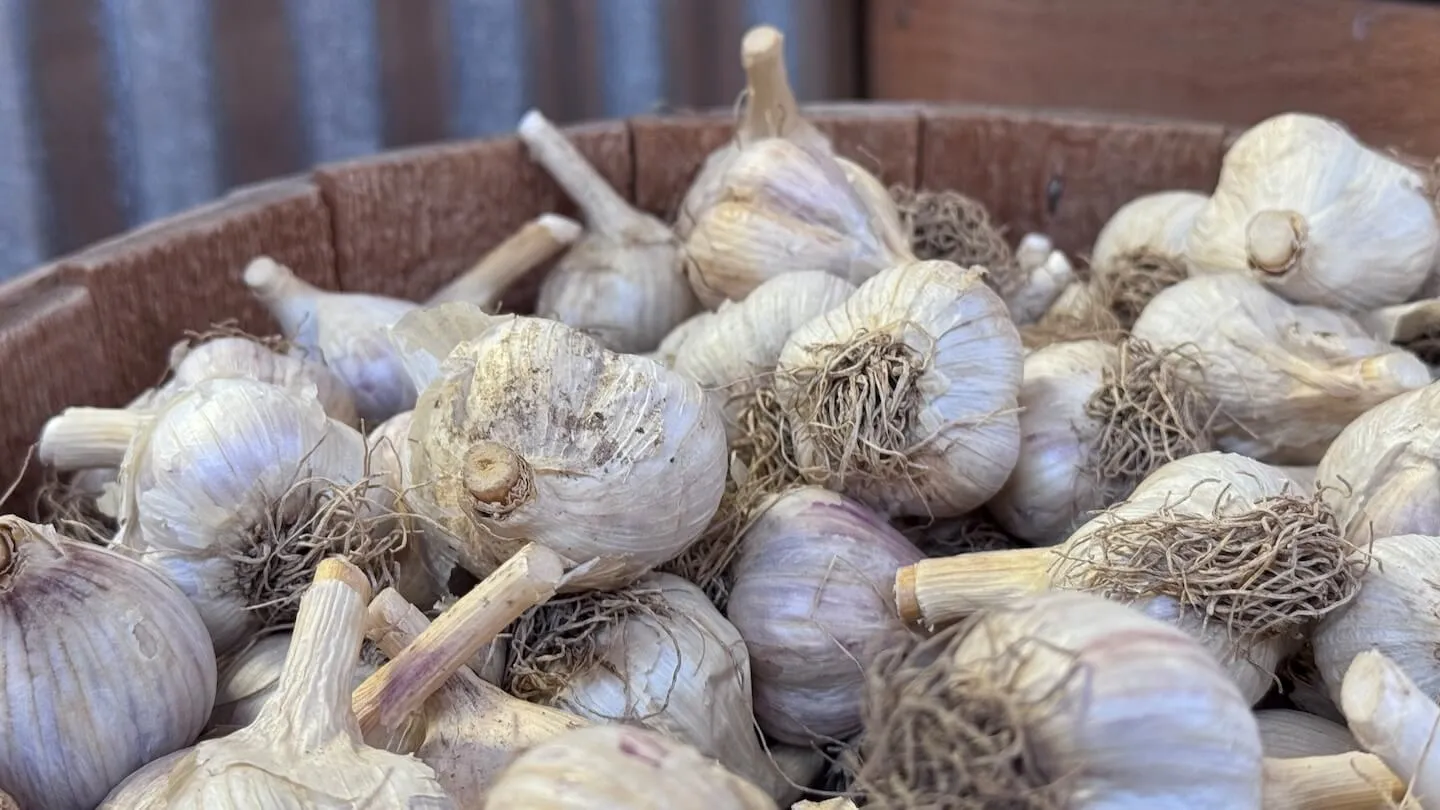
Onions are botanically known as alliums. Other members of this family include scallions, chives, shallots, leeks and garlic. Actually, there are more than 500 varieties of alliums which have that pungent characteristic smell and taste. Onions have a rich and "odorous" history! Onions were eaten in prehistoric times and were a popular food eaten in ancient Egypt, Greece and Rome. In these early times onions were believed to have mystical and healing powers, as well as symbolizing eternity. During the 17th century Europeans considered onions to be a health food of choice for breakfast!

There are two major categories of onions. Spring/summer onions, often referred to as fresh onions, include scallions, green onions, and spring onions. Spring onions are young onions and can be green, yellow or purple color. Spring onions have a white base that has not yet developed into a bulb. These "fresh" spring/summer onions have higher water content and do not store well. Scallions have a milder flavor than spring onions. The bulb end of a scallion has straight edges and will not form a bulb. These fresh onions contain more moisture than the dried varieties. Scallions and fresh onions need to be stored in the refrigerator in a lightly closed bag for 3 to 7 days.

Dried or storage onions include yellow, white, or red onions. There are many varieties, but usually they are referred to by their color - yellow, white, or red. Onions harvested in late summer or fall can keep for several months if cured, meaning the onions are allowed to dry with good air circulation for 2-3 weeks. Bruised or diseased onions or onions with green tips or thick necks do not dry and store very well. When you are purchasing onions, look for hard, firm onions that are dry and have small necks. The skin around the onions should be shiny and crackly to the touch. Avoid onions with wet or very soft necks, ones with thick, hollow centers in the neck, or ones with fresh sprouts.

Yellow onions are not usually eaten raw because of their strong taste and high sulfur content. The sulfur compounds are what create tears when preparing these onions. The dry papery covering of a yellow onion is golden brown. Yellow onions are usually cooked and are usually the onion of choice for caramelizing.

White onions (skin and flesh) are sweeter than yellow onions. White onions can be eaten raw. White onions can be used instead of yellow onions in recipes. Pearl onions are young onions that can be found as white, red or yellow. Pearl onions are usually roasted with meats or added to soups, stews or vegetable dishes. Shallots are pear-shaped bulbs that grow in a cluster. Their flavor is mild so watch that you don’t overcook shallots because they can burn bitter.

Red/purple onions have colored skins and white flesh tinged with purple. Their taste is sweet and mild so they are often eaten raw. Red onions tend to lose their color when cooked, but are delicious when grilled or lightly cooked with other foods.

Store dried onions in a cool, dry place away from bright light, and with good air circulation. Don't store onions near potatoes as the potatoes give off moisture and gas during storage which can cause onions to spoil. Storage onions can last up to four weeks under good storage conditions.

Onions are low in calories and sodium and have no fat or cholesterol. A half cup of raw, chopped onion has 35 calories, 8 grams of carbohydrate, 1 g of fiber, and 6 mg of vitamin C. One half cup of cooked chopped onions has 45 calories, 11 g of carbohydrate, 1 g fiber, and 7.5 mg of vitamin C.

Onions when chopped or sliced release sulfur-containing amino acids that react with enzymes to form volatile compounds which irritate the eyes and tongue. The older the onion, the stronger these compounds are. Once cooked, these compounds become milder. If peeling onions really irritates your eyes, peel the onion under cold running water.

Here are some ideas on how to use onions:

  • Cook thinly sliced onions briefly with some balsamic vinegar (no oil) and use as a pizza topping
  • Thread chucks of sweet onions on skewers, brush with a little olive oil, and grill them
  • Hollow out large red or yellow onions, stuff them with a rice or grain mixtures, and bake in a seasoned broth
  • Cook sliced onions until they are caramelized and tender. Use as a sauce for pasta.

Here's a recipe for Picco de Gallo from the Pennsylvania Nutrition Education Network www.panen.org/snap/onions. Although picco de gallo translates to rooster's beak, this delicious salsa or fresh relish is colorful and flavorful. This recipe is a great way to use onions, tomatoes, and peppers that are plentiful this time of year! Picco de Gallo adds a little spice/heat when served with chicken or fish. It makes a great dip for fresh made tortilla or pita chips. If you don’t like the heat of jalapeno peppers, use sweet bell peppers.

Picco de Gallo

(Makes 6-1/2 cup servings.)

  • 1 pound chopped ripe tomatoes
  • 1-1/2 cups chopped onion
  • 1/3 cup chopped, fresh cilantro
  • 3 seeded and chopped jalapeno peppers
  • 2 Tablespoons lime juice
  • 2 minced garlic cloves
  • 1/4 teaspoon salt

Combine all ingredients in a medium bowl. Serve immediately or cover and refrigerate up to 3 days.

Nutrition information per 1/2 cup serving: Calories 35, Total Fat 0g, Saturated Fat 0g, Cholesterol 0mg,Sodium 105mg, Carbohydrate 8g, Dietary Fiber 2g, Protein 1g.

Onions are a versatile vegetable and worth shedding a few tears over! Enjoy onions in a variety of ways - raw or cooked, as one of many ingredients/flavors in a dish or by themselves. Onions are a universal food and a staple ingredient in culinary delights around the globe! Eat Fresh! Eat Local! Eat Well!

Dianne Lamb is a Nutrition & Food Specialist with the University of Vermont Extension. The University of Vermont Extension and USDA, cooperating, offer education and employment to everyone without regard to race, color, national origin, gender, religion, age, disability, political beliefs, sexual orientation, and marital or familial status.

UVM Extension helps individuals and communities put research based knowledge to work.

Issued in furtherance of Cooperative Extension work, Acts of May 8 and June 30, 1914, in cooperation with the United States Department of Agriculture. University of Vermont Extension, Burlington, Vermont. The University of Vermont Extension and USDA, cooperating, offer education and employment to everyone without regard to race, color, national origin, gender, religion, age, disability, political beliefs, sexual orientation, and marital or familial status.

Contact UVM © 2013 The University of Vermont - Burlington, VT 05405 - (802) 656-3131