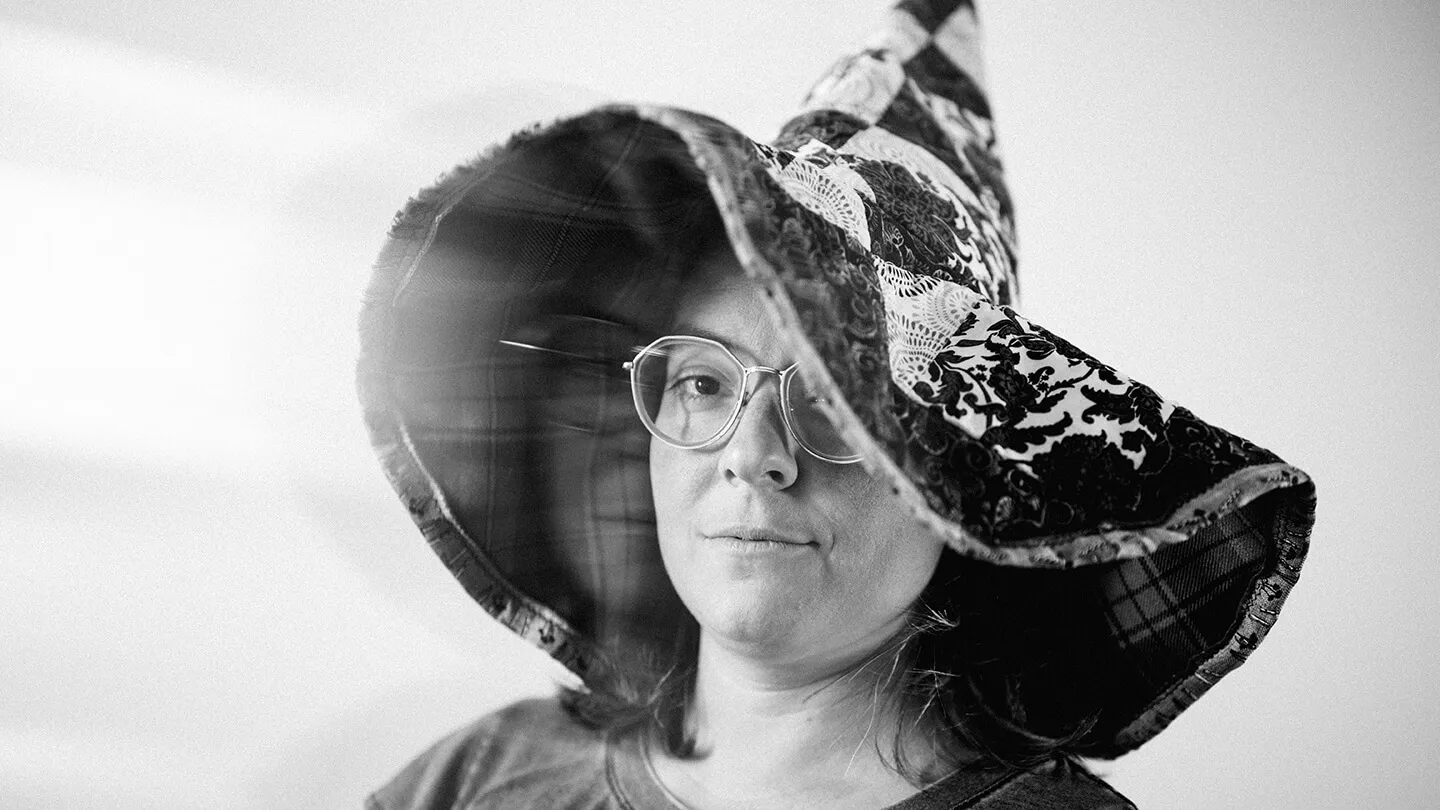
Witches don’t exist. They never have. At least, not in the way you probably imagine. And yet, witches have always been around.
In the early modern period witches attended unholy sabbaths with the devil, using magic to upend the fabric of Christian society while living in secret among the pious. Witches might even be the source of problems that needed fixing—a failed harvest or cows that died for no reason—and solved with a public hanging or immolation. Today, witches are the heroes of our movies and have hundreds of thousands of followers on Instagram. The 2024 Academy Award winning film “Wicked” is just the latest reinterpretation.
“Witches are having a renaissance,” says Zoe Senecal, Ph.D., a scholar of medieval European history at the University of Vermont.
She teaches the popular History of Global Witchcraft course and asks students to consider if witch hunts truly ended in the 18th century or if they merely transformed from targeting one bogey man to another.
The first time Senecal taught the course, the overturning of Roe v. Wade and the #MeToo movement was still in the ether and most of the students enrolled in the course were women. For decades women have recast witches from subversive figures attacking Christendom to feminist icons. Senecal suspects the rehabilitation reflects the politics of the time.
“Women being abused is not an ancient phenomenon; it’s still happening,” she explains. “A very close to the surface response to that is to look at some of the popular moments of history when similar things were happening.”
The rise of the activist witch
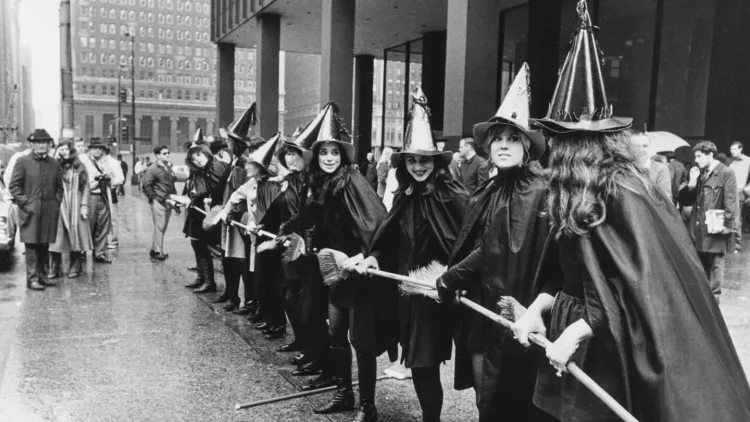
Second Wave feminists of the 1960s helped transform the witch from a member of the occult to a symbol of liberation against the patriarchy and capitalism. One activist group, the Women’s International Terrorist Conspiracy from Hell (W.I.T.C.H.), dressed as witches and hexed the New York Stock Exchange in 1968 as part of a political protest. Senecal argues there are historical problems with this interpretation.
“None of the people in the 16th and 17th century Europe who were actually burned as witches identified as witches,” she explains. “The idea that you can identify with witches as a form of radical feminism that is very modern, but I think it is still in the water that students are drawn to.”
Witchcraft is also increasingly embraced by queer individuals who relate to the accused excommunicated from their churches and cast out of their communities. There can be power in identifying as an outsider. The modern reinterpretation of the witch has one major difference from history—choice. But activists aren’t the only ones rewriting the witch narrative. President Trump has promoted the idea that he is the target of witch hunts for nearly a decade.
“He has got the right idea that people who are being persecuted as witches are innocent,” Senecal explains. “But he is creating in other ways the perfect storm of wide-scale persecution of witches to come back again.”
Because people didn’t begin burning witches overnight. In medieval Europe, church inquisitions searching for heretics within their ranks set the stage for the courts to get involved in witch hunts.
“It was not a mob phenomenon,” Senecal says. “There were like 200 years of the Inquisition brewing, creating this perfect legal storm. And in the same way we are seeing legal setbacks for feminists for women’s rights now. I think that is another important reason to study this phenomenon historically is so students can be aware of the slow creep aspects of how these phenomena go.”
A criminal profile emerges
Witches were referenced in early religious texts centuries before hunting them began in earnest. The term held a specific meaning: a person who made a pact with Satan to dismantle Christendom.
The legal pact is key, Senecal says. “Everything else that we think of when we think of witches, the green skin, or the fact that she is a woman, or the hat, or the cat, or any of these props or characteristics are attendant to that legal definition.”
The investigations were led by church intellectuals trying to ferret out witches hidden in plain sight.
“There was no such thing as witches, but this criminal profile emerged whole cloth almost from the minds of inquisitors and members of state who were interested in hunting witches,” Senecal says. “It is a legal fiction.”
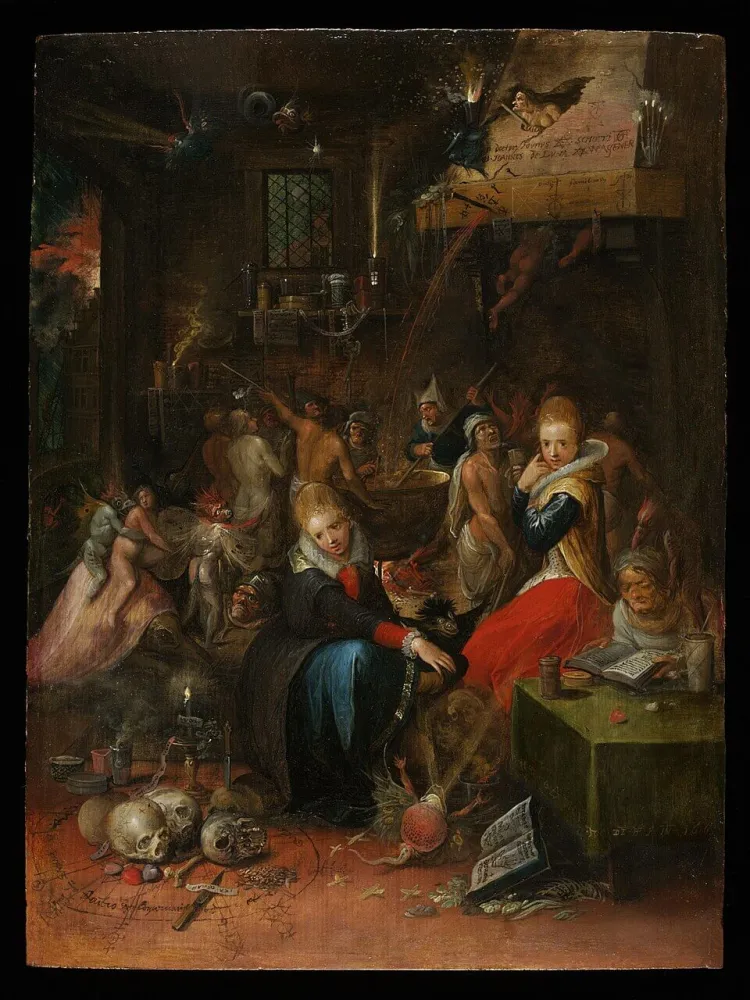
Local priests fueled the flames by priming congregants to remain on lookout for people attending the so called “witches’ sabbath”—conspiratorial meetings in the forests where Satan gave witches marching orders and magical powers to uproot Christian society. And despite being legal fiction, the trials took place in courts and needed proof of witchcraft for conviction. And that meant acquiring proof beyond spectral evidence that only certain afflicted congregants claimed to see.
While certain traits or adornments might make one more susceptible to being accused such as owning a cat or some other animal familiar or your body had a witch’s mark— the telltale sign of a diabolical pact, a confession was paramount. And that confession was gathered with the use of torture.
“The crime of witchcraft becomes an exceptional crime, which means it is so secretive and conspiratorial and hard to prove, that you are allowed to use judicial torture to a degree that it would not normally be allowed,” Senecal says.
The accused were routinely subjected to monstrous tactics from applications of thumb screws and pin pricking to water tests to illicit confessions of witchcraft. A confession stopped your torture, but it didn’t set you free. The accused were asked to name names of other witches before being executed.
“The word crazed is used and a lot of scholars don’t like that word because it obscures the fact that these were very procedurally bound, rationalized by the rationale of their time, extremely logical machinery of state and church law, Senecal says. “So, there was nothing crazed about them.”
No one is safe
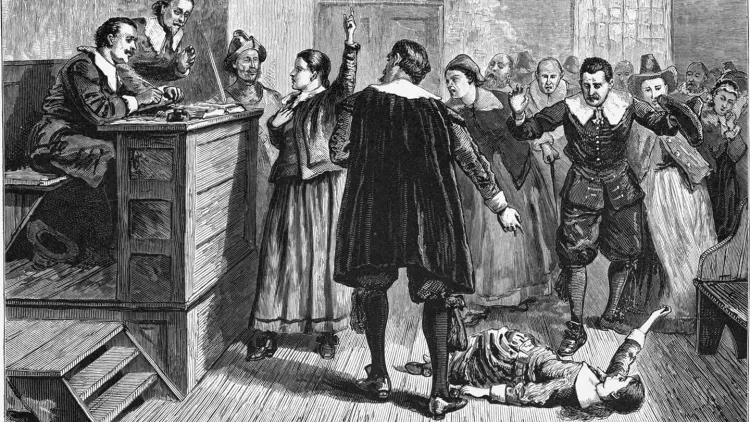
Witchcraft afflicted both Protestants and Catholics, the rich and the poor alike. A witch could be the parish priest or a shepherd with no name. Women comprise the majority of the accused, but a quarter of people accused of witchcraft in Europe were men.
Among the most famous is JohannesJunius, the mayor of Bamberg in Germany, who managed to write his daughter a letter while in prison describing how he confessed to witchcraft to make the torture stop, Senecal explains. “His voice is one of a few rare survivals of people who were able to sort of let us peek behind the curtain of the judicial process and say, ‘Oh. This isn’t real.’”
Over the years, Senecal has increasingly come to view that men accused of witchcraft are an important piece of the puzzle.
“This is not a random woman hunting time,” she says. “This was a very calculated judicial process that of course men got caught up in. The idea of the patriarchy hurts everybody is very true when we look at the male victims of the witch hunts.”
And by examining male victims of the witch trials, Senecal learned of other crimes men were accused of and executed for, such as becoming werewolves and practicing necromancy.
Werewolves were exclusively men, Senecal says, and like witches, werewolves received their powers from a pact with Satan and went out at night to ravage the sheep of God. But werewolves were not the hybrid figures haunting the dark woods that we think of today.
“The transformation is often affected by the putting on or removal of clothes, which is a sign of your humanity,” Senecal explains. “So, the deception factor is very adjacent to what is happening with witches.”
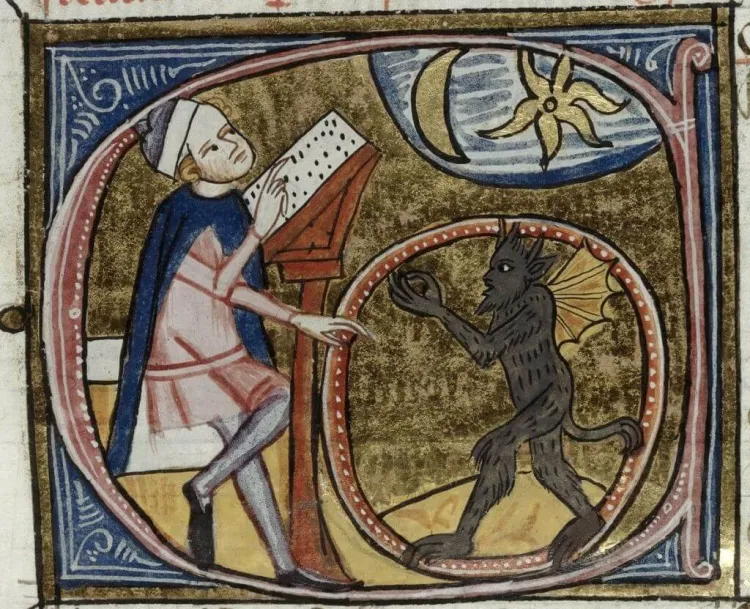
Necromancy was the inverse of witchcraft. Instead of Satan summoning witches to his bidding, priests conjured demons to do their works.
Necromancy was practiced throughout the entire medieval period before the witch hunts and considered a form of intellectual magic, Senecal says. “With the oncoming of the witch hunts, even necromancy becomes way more suspicious and much more likely to be persecuted. So, men don’t totally get out of jail free.”
The witch hunts vanish. Kind of.
Tens of thousands of people were killed during the European witch hunts. The hunts largely ended with the gradual introduction of judicial reforms in the 18th century, but scholars still debate whether they are truly over.
“They wind down as a judicial process mostly in the 1700s, not because people embraced scientific rationalism or because people realized it was wrong, it’s because of legal reforms,” Senecal says. “People stopped allowing spectral evidence, which is evidence that only exists in people’s minds.”
She doesn’t believe witch hunts went away—they just change form.
“All of these sort of negative aspects of the witch hunt still haunt us,” Senecal says. “We still have exceptional crimes. We still have judicial torture.
She points to Guantanamo Bay and the torture allowed there in the name of hunting terrorists.
“We still have this idea of conspiracies undermining societies—a fear in the back of everyone’s mind,” Senecal says.
And we still have witches. So, this Halloween when dressing the part, consider which type of witch are you?
“Learn a little bit about the history and then figure out where you are in the timeline. Which kind of witch are you trying to evoke?” Senecal asks. “Are you trying to evoke the 16th century victims of the hunts? Are you trying to evoke modern activist queer witches? Are you trying to evoke second wave feminist hex the patriarchy witches? Are you trying to evoke male witches? Just be aware that it is a very rich and diverse history and timeline and you can dip in wherever you want, all publicity for witches is good as long as it’s informed.”