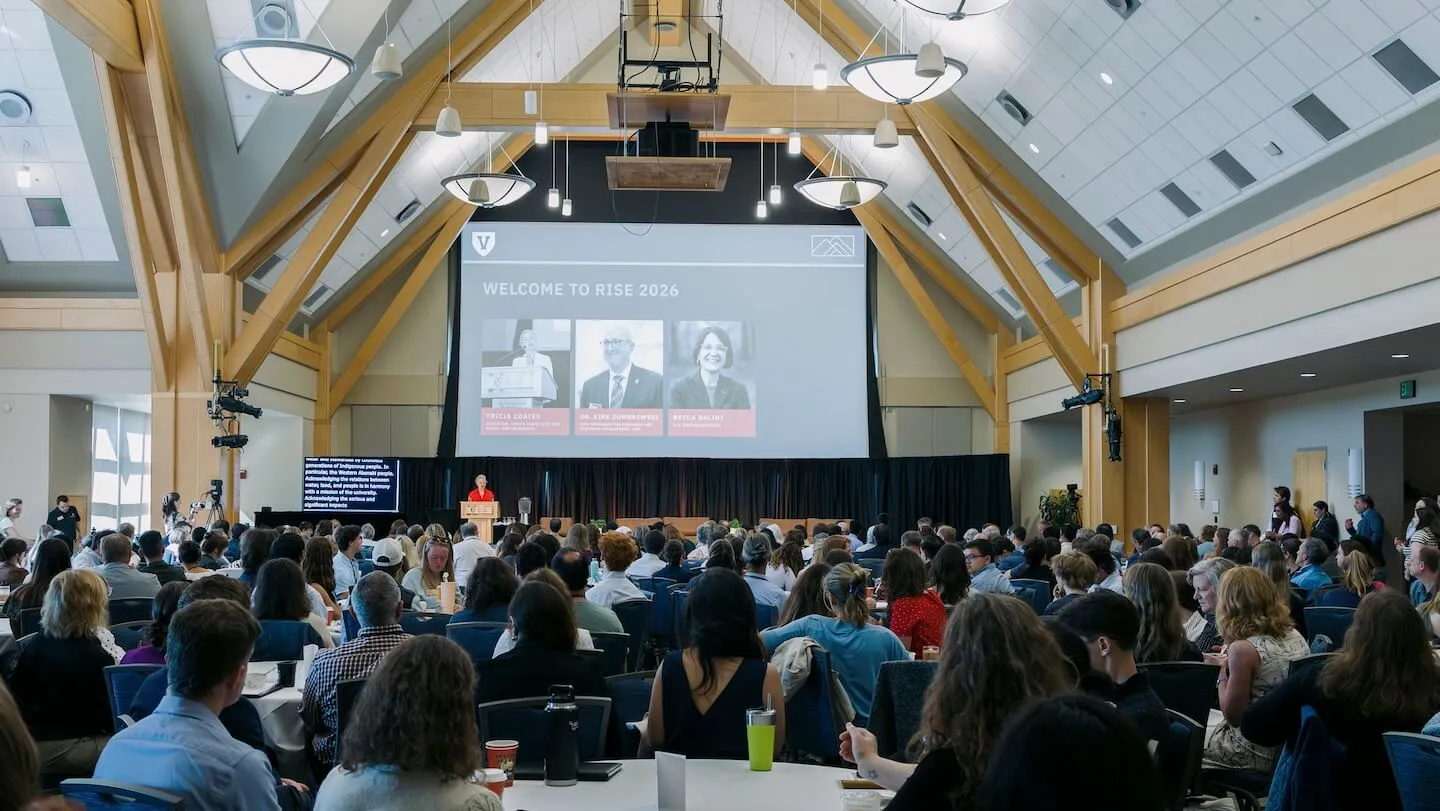
More than 600 people, including U.S. Representative Becca Balint, attended the 2026 RISE Summit in the Davis Center at the University of Vermont on Tuesday, June 16, to explore rural prosperity.
This was the fourth annual Research, Innovation, Sustainability, and Entrepreneurship Summit, conceived and presented by UVM’s Leahy Institute for Rural Partnerships, the UVM entity founded in 2023 to bring together the combined resources and expertise of the university to explore solutions to the most pressing needs of rural communities. The institute is named in honor of former United States Senator Patrick Leahy.
In welcoming attendees to the summit, UVM Vice President for Research Kirk Dombrowski noted the mission of UVM as a land grant institution, and the key role economic development plays in that work–what he called “the 21st Century land grant approach.” “There's knowledge and talent at the university that can go out into the community and make a difference,” Dombrowski said, “But there is also so much knowledge talent and excitement out there in the community that these days, a true land grant university is not a one-way street–it's a partnership. That is what we're really trying to bring together on a day like today.”
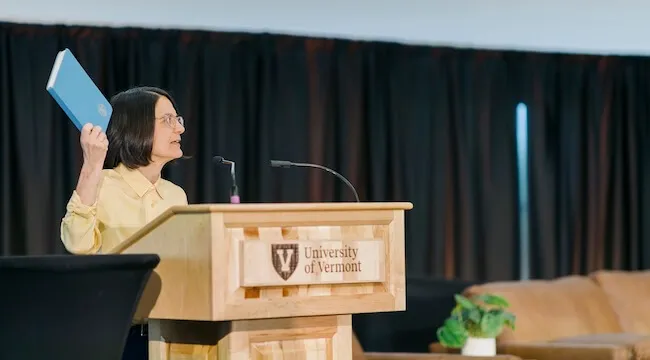
In her opening remarks, Representative Balint noted the problems and possibilities that would be explored at the summit. “That's the spirit we need more of right now–seeing problems as possibilities, as opportunities for us to look at things in a different way,” Balint said. “I know that is absolutely the spirit of this gathering” This year's theme, Balint said, is “incredibly important and urgent, in this moment in particular. We cannot solve the challenges that Vermont faces–and also states across this nation–if we remain in our silos. We can't design solutions for rural America without rural people at the table, because people in what I like to say are scrappy little communities across our state and our nation– those people know how to get stuff done.”
The keynote panel of the summit dove right into the topic of AI and its effects on rural economies, with panelists Kate Mays, UVM assistant professor of community development and applied economics, Matt Dunne, executive director of the Hartland, Vt.-based Center on Rural Innovation, and Kyla Kasharian, senior knowledge and impact associate at the Siegel Family Endowment. The panel was asked: Is AI inescapable? Their responses ranged from doubtful to optimistic, with Mays saying “I do think it's important to recognize that this is really a lot of top down efforts to make us think that AI is inevitable in order to integrate these tools into our workflows.” Dunne struck a more optimistic note. Pointing out AI’s ability to power small start-ups in rural settings, and Kasharian calling AI an “inescapable opportunity to forge a path forward and to imagine different futures that we wouldn't be able to otherwise.”
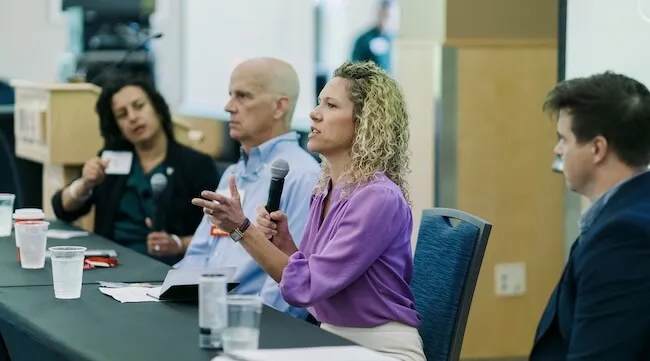
Breakout sessions in both the morning and afternoon, and varied lunch-and-learn programs highlighted lessons from rural communities across Vermont and the nation and showcased important tools and strategies for rural communities.

The afternoon also featured a musical performance at the piano by Professor David Feurzeig of UVM’s Program in Music. Feurzeig is known for his Play Every Town project, in which he plans to perform in all 252 towns in Vermont over the next few years (he has just reach the 100 mark), that stresses to need to minimize carbon-heavy travel and focus on local talent.
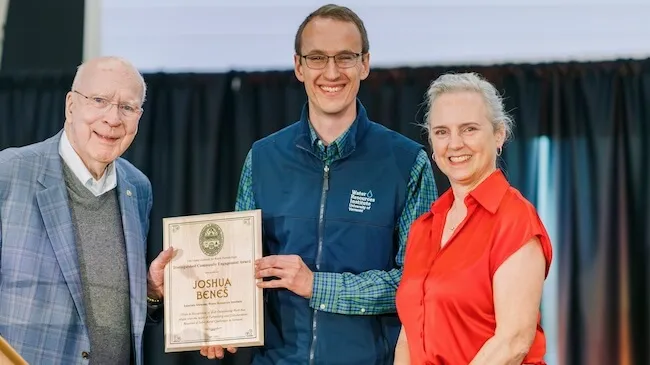
The Leahy Institute presented its latest recipient of its Distinguished Community Engagement Award during the afternoon session. Former Senator Leahy presented the 2026 award to Joshua Beneš, associate director for research facilities and networks for both UVM’s Water Resources Institute and its Field Research/Instruction and Land Stewardship Core.
The final session of the day, the afternoon keynote, explored the question: what’s possible for rural prosperity? Panel members Beth Haskovec of the Wisconsin Office of rural Prosperity, Rafael Carbonell of Harvard Kennedy School’s Taubman Center for State and Local Government, and Maura Collins of the Vermont Housing Finance Agency discussed the challenges of tax bases, the housing crunch, and the need to find creative ways to fill gaps in federal funding. The summit’s formal program closed with the panelists’ ideas of Vermont’s rural development “superpower,” some nominees for which included the Vermont Council on Rural Development, Vermonter’s “dogged spirit of entrepreneurship,” and, as Haskovec noted, the work of the Leahy Institute itself.