In the Field: Connecting, Learning, and Sharing Through Stormwater Site Visits
By Jill Sarazen, Green Infrastructure Collaborative Coordinator, Lake Champlain Sea Grant
This July, 30 stormwater practitioners gathered in Williston, VT, to visit four stormwater infrastructure projects and learn about the Town of Williston’s approach to stormwater management. Lisa Chiccetti, Williston Stormwater Coordinator, and Jill Sarazen, LCSG Green Infrastructure Collaborative Coordinator, co-led the tour. Attendees held a variety of roles, including municipal and state agency staff, engineers and designers, project managers, and students.
Earlier in the summer, Jill, Lisa, and their summer interns worked together to select sites with unique histories and varied treatment practices to give attendees an overview of Williston’s stormwater management program.
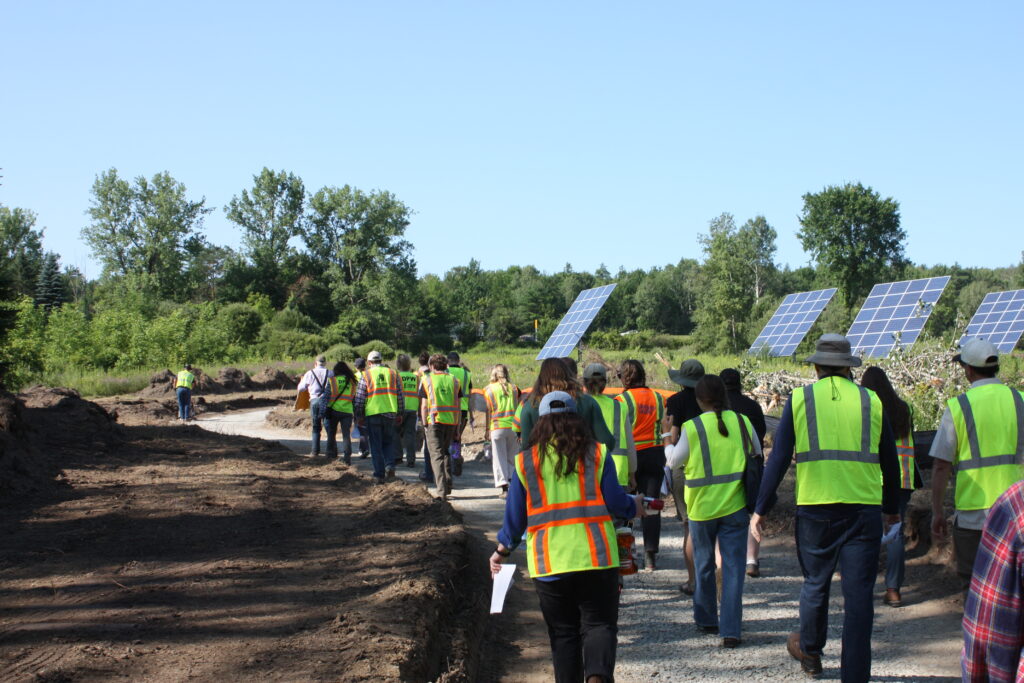
The first stop along the tour was a gravel wetland construction site, located behind the Williston Town Hall. This project was outlined in the Town’s 2016 Allen Brook Flow Restoration Plan and located on a town-owned parcel previously used for haying, recreation, and a small solar farm. The property will continue to have mixed use and trails, and the new stormwater project will manage previously untreated stormwater from 22 acres. The project was funded by Williston’s MS4 Community Formula Grant Award from the VT Department of Environmental Conservation with a 20% town match. During the tour, attendees saw the active construction site and discussed the design, site constraints, wetland permitting process, and site access planning for construction and maintenance.
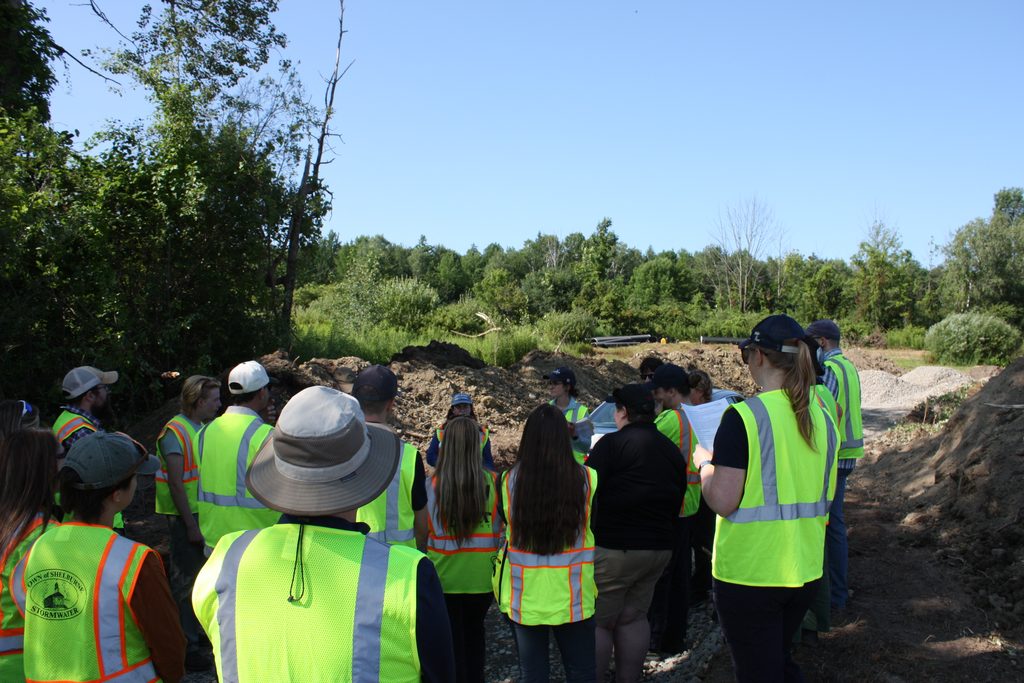
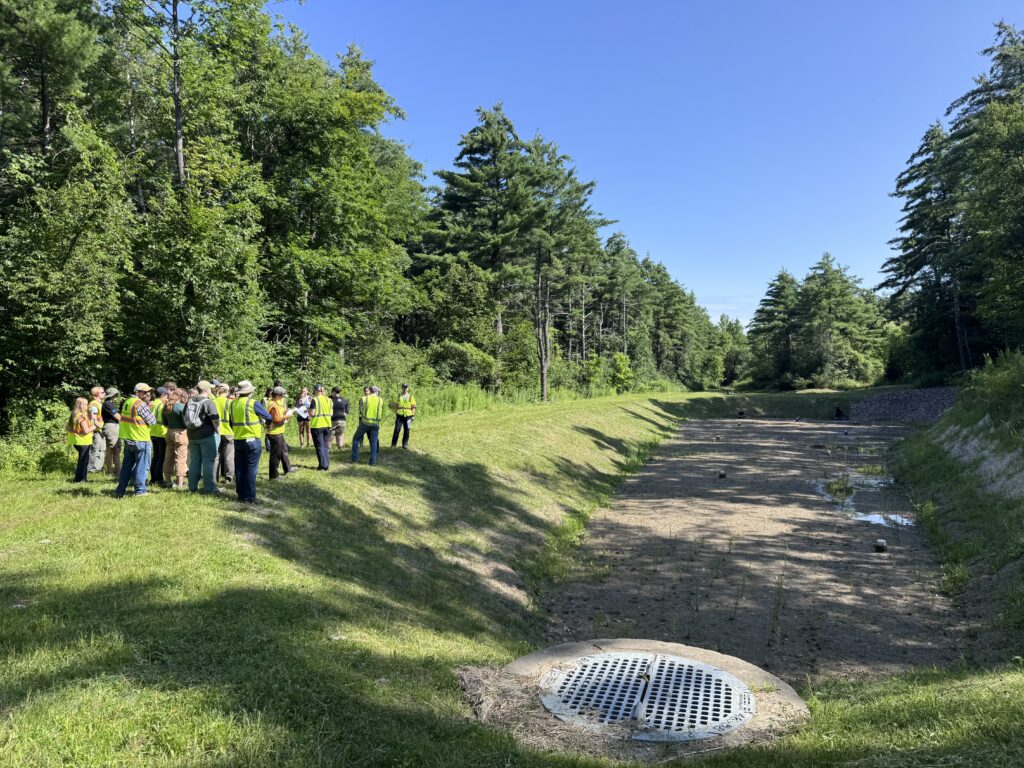
The second stop was a recent gravel wetland retrofit project completed in fall 2025. Previously, this project was an older dry pond treating runoff from a large residential neighborhood. Upgrading the design to a gravel wetland included the addition of a new pre-treatment forebay, enlarging the main treatment system, and adding a new subsurface gravel layer. This project is part of Williston’s Phosphorus Control Plan. At this site, the group discussed challenges with establishing plants in gravel wetlands and soil media specifications.
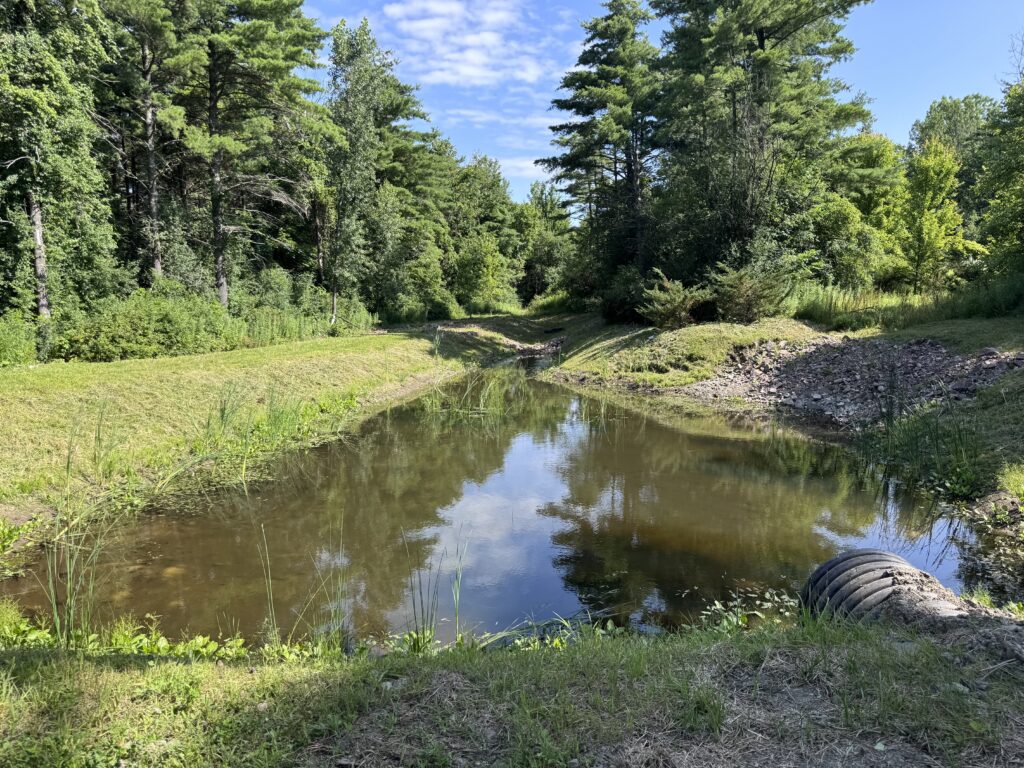
To round out the tour, the group visited a wet pond and a subsurface dry well system, both located in residential neighborhoods. Challenges with wet pond maintenance and controlling invasives were discussed. At the dry well system, the group was very interested in the effectiveness of smaller distributed systems, the relatively low cost, and the low-maintenance solution the project provides.
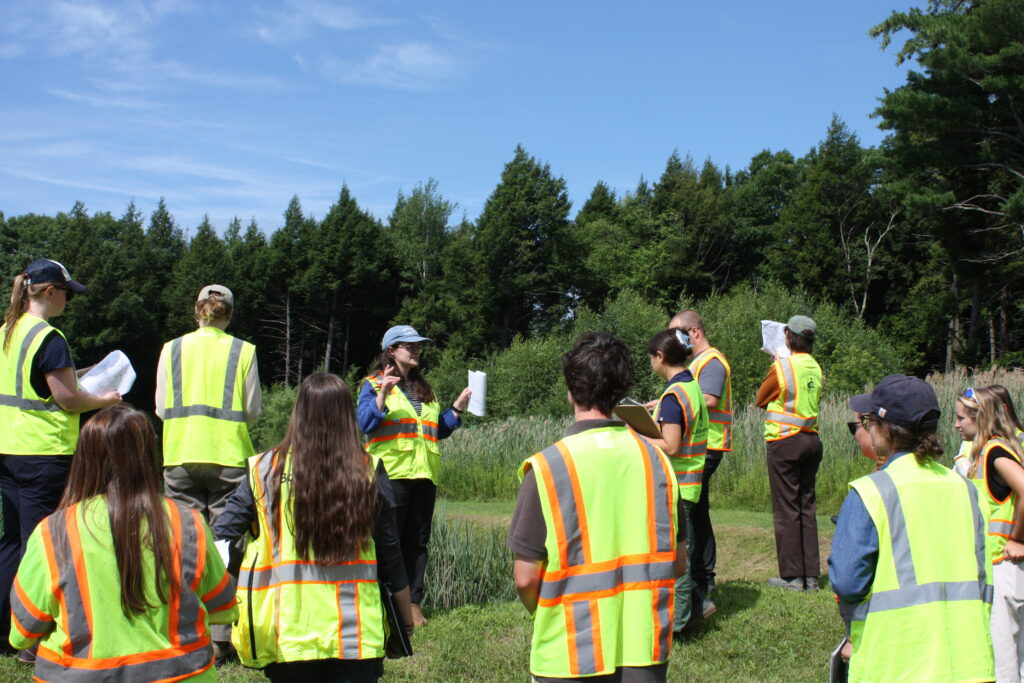
One attendee showed curiosity about applying similar subsurface systems elsewhere, expressing, “for sandy soils, this treatment practice puts less pressure and infrastructure burden on neighborhoods in need of stormwater management.”
The tour was the 5th Annual Lake Champlain Sea Grant Green Stormwater Infrastructure Tour and provided an informal setting for practitioners to make new connections and exchange ideas while enjoying a beautiful Vermont summer day. Thanks to all the municipal partners who have worked with us to make these site visits happen. To learn more, see photos and descriptions from Burlington, South Burlington, Essex and Essex Junction, and Shelburne.