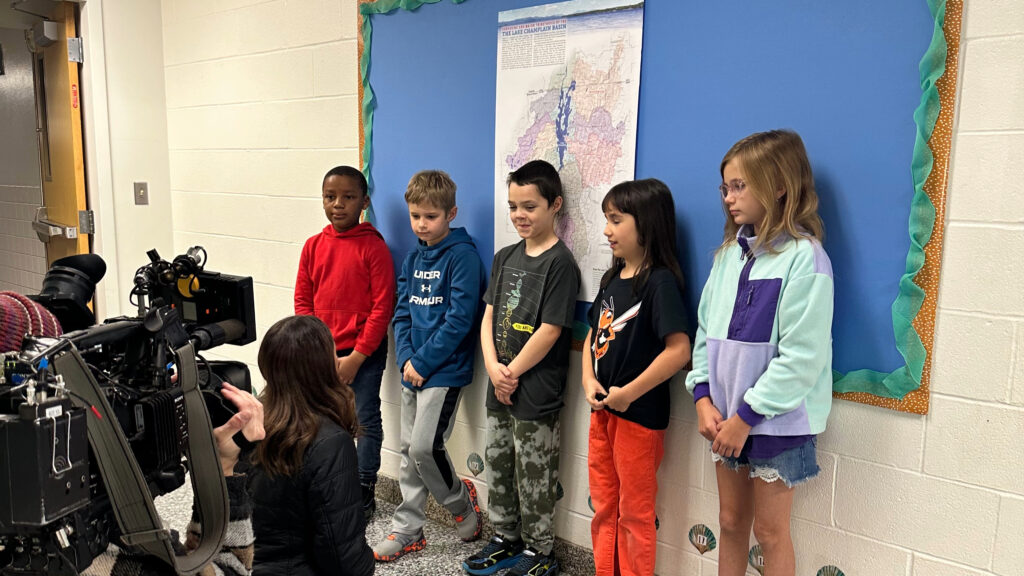
Learning From the Watershed: A Fourth Grade Teacher’s Perspective
By Elizabeth Herkalo, Plattsburgh City School District Fourth Grade Teacher
Background: Supported by a Lake Champlain Basin Program Small Education and Outreach Grant, the “Classrooms to Watersheds” project connected Plattsburgh City School District students and teachers with hands-on watershed science and stewardship. Through stream monitoring, microplastic field investigations, watershed pollution models, and other activities, Lake Champlain Sea Grant’s Watershed Alliance education team worked with Plattsburgh High School Environmental Science students, who then brought these lessons to fourth- and sixth-grade classrooms as “Watershed Ambassadors.” The project also gave teachers new tools and approaches for incorporating local watershed science into their classrooms. The following is the perspective of one teacher who participated in the grant during its first year–Tori DesRocher, Lake Champlain Sea Grant.
As a fourth-grade teacher, I’m always looking for ways to teach lessons with an emotional impact. There is a big difference between reading about a watershed in a textbook and standing outside with your classmates, looking at a stream, asking questions, collecting data, and realizing that the water in front of you is connected to the lake in your community. When students can get their hands dirty and work alongside scientists and educators, they see how their learning connects to the world around them; the lesson becomes something they remember.
That was one of the most meaningful parts of this experience for my fourth-grade students. Over the course of the program, they had the opportunity to explore watershed science through several hands-on experiences, including handling macroinvertebrates from the stream, watershed pollution models, and learning about microplastics by removing them from the beach. Each program gave students a different way to understand the Lake Champlain watershed, but together they helped build a much bigger picture. It demonstrated the impact of our actions on the system, the wildlife, and ourselves. They weren’t just learning vocabulary words like watershed, water quality, or habitat. They were beginning to understand what those words actually meant. These experiences gave students something that is difficult to recreate inside a classroom: a reason to care.
The Power of Learning From Someone Just a Few Years Older
One of the most unique and meaningful parts of the experience was having high school Watershed Ambassadors work directly with our fourth-grade students. There was something special about watching the students interact with these older students. The Watershed Ambassadors weren’t adults standing at the front of the room delivering a lesson. They were young people who were excited, engaged, and provided encouragement to love learning. That made a difference. Our fourth graders could see themselves in the Ambassadors. They could ask questions without feeling intimidated. They were able to see high school students talking confidently about science, working outdoors, explaining environmental concepts, and taking on leadership roles. For the fourth graders, the Ambassadors became more than instructors. They became role models. When a high school student explains something, demonstrates a scientific technique, or shares why they care about the environment, elementary students are seeing a very real example of where their own learning can lead.
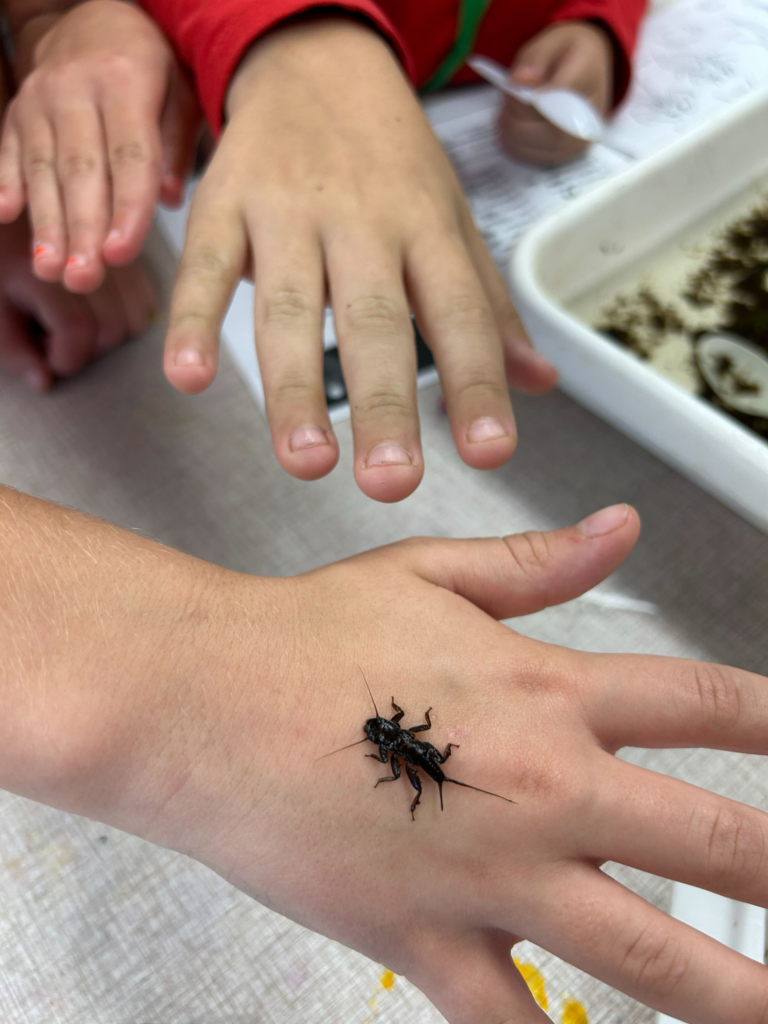
As a teacher, I found myself watching the Ambassadors as much as I was watching my own students. They were developing their own skills while teaching. They had to communicate complicated ideas in ways that younger students could understand. They had to be patient, flexible, and responsive. They learned how to read a group of students and adjust their approach when something wasn’t working. In other words, they were learning how to teach. That is an important part of this program that can sometimes be overlooked. The impact wasn’t one-directional. The fourth graders were learning about watersheds, but the high school Watershed Ambassadors were also learning how to become leaders, communicators, and educators.
Seeing Students See Themselves as Scientists
Perhaps the greatest reward was watching students begin to see themselves differently. They weren’t just fourth graders completing a science activity. They were collecting information. They were making observations. They were asking scientific questions. They were investigating environmental problems. They were working together to make sense of what they were seeing. They were scientists. And having high school Watershed Ambassadors there helped reinforce that idea. Students could look at someone only a few years older and think,
“I could do that someday.”
We often talk about the importance of educating the next generation of environmental stewards. But stewardship begins with connection. Students need opportunities to build relationships with the places around them, understand how those places work, and recognize that their actions matter. It also reminded me that some of the most powerful learning happens when we allow students to step outside the traditional classroom and into the environment they are learning about.
As a teacher, I couldn’t ask for a better experience.