From Seafood Scraps to Sustainable Solutions: UVM Student Studies Seafood Preferences and Byproduct Reuse
By John Brawley, Ph.D., Aquaculture Education and Outreach Specialist, Lake Champlain Sea Grant
When you sit down to enjoy a seafood meal, you probably focus on the part in front of you: a fresh filet, scallops, shrimp, or oysters prepared and ready to eat. But behind every seafood meal is a larger story. What happens to the shells, frames, heads, trimmings, and other parts that never make it to the plate?
Hannah Lewis, a master’s student in UVM’s Food Systems Program, is exploring that question through her research on seafood byproduct reuse, also known as waste valorization. Her work examines how seafood byproducts move through the regional economy, where reuse opportunities already exist, and what barriers may limit their broader use.
As highlighted in recent outreach work by Sea Grant’s Great Lakes Aquaculture Collaborative (GLAC), seafood and aquaculture systems are connected to businesses and consumers well beyond coastal communities. Seafood processing also takes place throughout the region in seafood markets, grocery stores, restaurants, aquaculture operations, and other businesses. Reusing seafood byproducts is not new. For many years, fish frames, shells, and other materials have been incorporated into agricultural fertilizers, bait, and animal feeds. More recently, seafood byproducts have found uses in biostimulants, pet foods, and other value-added products. These approaches can help close the economic circle of seafood production and consumption, but important questions remain: What limits their efficiency and success? Where are the opportunities for smaller businesses? And what kinds of regional partnerships could help make seafood byproduct reuse more practical?
To answer these questions, Lewis is looking beyond the waste stream itself and examining the network of seafood businesses, processors, service providers, end users, and institutions that determine whether byproducts become a disposal challenge or a useful regional resource. By mapping these connections, Lewis hopes to identify both the barriers that limit seafood byproduct reuse and the partnerships that could help turn underused materials into regional economic and environmental opportunities.
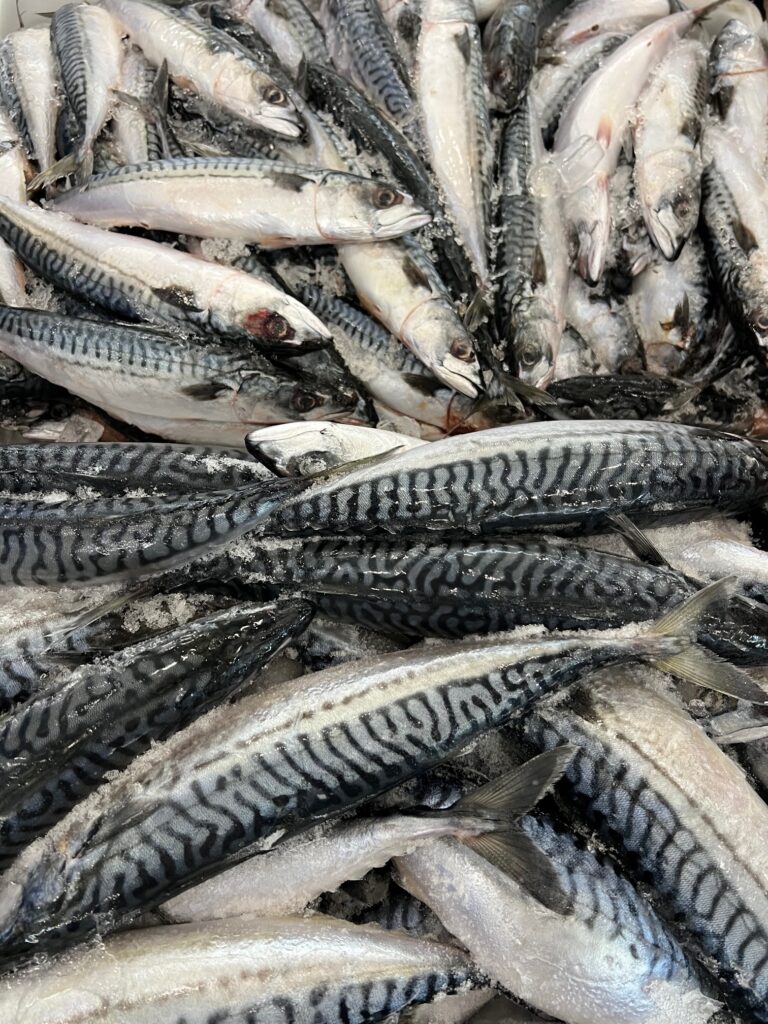
Photo: Atlantic Mackerel (Scomber scombrus)
To complement this work, Lewis has received a UVM Sustainable Campus Fund (SCF) grant to study seafood preferences on campus, including how students, faculty, and staff perceive wild-caught and farmed seafood. The survey will help connect questions about seafood consumption with broader issues of sustainability, aquaculture, and seafood byproduct reuse. The SCF-supported project will run through the fall semester and include a series of tasting events and workshops on campus.
To further ground this work in real-world seafood systems, Lewis and I recently attended the Seafood Expo North America in Boston, one of the largest seafood trade events in the region. The Expo provided an opportunity to speak with seafood businesses, processors, technology providers, sustainability organizations, and others working across the seafood supply chain. These conversations helped reinforce a central theme of Lewis’ research: seafood byproduct reuse is not only a technical challenge, but also a network challenge. Successful reuse depends on the relationships among those who generate byproducts, those who can transport or process them, and those who can turn them into useful products.
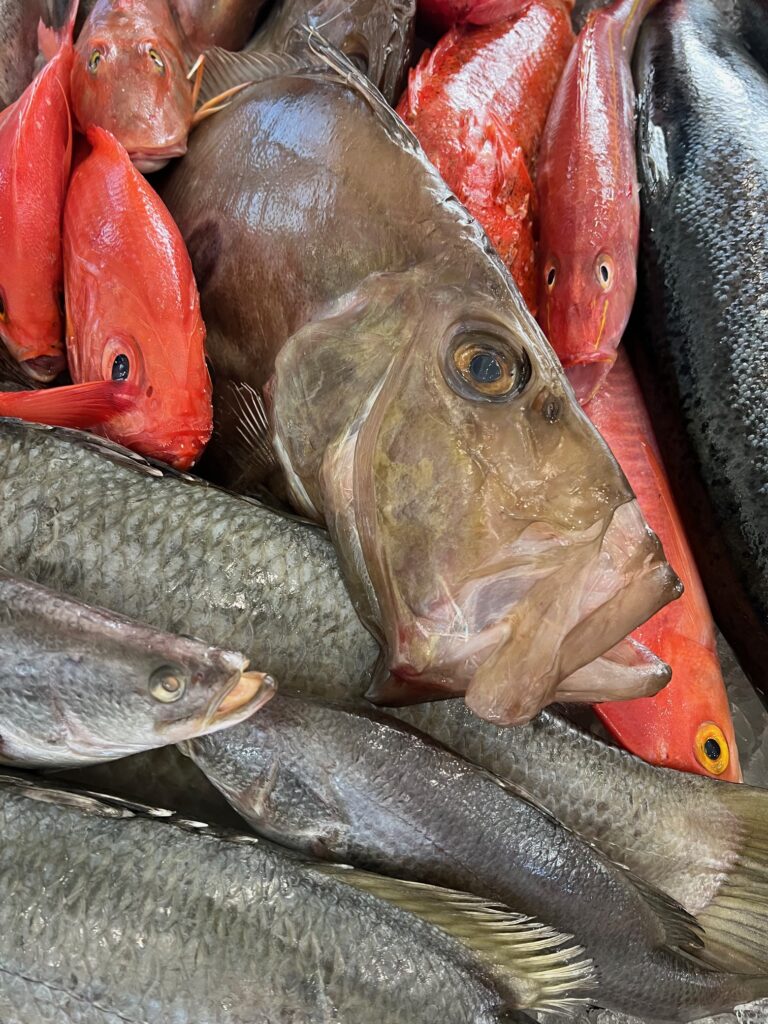
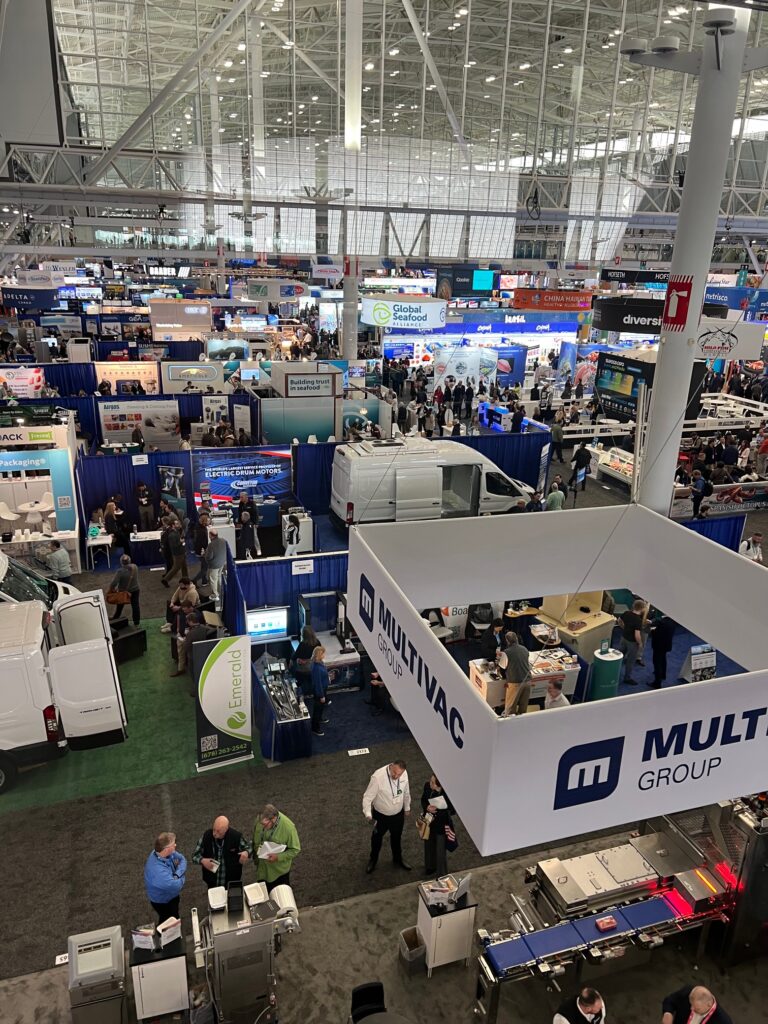
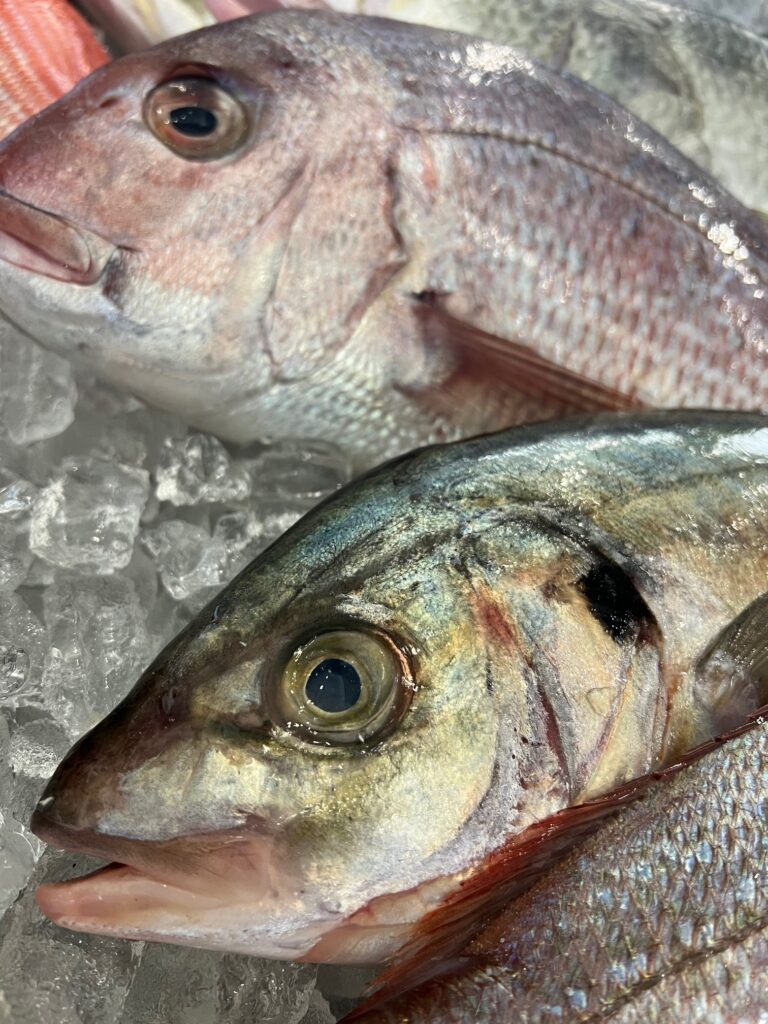
Photos: Displays of various fish and exhibitors at the Seafood Expo North America
The Expo also highlighted the growing interest in circular economy approaches within the seafood sector. Across the industry, businesses are looking for ways to reduce waste, improve efficiency, and create value from materials that might otherwise be discarded. For large seafood companies, some of these pathways are already well established. For smaller seafood businesses, including small processors, seafood markets, restaurants, shellfish growers, and aquaculture producers, the opportunities can be more difficult to access. Lewis’ research is focused on understanding where those barriers occur and what kinds of partnerships or cooperative models might make seafood byproduct reuse more practical at a regional scale.
This work also connects directly with Lake Champlain Sea Grant and Great Lakes Aquaculture Collaborative priorities. Seafood literacy, aquaculture education, waste reduction, and regional food system resilience are all part of a broader conversation about how communities understand and support sustainable seafood. In Vermont and the Lake Champlain basin, seafood may not always be the first food system that comes to mind, but aquaculture, fisheries, seafood markets, restaurants, composters, farms, and consumers are all connected to larger regional and national seafood supply chains. Helping people understand these relationships is an important part of public outreach. As one of Lewis’ academic advisors, I am also helping integrate the project into public outreach efforts focused on seafood literacy, aquaculture education, waste reduction, and regional food systems.
The SCF-funded campus survey will provide a useful foundation for this outreach. By asking members of the UVM community about their preferences and perceptions of wild-caught and farmed seafood, Lewis’ project can help identify common questions, knowledge gaps, and areas of interest. Those findings will inform broader LCSG and GLAC education efforts this year, including public-facing conversations about aquaculture, seafood sustainability, and the role of innovation in regional food systems.
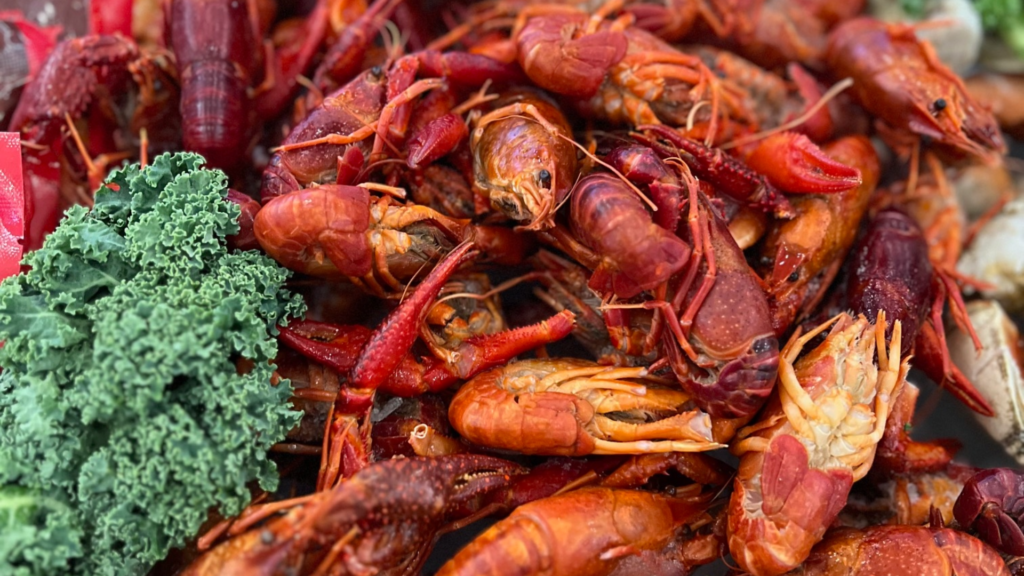
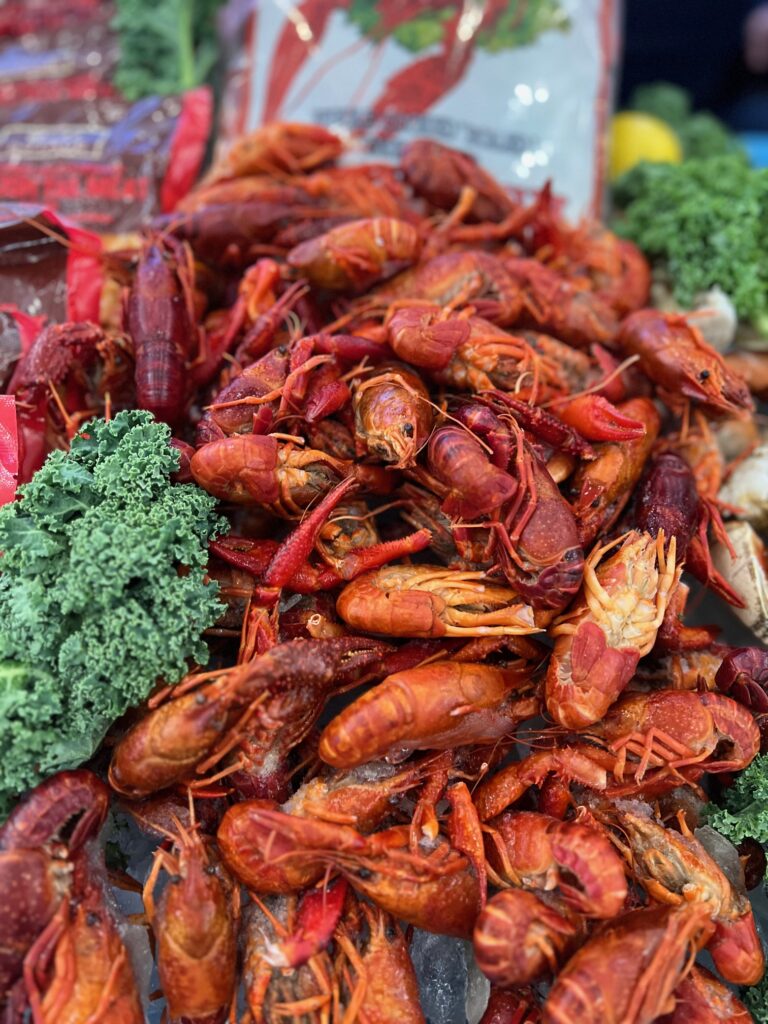
Photo: Fresh display of prepared crawfish
One upcoming opportunity to continue this conversation will be a public discussion on aquaculture at Hotel Vermont on June 8. The event will bring together researchers, agency partners, students, food system professionals, and community members to discuss aquaculture in Vermont and the broader region. Topics are expected to include fish culture, seafood sustainability, public perceptions of aquaculture, and opportunities for innovation in local and regional food systems. Lewis’ work on seafood preferences and byproduct reuse fits naturally within this broader discussion because it asks how seafood systems can become more efficient, more understandable, and more connected to community values.
Looking ahead, Lewis will continue developing her research on seafood byproduct reuse while launching the SCF-supported campus survey. Together, these efforts will help connect the “front end” of seafood systems (what people choose to eat and why) with the “back end” of those systems (what happens to the materials that remain after seafood is processed and consumed). By mapping relationships, identifying barriers, and listening to both businesses and consumers, this work can help point toward practical opportunities for reducing waste and creating value from seafood byproducts.
The larger goal is not simply to ask what happens to the rest of the fish. It is to better understand how seafood systems work, where useful materials are lost, and how research, outreach, and partnerships can help build more sustainable seafood systems for the region.
Learn more about fisheries & aquaculture by visiting our webpage.