Small Gardens, Big Impact: Rain Gardens Help Protect Burlington’s Waterways
By Michelle Lockhart, Land Use & Water Quality Educator, Lake Champlain Sea Grant
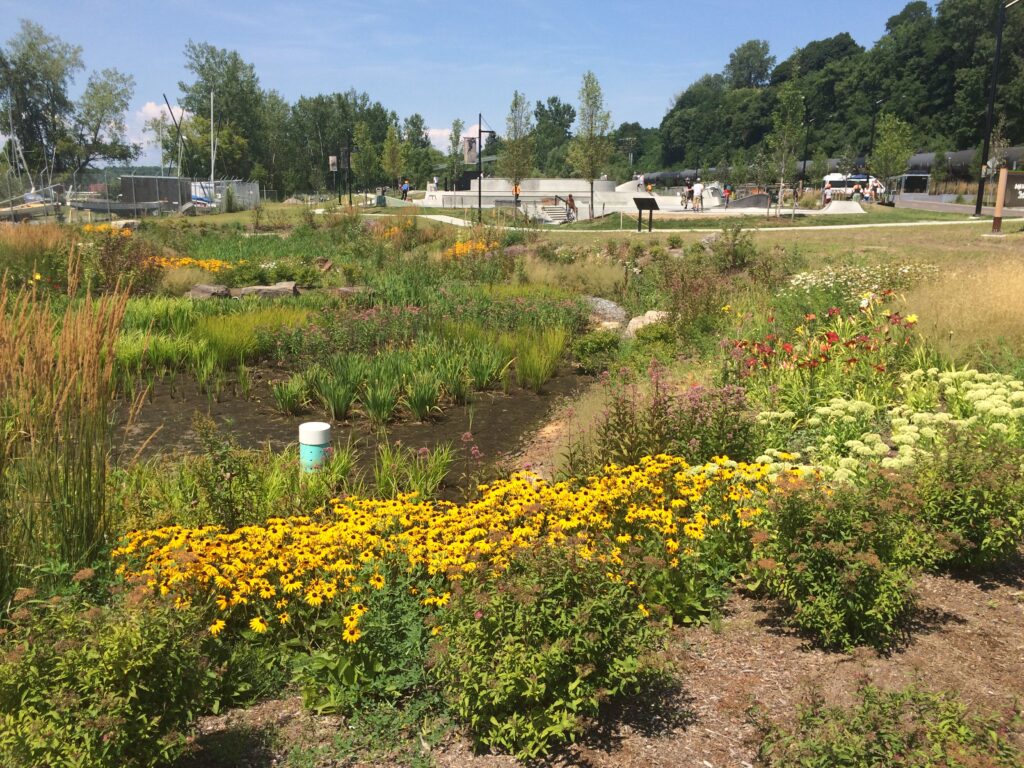
Homeowners in Burlington have been building special gardens to capture and filter stormwater. Rain gardens are not your average garden; they are designed basins planted with native vegetation that offer a multitude of benefits. Rain gardens act as “temporary bathtubs”, holding rainwater during a storm and allowing it to percolate into the ground rather than flowing into the streets and adding to stormwater runoff that can contribute excess sediment, nutrients, and pollutants into Lake Champlain or other local waterways. Rain gardens also help filter water and can provide habitat for bees, butterflies, and birds.
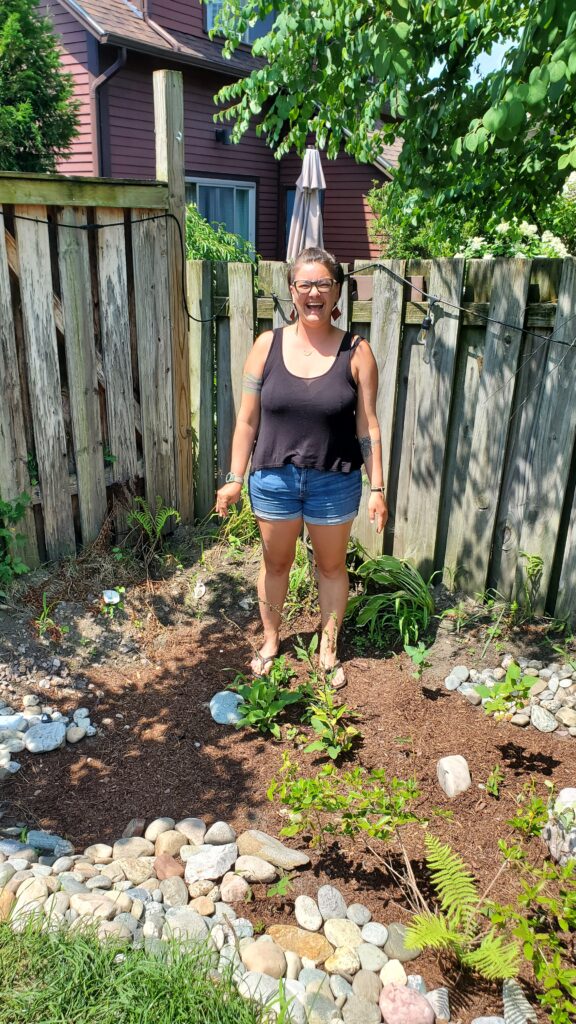
“We were excited to promote ecological love for our property that extends to the lake,” said Sequoia Young, who participated in the BLUE Stormwater Program, which offers property evaluations and rebates for installing approved stormwater practices. Sequouia designed and implemented her own rain garden with support from BLUE last summer, and with help from friends who dug it out in exchange for pizza. “We found interesting artifacts in the backyard while digging—a bent metal spoon and children’s toys that made me feel connected to who used to live here.” The garden is planted with native plants such as elderberry and ferns, and surrounded by river rock. Sequoia connected a gutter downspout into the garden that was previously causing erosion issues for the sandy soil of her property.
Photo: Burlington resident Sequoia celebrating a completed rain garden.
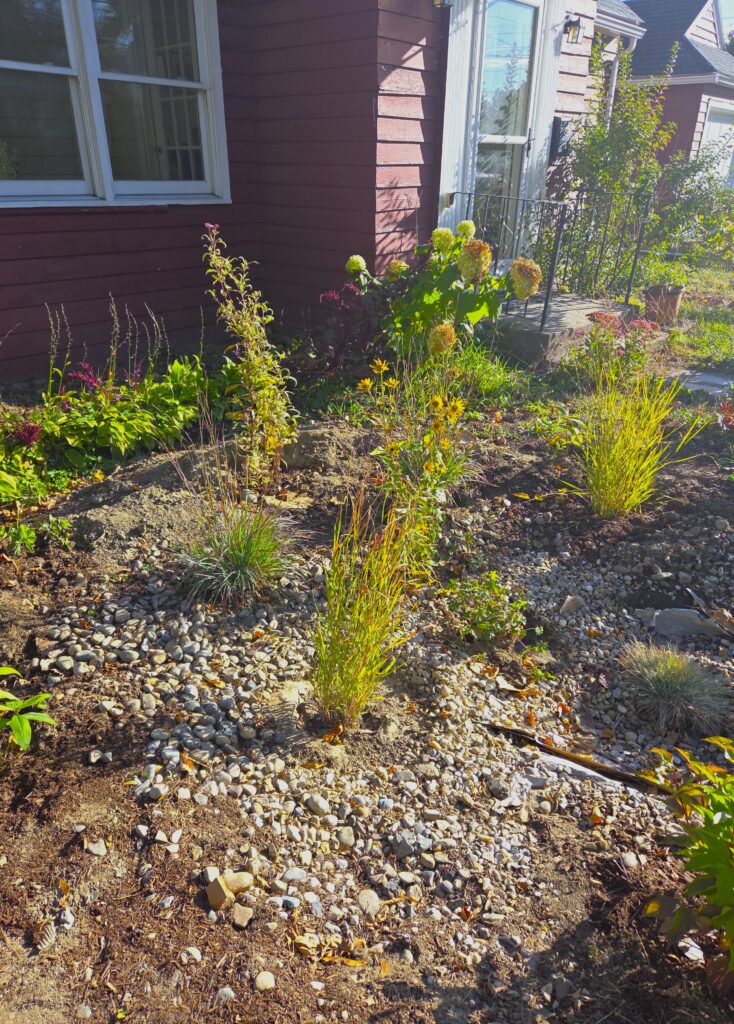
Burlington residents Amaya and Carlos Andres also built a rain garden last summer to help encourage water to flow away from the foundation of their home and an embankment that was at risk of eroding. They dug a wide, organically shaped rain garden and planted native plants such as red-stemmed dogwood and switchgrass, which added to existing border plantings of hydrangea in their front yard. Amaya and Carlos found the most rewarding part of building their own rain garden was being involved in the plant selection, and they are “excited to see what happens as the plants continue to grow.”
While building a rain garden on your own may initially seem intimidating, BLUE can provide technical support and guidance throughout the process. Many homeowners already have some of the tools needed to get started:
- Measuring tape, stakes, and string to define rain garden area
- Shovels to dig a garden basin
- A wheelbarrow to move soil
- An edger or flat shovel to form clean basin edges
- A rake or hoe to smooth the soil and ensure a flat bottom
Photo: Rain garden designed and built by Amaya and Carlons Andres with Support from BLUE Stormwater Program
Spring is a great time to plant new gardens, especially those that can soak up excess water and help protect the lake! If you are interested in learning more, view our Rain Garden story map with design considerations and photos showing different rain garden styles, or read our Rain Garden Manual. If you are a resident in Burlington or Williston, you can sign up for a free BLUE Stormwater Evaluation and become eligible to receive up to $1,500 for rain garden projects. If located elsewhere in Vermont, reach out to neighboring stormwater programs such as Storm Smart, Lake Wise, or Stream Wise to learn more.