As our world adapts to the changing climate, so must the food on our plates. At UVM’s Climate Kitchen, researchers are exploring ways to bring sustainable ingredients into everyday cooking, while making sure the dishes they create are ones that people actually want to eat. One team is focusing on mung beans and engaging the community to discover what truly tastes good.
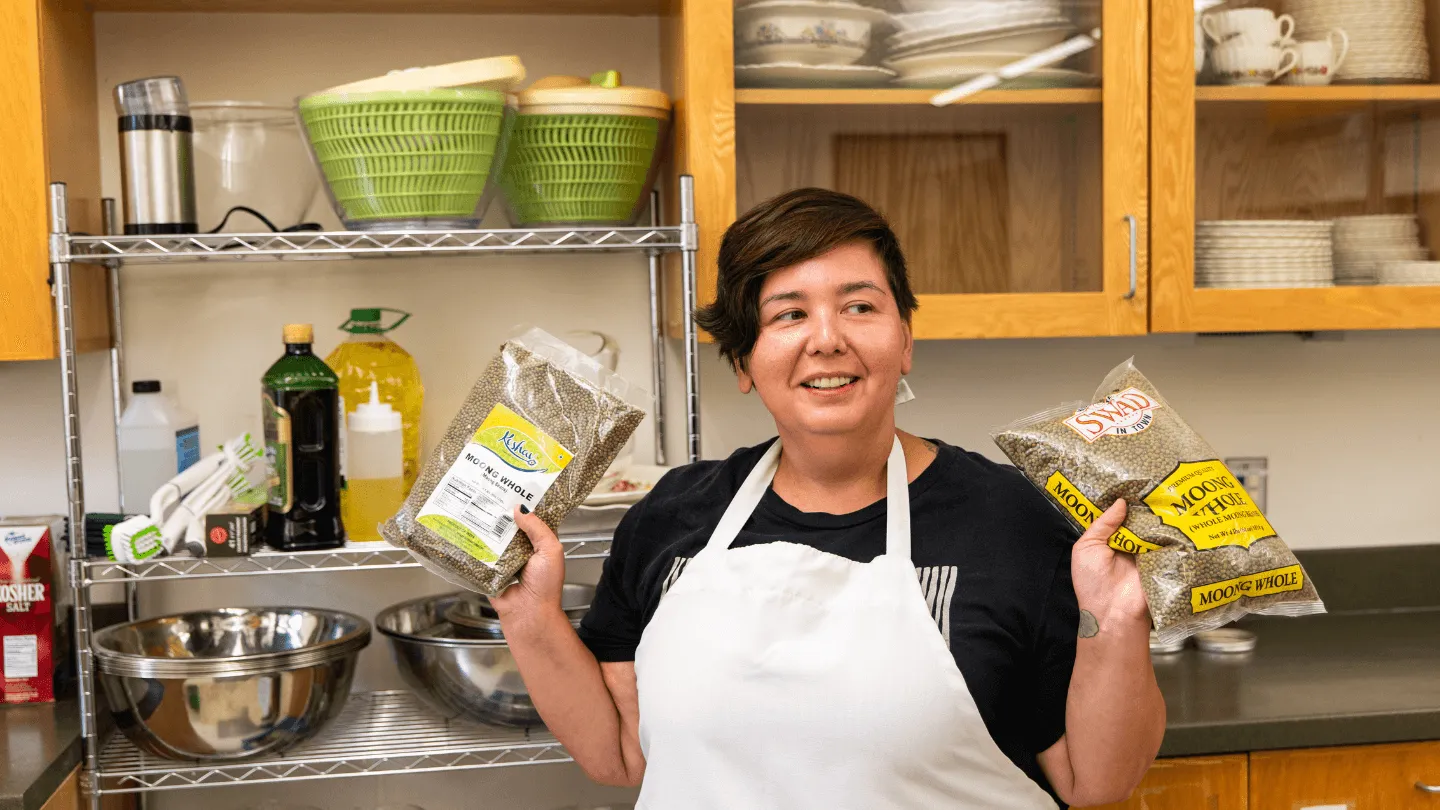
Mung beans are considered an environmentally friendly protein because they have a short growing time, are excellent nitrogen fixers, and require far less water than animal proteins. While they may be unfamiliar to many Americans, mung beans are a staple in Asian cuisine.
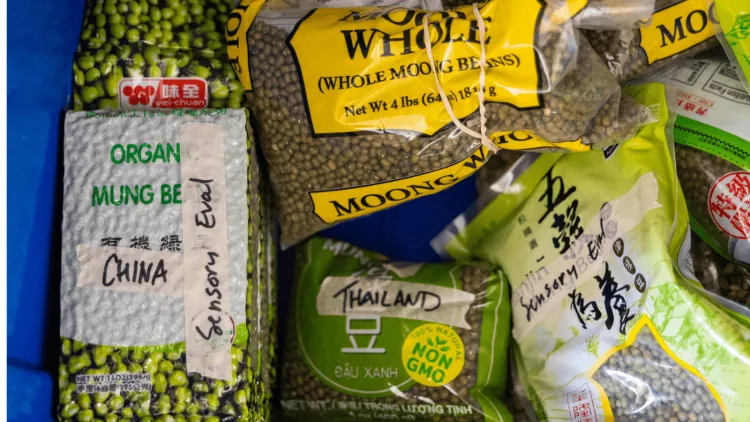
Alexis Yamashita, a Food Systems PhD candidate on the project, said that the team hopes to support local mung bean cultivation in Vermont. "If we focus on increasing biodiversity in our local food system, that only strengthens our resiliency in the face of a changing climate landscape,” she said.
Yamashita is part of an interdisciplinary research team including Dr. Eric Bishop von Wettberg, Dr. Dan Tobin, graduate student Brian W. Griffith, and Plant and Soil Sciences PhD student Jasmine Hart. They’ve partnered with farmers and community members at New Farms for New Americans, a Burlington-based gardening and agriculture program for immigrants and refugees. Together, they aim to develop a local mung bean that tastes good to the communities that typically eat this legume.
The short-term outcomes for this project are to have a better understanding of taste and texture with mung beans, but the project has longer-term goals to raise the profile of mung beans in Vermont. Yamashita said they could find which varieties will do well in Vermont or perhaps even maybe a new variety that fits local taste preferences and is also adapted to grow well in our region.
While some of the research has been in the field seeing which varieties grow best in Vermont, the delicious part happens in the Climate Kitchen in sensory evaluations.
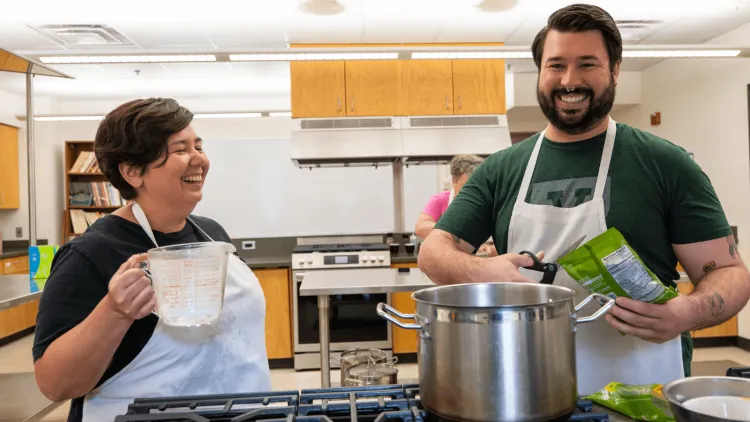
“Sensory science is a hard science,” said Griffith. “There's a lot of extant literature and evidence-based research behind it that tells you exactly what to do, down to the aroma of the room.” Yet the standard methodology didn’t resonate with the immigrant and refugee community. “We worked with our community partners to pare that down and make it a more community-engaged experience,” said Griffith.
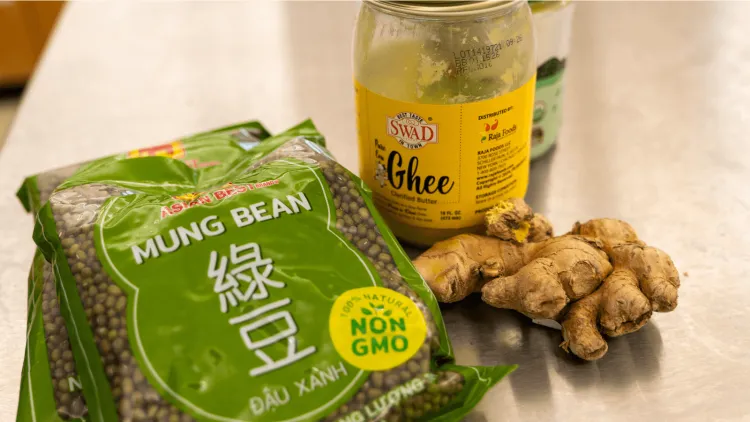
They co-created a process they call “the sensory sandwich.” First, they held an informal conversation about mung beans and seed varieties, discussing which tasters generally preferred for cooking and growing. Then they served three samples of dal made with different varieties of mung beans but cooked using the same recipe. Tasters were told to rank those different dals based on four attributes; flavor, taste, texture, and overall liking. After the ranking, they had another conversation about each of the dals to learn more specifically what they liked and didn’t like, and how they might use the mung beans in their own cooking.
This process helped the team gather more information and delineate the mung beans more accurately. Yamashita said, “It's an innovative approach to look at culinary attributes, and the preferences of food and taste in communities to really drive that work.”
“It's really gratifying to get to the opportunity to work with a community and really reflect upon our position as a research university of how we can better approach our research methods in ways that resonate with community members that aren't in an academic research setting,” said Yamashita. “A guiding concept as we're working through the project, is how do we make academic research not feel like research?”
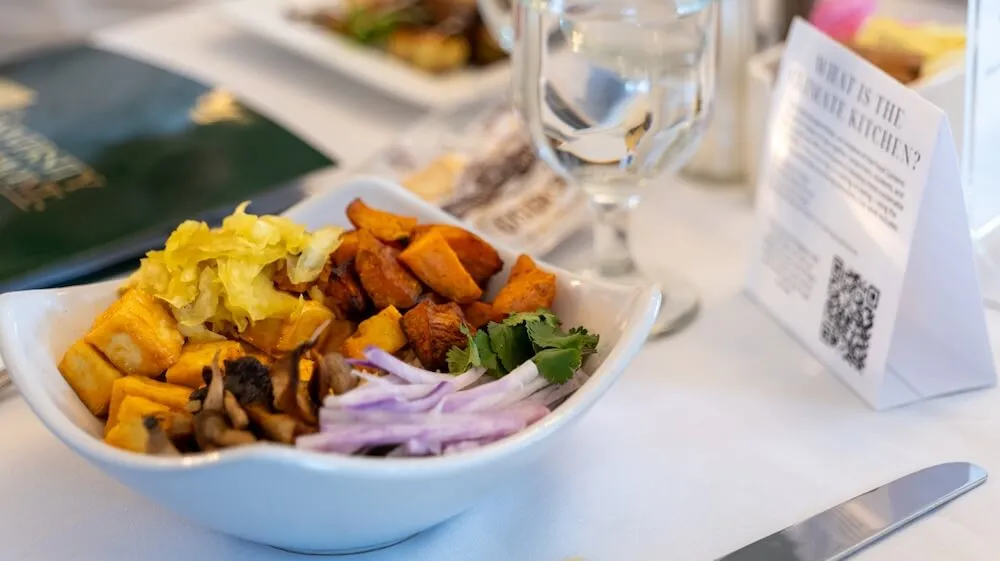
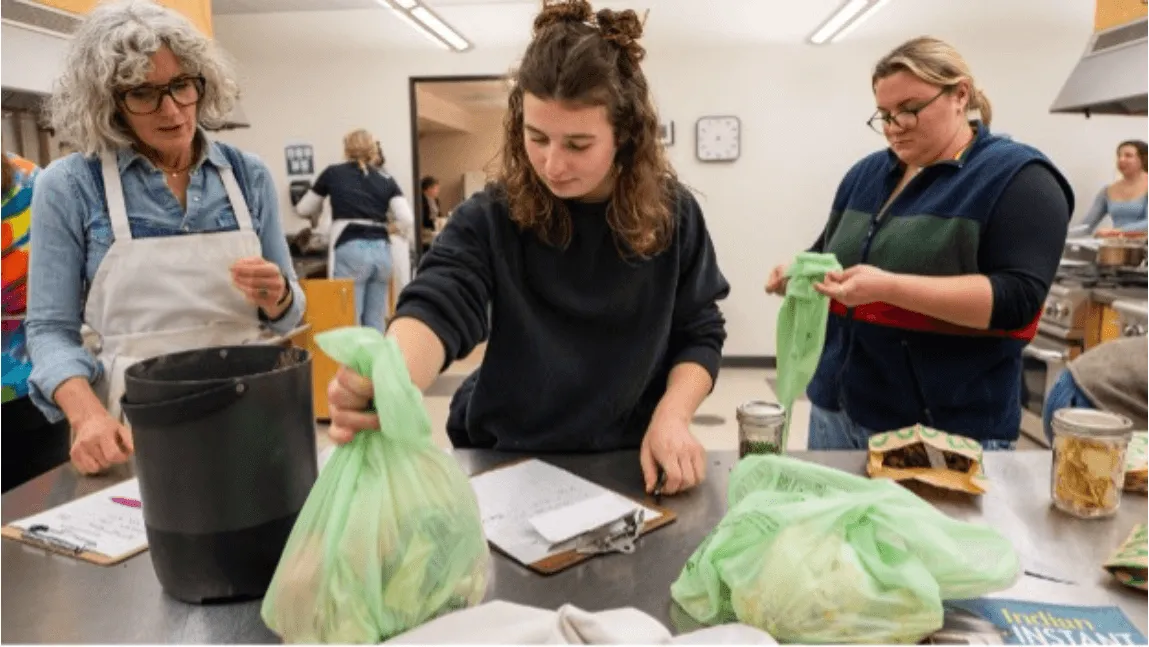
This project is one of many at the UVM Climate Kitchen, a maker’s space for collaboration and experimentation to help reimagine the connection between food and climate change. Their projects range from pop-up lunches featuring circular menus to studying tabletop composters and more. “Historically, chefs, cooks, food experts are sort of left out of the academy space,” said Griffith. “And so, what I really enjoy about working with an initiative like the Climate Kitchen and being in the Food Systems program at UVM, I can bridge my love of what goes on in the kitchen and academia itself.”
About the Food Systems Research Institute:
The Food Systems Research Institute (FSRI) at the University of Vermont (UVM) funds collaborative research that puts people and the planet first, unites disciplines and communities, and answers complex questions about food systems.
The FSRI gives researchers the freedom, resources, and time to engage community stakeholders, including decision-makers, farmers, and food systems actors, about issues and opportunities across our food system. This results in relevant, widely disseminated research that informs policies, practices, and programs locally and regionally for a more resilient and accessible food future for all.