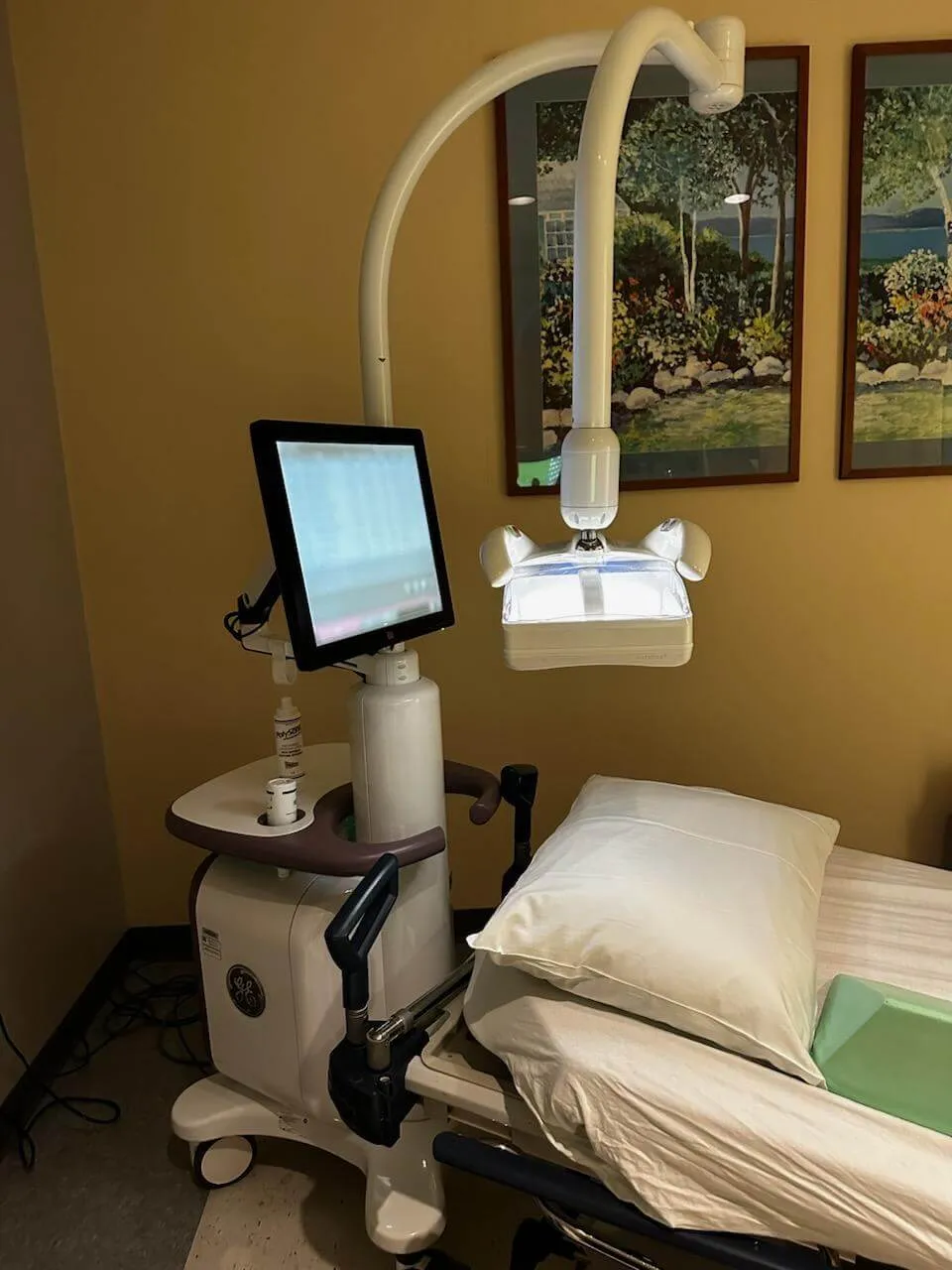
Research from University of Vermont Cancer Center investigators Brian Sprague, PhD and Hannah Perry, MD has been published in the Journal of the American College of Radiology, providing new evidence that automated breast ultrasound (ABUS) may offer important advantages for supplemental breast cancer screening in women with dense breasts.
The study, "Comparison of Supplemental Breast Cancer Screening Outcomes for Automated Versus Handheld Ultrasound," analyzed more than 25,000 screening ultrasound examinations performed across 27 radiology facilities participating in the Breast Cancer Surveillance Consortium (BCSC). Researchers compared outcomes from automated breast ultrasound (ABUS) and handheld ultrasound (HHUS), two methods used to supplement mammography screening for women with dense breast tissue.
The investigators found that ABUS was associated with fewer abnormal interpretations, fewer short-interval follow-up recommendations, and fewer false-positive findings than HHUS, while maintaining a comparable breast cancer detection rate. These findings suggest that ABUS may be an effective alternative to handheld ultrasound and could help reduce unnecessary follow-up imaging while continuing to identify breast cancers at similar rates.
The study was a collaboration within the Breast Cancer Surveillance Consortium, and included data from the Vermont Breast Cancer Surveillance System, the Metro Chicago Breast Cancer Registry, and the San Francisco Mammography Registry.
The findings have already attracted attention from several national and specialty healthcare news outlets, including Oncology Nursing News, Imaging Technology News, The ASCO Post, Applied Radiology, and AuntMinnie. The research was also highlighted in a blog post, by the Breast Cancer Surveillance Consortium, reflecting growing interest in effective supplemental screening options for women with dense breasts.