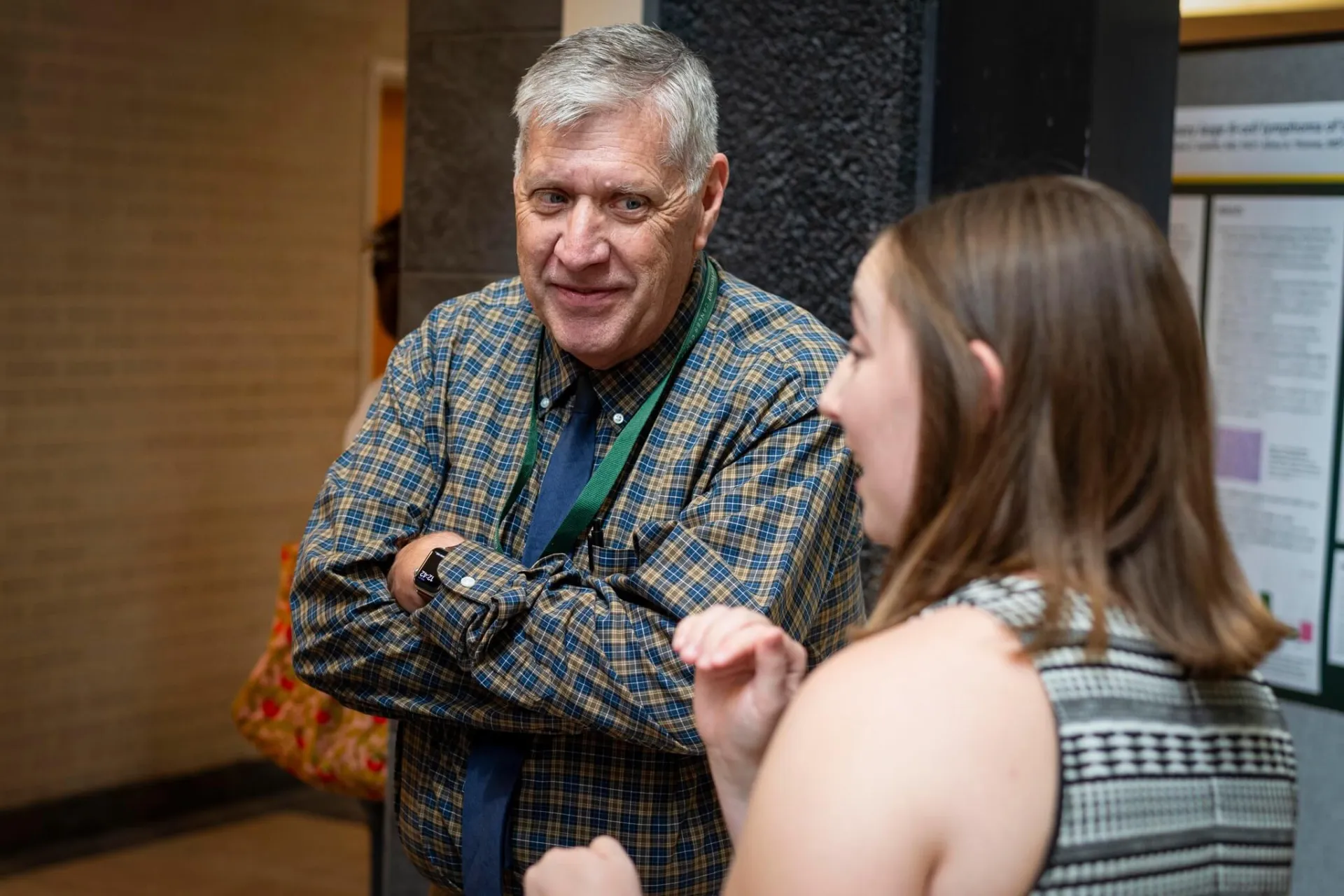
Olivia Varricchione and Safia Muftec, recent graduates of the University of Vermont’s Master’s program in Biostatistics, supported ongoing research activities as trainees with the Vermont Breast Cancer Surveillance System (VBCSS) during their studies. We congratulate Olivia and Safia on earning their degrees and on their accomplishments as emerging researchers in the field.
Through their involvement with VBCSS, Safia and Olivia gained hands-on experience applying statistical methods to large, real-world datasets. Their work supported collaborative research projects using real-word data from the VBCSS, giving them exposure to the complexities of population-based cancer surveillance and screening research. Both students contributed in particular to the ongoing VBCSS study of high-risk benign breast disease, led by Drs. Sprague, Weaver, Ahern, Perry, and Sowden.
Olivia’s research investigated determinants of treatment patterns for high-risk benign breast disease, including predictors of surgical excision after a needle-biopsy diagnosis. She also evaluated the validity of various statistical modeling approaches for the development of models predicting the likelihood of upgrade to a cancer diagnosis when a high-risk benign breast lesion is surgically excised.
Safia’s research investigated patterns of diagnostic work-up for high-risk benign breast disease and characterized the frequency with which multiple high-risk benign breast disease diagnoses are diagnosed concurrently. Ongoing research will evaluate whether the co-occurrence of multiple high-risk benign breast disease diagnoses is associated with an elevated risk of upgrade on surgical excision or risk of a future breast cancer diagnosis.
The contributions of Olivia and Safia reflect VBCSS’s strong commitment to training and mentorship. Their achievements underscore the important role that trainees play in advancing VBCSS research and shaping the future of biostatistics and cancer epidemiology. By integrating graduate trainees into active research studies, the program provides meaningful opportunities for students to develop technical expertise while contributing to impactful scientific work.