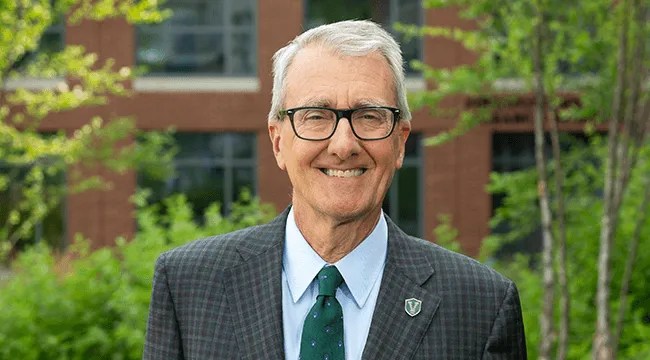
All 15 members of the Circulatory System Devices Panel of the Medical Devices Advisory Committee—including Larner College of Medicine Dean and UVM Chief Medical Affairs Officer Richard L. Page, M.D.—voted that the benefits do not outweigh the risks for the Ventura Interatrial Shunt System in the setting of heart failure with reduced left ventricular ejection fraction (LVEF) in well-treated patients refractory to standard medications, MedPage Today reported.
At the end of the day, the hope that the potential first-of-a-kind permanent implant would answer the unmet need to improve prognosis in these patients failed to trump concerns about its patchy efficacy data, which was based solely on an exploratory, post hoc subgroup analysis of the otherwise disappointing pivotal RELIEVE-HF trial. The committee shared concerns about longer-term risks such as stroke and endocarditis, and the shunt is still a foreign object that will always carry the risk of bacterial seeding, for example.
“We don't want to give false hope,” said Dr. Page. “We don’t want to believe we’re addressing a problem when we don’t have the data to support that.”
Read full story in MedPage Today
This topic was also covered by MedTech Dive, MSN, and TCTMD