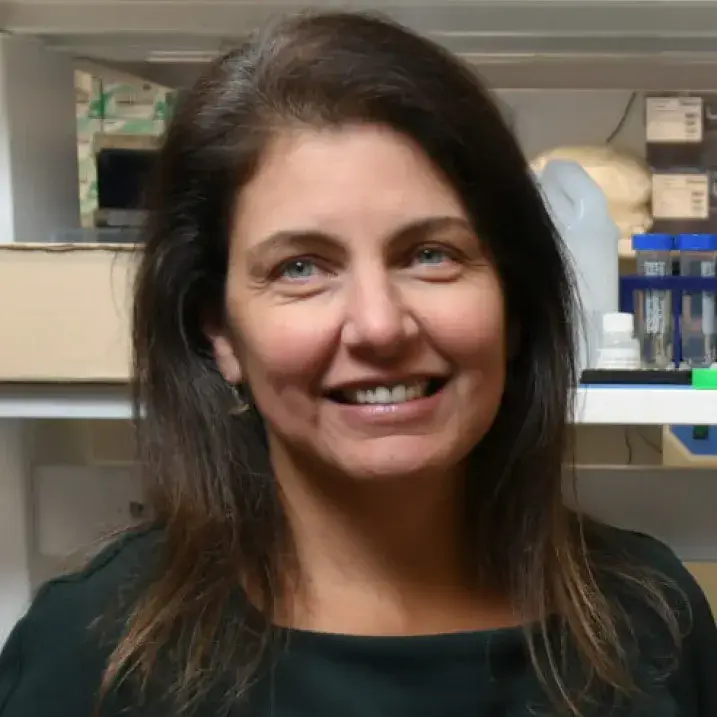
Julie Dragon
Associate Professor
Director, Bioinformatics Core
Director, Vermont Biomedical Research Network - Data Science Core
PRONOUNS she/her
Given Courtyard South, 4th Floor 451
95 Carrigan Drive
Burlington, VT 05405
United States
- Ph.D., Plant Biology, University of Vermont
- B.A. University of Florida
- Postdoctoral Training, McGill University
- Dept of Microbiology and Molecular Genetics
- Vermont Integrative Genomics
- Bioinformatics Shared Resource
JOURNALISTS: Need help scheduling an interview? Contact UVM media relations or search for a UVM expert.
Areas of expertise
data science, bioinformatics, genomics, metagenomics, cancer biology, evolution, team leadership, infectious disease, immunology.
BIO
Julie Dragon is an Associate Professor in the Department of Microbiology and Molecular Genetics, and is Director of the Bioinformatics Core in the Larner College of Medicine and Director of the Data Science Core for the Vermont Biomedical Research Network. Her work centers on the use of large genomics data sets to address evolutionary, environmental, and biomedical questions. Dr. Dragon is committed to leveraging genomics data to address many issues impacting our planet and lives, and making that data accessible to the many teams she collaborates with.
- Bioinformatician finding high performance computing solutions to the analysis of high-throughput -omics data.
- Focused on the analysis of genome-wide expression data and systems biology. Research has expanded to include variant analysis and metagenomics.
- Ph.D. in Plant Biology UVM, studying the evolution of an arctic-subarctic section of marsh sedges with Dr. David Barrington.
- Postdoctoral research, evolution of salt tolerance through hybridization with Dr. Marcia Waterway at McGill University.
- In 2010, joined UVM Department of Microbiology and Molecular Genetics as a bioinformatician with the Bioinformatics Shared Resource.
- In 2014, Director of the Bioinformatics Shared Resource (BSR), the Larner College of Medicine’s bioinformatics core facility.
- In 2017, Director of the Vermont Integrative Genomics Resource (VIGR), which fused the BSR with the Advanced Genome Technologies Core (AGTC).
Publications
Bio
Julie Dragon is an Associate Professor in the Department of Microbiology and Molecular Genetics, and is Director of the Bioinformatics Core in the Larner College of Medicine and Director of the Data Science Core for the Vermont Biomedical Research Network. Her work centers on the use of large genomics data sets to address evolutionary, environmental, and biomedical questions. Dr. Dragon is committed to leveraging genomics data to address many issues impacting our planet and lives, and making that data accessible to the many teams she collaborates with.
- Bioinformatician finding high performance computing solutions to the analysis of high-throughput -omics data.
- Focused on the analysis of genome-wide expression data and systems biology. Research has expanded to include variant analysis and metagenomics.
- Ph.D. in Plant Biology UVM, studying the evolution of an arctic-subarctic section of marsh sedges with Dr. David Barrington.
- Postdoctoral research, evolution of salt tolerance through hybridization with Dr. Marcia Waterway at McGill University.
- In 2010, joined UVM Department of Microbiology and Molecular Genetics as a bioinformatician with the Bioinformatics Shared Resource.
- In 2014, Director of the Bioinformatics Shared Resource (BSR), the Larner College of Medicine’s bioinformatics core facility.
- In 2017, Director of the Vermont Integrative Genomics Resource (VIGR), which fused the BSR with the Advanced Genome Technologies Core (AGTC).
Publications
Select Publications
- Curd E, Hart S, Lubkowitz J, Tracy K, Millazo L, Bodnar M, Jones T, Henderson M, Emerson P, Dragon JA. 2025. A novel fourth type of transmissible cancer; clonal malignant melanoma in the benthic fish species Ameiurus nebulosus. Nature. In submission.
- Iwanowicz L, Blazer V, Jones T, Bodnar M, Eckstrom K, Dragon J, Emerson P. 2022. Draft Genome Sequence of a Novel Calicivirus from a Brown Bullhead (Ameiurus nebulosus) from Lake Memphremagog, VT. 2022. Ameri Soc for Microbiology. Mar 17;11(3): e0118821. doi: 10.1128/mra.01188-21. PMCID: PMC8928769.
- Hanley J, Dragon JA, Dickson DM, Selig N, Tighe S, Eckstrom K, Scarpino SV, Whitehead SS, Durbin AP, Pierce KK, Kirkpatrick BD, Rizzo DM, Frietze S, and Diehl, SA. 2021. Immunotranscriptomic profiling the acute and clearance phases of a human challenge dengue virus serotype 2 infection model. Nature Comm May 24;12(1):3054. doi: 10.1038/s41467-021-22930-6. PMID: 34031380. PMC8144425.
- Bruce EA, Huang M, Perchetti GA, Tighe S, Laaguiby P, Hoffman JJ, Gerrard DL, Nalla AK, Wei Y, Greninger AL, Diehl SA, Shirley DJ, Leonard DGB, Huston CD, Kirkpatrick BD, Dragon JA, Crothers JW, Jerome KR, Botten JW. 2020. Direct RT-qPCR detection of SARS-CoV-2 RNA from patient nasopharyngeal swabs without an RNA extraction step. PLOS Bio Oct 2;18(10):e3000896. doi: 10.1371/journal.pbio.3000896. PMCID: PMC7556528.
- Galton VA, Martinez ME, Dragon JA, St Germain DL, and Hernandez A. 2020. The intrinsic activity of thyroxine is critical for survival and growth and regulates gene expression in neonatal liver. Thyroid: Sept 16. https://doi.org/10.1089/thy.2020.0508. PMCID: PMC7994419.