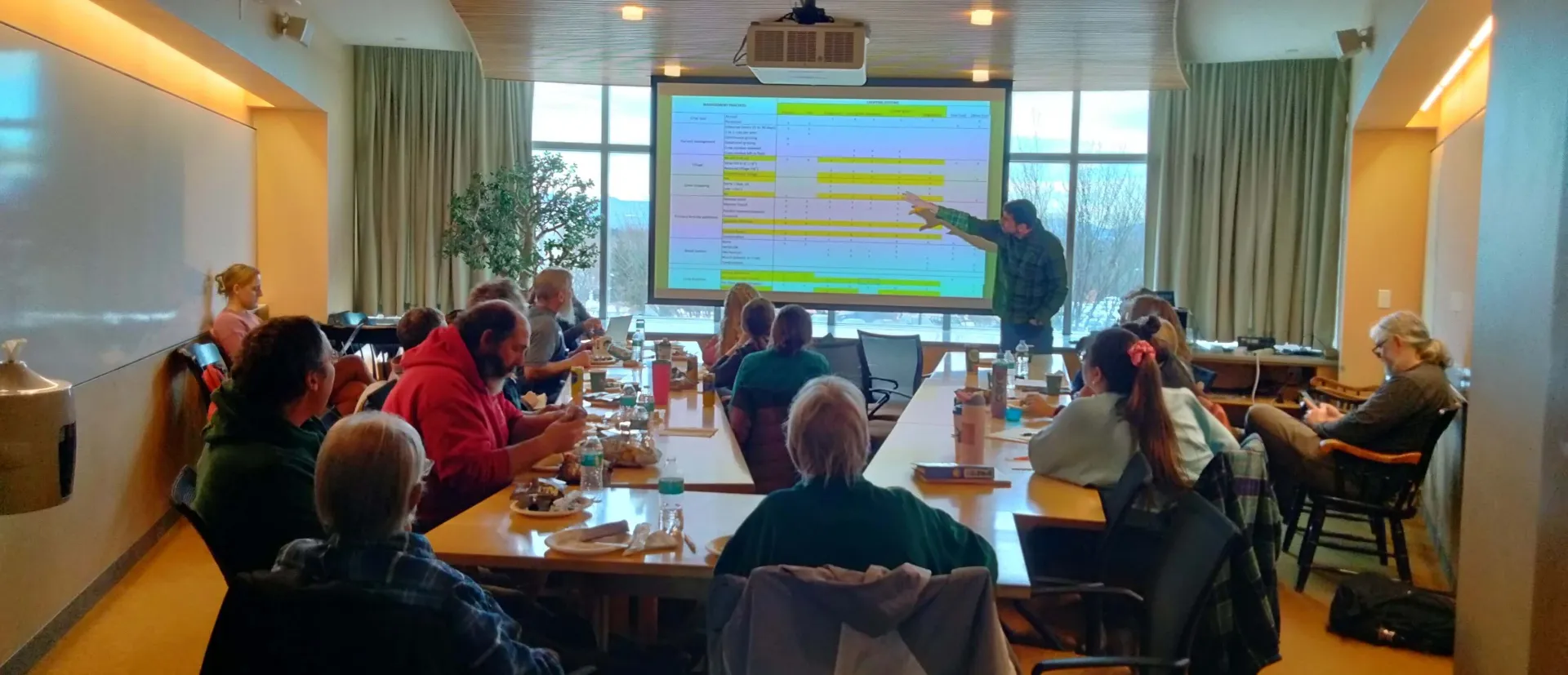
Healthy soils are the foundation of long-term land viability and economic success for farmers. In 2022, UVM Extension formed the Farmer Soil Health Innovator Network (FSHIN), a peer learning network that brings farmers, researchers, and technical service providers together to share knowledge and implement management practices to improve soil health and water quality in the Lake Champlain Basin. The goals of the FSHIN program are to increase the adoption of soil health monitoring and planning and support farmers in demonstration trials based on their questions[LR1] . UVM Extension Professor Heather Darby and Research Specialist Lindsey Ruhl led the FSHIN project in collaboration with Franklin County Natural Resource Conservation District and 15 farmers throughout Franklin and Addison counties. This work was funded by the USDA’s Natural Resources Conservation Service (NRCS) through its Conservation Innovation Grants (CIG). Members met with the technical assistance providers (i.e., Extension and NRCD staff) through the project and the cohort met bi-annually over the past three years, and on December 18, 2025, 21 members gathered for their final meeting.
Since 2022, farmers in this cohort have implemented practices aimed at improving soil health and conducted on-farm soil health monitoring to evaluate their effectiveness. For over a decade, Vermont farmers interested in soil health needed to send soil samples to laboratories in other states. The University of Vermont now has the capability to run these tests and provide reports with Vermont specific comparisons through the new Soil Health Research and Extension Center (SHREC) Lab. At the final meeting in December, cohort members visited the UVM campus to reflect and get a closer look at old and new UVM testing facilities.
Reflections and Takeaways from the FSHIN Cohort
Creating a dedicated space for facilitated farmer discussion was a core component of the FSHIN project. Beyond completing a three-year commitment, it was equally important for participants to reflect on their experiences and share feedback. At the end of 2025, the group gathered to discuss key takeaways from the past three years and consider what might come next for the network.
Here are some of the main takeaways from the farmers in the FSHIN cohort:
- Soil testing is valuable, but interpretation is challenging. Farmers agreed soil health tests are essential, yet results are often hard to interpret when viewed as single data points without broader context. If you want help interpreting your routine soil tests or soil health results, please contact your local Extension office: https://www.uvm.edu/extension/office-directory
- Trend-based results are more useful than individual scores. Testing results can fluctuate based on field conditions. After three years of testing and management changes, farmers want summaries that show whether soil health is improving, declining, or remaining stable over time to better guide decisions.
- Clearer data visualization would improve interpretation. Participants shared preferences for new ways of displaying soil health data that are easier to understand and more actionable.
- Interest extends below the top 6 inches of soil. Farmers want more information about deeper soil layers and how subsoil conditions affect overall soil function and crop performance.
- Compaction is a growing concern. Farmers want guidance on how to prevent compaction and strategies to reverse long-term compaction impacts.
- Operating in climate extremes needs practical guidance. Given recent years of destructive flooding and drought—sometimes in the same year—farmers have requested more resources and concrete management recommendations for both excessively wet and dry soil conditions.
- Questions remain about soil health and neonicotinoids. Following Vermont’s recent ban, farmers want more information on how neonicotinoids affect soil health
- “Resilient soils” need clearer definitions. Farmers want specific guidelines, benchmarks, and indicators that define what resilient soil looks like in practice.
Meeting the needs of Vermont farmers drives much of UVM Extension’s work. Receiving their feedback is essential to making sure our projects have real, relevant, and effective outcomes that will make a positive and lasting impact on the lives of farmers and the health of the land.
Although the FSHIN project has concluded, UVM Extension will use the soil health data and feedback collected over this three-year initiative to inform future projects, support farmers throughout Vermont, and improve soil health for many years to come! This means more soil testing! During their campus visit, the group toured the Agricultural and Environmental Testing Lab (AETL) and the Soil Health Research and Extension Center (SHREC).
Touring University of Vermont Soil Testing Labs
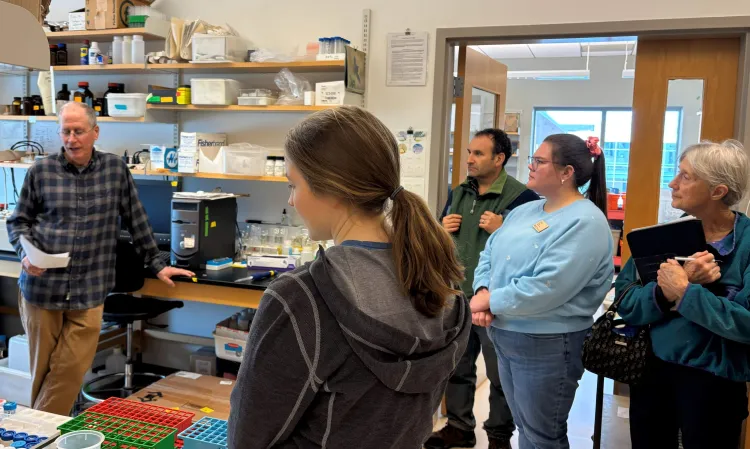
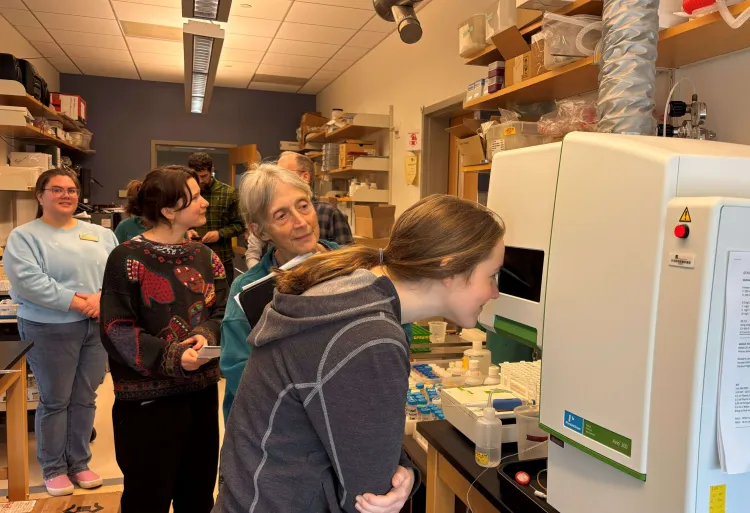
The AETL offers routine soil and manure testing to the public. Their services are mainly used by commercial growers and home gardeners. During the lab tour, Dan Needham, Manager of the AETL, led folks through the lab and gave an overview of some of the most frequently used equipment in the lab that tests soils for levels of nitrate-nitrogen, ammonium-nitrogen, total carbon, available phosphorus, pH, and more! If you want to learn more about the AETL or submit a sample for testing, please visit https://www.uvm.edu/extension/agricultural-and-environmental-testing-lab.
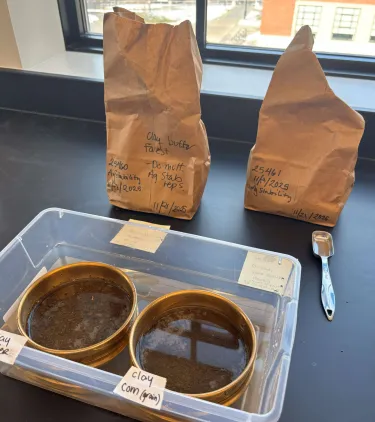
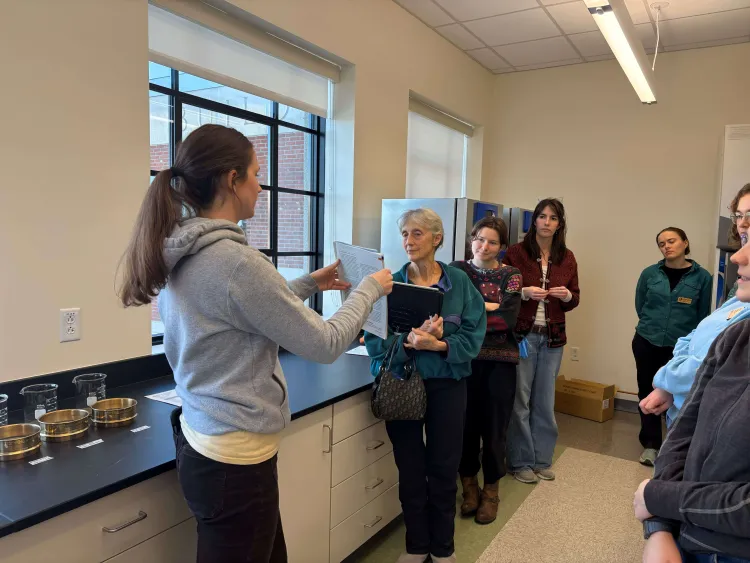
The Soil Health Research and Extension Center (SHREC) lab opened on Earth Day in 2025. This lab offers additional soil tests for farmers and landowners who want to understand more about the physical and biological characteristics of their soil and how it respond to different management practices within Vermont’s unique agricultural context.
Tests offered at the SHREC lab include:
- Permanganate oxidizable carbon (POXC): Measures a pool of organic matter that supports microbial activity and that is responsive to management practices.
- ACE protein: Measures soil protein, a source of organic nitrogen that can be converted relatively quickly into plant-available forms and is responsive to management practices.
- Wet aggregate stability: Measures whether soil aggregates will break down when exposed to external forces such as rainfall and tillage.
- Respiration: Provides a proxy for biological activity.
- Total carbon/ total nitrogen: Measures the total amount of carbon and nitrogen in the soil, including the active and relatively inactive pools.
- Phospholipid Fatty Acid (PLFA) tests to measure fungal to bacterial ratios will be available later this year!
All these tests can help farmers get a better idea of how their soils respond to management practices, so farmers and researchers can determine which methods are most effective at meeting soil health goals. If you have questions about soil sampling procedures or which test is right for you, please reach out to the SHREC team at SHREC@uvm.edu. Learn more about the SHREC lab, the tests they offer, and submitting soil samples at https://www.uvm.edu/ovpr/food-systems-research/soil-health-research-and-extension-center.
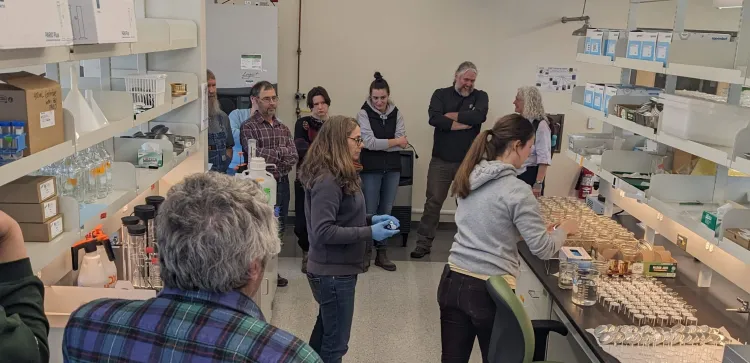
The FSHIN cohort was excited to visit these labs in person and see where their soils are tested. For many farmers, the new SHREC lab will help answer long-standing questions about their soils. One farmer even shared his excitement, saying it felt like UVM really listened to Vermont’s farming community and believes that this could drive real, meaningful change for farmers and soil health across the state.