University of Vermont Extension
Explore resources to help landowners and forestry professionals understand forest carbon projects, including how programs work, potential benefits and trade-offs, eligibility considerations, and management implications. Learn about carbon markets, project development, and opportunities to integrate carbon goals.

Forest Market Questions and Resources
What is forest carbon offset?

Body
offset image

Also known as a carbon credit, this is a certificate that represents the reduction or removal of one metric ton of CO2, or the equivalent amount of other greenhouse gases, for a set amount of time.

To Learn More:

How do forest carbon offsets work?

Body

Programs in which multiple forest landowners enroll parcels, and their generated offsets are combined, or pooled, under the management of a carbon offset developer. These programs enable owners of relatively small parcels to participate in voluntary carbon offset markets

To Learn More:

What is the purpose of carbon offset?

Body
carbon offset demo

A market-based approach to climate change mitigation, based on the idea that greenhouse gas emissions at one location can be balanced out, or offset, by carbon sequestration and storage at another location. In this framework, a carbon offset buyer who is responsible for greenhouse gas emissions pays someone else to keep greenhouse gases out of the atmosphere. There are two kinds of carbon offset markets: compliance and voluntary.

To Learn More:

What are the types of carbon offset programs?

Body
market images

Compliance carbon market: A carbon offset market established by a government as part of a regulatory regime that requires certain greenhouse gas emitters, such as power plants and factories, to reduce their emissions over time.

Voluntary carbon market: A carbon offset market in which private entities, as opposed to a government, set the terms of participation and there is no statutory obligation to participate, or for the buyer to reduce emissions over time. Most northeastern landowners who produce carbon offsets participate in a voluntary carbon market

To Learn More:

What is a forest carbon project?

Body
image of text key

A specific (typically, site specific) project that is enrolled in a carbon offset market. In compliance with the terms of enrollment, the land manager implements plans to reduce or prevent emissions and/or to increase sequestration and storage.

To Learn More:

What is the general process of a carbon project?

Body
process

The forest carbon project process generally begins with a landowner working with a carbon project developer to evaluate whether a property is eligible and financially viable for enrollment. If eligible, the developer conducts a forest inventory and models future carbon storage under both a baseline management scenario and a proposed project scenario. Carbon credits are generated from the additional carbon retained under the project scenario, which is achieved through management practices such as longer harvest rotations, higher tree retention, or reduced harvest intensity, and these commitments are documented in a forest management plan.

To Learn More:

What is the compatibility of carbon projects with other forest programs?

Body

Forestlands enrolled in a forest carbon offset project can be actively managed for timber and other wood products along with additional goals like improved wildlife habitat or recreational opportunities. In general, forest carbon offset projects are compatible with other forest programs if they do not restrict timber harvests or mandate carbon storage.

To Learn More:

How does a landowner enroll in a forest carbon project?

Body

A forester may be able to help a landowner navigate forest carbon offsets, but as this is a new and rapidly changing economic sector, talking to a carbon developer will be the best way to determine if the land is eligible to be enrolled in a carbon offset market. Because there are not many forest carbon projects in the northeast, many foresters and managers do not yet have experience in project facilitation. It is important to note that enrolling in one forest carbon program, even for one year, may lock the landowner into that program or prevent entering another forest carbon program. Diligent research on forest carbon program options and ramifications is highly encouraged.

To Learn More:

title in sky with forest bellow

Guides to Forest Carbon and Climate

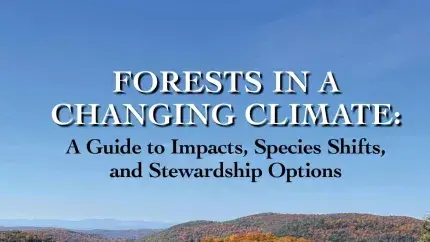
Read "A Guide to Forest Carbon" and "Forests in a Changing Climate"

Frequently asked Questions about Forest Carbon Projects

Is active forest management allowed under a forest carbon project?

Body

Under the ‘Improved Forest Management’ type of forest carbon projects, parcels can be actively or passively managed. Landowners will need a professional management plan describing the silvicultural strategies and prescription schedule. Forest management can have additional carbon benefits if harvested wood products are used as a substitute for fossil fuels, concrete, or steel, and long-lived, durable wood products can result in carbon storage for the life of the product.

What happens if there is a natural disturbance on the property?

Body

Most carbon projects require that a certain number of carbon offsets be set aside in case there is a loss of forest carbon due to a natural disturbance, like insect defoliation, fire, wind event, or ice storm. The methodology to compute the risk of natural disturbance and the number of offsets to add to this buffer pool varies by the registry. A carbon developer can provide more information.

Does it matter what kind of wood products are produced from the harvest?

Body

The expected lifecycle of the harvested wood products can add additional carbon storage, but this does require accounting. Many protocols simplify this accounting and assume a set life span for harvested wood.

Can a carbon offset contract be terminated early?

Body

There can be a large penalty for leaving a carbon project and the landowner may be responsible for repaying the offsets generated. These details are described in a carbon project contract. Entering a carbon project does require a time commitment. Although there are new options that require shorter commitments, these programs are in development or are not yet widely vetted

How much revenue can you earn from a forest carbon project?

Body

The amount of revenue a landowner can make with a carbon offset project varies greatly. It depends on the market, tree stocking and condition, site factors, size of the parcel, and future timber harvests. Costs of project development, inventory, and verification can vary by project and the standard used. The new programs for smaller parcels (e.g., Family Forest Carbon Program) are designed to reduce development costs through a ‘pay-for-practice’ framework; however, these programs are in the testing phase. In the voluntary market, carbon offsets generated from an improved forest management project can sell for more than other projects because of the co-benefits included with keeping forests as forests Securing Northeast Forest Carbon Program – www.northeastforestcarbon.org 2 Note: The content of this publication draws heavily on several similar publications produced by the Vermont Department of Forests, Parks and Recreation. (e.g., wildlife habitat, flood resilience). For projects that have occurred in New England, landowner revenue can range from $5-$25 per acre per year.

How long does it take to develop a forest carbon offset project?

Body

From contract signing to selling of credits takes about 12 to 24 months with most current standards, but this depends on many factors like project type, location, forest heterogeneity, and time of year. New programs for family forests may have different timelines because project development methods differ.

What is the minimum land requirement?

Body

The amount of forestland needed for a forest carbon offset project varies by the standard used. As recently as 2019 most forest carbon projects require acreages of at least 2000 acres but now new programs require far less. There are now programs for forest parcels as small as 10 acres, but some of these programs are in the development stages.

Is forestland enrolled in current use eligible for a carbon offset project?

Body

Land enrolled under current use programs are eligible for a carbon offset project, provided that the land meets the criteria outlined by the specific carbon registry.