2026 UVM SoTL Symposium
Agenda and Abstracts
When: Thursday, May 14, 2026, 8:30AM
Where: 102 Innovation Hall
| Time | Topic | Speakers | ||
|---|---|---|---|---|
| 8:30am | Coffee and light breakfast | |||
| 9:00 am | Welcome and overview of the day | Holly Buckland Parker and Courtney Giles | ||
| 9:05 am | Welcome to UVM community and Dr. Tracie Addy. Intro for Dr. Addy | Interim Provost Linda Schadler | ||
| 9:15 pm | Keynote and Q & A | Dr. Tracie Addy | ||
| 10:15 am | Break | |||
| 10:30 am | Research Session 1: Theme – Universal Design for Learning in Pedagogical Practice | Eric Ruggles, Lisa Dion, Keith Epstein, Wei Ming Dariotis | ||
| 11:00 am | Stretch and Networking Break | |||
| 11:15 am | Research session 2: Theme – Innovative approaches to student learning assessments | Ryan Mason, Lori Meyer, Matthew Scarborough, Sheila Boland-Chira, Shamima Kahn | ||
| 12:05 pm | Lunch | |||
| 1:00 pm | Research session 3: Theme – Equity minded teaching strategies for all learners | Cara Simone, Ghazah Abbasi, Tyler Molleur
| ||
| 1:35 pm | Top 5 tips for navigating the IRB for a SoTL project | Melanie Locher, IRB Director | ||
| 1:55 pm | Break | |||
| 2:05 pm | Research session 4: Theme – Creative and critical uses of Gen AI in teaching and learning | Joseph Kennedy, Kaitlin McCreery, Lisa Dion, Deborah Cafiero | ||
| 2:45 pm | Research session 5: Theme – Strategies for student engagement and belonging | Janet Murray, Linden Higgins, Allison Anacker & Daniel Peipert | ||
| 3:15pm | Closing remarks and evaluation completion | Courtney Giles and Holly Buckland Parker | ||
| 3:30pm | Symposium ends | |||
Research Session 1: Universal Design for Learning in Pedagogical Practice
Eric Ruggles
Teaching Slam – Comfortable Learning Before Class Begins
Students new to the college arena often don’t see the relevance and merit of the class they are told to take. How is this class relevant or applicable to me and how will I use this information in the future are common questions. Time before class is a prime slot to not only synthesize a comfortable atmosphere but also engage your students as they arrive. This Teaching Slam will illustrate two symbiotic methods that can help create a comfortable atmosphere, engage students, and demonstrate the common ground the class traverses.
Lisa Dion
Teaching Slam – Gradescope
I use Gradescope to give real-time feedback to my students during in-class activities. I create autogradable questions (multiple choice, check-all, fill-in-the-blank) in an Online Assessment and set it so that students don’t receive feedback when they answer a question correctly. As they complete the assessment in class, I display Gradescope’s Statistics page for the assessment on the projector and refresh the bar graph of the class’s correct responses every few minutes. I have found this to be an effective way to get students to collaborate and talk through their solutions with each other (productive struggle!) in a low-stakes environment.
Keith Epstein
Teaching Slam – Pre/post video thinking/writing to improve comprehension and retention
Abstract: In my project-based course (Senior Experience in Engineering Design, aka SEED) with 100 students working on 25 projects, every 3 weeks students watch a video, on their own time, to learn about a concept (for example risk analysis using a tool called FMEA – Failure Modes and Effects Analysis), then take an online quiz, then apply that concept to their project.
Much of the video content was not being retained and applied to projects, so I added some pre/post video thinking/writing. First, students spend up to 5 minutes thinking/writing about how they would do this task (for example, conduct a risk analysis of their project) based on what they know now, before watching the video. Second, after watching the video, students spend up to 5 minutes thinking/writing about what parts of their initial prediction were correct, what the video helped them understand or clarify, and what is still confusing. Then they take the quiz and paste their writings into designated text boxes.
These two short thinking/writing exercises help create space in the brain for the new knowledge, similar to struggling with a problem before receiving instruction, and help improve knowledge retention by forcing recall and comparison to existing mental frameworks. They also give me, the instructor, areas to improve in my videos and show me what I need to clarify with the whole class. Student feedback shows that most think this was a good change and should continue in future years.
Wei Ming Dariotis
Lightning Talk – Co-Creating Relational Assessment Rubrics for Liberation Pedagogy
Co-creating relational assessment rubrics functions as an alternative assessment practice that reflects “an ongoing [reflexive] process” (Stommel, 2023). This kind of dynamic assessment practice that emphasizes interpersonal relationships in the learning community can help students feel the value of their own learning rather than focusing on “getting grades” in the way that makes generative AI so attractive.
If the purpose of education is liberation (Freire,2000, 1970) or freedom (hooks, 1994), then the structures of assessment must correlate with the principles of liberatory education. The suggested practice of co-creating relational assessment rubrics builds on research about creating assessment “ecologies” (Inoue, 2019, 2022) that support student liberation. However, unlike contract grading (Cowan, 2020; Elbow & Danielewicz, 2008; Shor, 1996) or ungrading, which creates an illusion of objectivity through the quantification of labor (Carrillo, 2021), relational assessment rubrics embrace a logic of “intersectional social justice” (Love, 2019).
In the form of co-created assessment rubric this lightning talk will cover, the structure of the rubric itself is transformed to emphasize the relationships in the learning community and to motivate student learning and growth.
Research Session 2: Innovative Approaches to Student Learning Assessments
Ryan Mason
Lightning Talk – Interfacility Transfers to Emergency Medicine Clinicians
Background: Interfacility Transfers (IFTs) are a critical part of emergency care in a rural environment. IFT is a complex process involving clinical judgement, legal statutes, hospital policy, provider-to-provider communication, and Emergency Medicine Service (EMS) logistics. Emergency Medicine (EM) residents have little exposure to the IFT process as the bulk of their training occurs at receiving medical centers. Our curriculum was designed to fill this gap. This project was supported by the Frymoyer Scholars’ Program and exempted from our institutional IRB.
Methods: The curriculum consisted of three one-hour didactics (Legal Obligations, Transfer Center Logistics, EMS Capabilities) and one two-hour Simulation of four cases with practical applications. The curriculum was implemented Fall 2025. Participants completed a post-pre survey on their comfort level with the transfer process using a 5-point Likert scale. Additionally, a focus group was conducted to collect qualitative themes of the experience using native zoom AI to transcribe the conversation.
Results/Conclusions: A total of 18 EM clinicians completed the survey (5 attendings and 13 residents). There was a statistically significant increase in comfort with IFT for all participants (p-value 0.001) and for residents (p-value 0.002). A second iteration of the curriculum, incorporating feedback, is planned for Fall of 2026.
Lori Meyer, Kelly Swindlehurst, Colby Kervick, and Katharine Shepherd
Lightning Talk – Beyond accreditation: The principles-focused evaluation of an undergraduate program
The context of modern evaluation has shifted in recent years. Particularly when evaluating complex, social, and educational institutions, it is important to adopt evaluation approaches that capture their inherent complexity. This case narrative describes how a faculty team used the elements of principles-focused evaluation to design a set of core principles as part of a larger effort to program-evaluate a newly established undergraduate major at UVM. This lightning talk begins with an overview of the program’s context and moves into the purposes of conducting a principles-focused evaluation and how it has helped the program move beyond evaluation in the context of standard accreditation processes. Activities to be highlighted include work supporting students’ engagement in autoethnographic research and community-based focus groups to center voices that tend to be marginalized in program improvement work. The talk concludes with an update on current progress, lessons learned so far, and implications for others interested in principles-focused evaluation.
Matthew Scarborough
Lightning Talk – Lessons from implementing choice-based assessment
During this lightning talk, I will provide a high-level overview of the course (CEE 3520 – Environmental Engineering Chemistry and Microbiology), including course content and learning outcomes. I will then discuss lessons learned over the past two years of implementing choice-based assessment (CBA), both from the perspective of the instructor and feedback from students. Unlike conventional CBA, the course requires that students complete two mid-term exams and the final exam. This ensures (1) students get practice taking exams (which is important for engineering licensure); and (2) I have a consistent way to compare learning outcomes across cohorts. While students appreciate the flexibility and the opportunity to earn a good grade without being good test takers, some implementations of CBA provide too-little structure for some students. The grading burden can also be significant and intense without appropriate structure. Future changes will include aligning available choices with responsible use of AI and making assignments problem-based rather than skills-based (e.g., writing assignments and coding assignments).
Sheila Boland-Chira
Lightning Talk – Student Research into Writing Center Decisions
In a community-engaged learning (CL) course for undergraduate students who serve as UVM writing tutors, Lori Salem’s concept of educational decision-making as “shaped both by our own personal preferences and by broader social factors” (2016) framed a group research project into UVM students’ choices to use—or not use—writing center support. In this lightning talk, I will describe the project design and what student researchers thought about how it aligned with course learning goals, what they valued, and what improvements they suggested for scaffolding a group research project.
Shamima Kahn
Research Talk – Strengthening research skills in Masters of Public Health students
Background: Creating opportunities for graduate students to enhance their research skills is essential, and an important aspect of nationally accredited public health programs. We evaluated the perspectives of Master of Public Health (MPH) students who volunteered for a mentored research project outside their regular coursework.
Objective: To evaluate online MPH students’ motivations, experiences and recommendations about a mentored scoping review project.
Methods: Supported by medical library faculty members, one faculty mentor developed two review projects on emerging public health topics related to obesity. After evaluating different types of reviews, a scoping review methodology was selected. Two co-investigators not connected with the scoping review conducted two focus groups to document students’ experiences.
Results: The online discussion was recorded and transcribed. A thematic content analysis approach was used to identify students’ appreciation for applied learning, enhancement of research concepts, their recognition of diverse skills required for a successful project, and best practices for engaging in scholarship on a volunteer basis.
Discussion & Conclusions: Students viewed this opportunity to enhance their research experience and boost their resume by working closely with one faculty member and medical library faculty members. Volunteer nature afforded students a lower-stress environment and time-efficient mechanism to engage in scholarship.
Research Session 3: Equity-minded teaching
strategies for all learners
Cara Simone
Research Talk – Margins of the medical school curriculum: centering student experience in the pursuit of health equity
Health inequities are well-documented and persistent. To address this issue, medical schools have revised their curricula to reflect a commitment to equity. What is less known is how students experience equity-oriented instruction. This qualitative case study examines how students perceive and interpret equity-oriented instruction within the pre-clinical curriculum at the Larner College of Medicine.
Three data sources were analyzed using a two-phase qualitative analysis: Course evaluation comments collected between 2020 and 2024, institutional documents related to curriculum and faculty development, and semi-structured interviews with students underrepresented in medicine (URiM; n = 7). Data were analyzed using deductive and inductive thematic coding. Critical Race Theory and Transformative Learning Theory informed the research design and analysis.
Four key findings emerged from the coded datasets: 1. Students described equity-informed content as most impactful when it was integrated with biomedical material. 2. While students praised institutional efforts to address equity, they also noted that equity was not addressed evenly across courses and instructors, which they perceived as uneven follow-through. 3. Belonging for URiM students was described in practical terms. It was determined by how conversations unfolded in classrooms and by how peers interacted with them. 4. Professional identity formation was influenced by equity-focused instruction, including early thoughts about their future practice of medicine.
Centering student perspectives is important for understanding how equity-oriented instruction is enacted and received within medical education. The thematic results of this study highlight patterns in how stated commitments to equity were experienced in practice. In some cases, alignment was evident; in others, gaps were noted.
The study suggests several practical implications for improving equity-related learning in medical education. Medical schools may benefit from monitoring how equity content is integrated with biomedical instruction. Providing faculty guidance on how and why to frame race in clinical reasoning may also strengthen equity-oriented teaching. Institutions may also consider strengthening mentorship and inclusive classroom participation. Attention to these areas may improve curriculum design, faculty development, and learning environments while supporting professional identity formation in future physicians.
Ghazah Abbasi
Lightning Talk – Democratizing Knowledge: The Circle Process in the College Classroom
The circle process is a classroom discussion format that can be used to democratize knowledge and to allow faculty and students to adopt the roles of both teachers and learners. The circle process refers to a discussion format where participants sit in a circle and take turns speaking and sharing their thoughts to discussion questions. The goal of the circle process is to create a space of compassion, safety, and vulnerability. The circle process has been used in a variety of contexts, such as schools and restorative justice contexts.In this presentation, I reflect on my teaching experiences to show how the circle process can be used to democratize knowledge production in the college classroom. I provide an overview of the circle process discussion format, the goals and outcomes of the circle process, a sample classroom assignment, my perspective on how it impacts my teaching, and my students’ anonymous perspectives on how it impacts their learning.
Tyler Molleur
Lightning Talk – Using reflection to examine the art of nursing with learners pursuing the profession as a second degree
Direct-entry nursing students are challenged to balance personal, work, and academic responsibilities while facing an intensive curriculum. This quality improvement project implemented reflection from writing prompts and storytelling, with the aim to enhance understanding of the art of nursing and build cohort connection. The project featured a single cohort of participants at a medium-sized New England university. Students engaged in written personal reflection from a story or literary prompt on the concepts of inspiration, hope, courage, and intuition. They submitted reflections anonymously that were shared with the cohort. Participants then completed a survey asking how each activity aligned with selected course objectives and opportunities to incorporate knowledge into future practice. Alignment of the prompts with selected course objectives and feedback on whether the prompts informed their nursing practice was sought, with learners reporting above average alignment of most prompts with course objectives, along with affirming the prompts informed their nursing practice. Additional feedback highlights further revisions to enhance successful implementation.
Research Session 4: Creative and critical uses of Gen AI in teaching and learning
Joseph Kennedy
Lightning Talk – AI Ambient Visit Recorders: Deployment in Emergency Medicine Training and Educational Implications
Background: Ambient visit recorder (AVR) technologies using generative AI offer potential to reduce documentation burden in emergency medicine (EM), but their impact on resident education is not well described.
Objective: To implement AVR technology in an EM residency and evaluate its effects on documentation practices, resident experience, and clinical reasoning.
Methods: AVR was deployed across a three-year EM residency with unrestricted access. Implementation was iterative and informed by informal survey data and leadership observation. Educational implications were examined using frameworks including cognitive apprenticeship, constructivism, and self-determination theory.
Results: Among surveyed residents (68% response rate), 76.9% reported improved efficiency and earlier completion of documentation, and 53.8% reported improved wellbeing and perceived documentation quality. Most residents used AVR primarily for history and physical exam generation, while continuing to independently compose medical decision-making (MDM). Few relied fully on AI-generated MDM. However, 38.4% reported decreased recall of clinical details, and concerns emerged regarding potential erosion of clinical reasoning and note quality.
Conclusions: AVR implementation was generally met with approval from residents but introduced important educational tension. Future research should evaluate the impact of AI-assisted documentation on clinical reasoning, knowledge retention, and long-term competency development across training levels.
Kaitlin McCreery
Lightning Talk – IUnplugged Instruction in AI Epistemics
How does AI know things? AI Epistemics engages with this question, and as we accelerate toward a world that demands critical evaluation of AI-generated information, mechanistic understanding of how these systems work and how they are trained may be the most durable foundation for an AI curriculum that outlasts any particular tool. Experienced practitioners often gain more from AI tools than novices, not because they use them more, but because domain expertise helps them interrogate, contextualize, and refine model outputs. First-year students, by contrast, often arrive at university conflating AI with robotics, attributing human-like reasoning to models, or assuming outputs are naturally authoritative. This talk introduces the AI Epistemics framework and shares a work-in-progress SoTL study embedded in a first-year biomedical engineering course. Students will engage with hands-on, computer-free lab sessions learning foundational anchors of generative AI: tokenization, word embeddings, and transformer architecture. The study uses performance-based pre/post measures, addressing recent evidence that AI users overestimate their own competence. I hope to spark discussion about cultivating students to be more thoughtful, skeptical, and effective at engaging with generative AI in higher education.
Lisa Dion
Lightning Talk – Student analysis of genAI outputs
I treat generative AI differently in three of the courses I teach: I ban it for all work submitted for credit in sophomore-level Data Structures & Algorithms; I allow it with proper citations for the programming projects in junior-level Advanced Programming; and I have students explore and discuss multiple ethical dilemmas around AI (bias, environmental impact, law, war, the Trolley Problem) in Senior Seminar. All of these courses are required for computer science majors and none of them require students to purchase or use genAI themselves, but rather they are asked to critically analyze example genAI outputs.
Deborah Cafiero
Teaching Slam – Measuring how using generative AI affects proficiency gains in second-language writing
In Fall 2026, I will conduct a research study in Spanish Intermediate II courses. This study will include a pre-test and post-test, consisting of a 2-3 paragraph Spanish-language response to a Spanish-language prompt at the beginning and end of the semester, in order to measure learning gains in writing.
Students who participate in the study will be randomly assigned to one of two conditions: to use generative AI for help editing online writing assignments throughout the semester, or not use generative AI. If they use generative AI, they must write a complete response to every assignment in their own words, then use a prompt to help them identify and correct their errors. Alternatively, students who do not use generative AI will complete the same assignments but receive only instructor feedback. While students who participate in the study will be randomly assigned to one of these two conditions, students who do not participate have the same options available to them.
Comparing writing proficiency from the (anonymized) pre-test to the post-test will allow me to measure whether generative AI used in this fashion over the course of a semester affects proficiency gains in second-language writing.
Research Session 5: Strategies for student engagement and belonging
Janet Murray
Lightning Talk – Exploring structured team-based learning
In this initial study, a survey will be utilized to explore the use of a structured Team-Based Learning (TBL) framework to support students’ engagement with primary scientific literature in a mixed graduate and upper-level undergraduate STEM course. The instructional design incorporates weekly rotating team roles adapted from Process Oriented Guided Inquiry Learning (POGIL) assigned roles and reconfigured team membership every four weeks to promote equitable participation, broaden peer interaction, and reduce group stratification across academic levels. In-class literature evaluation tasks require teams to interpret data, assess methodological rigor, and synthesize findings from peer-reviewed research articles. To assess students’ perceptions of the rotating-role structure, collaboration dynamics, and perceived gains in scientific literacy, a comprehensive survey will be administered at the end of the semester prior to the final class meeting. This survey will capture students’ reflections on team functionality, confidence in analyzing primary literature, and the perceived impact of role rotation on their learning. Findings from this pilot study will provide foundational insights for future research on scaffolded TBL practices designed to enhance critical reading, analytical reasoning, and equitable engagement in mixed-level classrooms.
Linden Higgins
Lightning Talk – Creating a more inclusive genetics course through backwards design
Creating inclusive classrooms where diverse students can succeed is important. In spring of 2025, Melissa Pespeni and Linden Higgins received an HHMI grant to revise sophomore genetics to make the course more inclusive particularly for first generation students. These changes included instituting pre- and post-course surveys to ascertain student identities, interests, and (in the post-course survey) their perception of belonging and learning gains, revision of course and unit goals then alignment of content and assessments with those goals, and implementation of regular reflections by Melissa and the graduate teaching assistants.
These changes have impacted Melissa’s pedagogical choices and student learning. Removing content allowed time for more continuous practice through a variety of classroom activities. In turn, these activities meant she spent more time interacting with the students and collecting more frequent and immediate feedback. Through these interactions, Melissa became more aware of students’ experiences with the content and more able to make rapid shifts to meet their needs. In our presentation, we will discuss the impact of these changes on students’ sense of belonging and their self-assessment of their learning.
Allison Anacker & Daniel Peipert
Lightning Talk – Implementation of inclusive teaching practices with graduate teaching assistants in Exploring Neuroscience
Students in intro-level STEM courses are more successful and confident when they experience a sense of belonging, supported by inclusive teaching practices. Exploring Neuroscience is a team-taught course with a lecture portion taken by neuroscience majors, minors and others, leading to a range of identities and experiences in the same course. There is also a lab portion of the course for Neuroscience BS students, taught by graduate teaching assistants (GTAs).
This work aims to establish and enhance inclusive teaching practices. Implementations include a teaching bootcamp for GTAs, updating lab activity and assessment instructions with transparency in learning and teaching (TiLT) practices, and augmentation of group-based activities to promote community-building within lecture and lab.
Assessments include surveys that ask about belongingness, confidence and mastery. We have recently collected baseline data from Spring 2026. In Fall 2026 and Spring 2027, comparisons will be made between pre- and post-course scores, and compared to these baseline scores from Spring 2026, to assess efficacy of the intervention. We will also assess grades and whether the impact of the shift differs by demographic variables, since the TiLT approach has demonstrated greater impact for students from underserved populations.
This work is part of the HHMI Communities of Practice.
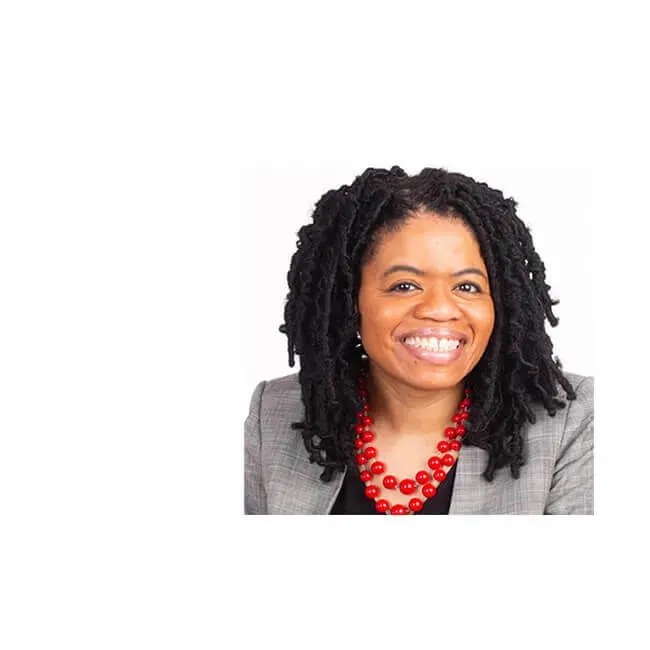
Keynote Address
Dr. Tracie Addy will be the Keynote Speaker. She's the founding director of the Institute for Teaching, Innovation, and Inclusive Pedagogy at Rutgers University and she's earned national recognition for her scholarship and leadership in teaching and learning.
Dr. Addy's keynote description:
AI is Here. Now What About Equity? Centering Our Teaching Values in the Age of Generative AI
Much of the focus during this current moment in higher education is generative AI (GenAI) policy, literacy, and assignment redesign, all important considerations for creating effective learning environments. Equally significant, but not largely discussed, are the relationships between GenAI and equitable learning as well as how the decisions instructors make regarding GenAI relate to their teaching values. During this keynote session we will explore these less-talked-about topics and bring them to the forefront to inspire more nuanced ways of thinking about teaching in the age of generative AI.