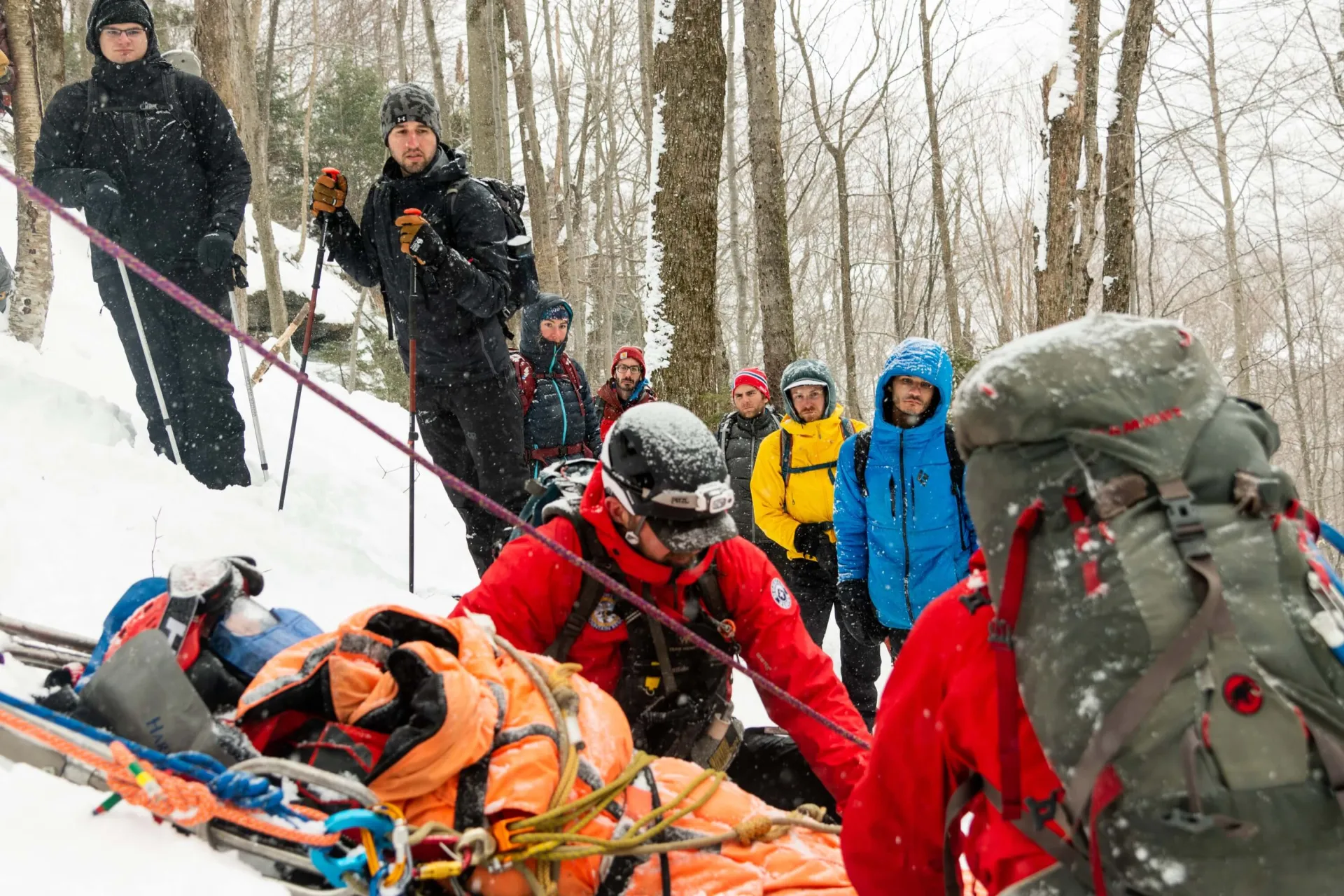

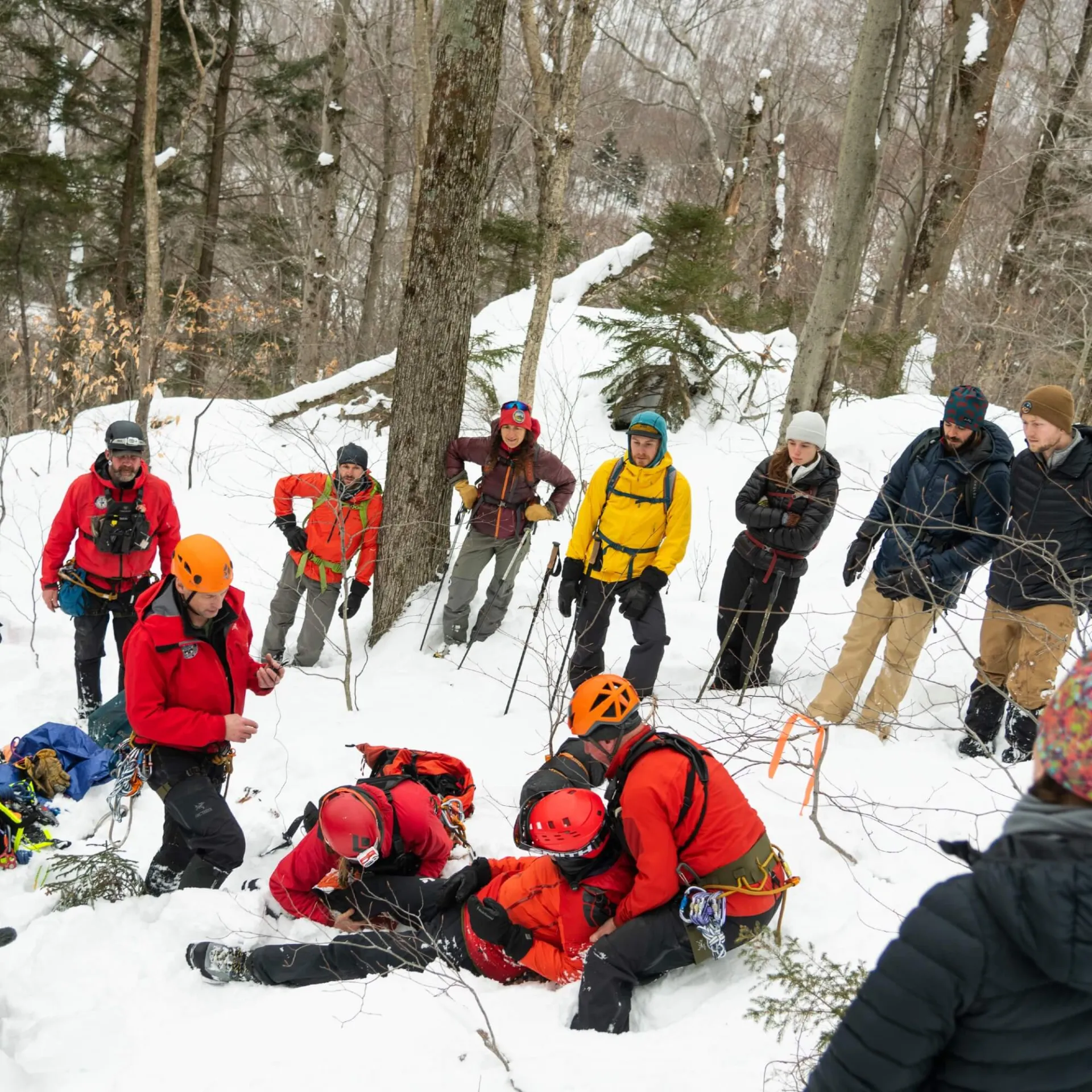
Wilderness Medicine Training with IREMS
The Initiative for Rural Emergency Medical Services offers three progressive levels of wilderness medicine certification: Wilderness First Aid (WFA), Wilderness First Responder (WFR), and Wilderness EMT (W-EMT).
Course Offerings
Wilderness First Aid
Wilderness First Aid (HLTH 1990) is a one-credit course specifically designed for individuals engaged in outdoor recreation or education, Wilderness First Aid (WFA) is a 16-hour introductory course that teaches students the basic knowledge and skills needed to recognize, assess, and manage common medical problems, trauma, and environmental emergencies in wilderness or austere settings.
Course Objectives (taught at an introductory level and applied in wilderness or austere environments):
- Understand and apply principles of personal safety and emergency prevention
- Demonstrate basic patient assessment
- Recognize and stabilize life-threatening emergencies
- Manage common soft tissue and musculoskeletal injuries
- Assess and manage common medical emergencies
- Recognize and manage heat and cold-related emergencies
- Identify and respond to toxic exposures
- Demonstrate safe lifting and moving techniques
- Understand proper documentation practices
- Make informed decisions regarding next-level care and/or evacuation
Wilderness First Aid Certification
Wilderness First Aid Certification (HLTH 1210) prepares outdoor enthusiasts, educators, and leaders to respond confidently to medical emergencies in remote settings. Through hands-on instruction and scenario-based learning, participants gain practical skills in patient assessment, injury and illness management, and evacuation decision-making. Students who successfully complete all course requirements earn a Wilderness First Aid certification from UVM.
Learn more about the Wilderness First Aid Certification program
Wilderness First Responder
Wilderness First Responder (HLTH 1510), a 3-credit course, provides the industry-standard training and certification for professional guides and outdoor leaders.
WFR certification standards emphasize the following proficiencies:
- Ensuring rescuer and patient safety
- Conducting physical exams to identify injuries or abnormalities
- Assessing signs, symptoms, and vital sign patterns
- Obtaining relevant patient history
- Preventing medical problems related to activity and environment
- Recognizing and mitigating environmental conditions that may lead to emergencies
- Stabilizing emergencies and initiating appropriate medical treatments (e.g., splinting, wound care, spinal injury management, environmental threat response)
- Assisting patients with their medications
- Making informed decisions regarding the need and urgency of evacuation
Wilderness Emergency Medical Technician
Wilderness Emergency Medical Technician (HLTH 2510), a 3-credit course, is designed for individuals already certified as Emergency Medical Technicians (EMTs) who want to expand their skills and knowledge to provide effective emergency care in wilderness and remote settings, preparing them for roles in search-and-rescue units, ski patrols, and outdoor recreation or education through a 40-hour curriculum that combines lectures, hands-on skill sessions, and scenario-based field exercises.
Why Wilderness Medicine?
Whether you're leading outdoor expeditions or preparing for emergency response in remote areas, wilderness medicine training equips you with the confidence and skills to act decisively when it matters most.