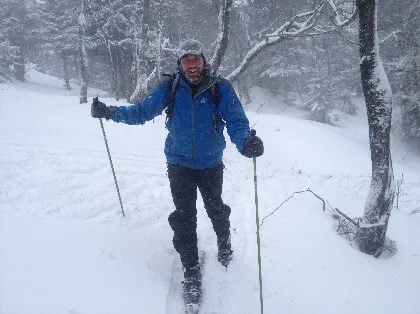
Hometown: Underhill, Vermont
Educational Background: B.A. & Sc. from McGill University: Cognitive Science, Philosophy, Political Science
How did you learn about the Food Systems program and what made you interested in applying?
After working on a number of small farms during the years after I graduated from McGill, I began to realize that we have some important work to do to strengthen and improve our food system. I see food as a crucial intersection between industry, tradition, public health, and environmental stewardship. I believe that some of the policies which regulate and support the food system we have now could be updated and reworked to better serve both producers and consumers of food. The interdisciplinarity and systems approach of the UVM Food Systems program is what really attracted me. The program offers an opportunity to think from a wide angle about the many facets of our food system, and then zoom in to focus on one area of interest or concern.
How has your educational background and experience prepared you for studying food systems?
I have always been interested in how people and societies make decisions. My undergraduate degree delved deeply into the individual underpinnings of decision-making and cognitive theory. However, stepping out into the world, I became increasingly aware of both the power and the fragility of our collective decision-making process. I believe Vermont’s public institutions offer real hope for positive change, and that by studying and engaging with these institutions, I can help lawmakers to create smart, focused public policies which strengthen our food system.
What are your future career goals?
I would like to find a way to put what I’ve learned about public policy analysis and optimization into play in a real world setting to improve the food system. Specifically, I would like to focus on bolstering sustainability and resiliency by formulating and analyzing public policies which allow producers to thrive, while also addressing pressing issues such as water quality, climate change, and public health. Where, exactly, this will take me, I’m not yet entirely sure. But I’m sure looking forward to the challenge.
Have you learned anything in particular, since entering the program that has surprised you?
My research focuses on the potential for a specific type of dairy farm management, namely grass-based dairying, to help our small farmers increase profitability, while also addressing ecological goals such as reducing runoff to mitigate problems like algae blooms in Lake Champlain. This type of win-win situation is a rare bird, and I was surprised at first to learn that not only is it theoretically possible, there are already plenty of Vermonters successfully practicing grass-based livestock management all over the state! I think it’s exactly this type of common-sense thinking that can help our state’s agricultural sector thrive both ecologically and financially in the years ahead.
Please leave us with a fun fact about yourself.
In addition to academics, I really enjoy playing rock and roll music with my band, as well as adventuring in Vermont’s backcountry on skis or a mountain bike.