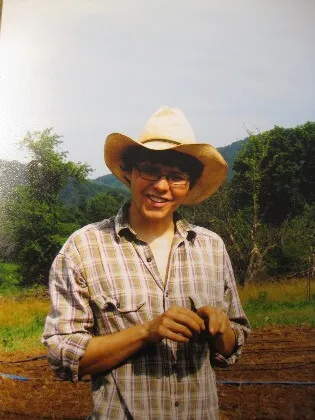
Hometown: Linden, Virginia
Educational Background: BA Anthropology and Environmental Thought and Practice from UVA
How did you learn about the Food Systems program and what made you interested in applying?
I was farming and I started researching food systems programs. There were not too many to choose from when I was searching, but UVM’s program was attractive because of the unique values of the state and the existence of a robust sustainable farming movement in the area. Seriously, you can’t take ten steps without tripping over a CSA!
Tell us more about your educational background and your interests.
I have always been interested in sustainability and climate change. At the same time, I wanted to know why people think, feel, and do as they do. In college I pursued these interests through an anthropology and an environmental thought and practice double major. After graduating, I decided that the best way for me to get involved in “sustainability” was through the culturally fundamental practice of food production. So, I started working on an organic vegetable farm in Virginia for two years that distributed food through an on Farm CSA, several farmers markets in D.C., and local wholesalers. The work was hard and fun, but I was so busy I didn’t have time to think critically about the food I was helping to produce and distribute. I wanted to understand if our methods of production and modes of distribution were truly sustainable environmentally, economically, and socially. I mean, we used tractors extensively, drove box trucks hundreds of miles a week, had a largely affluent clientele, and though we never stopped working, it turned out making ends meet was challenging! In essence, I wanted to know if small scale organic farming really could make a difference, or if it was a niche market fad? If this kind of production was not the answer, what was? Turns out, it’s complicated.
How has your educational background and experience prepared you for studying food systems?
Anyone can contribute to the study of food systems! How our society produces, distributes, and consumes food is motivated by cultural values, economics, philosophy, demography, biotechnology, government policy, politics, and just about everything else. To design a sustainable food system we need representation from every discipline and worldview, and no one person can provide it all. My particular interest in what motivates people has led me to research the kinds of choices farmers make in designing and operating their businesses.
What are your future career goals?
I don’t think sitting at a desk is for me. It makes my back hurt. I envision getting back into farming.
Have you learned anything in particular, since entering the program that has surprised you?
I was lacking in an understanding of the economic context that sustainable farming is trying to emerge in. This perspective is valuable for me in terms of understanding the challenges sustainable farming faces. For example, the relative inefficiency of small scale “industrial farms” in terms of both energy and financial investment is a big challenge.
Please leave us with a fun fact about yourself.
Dual EU citizenship!