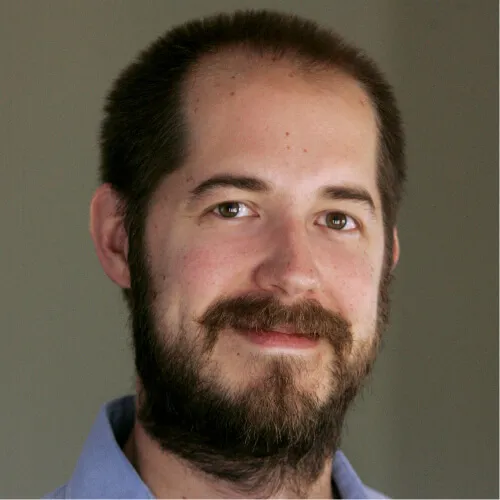
Mark Budolfson is an Assistant Professor in Philosophy.
Where are you from? I'm originally from Minneapolis, but I consider Flagstaff Arizona my hometown, which is where I went to college and lived for many years.
Tell us about your academic background and research focus. I often work on interdisciplinary issues at the interface of ethics and public policy, especially in connection with collective action problems such as climate change and other dilemmas that arise in connection with common resources and public goods. My current research includes work on climate change economics and the social cost of carbon, global ethics and international institutions, and individual reasons for action in collective action situations -- e.g. whether each of us should focus our energy on 'voting with our dollars' for a better world, or whether perhaps each of us would do better to focus on promoting political change wherever our individual talents and abilities can be most productively deployed.
What do you think are the most pressing issues facing our food system? Food systems face many challenges at both the local, national, and international level, and different challenges at different time scales. Climate change is arguably one of the most worrisome food systems challenges from a long-run perspective, especially from the perspective of the global poor. Some experts believe that the impact of climatic changes on agriculture may ultimately be the most worrisome aspect of climate change in general.
I believe that realistic policies to reduce GHG emissions would threaten the food security of the global poor in the short- and intermediate-term by raising food prices and reducing their wealth from where it would have been under business as usual, which is an important part of the challenge at the food-climate nexus that is frequently ignored. This is only one example of the way that the interests of the poorest and most vulnerable people should often be front and center in policy discussions which is a recurring theme in my work at the interface of philosophy, politics, and economics.
Somewhat controversially, I think that one of the most important challenges for our own food systems discussions in Vermont (and the USA in general) is to avoid focusing only on the dimensions of food systems that are most important given our own personal preferences (which might include preferences for local food, organics, small 'family' farms, boutique animal products, etc.) while ignoring other important values (such as the value of producing enough food to feed the world, empowering and enriching the global poor though genuinely free global trade, giving proper weight to the interests of animals, etc.). This challenge is particular pressing if promoting our personal preferences might come at the cost of these other things that are arguably more important.
Tell us about your interests and why you chose Vermont and UVM? I love hiking and more generally having natural beauty as part of the background for my everyday life, as well as good food, good beer, and lots of other great things in Burlington -- so I'm really excited and very lucky to be at UVM. UVM is also a place where it is easy to get to know colleagues across disciplines. Collaboration and learning from other disciplines has been a big part of my research, and I'm looking forward to more of the same here given the interdisciplinary values that impressed me so much when I took this job.