CEMS Home : University of Vermont
home
CEMS - The College of Engineering and Mathematical Sciences

Phi Beta Kappa visiting scholar: Dr. Andrew Odlyzko

Release Date: 03-15-2010

Author: Dawn Marie Densmore
Email: Dawn.Densmore@uvm.edu
Phone: Array Fax: 802-656-8802

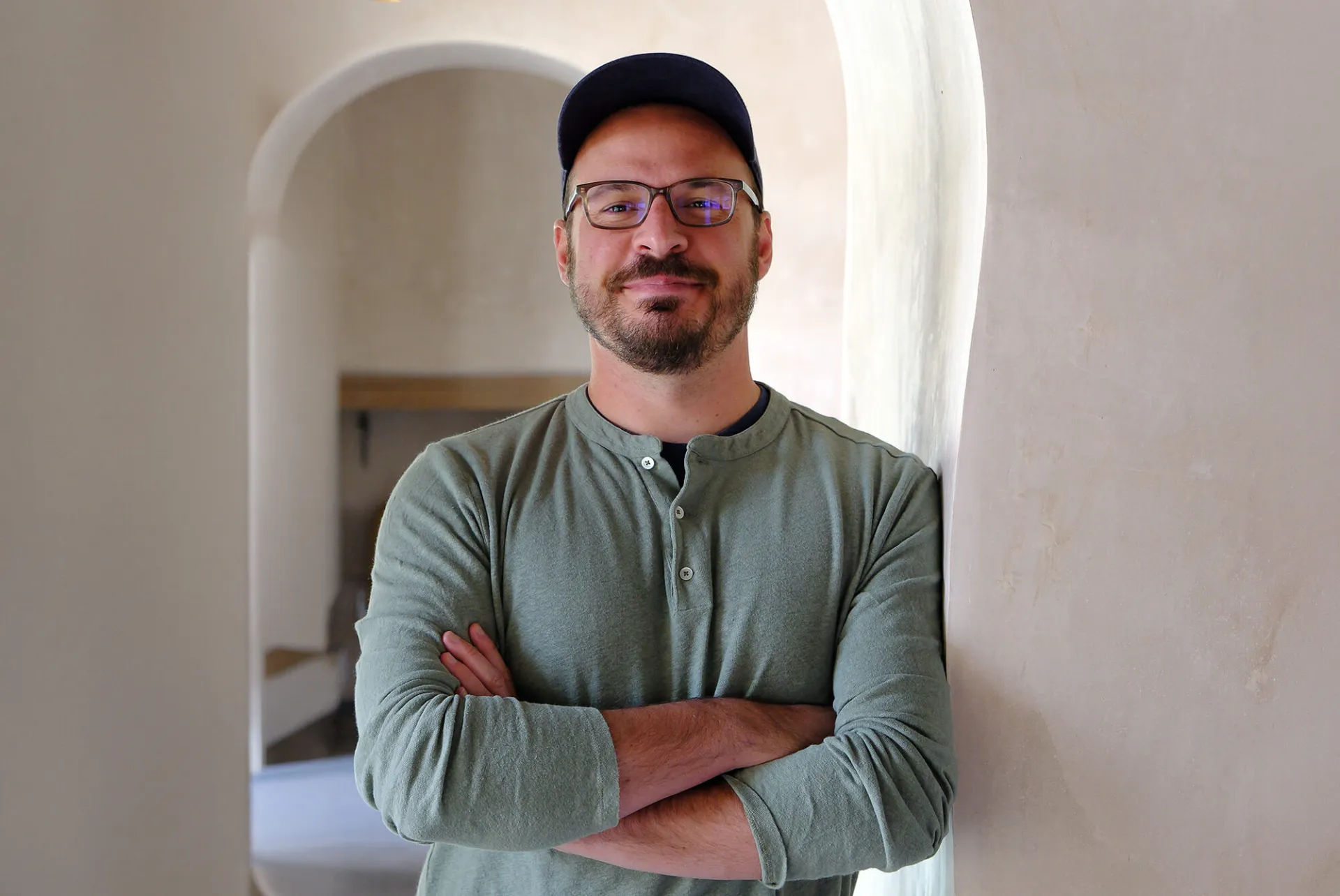
Dr. Andrew OdlyzkoVisiting Scholar Dr. Andrew Odlyzko will present, "How to live and prosper with insecure cyberinfrastructure" on April 6, 2010 in the Davis Center Livak Ballroom from 4:00-5:00 pm.

Odlyzko's presentation will go beyond the technology of network security to explore the impact of sociological, economic, and psychological considerations. Open to the public, this lecture is coordinated by the UVM Phi Beta Kappa and sponsored by the UVM College of Engineering and Mathematical Sciences Dean's Office, the Department of Mathematics and Statistics, the College of Arts and Sciences, and the Honors College.

Odlyzko is a professor in the School of Mathematics at the University of Minnesota, where he has been, at various times between 2001 and 2008, the founding director of the interdisciplinary Digital Technology Center, interim director of the Minnesota Supercomputing Institute, assistant vice president for research, and the ADC Telecommunications Chair Professor. Before moving to Minneapolis in 2001, he did research and research management at Bell Labs and AT&T Labs. He received an honorary doctorate from University Marne la Vallee and serves on over 20 technical journal editorial boards, as well as on several advisory and supervisory bodies. He has three patents and over 150 technical papers in computational complexity, cryptography, number theory, combinatorics, coding theory, analysis, probability theory, and related fields.

The distinguished visitor will also speak during his visit on telecom economics to students enrolled in Professor Richard A. Sicotte's Industrial Organization class in the Economics Department. Other events are also scheduled during his two-day visit: For information on these events contact: Jonathan W. Sands or Jacques Bailly (see below).

Odlyzko's work ranges from pure mathematics to communications, computer science, security, electronic commerce, growth of the internet, and technology manias. Of particular interest is his research on zeros of the Riemann zeta function and their connections to prime numbers and quantum chaos; as well as his work on breaking knapsack cryptosystems, debunking the myth of internet traffic doubling every 100 days, and demonstrating that connectivity has traditionally mattered much more for society than content. A current project is in economic history, comparing the Internet bubble to the British Railway Mania of the 1840s and exploring implications for future bubbles and technology diffusion in general.

He has managed projects in diverse areas, such as security, formal verification methods, parallel and distributed computation, and auction technology. In recent years he has also been working on electronic publishing, electronic commerce, and economics of data networks, and is the author of such widely cited papers as "Tragic loss or good riddance: The impending demise of traditional scholarly journals," "The bumpy road of electronic commerce," "Paris Metro Pricing for the Internet," "Content is not king," and "The history of communications and its implications for the Internet."

Phi Betta Kappa Visiting Scholar Program

Founded in 1776, Phi Beta Kappa is the nation's oldest academic honor society. It has chapters at 276 colleges and universities and over 600,000 members. The Phi Betta Kappa Visiting Scholar Program seeks to contribute to the intellectual life of the institution by making possible an exchange of ideas between the Visiting Scholars and the resident faculty and students. Each year twelve or more distinguished scholars are invited to colleges and universities with chapters of Phi Beta Kappa to spend two days meeting with students and faculty, taking part in classroom discussions, and giving lectures that are open to the entire academic community. The program has sent 566 Scholars on 4,736 two-day visits since it was established in 1956.

Abstract

"How to live and prosper with insecure cyberinfrastructure"
Mathematics has contributed immensely to the development of secure cryptosystems and protocols. Yet our networks are terribly insecure, and we are constantly threatened with the prospect of imminent doom. Furthermore, even though such warnings have been common for the last two decades, the situation has not gotten any better.On the other hand, there have not been any great disasters either. To understand this paradox, we need to consider not just the technology, but also the economics, sociology, and psychology of security. Any technology that requires care from millions of people, most very unsophisticated in technical issues, will be limited in its effectiveness by what those people are willing and able to do. This imposes strong limits on what formal mathematical methods can accomplish, and suggests that we will have to put up with the equivalent of baling wire and chewing gum, and to live on the edge of intolerable frustration.

Professor Odlyzko's permission must be obtained before any recording of this lecture.

Contact information: Andrew M. Odlyzko Email: odlyzko@umn.edu For more information on this lecture contact: Jonathan W. Sands , Dept. of Mathematics, University of Vermont Jonathan.Sands@uvm.edu 656-4339, or Phi Beta Kappa Society, Jacques Bailly, president, Jacques.Bailly@uvm.edu 656-0993.

Contact UVM © 2013 The University of Vermont - Burlington, VT 05405 - (802) 656-3131