Vision

Goals

Educate stakeholders and the public about the Payments for Ecosystem Services approach.

Advance the theory behind Payments for Ecosystem Services.

Apply the Payments for Ecosystem Services approach to solving real life problems.

Sign a Declaration of Purpose that affirms our dedication to advancing Payments for Ecosystem Services as a solution to environmental problems.

Robert Costanza, Director of the Gund Institute for Ecological Economics, University of Vermont, USA, stated that Costa Rica has been world leader in Payments for Ecosystem Services, and therefore it is important to learn from its experience.

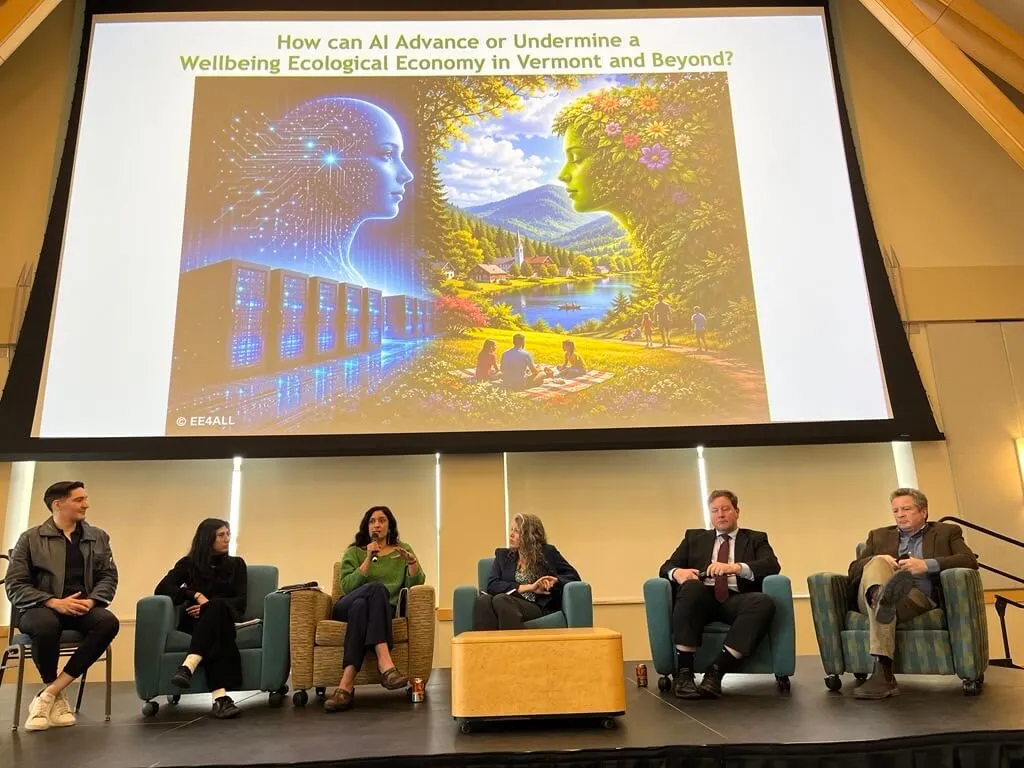
Conserving and recovering forest areas, through payment for ecosystem services schemes is the key point of the “Heredia Declaration” that resulted from the international atelier (workshop): Payments for Ecosystem Services (PES): from local to global, organized by the Gund Institute for Ecological Economics at University of Vermont and the CINPE, International Center for Policy Economics for Sustainable Development.

PES are not incentives or subsidies but payments for services produced by ecosystems. In Costa Rica there are four main ecosystem services: GHG mitigation, aesthetic beauty, water protection and biodiversity protection.

Universidad Nacional of Costa Rica is developing tools to model the second phase of PES.

One of the results of this event is the “Heredia Declaration”, which defines ten principles required for the second stage.

Among these principles, “measurement” is fundamental because it is important to form a PES inventory. Professor Costanza added that it is important to consider a bundle of services, since many of the characteristics of the ecosystems are intrinsically connected.

Another important principle is scale-matching according to the problem. There are several problems at the local, national and global levels where institutions must be calibrated to satisfy these three demand stages.

Furthermore, the declaration reccomends to take an account education and policy, public participation, property rights, sustainable financing, adaptive management, distribution (equity) problems and policy coherence.