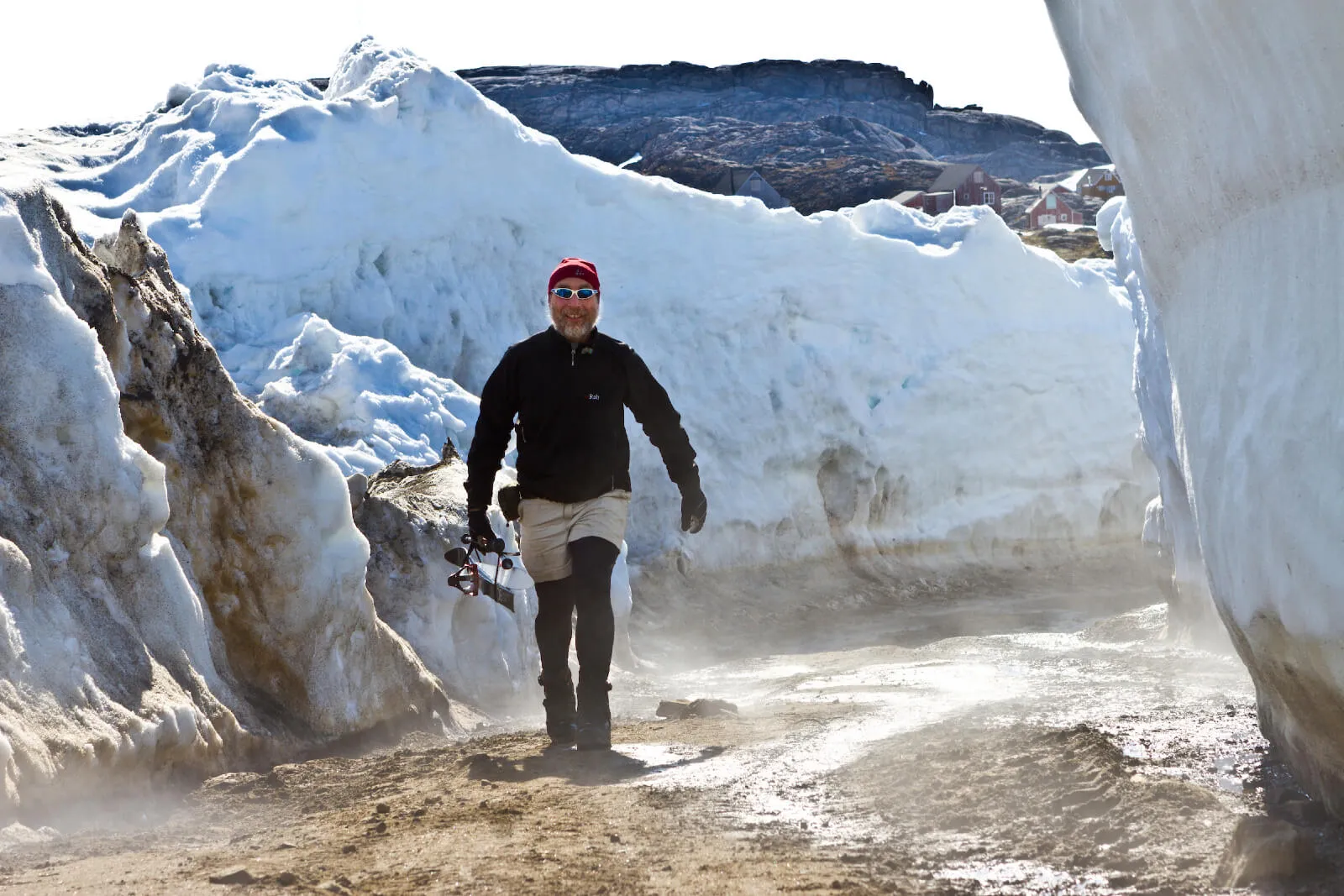
As the U.S. government considers taking over Greenland, University of Vermont (UVM) geoscientist Paul Bierman is available to explain why military and mining ambitions on the island are not practical or even possible.
“Natural hazards make resource extraction and military endeavors in Greenland uncertain, expensive and potentially deadly,” says Bierman in his Jan. 6 op-ed in The Conversation.
Bierman has studied and written extensively on Greenland’s history and science, including:
- The U.S. military’s long history in Greenland, from mining during World War II to a nuclear-powered army base built into the ice
- How Greenland’s melting ice and landslide-prone fjords make the oil and minerals dangerous to extract
- Bierman’s research in PNAS, Nature, and Science, and his 2024 book, When the Ice is Gone, detail how losing Greenland’s ice will catalyze devastating events if we don’t change course and address climate change now.
- In this video, Bierman discusses his research indicating that: Greenland Melted Recently, Shows Higher Risk of Sea Level Rise; and here, Paul Bierman introduces When the Ice is Gone (W. W. Norton, 2024).
To schedule an interview, contact Lauren Milideo of UVM’s Gund Institute for Environment, or Prof. Paul Bierman.