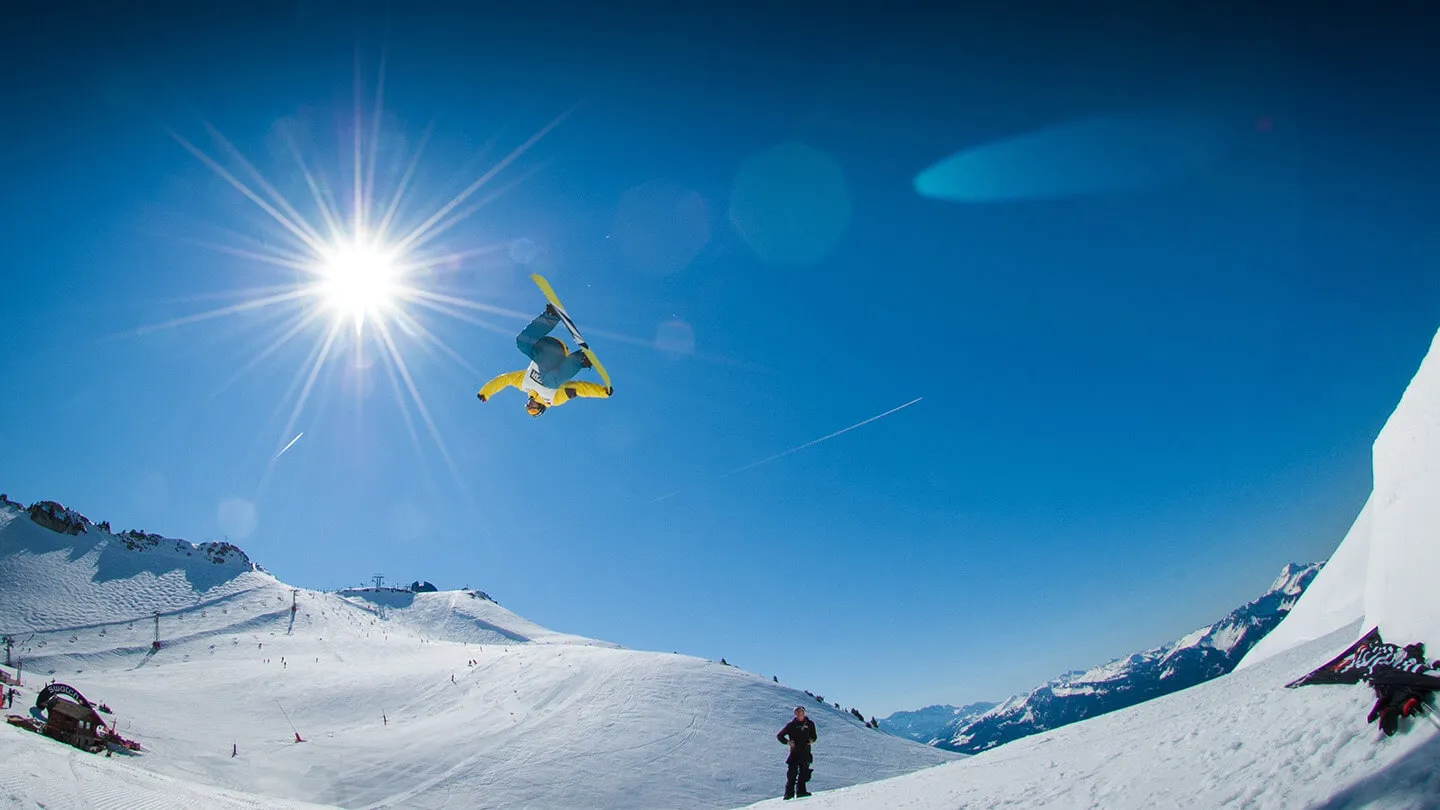
Imagine soaring more than 400 feet in the air before landing on skis, launching off a nearly 50-foot platform strapped to a snowboard, or sledding face first over 80 miles an hour down a sheet of ice—on purpose. Spectators of the 2026 Winter Olympic Games may wonder if the brains of elite athletes are wired differently than the rest of us mere mortals.
For neuroscientist Sayamwong Hammack, professor of psychological science at the University of Vermont, the answer is much more complicated.
“I think that there's some level of truth that all of our brains are different,” he explains. … “There could be a lot of variation in between all of us though we have a lot of the same elements. This gets into conversations I have in the classroom, what I experience as fear and anxiety is likely really different from your subjective experience of fear and anxiety.”
Some of us (ahem) may not enjoy skiing as fast as we possibly can down a mountain. The risk of potential injury just feels too high. But for an Olympic alpine skier, they have a different relationship with risk. In part, Hammack explains, because they don’t view their activities as particularly risky.
“As an Olympian, you aren’t thinking about risk anymore,” he explains. “It has become something else in terms of your cognitive processing.”
They have something most of us do not: thousands of hours of practicing the same so-called risky maneuvers.
“When we watch people do that, we are putting ourselves in those situations and then it seems crazy,” Hammack says. “But it’s not crazy for those folks because they have done it before.”
Scientists have long understood the brain’s adaptability and the potential to train our brains to respond differently to fears or anxieties. (Hence the entire field of cognitive behavioral therapy.) But there is another aspect of training our bodies and minds that Hammack suspects may set professional athletes apart.
“What we are often trying to do is to take some kind of action and put it into habit,” Hammack explains. “And I do think to some degree Olympians are just doing that to an extreme version, such that every action in a sport or an event is done without thinking.”
For instance, when downhill skiing, you don’t want to be consciously thinking about where your feet are or how to handle a bump, he says. “And so, with practice and repetition, the idea is that it [becomes] a habit and that your brain is now processing that stuff without you thinking about it. As an Olympian what you are trying to do is train, train, train so that you are not thinking about thinking.”
It makes sense from a survival perspective, too.
“That's part of what we should be doing as an organism,” Hammack says. “… You really want to save your adaptable brain power for times when the strategies you've learned don't work and you have to figure out a new strategy.”
But is the Big Air snowboarder’s brain already primed to seek out more thrilling stimulation? Are some of us born to be risk takers or do we become one? The answer is not so simple.
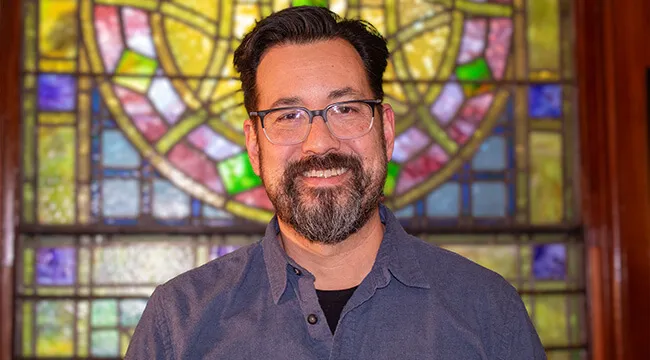
Hammack studies the neural circuity of emotions such as stress and anxiety. His lab has explored how exercise can mediate these emotions, and reduce anxiety, although the exact mechanism is not yet understood, he admits.
“There is something called anxiety sensitivity where some of us just get more anxious,” he says. “I was that kind of person and so there are certain things that I would not do. I was not the person to get on roller coasters.”
A person particularly sensitive may never go down certain paths—like Big Air jumping.
Hammack suspects the brain’s reward system also plays a role.
“There are certainly parts of the brain that have to do with reinforcement and making you feel good,” Hammack says. “There are certainly parts of the brain that have to do with avoidance and fear and those things that you don’t want. And there is always some potential conflict between those two things.”
He points to the opponent-process theory, which may explain some thrill-seeking behaviors. Essentially, the theory argues that whenever an emotional response to a stimulus is activated, a secondary anti-excitement response becomes activated to counteract it.
“The theory says that the second process always takes more time to get activated but it is sluggish to deactivate,” Hammack says. “So, it stays on longer.”
Think of children and the excitement they experience the weeks before Christmas and their joy when it arrives. Now picture the day after when those initial feelings have dissipated and are replaced by another feeling: sadness.
The theory works in the other direction, too.
Consider going skydiving for the first time, Hammack says. “You get up [in the plane] and you are absolutely terrified. And you jump and you are scared. You get to the ground, and you are safe and you become elated because of that B process. So, thrill seeking can be explained in that.”
“As an Olympian, you aren’t thinking about risk anymore. It has become something else in terms of your cognitive processing.” - Sayamwong "Jom" Hammack
The opponent-process theory is also used to explore the science of addiction, he notes. “And there is a lot of evidence coming from those studies that this is real.”
But Hammack isn’t convinced the brains of professional athletes competing in so-called riskier sports are all that different from the rest of us—even the brain of Alex Honnold, the free solo climber who scaled the skyscraper Taipei 101 without safety gear last month.
Honnold is also the first person to climb El Capitan in Yosemite National Park without a rope. A 2018 documentary called Free Solo about Honnold showed him undergo a brain scan that found his amygdala—the region of the brain that processes emotions such as fear—wasn’t activated to extreme stimuli. People wondered if this explained why Honnold can free solo routes without being scared.
“I am super skeptical of that,” Hammack says. “There is a narrative that maybe his avoidance areas do not get stimulated in the same way. And that might become your chicken and egg thing. Was he always that way or did he just learn to inhibit it? And I don’t know the answer to that. But it very well could be he just learned to inhibit it.”
Hammack’s larger point is that Honnold didn’t free solo that skyscraper on a whim.
“One thing that no one ever talks about in the case of that mountain or that building is he climbed it with ropes many times, so he knew what he was getting into,” Hammack says. “So, a lot of it is about practice.”
There was also the financial reward of performing the feat while it was livestreamed on Netflix and the emotional reward of millions of people cheering him on. Just like such events as Olympic luge.
“We as a culture celebrate that kind of performance. We celebrate winning. We celebrate elite performance,” Hammack says. “And so, while there is the thrill seeking parts of this, and there is the habit in terms of the learning, I have to imagine that you are being conditioned to find reward in all of this reinforcement that comes from everyone around you to be the best at what you do is a big part of why people do those things.”