Polystyrene Foam Pollution in the Lake Champlain Basin
Polystyrene foam from dock floats, food service, and packaging makes up a large percentage of marine debris in the Lake Champlain Basin. Wind, waves, sunlight, heat, and organisms can cause uncovered polystyrene foam used in floating structures and other products to break apart. In turn, small pieces of foam can spread, polluting waterbodies and the environment. Polystyrene foam does not biodegrade, and once in the environment, it can stay there indefinitely.
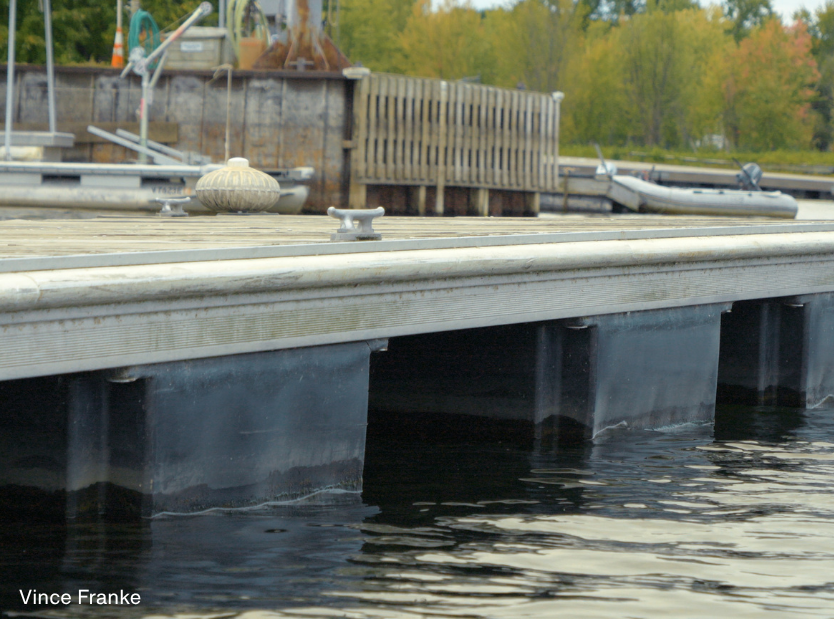
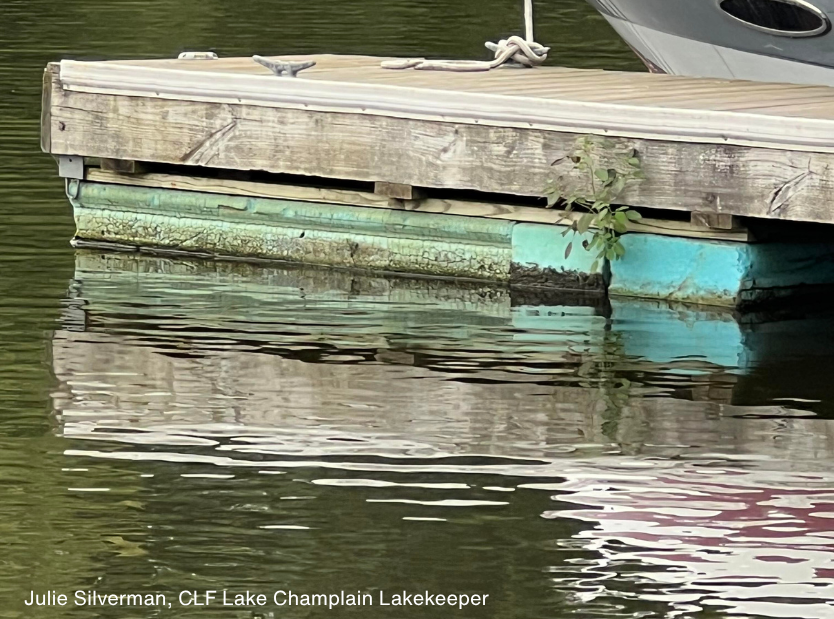
Unencapsulated VS Encapsulated Foam
Encapsulated refers to Styrofoam having a thick protective barrier completely covering it and protecting it from the elements for at least 10 years. It is also important that the hardware securing this covering is rated to last at least 10 years. These barriers are often made of thick plastic, but they can also be made of fiberglass or other durable materials. Foam products that are constantly exposed to the elements should be encapsulated. Without a durable barrier protecting the foam from breaking apart, the foam is able to spread throughout the environment, impacting wildlife, water quality, and recreation. Vermont winters require homeowners to remove their floating docks from the water. The process of dragging a dock onto shore accelerates the deterioration of unencapsulated foam dock floats, making it even more important to have durable encapsulated dock floats.
Why Foam Pollution Matters
Protecting Our Shorelines and Waterways
Foam debris washing onto shorelines and accumulating in waterways diminishes the natural beauty of our lakes, rivers, and recreational spaces. What begins as a small piece of foam can eventually break apart into thousands of fragments, creating a long-lasting source of pollution.
Hidden Risks to Water Quality
Polystyrene foam contains chemicals that can leach into the environment over time, potentially affecting water quality and aquatic ecosystems. One of these chemicals, styrene, has been identified as a probable human carcinogen. Additional additives used during manufacturing—such as color pigments, UV stabilizers, and flame retardants—may also enter the environment as foam degrades.
A Magnet for Pollution
Foam doesn’t just release chemicals—it can also absorb them. Floating polystyrene acts like a sponge, attracting and concentrating pollutants already present in the water. This allows foam debris to become a carrier for toxic substances throughout aquatic environments.
A Persistent Environmental Problem
As foam breaks down, it fragments into smaller and smaller pieces rather than fully decomposing. These particles can remain in the environment for decades, making cleanup difficult and increasing the risk of exposure for wildlife and ecosystems.
Microplastics Enter the Food Web
Polystyrene foam eventually breaks down into microplastics, which can enter the food web when eaten by primary consumers. Microplastics bioaccumulate, meaning they remain within the organisms that consume them and simply build up as they move up the food chain. This means the predatory fish we eat like trout may contain high levels of microplastics
Impacts on Fish
Polystyrene foam microplastics have been found to cause developmental problems in fish. During development, microplastics can enter the cells of fish, causing premature cell death. This results in the fish being incapable of effective hunting or properly mating.
Impacts on Birds
When consumed by birds, polystyrene foam can lower a bird’s appetite yet provide no nutrition, preventing them from getting enough energy to maintain a healthy weight. Larger pieces of foam can clog a bird’s digestive tract, preventing them from defecating and resulting in mortality.
Alternatives to Unencapsulated Polystyrene Foam
Common Foam Product
Possible Alternative
What Can You Do to Help?
Polystyrene foam pollution has no clear source, so the best way to fight this issue is to minimize our individual Styrofoam usage. Some ways you can do this are:
Encapsulate
If you own property on a lake, check to make sure all of your floating structures or buoys do not contain unencapsulated polystyrene foam. Encapsulated foam dock floats must be checked to make sure they are not damaged or leaking foam into the environment. Here is a helpful video on how to check your floating structures.
Explore Alternatives
Many everyday items have foam versions that are cheaper and lighter. Even though they are practical, we urge you to use multi-use versions of products like foam plates, coolers, or cups.
Secure
Sometimes we cannot prevent the use of Polystyrene when receiving a package. When this is the case, make sure your foam waste is secure in your trashcan so that it makes it to the landfill without ending up in a waterway. Styrofoam is light and can easily blow out of trashcans.
Clean
The next time you are near a body of water, take the time to search for Polystyrene foam debris and pick it up. The coalition hosts multiple public trash cleanups each year. For more information on where and when those are, please visit this website.