Tips for Flood Safety During National Preparedness Month
By Alison Spasyk, Flood Resilience Educator, Lake Champlain Sea Grant
September marks the start of many things – back to school, the changing of leaves, and the promise of cooler days. September is also National Preparedness Month. Although emergencies and natural disasters can happen at any time of year, now is as good a time as any to think about how well you are prepared for the unexpected.
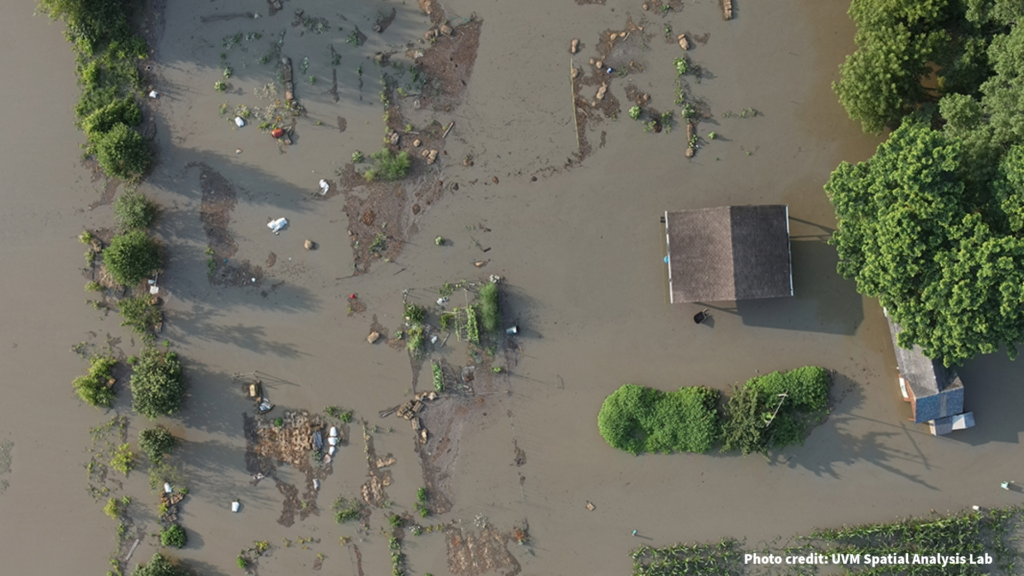
In the Lake Champlain basin, flooding is the most common and costly natural hazard. As extreme precipitation events become more common, there are some basic steps you can take to be better prepared for future flooding. See below for tips on flood preparedness.
Where to get emergency alerts and flood information
- VT-ALERT and NY-ALERT are mass notification services that allow you to receive alerts on your phone and email about situations such as severe weather, unexpected road closures, missing persons, or evacuations. Notifications can be tailored to specific locations and types of alerts you would like to receive. Sign up for VT-ALERT or NY-ALERT by visiting the respective webpages.
- The National Weather Service (weather.gov) issues weather alerts and weather forecasts. Search for your town to get the latest forecast.
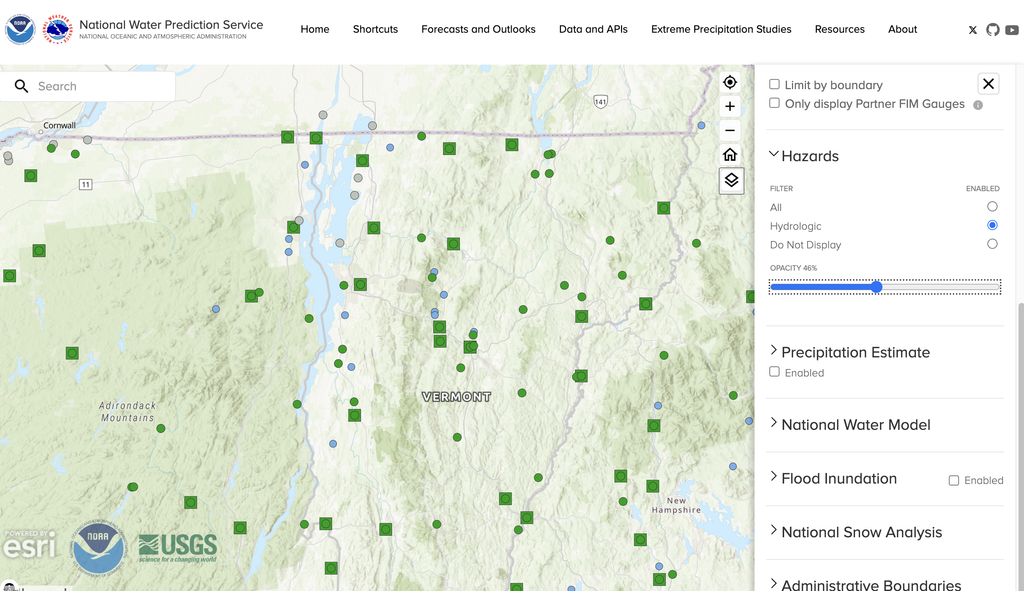
- The United States has a network of river gauges that provide information on current and forecasted water levels, which can be found at https://water.noaa.gov/. The circles and squares represent locations where there is an official NWS gauge. The color of the circle represents current conditions, and the color of the squares represents the water level forecast. If you live along or near a river, check whether there is a river gauge near you. Click on the circle or square to view the current water level, and if available, forecasted water level and flood impacts at a given level.
- If there is a storm forecasted, pay attention to local news stations on TV and radio, and heed instructions about when to take action.
- In the event of a power outage or when internet is not available, a battery-powered or hand-crank radio with NOAA weather tone alerts can provide information about life-threatening weather 24 hours a day, 7 days a week. Weather radios can be purchased at most hardware stores and come in battery-operated and hand-crank models for use during power outages.
Make a plan for flooding for your household
Think about the following questions with your family and household needs:
- What belongings will you move to a higher floor if flooding is imminent?
- If you are told to evacuate, where will you go? Can you stay with someone you know? What about any pets?
- Where are emergency shelters in your community?
- Do you know the best roads to take that likely won’t be affected by flooding or washouts?
- What will you bring? Do you have a Go-Bag (an easily movable bag with the items you need for a few days away from home)?
- Do you know how to safely turn off your utilities in advance of a storm (electricity, gas, and water)?
If a flood is forecasted in your area:
- Move important items to upper floors or high shelves.
- Keep your cell phone charged.
- Bring outdoor equipment inside (trash cans, lawn furniture, toys, hanging planters, grills, etc.) or tie them down securely.
- Fill bathtubs, sinks, and jugs with clean water. This water can be used for drinking, washing, and cleaning the toilet.
- Gather your emergency supplies and stay tuned to local radio or television stations for updates.
- Before a storm arrives, fill up your gas tank or fully charge your electric vehicle to prepare for potential evacuation.
- If possible, relocate vehicles to higher ground.
Lake Champlain Sea Grant will be sharing other helpful tips throughout the month of September on our Instagram. Learn more about flood preparedness and community resilience on our webpage.