Secondary tabs
Submission information
| Study Title | New York Botanical Garden Floodplain Forest, SAP-Ne Demonstration Site (Bronx, NY) |
|---|---|
| Case Study Type | Forest health, Management type |
| Management Subcategory | demonstration site |
| Site Photo |
|
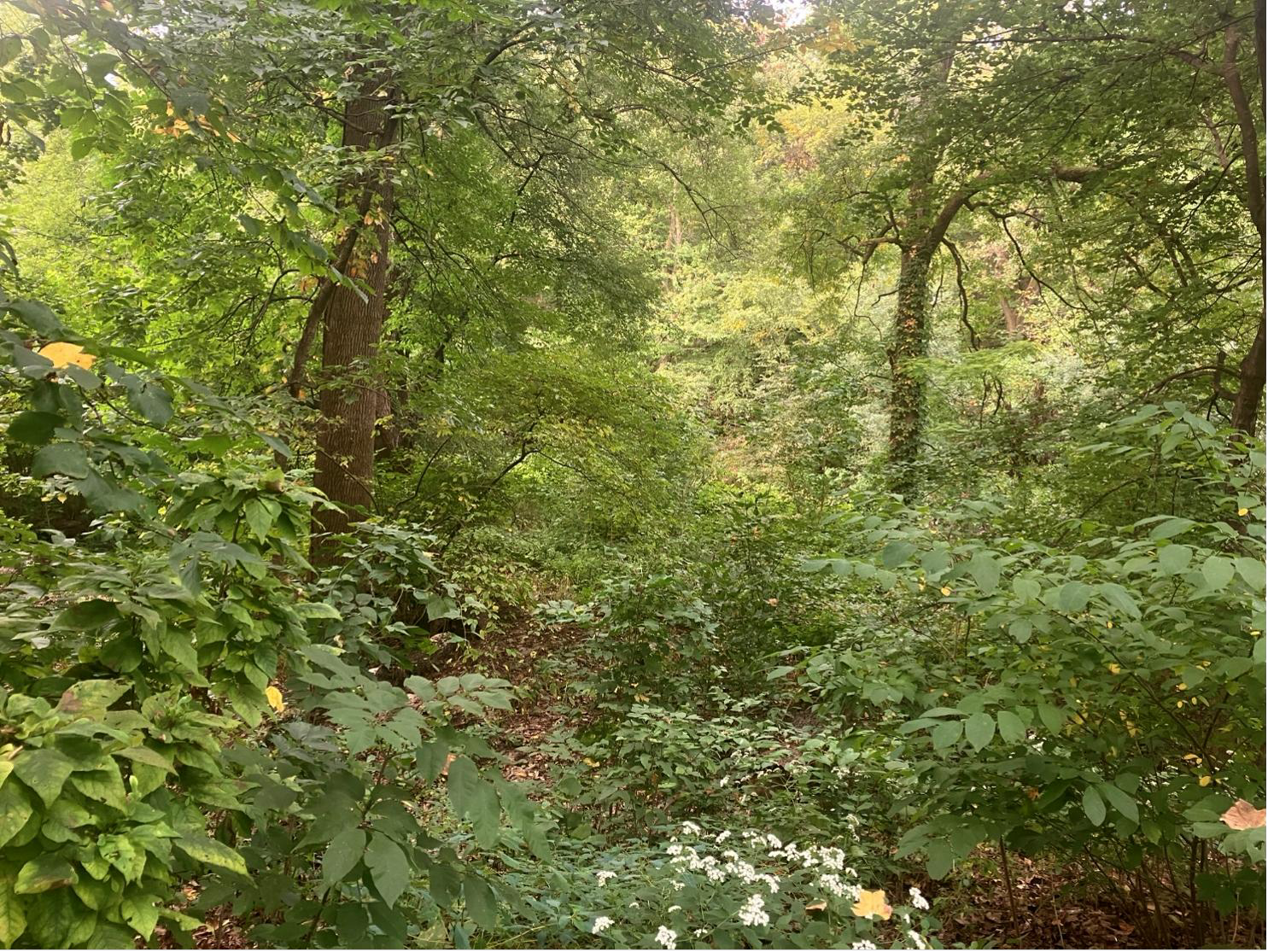
| Image caption | View of the floodplain forest from NYBG’s Magnolia Bridge looking south. Note two large green ash (Fraxinus pennsylvanica) in the photo. |
| Lay Summary | The floodplain forest at this site includes sections of the old growth Thain Family Forest, the largest patch of contiguous old growth forest remaining in New York City, and other natural areas at the Garden. NYBG has invested in treating mature ash trees in the floodplain, which has the largest concentration of naturally occurring ash on the property, to retain their ecological, scientific and educational value. Forest stewardship practices at this site are supported in part by the Sustaining Ash Partners Network (SAP-Ne), through a demonstration site network showcasing effective approaches for preserving future generations of ash in the face of emerald ash borer. |
| Location | Bronx, New York |
| Location Description | Much of this site is in the New York Botanical Garden’s Thain Family Forest, an old growth forest at the center of the institution. Sections of floodplain are also present in some second-growth natural areas too. |
| Latitude | 40.865800 |
| Longitude | -73.875005 |
| Directions | The New York Botanical Garden is located at 2900 Southern Blvd in the Bronx. The floodplain forest can be viewed from Magnolia Bridge. To access the site, walk from the main entrance to the northernmost bridge across the Bronx River at the Garden (the Magnolia Bridge) and overlook the floodplain, which is present to the north and south of the bridge, on both sides of the river. |
| Accessibility | Magnolia Bridge is accessible by foot. |
| Landowner Name | New York Botanical Garden |
| Landowner phone | +1 718-817-8700 |
| Landowner email | jzeiger@nybg.org |
| Stand Area with Units | 3.6 acres |
| Cover Type | Ash |
| Primary Forest Health Threat | emerald ash borer |
| Secondary Forest Health Threats | |
| Primary Pests/Disease | emerald ash borer |
| Stand History | Ash management has been ongoing since before the grant period. The stand includes sections of old growth and secondary growth floodplain forest along the Bronx River. Knotweed is very abundant in some areas and has been managed through multiple annual growing season cutbacks with volunteers. |
| Pre-Treatment Forest Health Issues | This work focuses on emerald ash borer impacts to ash trees. NYBG also manages tree and forest health for a variety of conditions. Invasive vegetation is also controlled manually within many of NYBG’s natural areas. |
| Case Overview | The floodplain forest at this site includes sections of the old growth Thain Family Forest, the largest patch of contiguous old growth forest remaining in New York City, as well as other natural areas at the Garden. It is managed for the goals of preserving biodiversity and natural ecosystem processes, supporting research on urban ecology, and encouraging education and passive recreation in nature. The Garden treats mature ash trees, including green ash (Fraxinus pennsylvanica) and a naturally occurring pumpkin ash (Fraxinus profunda) in the floodplain to preserve their ecological, scientific and educational value. The Garden has a history and schedule of treating ash and plans to use best practices to retain these trees on the landscape into the future. In addition to ash treatment, horticultural staff and volunteers manually remove invasive species such as knotweed (Reynoutria spp.) and porcelain berry (Ampelopsis brevipedunculata) to promote both tree regeneration and native herbaceous vegetation. |
| Silviculture Objectives | During the last century, the Thain Family Forest and NYBG’s other forested natural areas have suffered from several tree diseases, which have strongly impacted the tree composition. With new threats on the horizon, such as climate change, land stewards at the Garden try to preserve diversity of tree species as feasible, to promote ecological resilience. |
| Landowner Objectives | The primary objective of this work is to support floodplain biodiversity and ecological integrity by retaining mature ash trees on the site and supporting continued ash regeneration. The larger goals are preserving biodiversity and natural ecosystem processes, supporting research on urban ecology, and encouraging education and passive recreation in nature. |
| Silviculture Prescription | As part of this project, mature ash will be preserved with early spring chemical treatments. Separately from the SAP-NE project, invasive species will be managed as feasible with manual cutting and removal. |
| Factors Influencing Prescription Choice |
|
| Equipment used | NYBG staff followed pesticide label instructions for chemical treatments. |
| Prescription Notes | Chemical treatments have allowed NYBG to preserve mature ash across the Garden landscape. |
| Post-Treatment Assessment Expected | yes |
| Future Treatment Plans | There is a plan for long-term treatment of mature ash at the Garden to retain these trees on the landscape. Biocontrol are also being considered. |
| Primary Contact | John Zeiger |
| Contact Title | Manager of the Thain Family Forest |
| Contact Organization | New York Botanical Garden |
| Contact Email | jzeiger@nybg.org |
| Contact Address | 2900 Southern Blvd Bronx , New York. 10458 |
| Additional Photo 1 |
|
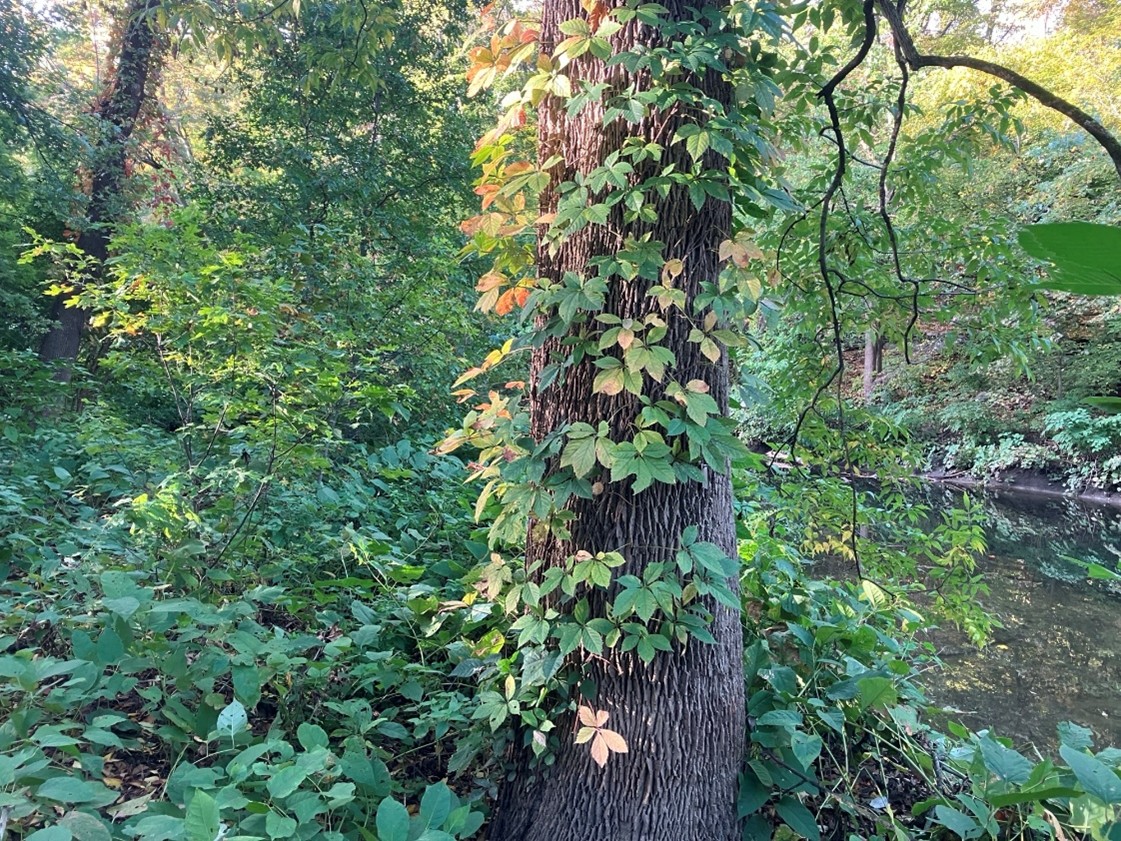
| Caption 1 | Floodplain ash with Bronx River in background. |