On Thursday, April 16 in the Billings Marsh Room, 32 literature-curious people gathered — and the conversation stretched across centuries. The occasion was a lecture in the Silver Special Collections Library Lisman series on early American book culture, featuring Claudia Stokes, a professor of English at Trinity University, San Antonio, Texas. Stokes spoke about "James Fenimore Cooper and the Politics of the Sequel."
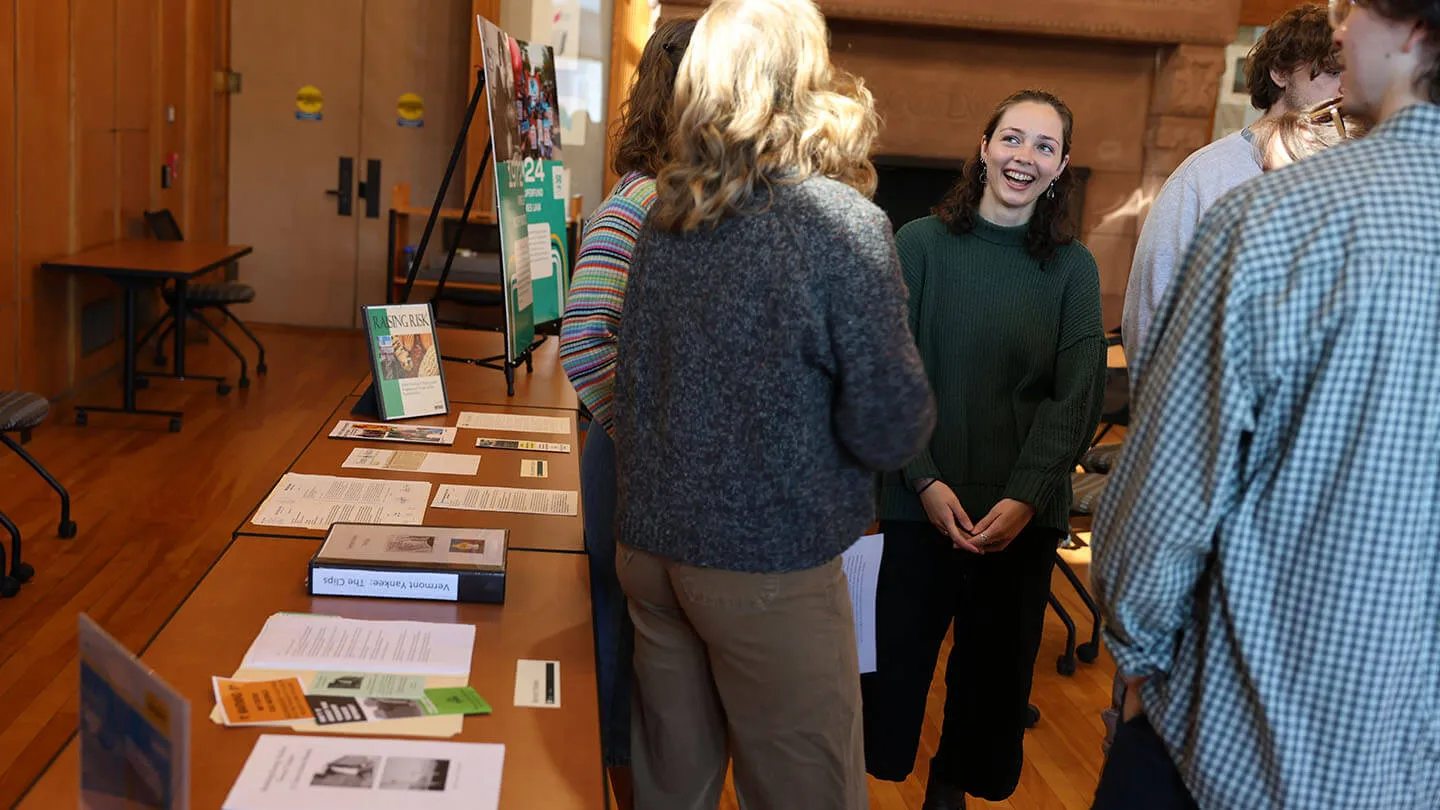
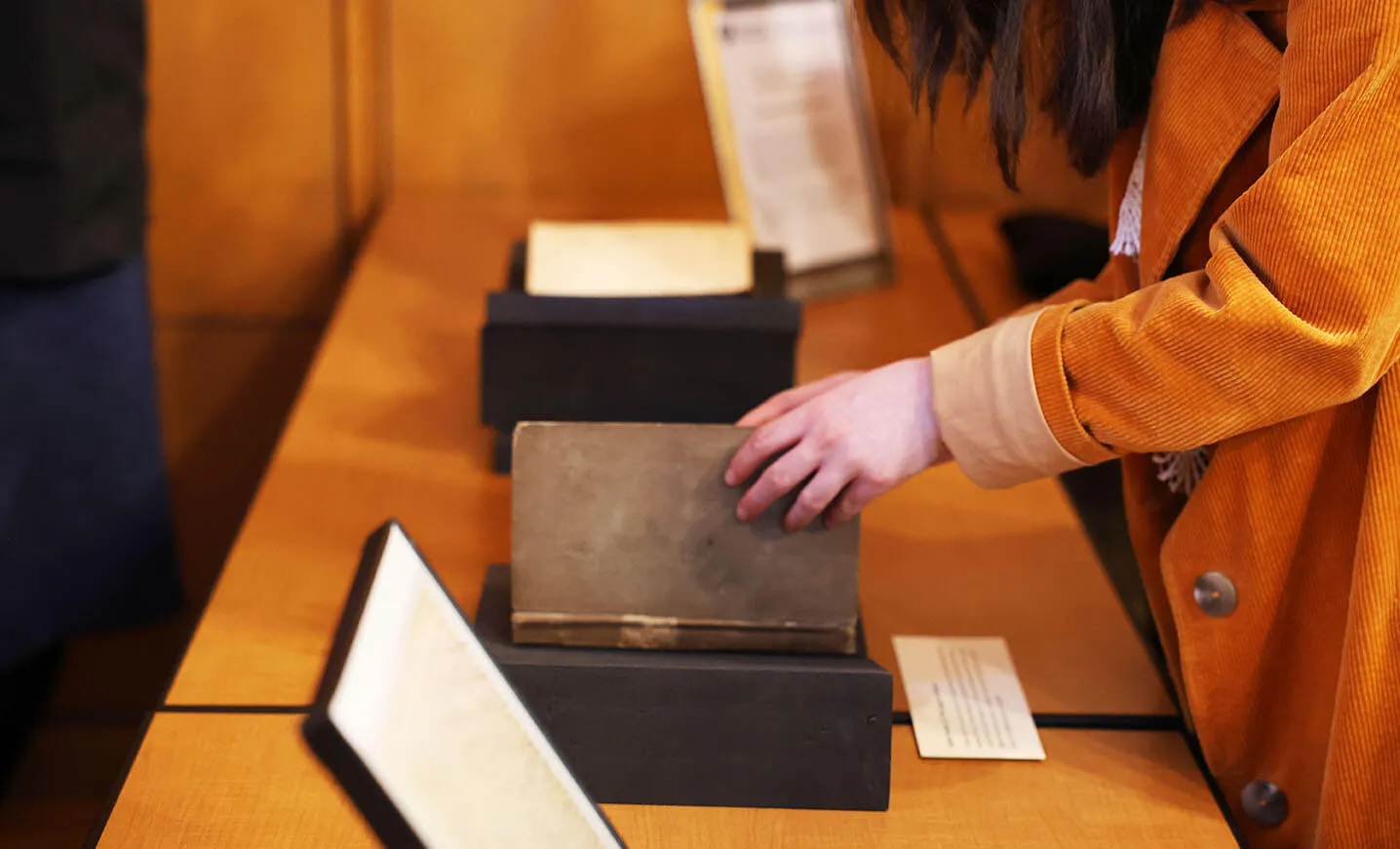
The setting itself quietly reinforced the talk’s themes. On tables at the back of the room sat "recent" acquisitions to UVM’s early American literature holdings. Special Collections Director Bridget Burke noted that one might assume the richness of UVM’s early American holdings stems simply from the university’s age — founded in 1791, UVM began building collections early — but the story is far more complex. A fire in 1824 destroyed the university’s library, and books donated and purchased to replace those that burned were more likely to be Latin verse or natural history, not American novels. Decades later, an 1854 catalog still showed notable absences — Nathaniel Hawthorne, Walt Whitman, Edgar Allan Poe and Cooper among them.
Therefore the Lisman project, initiated in 2023 through the generosity of alumnus and book collector Bruce Lisman ('69), allows these early 19th century works to find their way to university shelves. The project enriches opportunities for students and scholars — and, as the evening demonstrated, invites fresh ways of reading them.
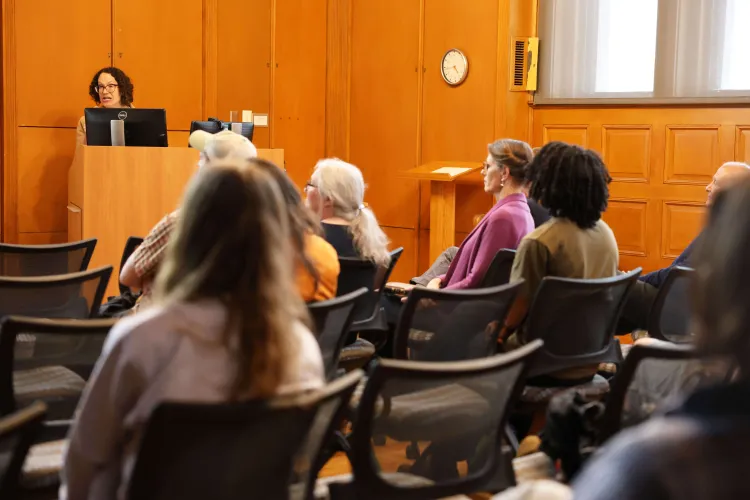
Elizabeth Fenton, a professor in UVM’s English department, opened the event with warm and personal remarks. She described not only Stokes’ scholarly accomplishments but also her collegiality: someone who brings people together, fosters conversation and builds intellectual community. It was a fitting introduction for a talk that would itself challenge familiar assumptions and encourage open discussion.
Stokes began with a disarming observation: "Nobody lights up when they hear that name," she said of James Fenimore Cooper, prompting laughter from the room. Known today primarily for adventure novels such as "The Last of the Mohicans," Cooper is not often associated with innovation or stylistic brilliance.
Stokes' focus was the sequel, a form modern audiences tend to dismiss as derivative. Today’s sequels — whether in film or fiction — are often seen as commercial extensions rather than meaningful works. But, as Stokes pointed out, the sequel is as old as storytelling itself. From Homer’s epics to Shakespeare’s "Henrys," narratives have long unfolded across multiple installments.
What changed, she argued, in the 18th century was not the existence of sequels, but their function. In Britain, "continuations" of popular novels proliferated — often written by unauthorized authors, akin to today’s fan fiction. There were, Stokes noted, an estimated 700 such continuations of "Robinson Crusoe." In response, original authors began writing their own sequels, asserting control over their stories and reclaiming narrative authority.
This is where Cooper enters the picture. Stokes argued he was the first American writer to fully embrace the sequel as a deliberate literary strategy. While his sequels often sold poorly — and may have contributed to his declining reputation — he persisted in writing them. The question, then, is why.
The answer, according to Stokes, lies in Cooper’s deep concern with continuity
Specifically, Cooper perceived rupture between America’s past and present. For Cooper, the sequel was not merely a narrative device but a means of preserving social and cultural order. If the novel promises novelty — something new — the sequel resists that impulse. It returns, revises and reinforces.
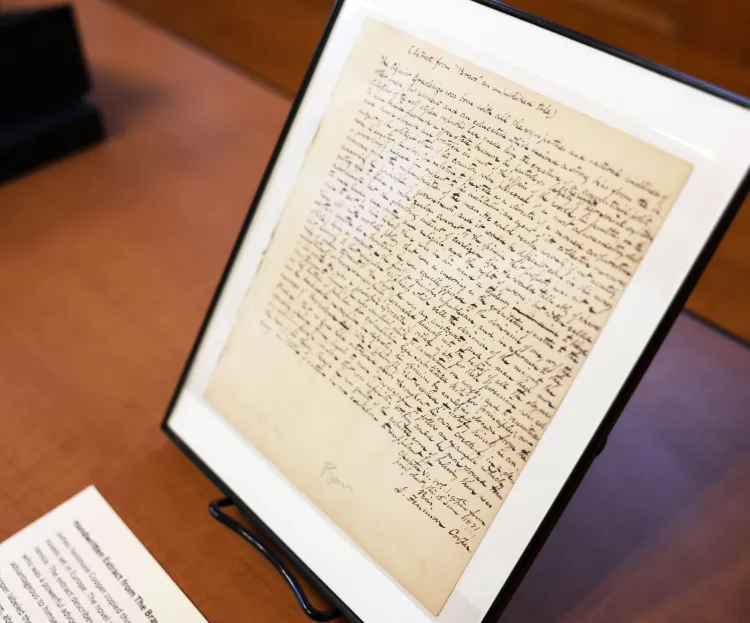
Stokes illustrated this through Cooper’s "Littlepage Manuscripts" trilogy (1845-46), portions of which are held in UVM's Early American Literature collection. Spanning nearly a century, from colony to republic, the novels follow multiple generations of a single family. Each male heir is tasked with recording his experiences, creating a continuous familial narrative that mirrors — and attempts to stabilize — the nation’s history.
Within these works, continuity is not neutral. It serves to preserve the status and property of an elite family, even amid social upheaval. Recurring characters — including a loyal enslaved man and a devoted Indigenous figure — are portrayed as content and supportive of the family’s position, while social climbers from outside (not coincidentally called the "Newcome" family) the established order are depicted as disruptive. The message is clear: Stability lies in maintaining hierarchy and old ways, not challenging it.
Critics of Cooper’s time were not impressed. They found the novels repetitive and formulaic, urging him to produce something new. But this criticism, Stokes suggested, misses the point. For Cooper, novelty was not a virtue — it was a threat. Repetition, continuity and predictability were markers of refinement and stability. To demand innovation was, in his view, almost ungentlemanly.
If this makes Cooper sound out of step with modern values, Stokes did not disagree. In a candid and humorous assessment, she described him as "grumpy," "judgy" and, by contemporary standards, deeply problematic — racist, homophobic and dismissive of women. "Kids, you should get off his lawn," Stokes joked with the audience. His prose, she added, can be notoriously difficult. "Try diagramming one of his sentences," she challenged.
That raises a larger question posed by Fenton: What is the value of studying "bad" books?
For Stokes, the answer lies in historical perspective. The standards by which literature is judged today are not the same as those of the past. To dismiss works like Cooper’s outright risks misunderstanding the cultural and intellectual worlds that produced them. Instead, she invited the audience to read such texts with curiosity — asking not whether they align with modern tastes, but what they reveal about earlier values and anxieties.
The sequel, in this light, becomes more than a literary form. It is a tool for managing change, preserving identity and asserting control — over stories, over history and over social order.
The evening concluded with questions that extended these ideas further: the relationship between sequels and serialized fiction, Cooper’s own complicated relationship to class and whether there might be new ways to interpret his conservatism — not simply as reactionary, but as a creative response to instability.
If the audience arrived with modest expectations, they left with something more substantial: a reframed understanding of both a writer, his form, and why we choose to keep telling the same stories.
All of Cooper's works and letters on display at the event are also available to researchers, as are other items in the Early American Literature collection. Please contact the Silver Special Collections Library to learn more.