My Why
My family, and those dear to me, certainly have their share of syndromes for which biomedical research has made impressive and often unexpected gains toward treating. However, as an academic physician, and, importantly, as one who has not personally participated in biomedical research, I feel that my voice is unique here.
During my time as the Director of Pediatric Psychiatry for the Solid Organ Transplant Unit at Massachusetts General Hospital, I was lucky to spend every week with brilliant researchers in organ transplant services, infectious diseases, gastroenterology, and psychiatry. The story I remember most was the incidental finding that children who were immunosuppressed to prevent the rejection of their organ transplantation would sometimes contract serious viral illnesses such as Epstein-Barr virus. These children would be admitted, and we would quickly withdraw their immunosuppressants. Thankfully and remarkably, many of these children recovered from the virus—and despite having had the immunosuppressants removed, their transplanted organs were not rejected. This led to a series of experiments in which animals were deliberately infected with the Epstein-Barr virus and then transplanted, leading to tolerance protocols that to this day have allowed people who have received transplanted organs in life-saving procedures to also forgo immunosuppressants. I remember the palpable excitement as the studies went forward.
Though much remains to be learned, it remains the case that this incidental finding opened up an incredible body of research, and thus hope for people receiving immunosuppressants for a variety of reasons. The incidental finding at Massachusetts General Hospital required quick mobilization of labs around the country, as well as funding opportunities, to explore how best to create protocols that would induce tolerance of transplanted organs.
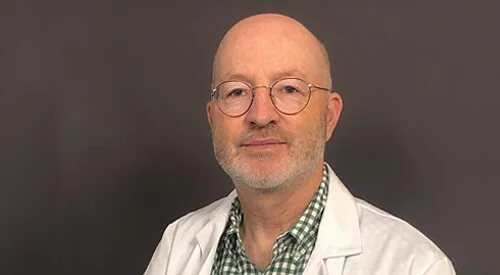
Steven Scholzman, Ph.D.
Chief of Child Psychiatry and Associate Professor of Psychiatry
This story was originally published on the United for Medical Research website.