The Food Systems Graduate Program recently awarded funding to "The Roman Villa Project: Archaeology, Paleobotany, Sustainable Agriculture, and Food Systems in Italy's Sabnie Hills," a transdisciplinary research project lead by Mark Usher, Lyman-Roberts Professor of Classical Languages and Literature in the Deparment of Classics at UVM.
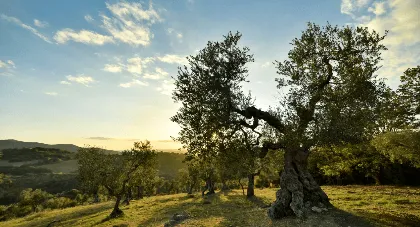
The Roman Villa Project involves research at a unique archaeological site, an ancient olive plantation at Agritourismo Le Mole sul Farfa in Mompeo. This farm is likely connected to Pompey the Great (106-48 BCE) and has been in continuous agricultural use for over 2,000 years. In addition to the incredible archaeological remains, including a cryptoporticus (an underground barn with processing and storage rooms), the original millstone from the olive press, and a three-bay oil-separating vat, the site includes about 20 varieties of olives among the 1,500-year-old trees that have been DNA-tested and shown to be unknown (i.e., premodern).
Usher and his team, which includes Eric Bishop-von Wettberg, Program Director, and Nick Rose, Food Systems PhD student, will be studying these ancient olive trees and establishing a nursery on the site to propogate these ancient varieties with the intention of preserving them for the future and studying olive crop resilience in the face of climate change.
While travel to Italy is on hold, Usher and his team produced an informational video about their work and collaboration with the Agritourismo Le Mole sul Farfa. You can learn more about this work here.