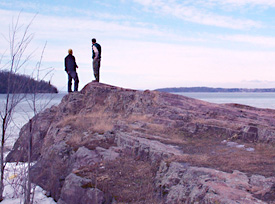
Bedrock outcrop bordering Shelburne Bay
Bedrock is the foundation of the Vermont landscape, as well as its oldest component. Composed of minerals that formed in the earth’s crust and ancient oceans, bedrock provides the raw material that forms soils and nourishes plants and animals. Although usually buried from view by overlying sediment, soil, and vegetation, the underlying bedrock also controls much of the landscape’s topography, and consequently plays a major role in determining the human and natural history of Vermont. The minerals found in different kinds of bedrock are often commercially valuable, like the talc that was mined from the marble quarry near Rochester. Or the rock itself might be valuable, as in the case of the granite found near Barre. The structural and chemical nature of rock also affects soil structure and chemistry. Limestone for example is a carbonate-rich rock. As it weathers it provides many important nutrients for plant growth such as calcium and magnesium. These cations also buffer soil acidity and thus aid plants in nutrient uptake.
Certain plants, such as ebony sedge and wild columbine, thrive in this more neutral soil environment. In contrast some bedrock types, such as serpentine, contains minerals like nickel and chromium that are so hostile to plant growth that only the hardiest plants can thrive on the soils that develop there. It is common to find poverty grass and harebell in these environments.
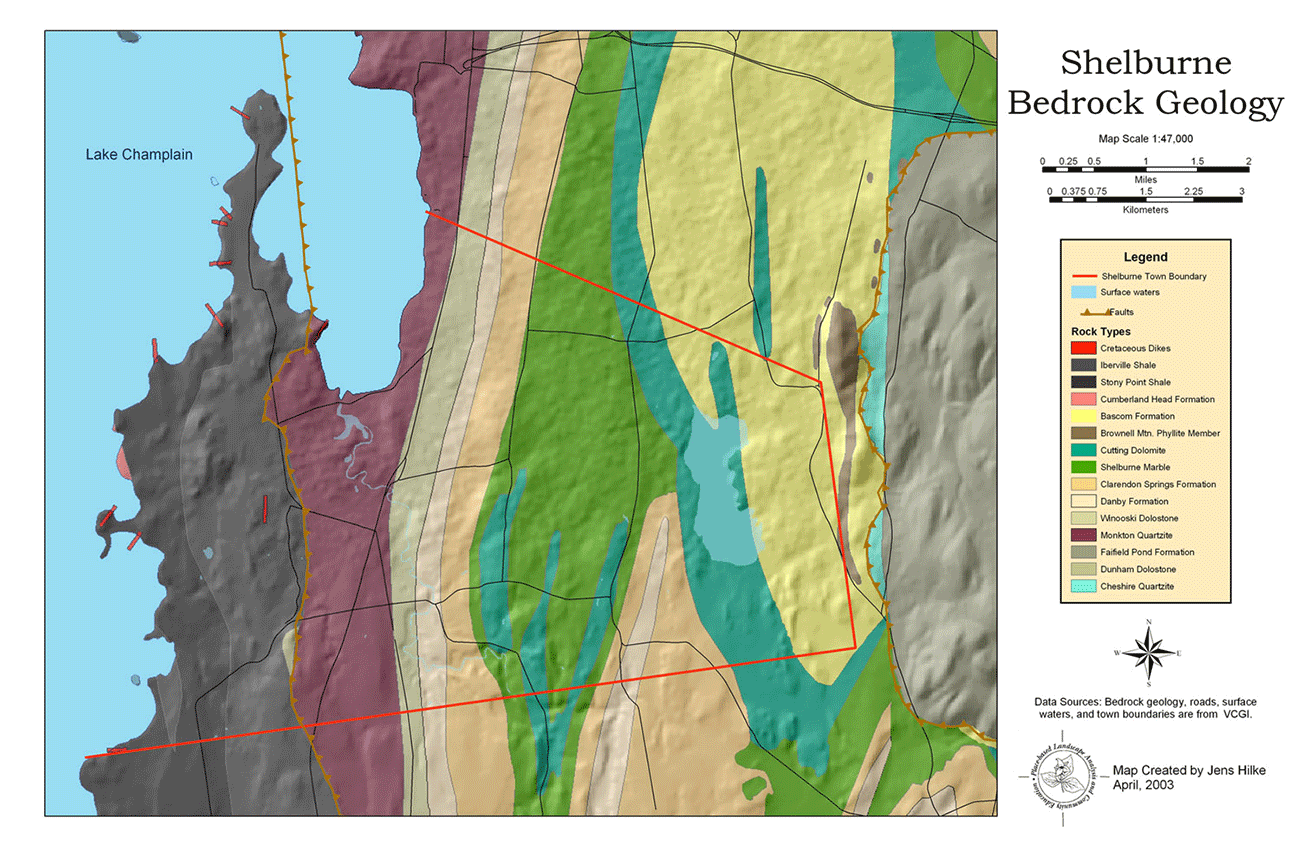
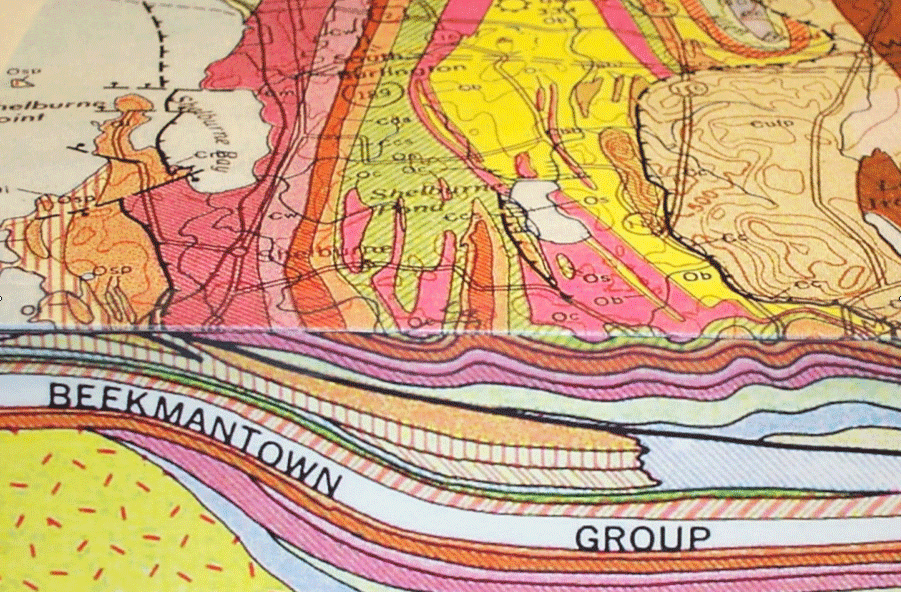
Vermont’s geology is diverse and complex, and not all of the bedrock maps have been updated to provide the most recent interpretation of features. However, the 1961 paper map produced by the Vermont Geologic Survey is an excellent place to start. You can also check the VCGI website to see if your community’s bedrock map has been digitized, which will allow you to hone in on updates and information about your specific area. Once you have a basic map of your area, go for a walk or drive and keep a sharp eye out for rock outcrops. Look for both the general form (is it sharp and blocky or round and blob-like) as well as the close-up details (Can you see crystals or layers? What size are they?). As you find outcrops, don’t forget to notice the other features found nearby such as a stone foundation, a grove of sugar maples, or a small porcupine den.