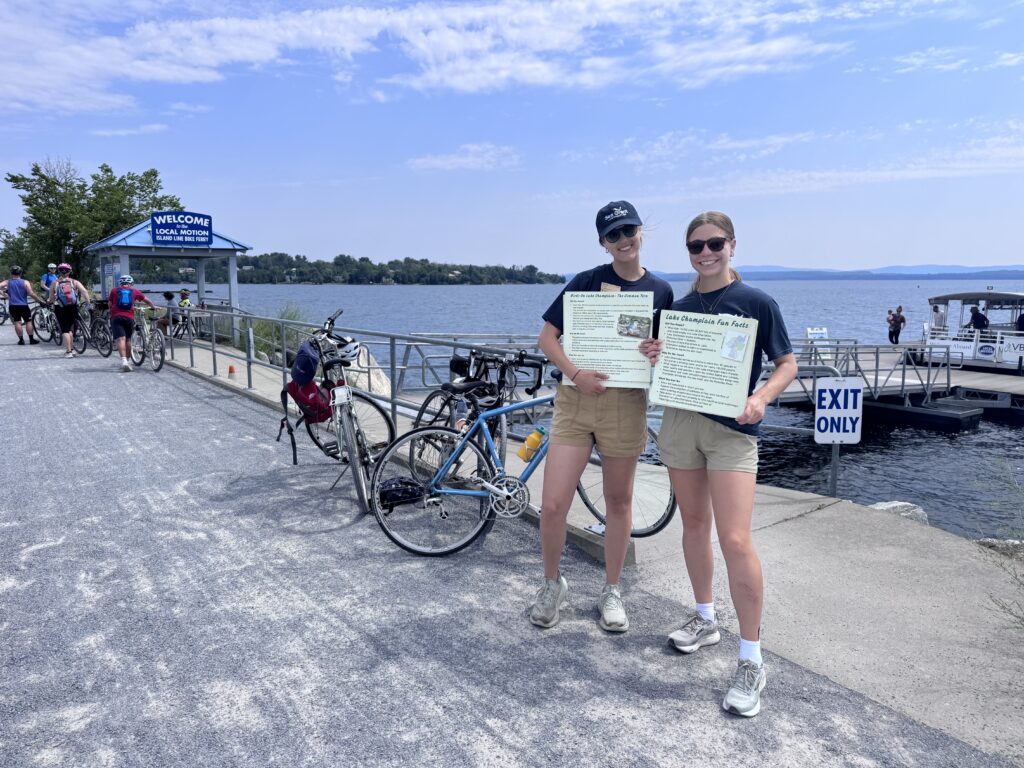
Learning on the Lake: Lake Champlain’s “Little Lake Lessons”
By Jessie Curl, Communications Lead & Program Specialist, Lake Champlain Sea Grant
Ask us about the lake!
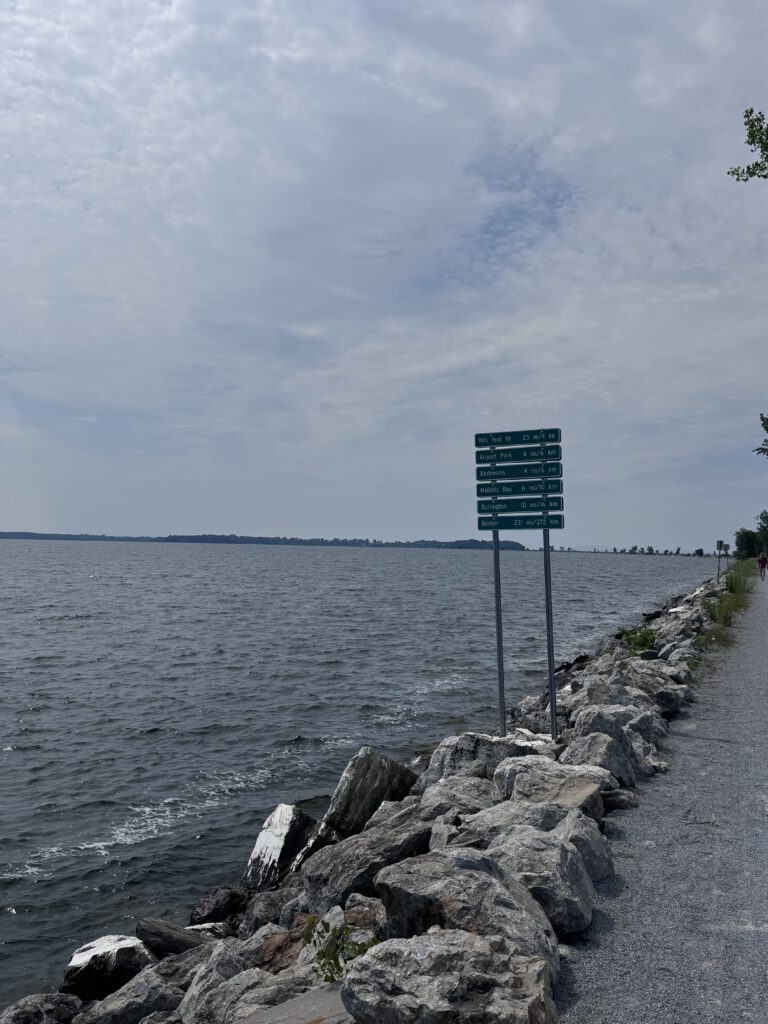
Year after year, the 13.4-mile Colchester Causeway rail trail in northwestern Vermont attracts walkers, runners, cyclists, and rollerbladers from across the country, offering breathtaking views of Lake Champlain. The causeway is not only the longest bike path over water in the world, but also a corridor rich in history. Originally serving as a rail bed for the Rutland County railway, it served as a vital route carrying butter, milk, ice, and livestock to New York City and Boston. While its purpose is now for recreation, traces of the past remain visible across the trail. Old train wheels, sections of rail, and slabs of white marble can still be found throughout the causeway. The marble itself is especially noteworthy, as it is the same material used in the construction of several monuments in Washington, D.C.
As if the history of the trail weren’t enough, the path offers some of the most stunning scenery in the region. Stretching through the waters of Lake Champlain, it boasts views of New York’s Adirondack Mountains to the west and Vermont’s Green Mountains to the east. This location provides a unique perspective on the drainage basin, or watershed, and makes for an ideal place to learn about the lake itself, as visitors are surrounded by the waters that support recreation, wildlife, and regional economies in the area.
After walking or biking 6 miles from the Colchester side, the causeway comes to an end, and to continue, recreationalists have the option to hop on a bike ferry. Run by Local Motion, the ferry ride spans a cut in the path that allows boats to pass through. At the cut, passengers line up to board the ferry, with long waits typical on nice weather days.
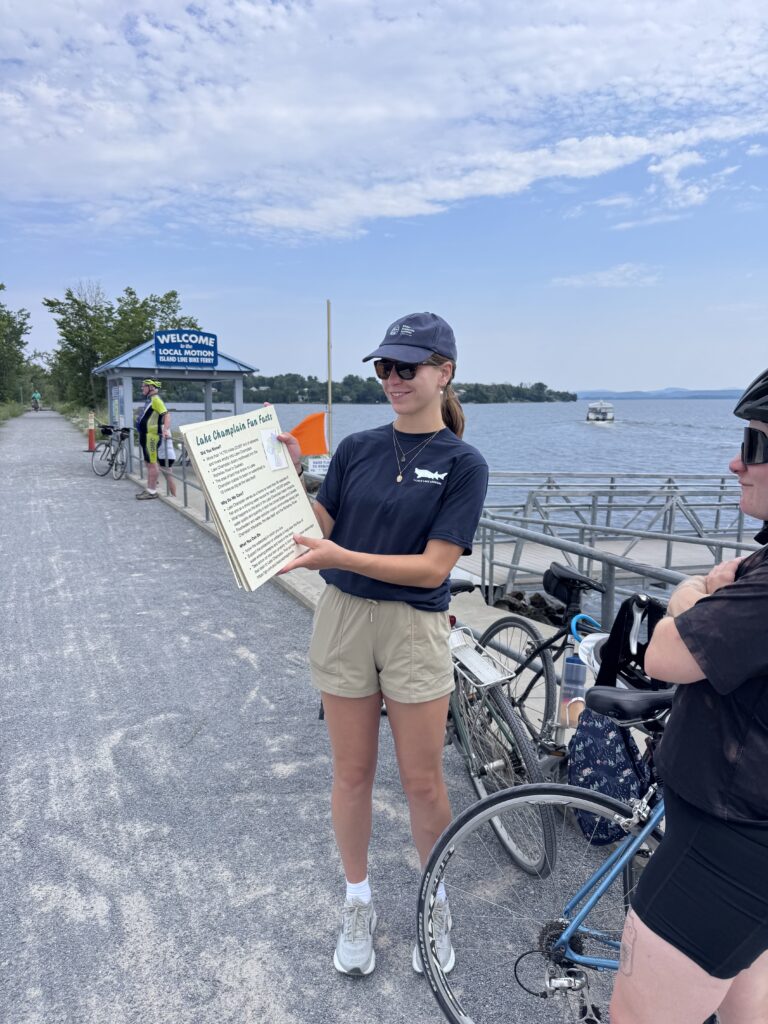
Recognizing the causeway as a living classroom, Lake Champlain Sea Grant began partnering with Local Motion to engage with visitors in “Little Lake Lessons,” where staff shared their passion for the lake with visitors while they waited for the bike ferry. Through informal, interactive conversations, educators shared their passion for the lake and helped visitors connect to the incredible resource surrounding them. Visitors selected from a variety of lessons, including:
- Lake Champlain’s formation and water flow patterns.
- The lake’s cultural history.
- Amazing animals that depend on the lake, including eastern spiny softshell turtles, sea lamprey, and common tern.
- Challenges facing the lake.
- Stewardship activities that visitors can participate in to help the lake.
This year, LCSG, Local Motion, Lake Champlain Basin Program, Rozalia Project, South Hero Land Trust, Lake Champlain Committee, and the UVM Water Resources Institute came together to offer a summer full of engaging lessons at the causeway. By combining the expertise and resources of multiple organizations, the partnership expanded opportunities for visitors to connect with and learn about the lake. Building on a lineup of educational offerings, partners introduced eight new topics for visitors to explore: foam in our waterways, stormwater impacts, road salt pollution, cyanobacteria, aquatic plants, marine debris, non-indigenous aquatic species, and drought in Lake Champlain. These programs turn a scenic ride or walk into an opportunity to learn more about the surrounding watershed, connecting visitors directly to the waters of Lake Champlain.
“This was a fun and different way to engage with folks and help connect them to the lake…regardless of whether it was their home watershed or not, orienting people to where they are recreating and increasing scientific literacy is super important!”–Little Lake Lesson Educator
View our Little Lake Lessons here.