Building Resilience Through Hands-On Stormwater Training
By Jill Sarazen, Green Infrastructure Collaborative Coordinator
From the classroom to the field, recent stormwater management installation trainings gave participants the opportunity to turn stormwater management concepts into real-world practice. In May, Lake Champlain Sea Grant (LCSG) collaborated with Winooski Natural Resources Conservation District (Winooski NRCD), Stone Environmental, SLR Consulting, and Hilltop Construction to deliver the second installment of the Resilient Sites training program hosted at Yestermorrow Design/Build School. This training for contractors and natural resource practitioners was built on a one-day training session in June 2025 that highlighted proper methods for siting and installing a culvert.
The curriculum was co-taught by SLR, Stone Environmental, Winooski NRCD, and LCSG. It included two online class sessions that discussed stormwater management principles, site analysis methods, and treatment practices. Students had the opportunity to conduct a site analysis at a site of their choosing and select suitable best management practices (BMPs) that could slow, spread, and sink stormwater into the ground.
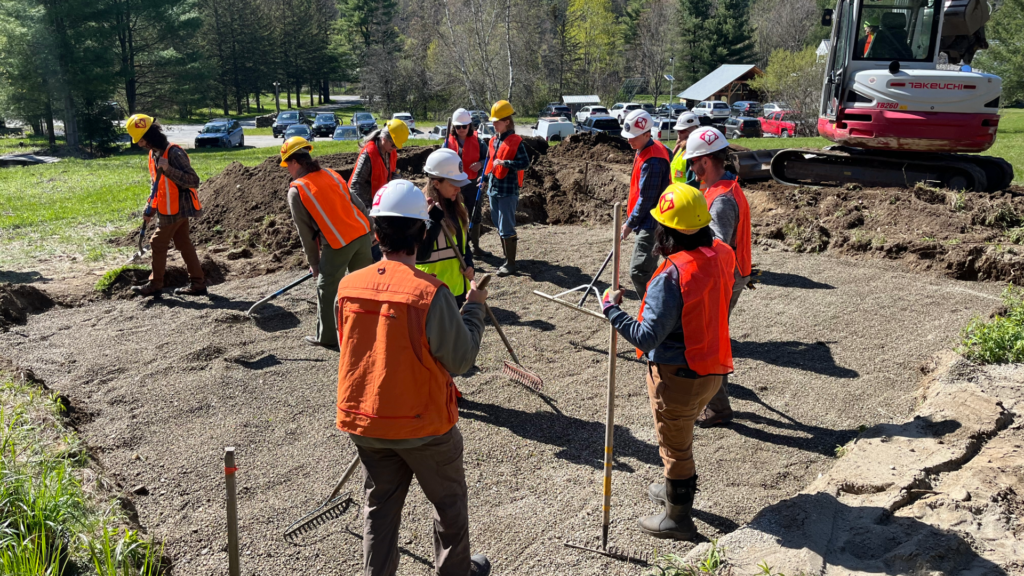
The following week, the group met at Yestermorrow Design/Build School in Waitsfield to participate in the installation of a bioretention practice, a vegetated basin with infiltrative soils that was designed to treat stormwater runoff from a gravel road and several buildings on the Yestermorrow campus. Hilltop Construction operated the excavator and led the demonstration, and training attendees participated by installing materials and planting vegetation. The project designer from Stone Environmental described the installation process, design decisions, and materials selection.
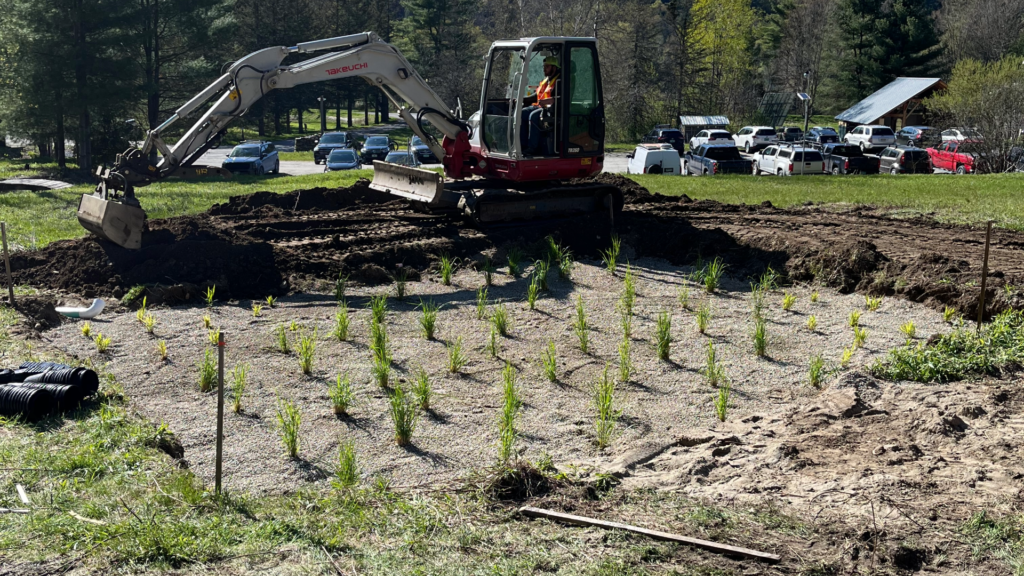
“The webinars were very informative and helped get my feet wet on what to be paying attention to and what questions I would have on site. The site visit was great and allowed for hands-on but also allowed for a lot of discussion of our sites and questions about the one that was being installed,” one participant shared.
The organizers plan to host future hands-on BMP trainings and build on the momentum from the last two events. A future goal is to develop a certification program for contractors and natural resource practitioners.
Small BMP Installation Training: Open Top Culvert Build & Install
LCSG collaborated with staff from the Vermont Department of Environmental Conservation’s Lakes and Ponds Program, who organized a hands-on demonstration training for natural resource practitioners near Lake Carmi. Franklin Watershed Committee coordinated the site with willing landowners, and staff from the Northwoods Stewardship Center delivered the training content.
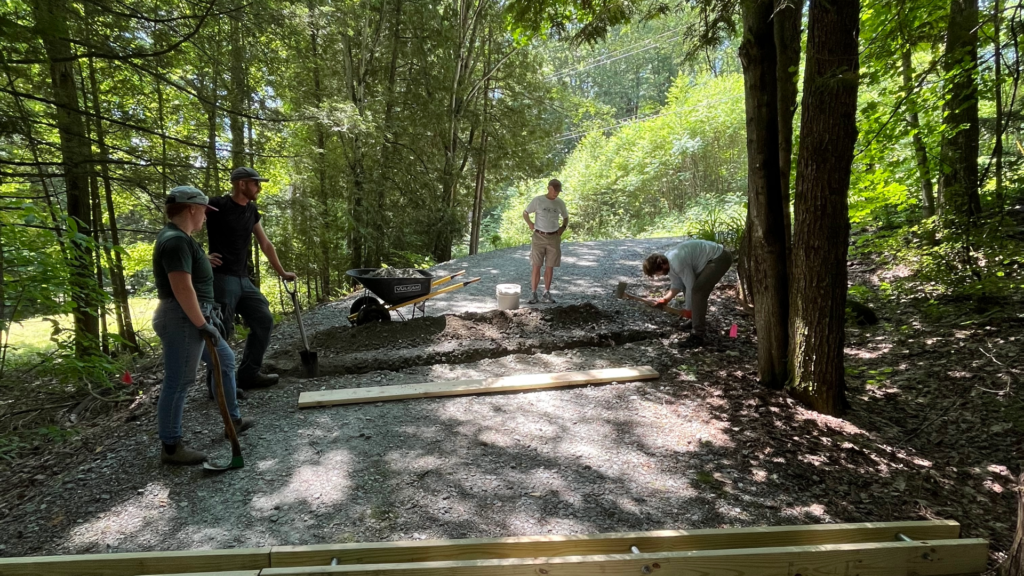
Northwoods staff led participants through the process of siting, building, and installing open-top driveway culverts. This practice can be utilized on sloped gravel driveways to capture and divert stormwater runoff flowing down a driveway and direct it to a stable, vegetated location to infiltrate. Open-top culverts can help to increase the lifespan of a gravel driveway because they reduce driveway surface erosion by directing water off the driveway rather than allowing it to flow downhill. Furthermore, vegetation filters runoff and reduces the amount of sediment washed off and entering waterways.
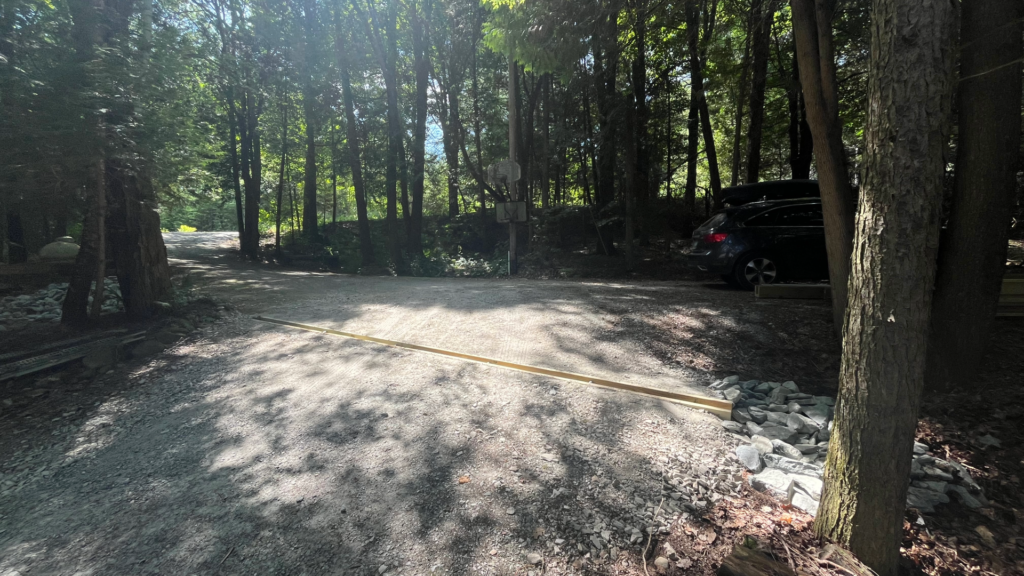
Inspired by the training, practitioners shared that they are excited to work with residents in the communities they serve to promote open-top culverts and other simple, effective practices that manage stormwater where it falls. Several practitioners are already planning to put their new skills to work by installing a new open-top culvert later this summer.
Interested in learning more about stormwater management? Read more on our website.