Secondary tabs
Submission information
| Study Title | Massachusetts Department of Conservation and Recreation: Barker Hill Lot |
|---|---|
| Case Study Type | Forest type, Forest health, Management type |
| Management Subcategory | forest adaptation, managing invasives, ecological restoration |
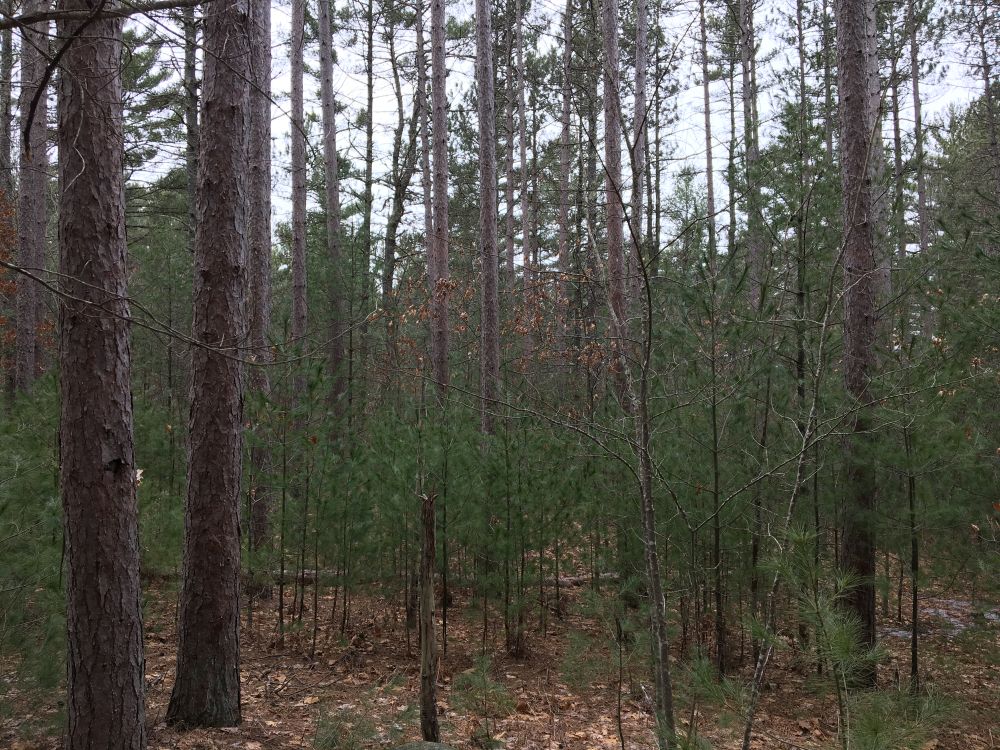
| Site Photo |
|
| Image caption | Red pine/white pine overstory with mixed hardwood and white pine regeneration (pre-treatment) |
| Lay Summary | The goals of this harvest were to convert white/red pine plantations and create multiple age and size classes across the site, including an oak/mixed hardwood stand. Treatments included creating canopy gaps (up to an acre), thinning outside of the matrix, and invasive plant treatments. Post-harvest monitoring will occur after 5 growing seasons. |
| Location | Townsend, Massachusetts |
| Location Description | Northwest section of the town of Townsend, MA |
| Latitude | 42.6956173 |
| Longitude | -71.7354870 |
| Directions | The site is located off of Barker Hill Road in Townsend. There is no developed trailhead. |
| Accessibility | By foot |
| Landowner Name | Commonwealth of Massachusetts |
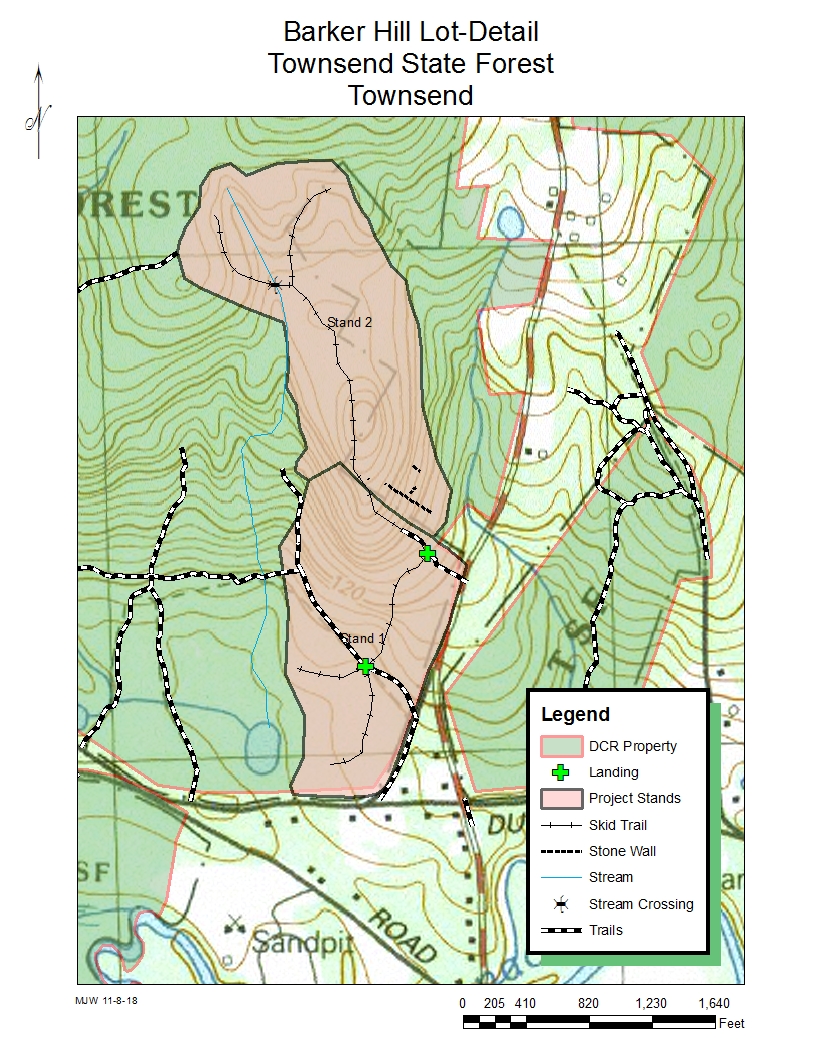
| Stand Area with Units | 90 acres |
| Cover Type | Mixedwoods |
| Natural Community Classification | Oak-Hemlock-White Pine Forest |
| Plant Community/Habitat Class Growth Stage | Mature mixed oak hardwood and white/red pine plantation |
| Primary Forest Health Threat | invasive plants |
| Primary Pests/Disease | red pine scale |
| Secondary Pests/Disease | hemlock woolly adelgid |
| Soils | This area of Middlesex County has, in general, relatively thin soils and rocky outcrops, with the underlying bedrock close to the surface. The soils in this area generally fall into the glaciofluvial (glacial outwash) and glacial till types. |
| Estimated Stand Year Origin | 1935 |
| Stand Origin Year Note | Plantations were established in the 1930s; hardwoods grew from industrial abandonment and wildfire. |
| Site Index with Units | White pine SI 57, Windsor Series |
| Stand History | At the time of acquisition these properties were heavily cut over to provide the raw material necessary for the manufacture of barrels and other lumber products. Extractive cutting of these forest lands left them in a degraded condition and subject to outbreaks of wildfire. The largest wildfire occurred in 1927, burning several thousand acres. Abandoned agricultural areas were planted with white and red pine by Civilian Conservation Corps crews. Hardwoods grew up following wildfire. |
| Species 1 | Pinus strobus (eastern white pine) |
| Species 1 Percent(%) | 66% |
| Species 2 | Pinus resinosa (red pine) |
| Species 2 Percent(%) | 11% |
| Species 3 | Oak spp. (e.g., northern red oak, white oak) |
| Species 3 Percent(%) | 8% |
| Pre-Treatment Growth Stocking | Basal area=104 sq. ft. |
| Pre-Treatment Forest Health Issues | red pine scale |
| Case Overview | The ±90-acre project area consists of 2 stands that are even aged (± 85 years old). The overstory trees located within Stand 1 (±40 acres) range from small sawlog (11” to 14” diameter at breast height (DBH)) to medium (15” to 19” DBH), with scattered >20” DBH specimens found throughout the stand. This is a white pine/red pine plantation that was established in the 1930s by the Civilian Conservation Corps. The red pine growing within this stand are not uniformly distributed. Instead, they are in small homogenous groups throughout the stand. Previous silvicultural treatments have established an excellent cohort of white pine and mixed hardwood seedlings and saplings under the red pine and white pine overstory ready for release. In areas of a pure white pine overstory, previous treatments established regeneration, but most have succumbed to mortality due to overstory shading, along with damage from ice and snow events leaving scattered pockets of white pine and mixed hardwood regeneration in the understory. The overstory trees located within Stand 2 (±50 acres) are pole sized (5” to 11” DBH) to small sawlog size with some larger specimens in the stand (>16” DBH). Most of the stand is composed of oak species with scattered white pine and other hardwoods. This stand has thick patches of mountain laurel throughout, essentially shading out any tree regeneration. In areas where gaps have formed in the canopy due to wind throw, or natural mortality of overstory trees, and mountain laurel is not as thick, white pine, red maple and black birch have seeded in. |
| Silviculture Objectives | •Demonstrate multi aged silviculture techniques that will release and establish regeneration. • Remove red pine trees susceptible to disease and insects. • Remove poorly formed, less vigorous and damaged trees. • Create diverse habitats that benefit native wildlife and build forest resilience to stressors by increasing vertical and horizontal structure. •Favor climate adapted species for retention and regeneration • Improve soil structure through the retention of coarse woody material of all sizes. |
| Landowner Objectives | Release and recruit tree regeneration; Increase tree species diversity and forest structure; Enhance carbon sequestration and storage; Monitor and treat invasive plant species populations |
| Silviculture Prescription | Stands will be treated using an expanding gap irregular shelterwood system. Gaps between 1/3 and 1 acre will be installed across the stands to mimic natural disturbance patterns with the intent of regenerating approximately 15%-20% of the stands. Outside of these gaps, trees will be thinned to promote canopy expansion, diameter increment, and tree vigor. Desirable species such as red and white oaks and white pine will be favored for retention, while low grade black birch, black oak and red maple will be favored for removal. Gap placement within these stands will focus on: Advance regeneration that may be released; Areas of pure red pine that are susceptible to pathogens (Stand 1); Proximity to preferred crop trees that can provide a source of seed; Areas where trees have damaged crowns or are composed of low vigor specimens; and high densities of mountain laurel preventing tree regeneration (Stand 2). |
| Regeneration Targets/Goals | Regenerate 15%-20% of forest stands |
| Regeneration Method | irregular shelterwood |
| Factors Influencing Prescription Choice |
|
| Climate Adaptation Considerations | Considerations considered during prescription development included: |
| Equipment used | Cut to length harvester and forwarder |
| Prescription Notes | Harvesting was done during winter/spring 2026. Harvesting met and exceeded all expectations considered during project proposal, specifically protection of advance regeneration already present, and protection of white oaks and hickories as seed sources as a climate adaptation tactic. The red pine plantation experienced significant mortality due to presence of red pine scale and additional timber was designated for removal as a safety measure during harvest. |
| Additional Resources / External Links | https://forestadaptation.org/adapt/demonstration-projects/massachusetts-department-conservation-and-recreation-barker-hill-lot |
| Post-Treatment Assessment Done | no |
| Post-Treatment Assessment Expected | yes |
| Post-Treatment Assessment | DCR Management Forestry policy is to conduct a post-harvest inventory/analysis after five growing seasons. |
| Treatment Total Time | 16 hours |
| Treatment Total Cost | $1,500 |
| Treatment Cost Notes | Estimated $1500.00 for staff time and supplies to treat invasives. The work was done with in-house staff with appropriate training and licensing. |
| Future Treatment Plans | Ongoing invasive monitoring and follow up treatments are planned. In addition, a prescribed burn plan will be developed for the site. |
| General Notes | Basal area pre harvest: Stand 1: 104 sq ft/ac, Stand 2: 60 sq ft/ac; Basal area post-harvest: 40-60 sq ft/ac across both stands; Basal Area Acceptable Growing Stock (pre-harvest): Stand 1- 70.6%, Stand 2: 64.4%; Trees per acre pre-harvest: Stand 1: 140, Stand 2: 174; Trees per acre post-harvest: Stand 1: 50, Stand 2: 75; Mean stand diameter: Stand 1: 14.2 inches, Stand 2: 11.4 inches |
| Data Available? | yes |
| Primary Contact | Mike Waterman |
| Contact Title | DCR Northeast District Management Forester |
| Contact Organization | Massachusetts Department of Conservation and Recreation |
| Contact Email | Michael.J.Waterman@mass.gov |
| Contact Phone | +1 978-888-9204 |
| Contact Address | 25 Shattuck Street Lowell, Massachusetts. 01852 United States |
| Additional files | |
| Additional Photo 1 |
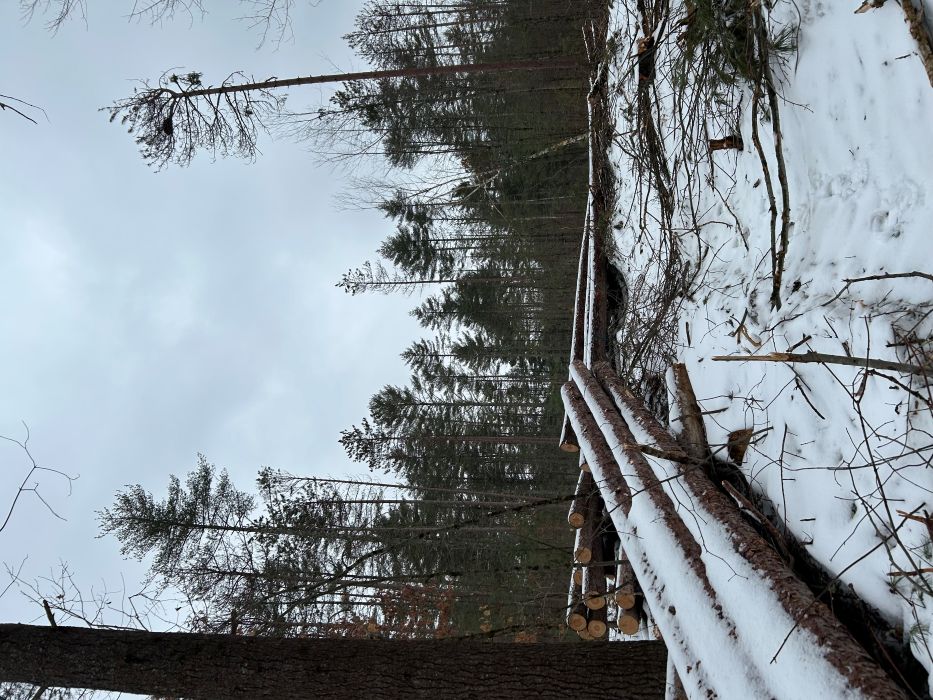
|
| Caption 1 | Red/white pine plantation post-harvest |
| Additional Photo 2 |
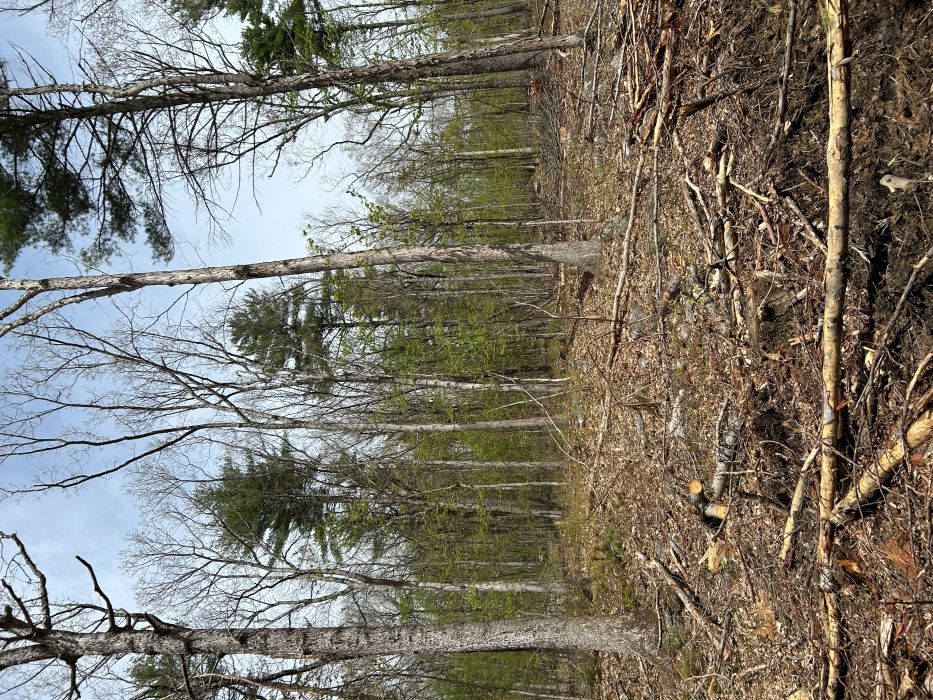
|
| Caption 2 | Retained white oaks post harvest |
| Additional Photo 3 |
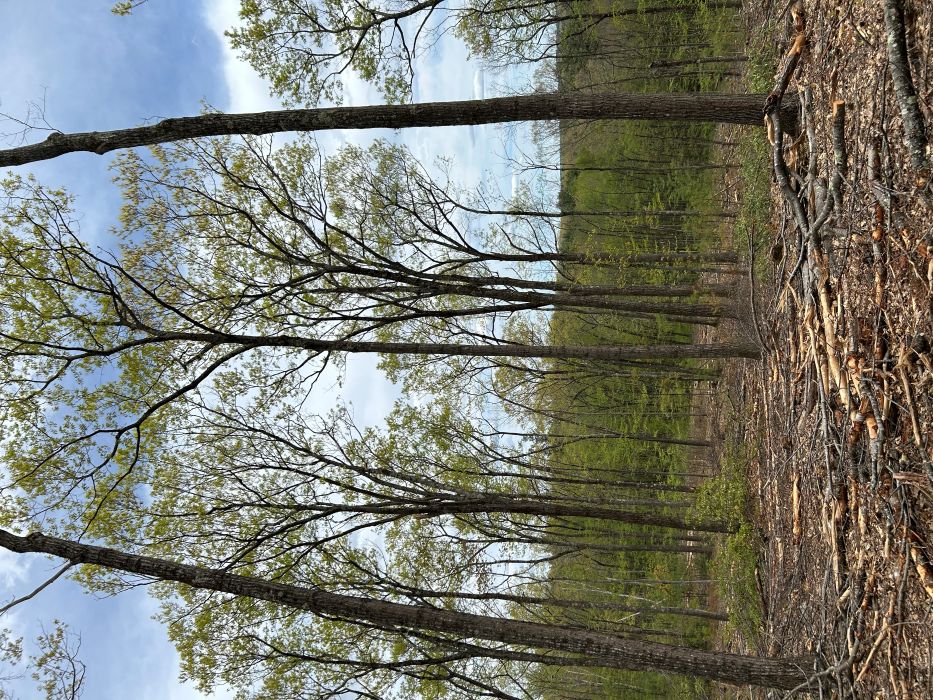
|
| Caption 3 | Thinning in oak-mixed hardwood matrix |
| Additional Photo 4 |
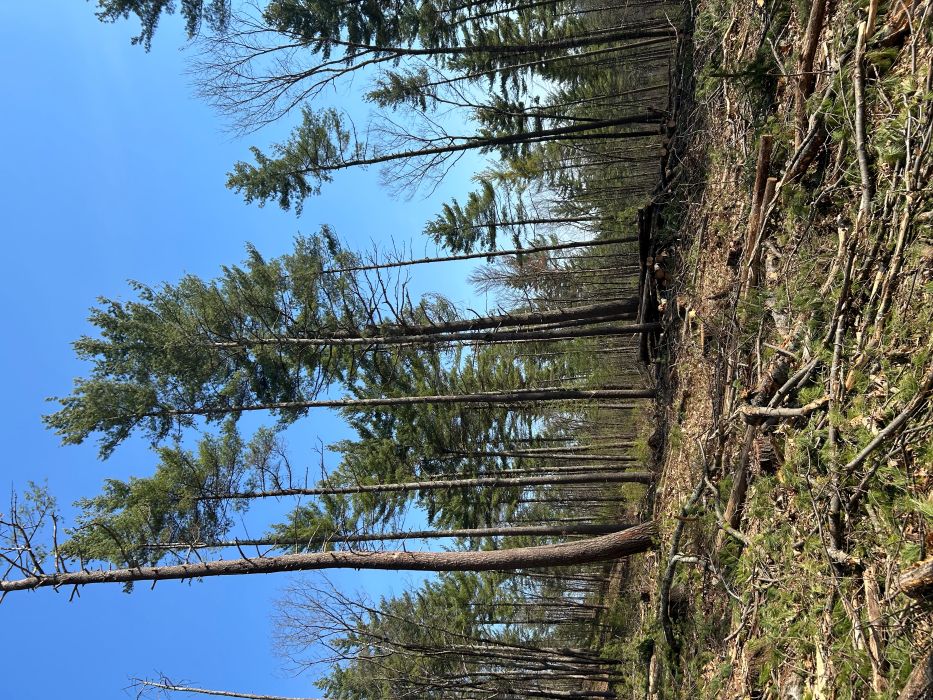
|
| Caption 4 | Thinning in white pine stand |