Secondary tabs
Submission information
| Study Title | Society for the Protection of NH Forests: Peirce Reservation |
|---|---|
| Case Study Type | Management type |
| Management Subcategory | forest adaptation, ecological restoration, wildlife habitat |
| Site Photo |
|
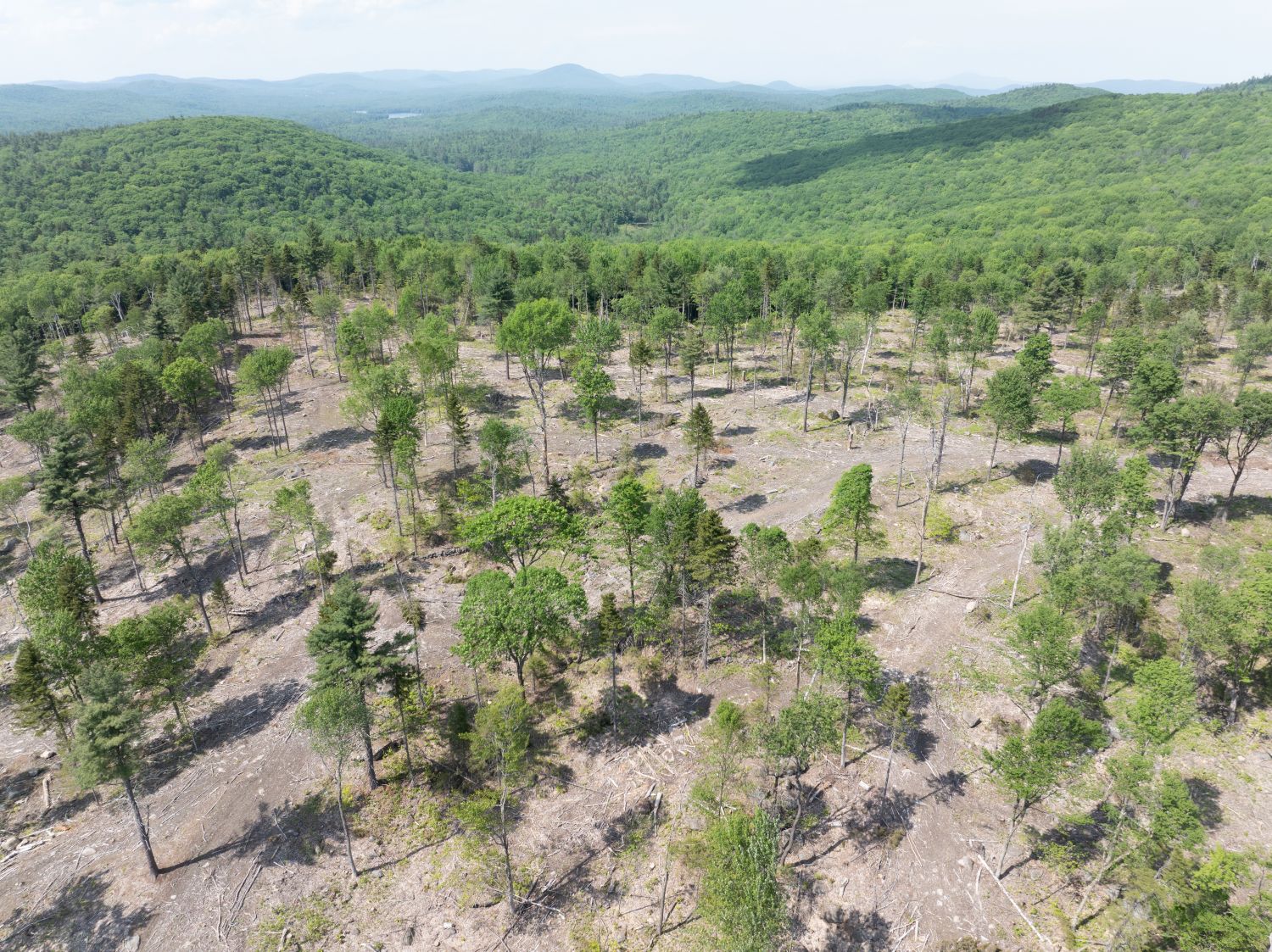
| Image caption | Aerial view of low density irregular shelterwood at Peirce Reservation |
| Lay Summary | A commercial timber harvest was carried out in the winter of 2023-2024. Two prescriptions were performed, a low density shelterwood over 65 acres, and a thinning over 50 acres. The desired outcome is to regenerate the forest to a well-adapted mixture of species in the shelterwood area, and improve the forests resistance to climate change in the thinning area. |
| Location | Stoddard, New Hampshire |
| Location Description | South/Southwest facing slope on very rocky, sandy loam |
| Latitude | 43.0766373 |
| Longitude | -72.0753473 |
| Directions | The Bacon Ledges Trail crosses through the harvest area. The trailhead is located off of Old Antrim Road. The landing for the harvest is located shortly after the trailhead. |
| Accessibility | Accessible by foot |
| Landowner Name | Society for the Protection of New Hampshire Forests |
| Landowner phone | +1 603-224-9945 |
| Landowner email | info@forestsociety.org |
| Stand Area with Units | 142 acres |
| Cover Type | Mixedwoods |
| Natural Community Classification | Northern Hardwoods-Hemlock-White Pine Forest |
| Plant Community/Habitat Class Growth Stage | Mid successional |
| Primary Forest Health Threat | wind-tornado/hurricane |
| Secondary Forest Health Threats | |
| Primary Pests/Disease | emerald ash borer |
| Secondary Pests/Disease | hemlock woolly adelgid |
| Soils | Tunbridge-Lyman-Rock outcrop complex |
| Estimated Stand Year Origin | 1940s |
| Stand Origin Year Note | Mixture of agricultural abandonment, the 1938 hurricane, and subsequent fires. |
| Site Index with Units | 68 ft for Northern red oak |
| Start date | Tue, 12/05/2023 - 00:00 |
| End date | Thu, 02/08/2024 - 00:00 |
| Stand History | The stand developed from abandoned pastures. Some harvesting had occurred prior to Forest Society ownership in 1978. In 2006, a small firewood harvest was conducted over a few acres. |
| Species 1 | Acer rubrum (red maple) |
| Species 1 Percent(%) | 22% |
| Species 2 | Quercus rubra (northern red oak) |
| Species 2 Percent(%) | 21% |
| Species 3 | Pinus strobus (eastern white pine) |
| Species 3 Percent(%) | 14% |
| Pre-Treatment Growth Stocking | 150 feet of basal area per acre (130 in overstory) |
| Pre-Treatment Forest Health Issues | Emerald ash borer |
| Case Overview | The Peirce Reservation is owned by the Society for the Protection of New Hampshire Forests (Forest Society), a non-profit forestry organization, dedicated to protecting the state’s most important landscapes while promoting the wise use of its renewable natural resources The property was donated by Betty Babcock between 1978 and 1985, at the end the donation totaled over 3,400 acres. An updated management plan was written in 2022 and prescribed the harvest in stand 14, known as the Wright Pasture. The management plan identified the need to improve the timber quality and species composition, and maintain the presence of ash. |
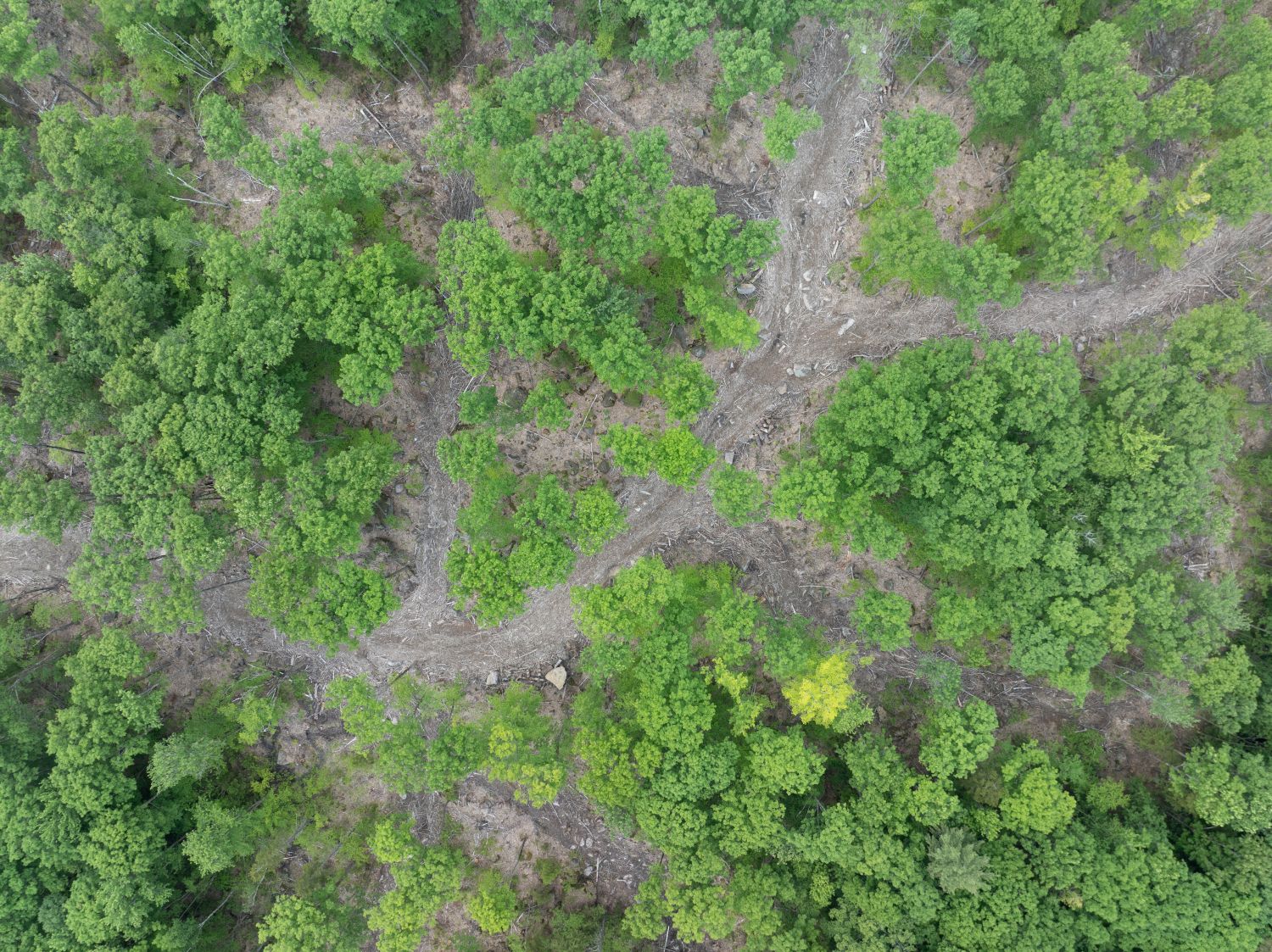
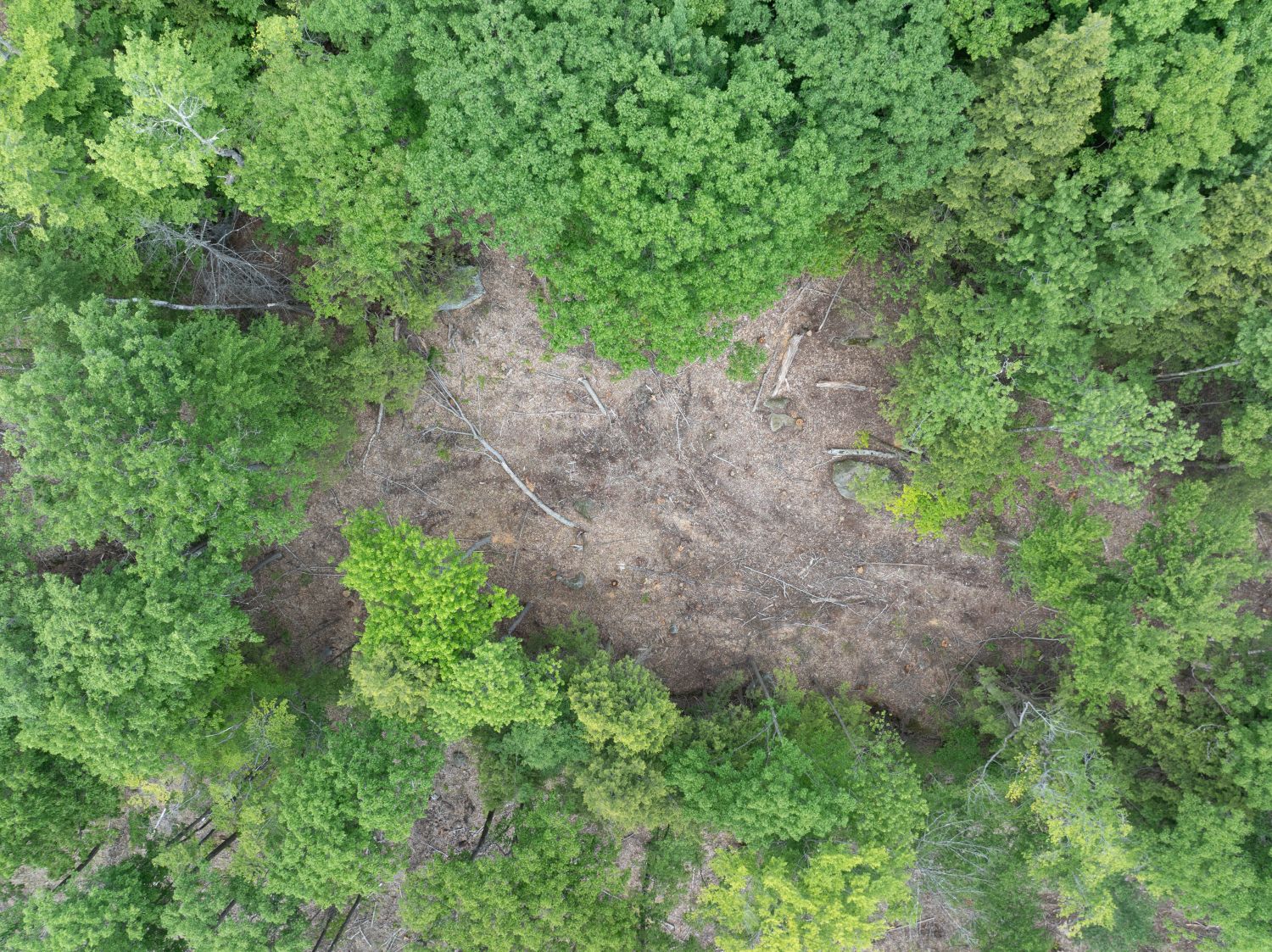
| Silviculture Objectives | The stand was divided into two sections where different prescriptions were carried out. The lower portion received an improvement thinning (50 acres) to increase the vigor and improve the quality of the remaining growing stock, favoring species well adapted to climate change, and suitable for timber production. Several group openings were created in enriched sites to favor ash regeneration, which would be spared by the emerald ash borer for several decades. The upper portions received a low density irregular shelterwood (65 acres). A wide array of climate adapted species were retained in the overstory to provide seed and shade. Variable retention provided a mixture of shade intensity, allowing development for a range of species. In areas with a healthy softwood understory, an overstory removal took place. |
| Landowner Objectives | • Provide a diverse mixture of wildlife habitat. • Preserve water quality of the many wetland features on and nearby the property. • Provide recreational opportunities for anglers, hunters, and other passive users. • Maintain or increase the biodiversity of the property. • Protect ecologically sensitive areas. • Protect and safeguard historically significant sites. • Manage in accordance with the conservation easements that encumber them (i.e., Within Forestry and Habitat Management Areas: Improve the commercial timber growing stock within the forest; Harvest forest products when ecologically and economically appropriate; Protect the capacity to produce forestry products in accordance with sound ecological/forestry principles; And within designated Wildlands: Leave these areas as free from human disturbance, noise, artificial light, and pollution as practicable; Protect environments and ecological processes that support viable populations of native plants, animals, organisms and natural beauty.) |
| Silviculture Prescription | A mixture of prescriptions aimed at increasing diversity and resiliency: •Improvement thinning in dense portions of the stand mostly dominated by red oak and red maple. The goal in these areas is to remove unacceptable growing stock and favor stems of good vigor and quality. This thinning should strive not to simplify the forest in terms of species composition. •Group selection in areas without desirable advanced regeneration, with the goal of creating conditions suitable for the regeneration of red spruce, balsam fir, and midtolerant northern hardwoods such as yellow birch, sugar maple, and white ash. Group sizes should mostly be between ¼ to ½ acre in size to favor these species, but one or two larger openings should be considered to favor shade-intolerant species as well. •Partial overstory removal in areas with desirable advanced regeneration. During inventory, red spruce and yellow birch were noted in some areas in the midstory or understory layer. Red oak, white pine, and sugar maple were not as common, but were also noted in a few places in the understory. Removal of mature or poor quality trees in the overstory has the goal of releasing these stems and encouraging a new cohort. •White ash regeneration harvest, if possible, in an area with significant mature white ash and suitable soils. The impending loss of much of the property’s ash due to emerald ash borer will bring about a drastic change to many parts of the forest in the next 10 years. If there are opportunities during this harvest to provide white ash to regenerate, it may allow ash to persist on the landscape in the form of small trees that aren’t as desirable to the insect. If we can retain ash for long enough for the biocontrol insects to become established, it may be possible for young ash to grow into mature size classes at some point in the future. |
| Regeneration Targets/Goals | 50 acres of the stand regenerating under diverse overstory conditions |
| Regeneration Method | irregular shelterwood |
| Factors Influencing Prescription Choice |
|
| Climate Adaptation Considerations | A wide array of species, best suited for the site and climate change were promoted through the creation of diverse overstory conditions. Vigor was improved through improvement thinning and overstory removal. For more information, see the link to the NIACS adaptation webpage below. |
| Equipment used | Whole tree harvesting system, feller-buncher, grapple skidder, slasher, chipper |
| Prescription Notes | The harvest was broken into two units, a mark to cut area, and a mark to leave area. The lower mark to cut area received an improvement thinning, and group selection cuts were done in moist areas with ash to encourage ash regeneration. The mark to leave area on the upper portion underwent an irregular shelterwood cut with retention of all commercial species already present. Sensitive areas were retained, breaking up the cut into three sections of varying size. In areas where desirable regeneration were present, partial overstory removal cuts were used to free the regeneration. In areas without well established regeneration a low density shelterwood was used in combination with small patch clearcuts. This prescription varied highly depending on the species present in the overstory, with suitable and less common species retained in the overstory as legacies. This prescription differed from the management plan, but aimed to accomplish the same goals, while putting a larger portion of the stand in an early successional condition. |
| Additional Resources / External Links | https://forestadaptation.org/adapt/peirce-reservation |
| Post-Treatment Assessment Done | no |
| Post-Treatment Assessment Expected | yes |
| Post-Treatment Assessment | Stocking, distribution and condition of residual trees (10-15 years post-harvest); Stocking and distribution of regeneration (5-10 years post-harvest) |
| Treatment Notes | Harvest occurred on frozen ground during the winter, protecting small seedlings. In the mark to leave area, the feller-buncher removed all unmarked hardwood saplings. |
| Basal Area Pre-Harvest | 150 |
| Basal Area Acceptable Growing Stock | 93 |
| Basal Area Units |
|
| Trees Per Acre | 180 |
| Primary Contact | Wendy Weisiger |
| Contact Title | Managing Forester |
| Contact Organization | Society for the Protection of New Hampshire Forests |
| Contact Email | wweisiger@forestsociety.org |
| Additional Photo 1 |
|
| Additional Photo 2 |
|