Secondary tabs
Submission information
| Study Title | Spruce Mountain Climate Adaptation Demonstration |
|---|---|
| Case Study Type | Forest type, Forest health, Management type |
| Management Subcategory | forest adaptation, wildlife habitat |
| Site Photo |
|
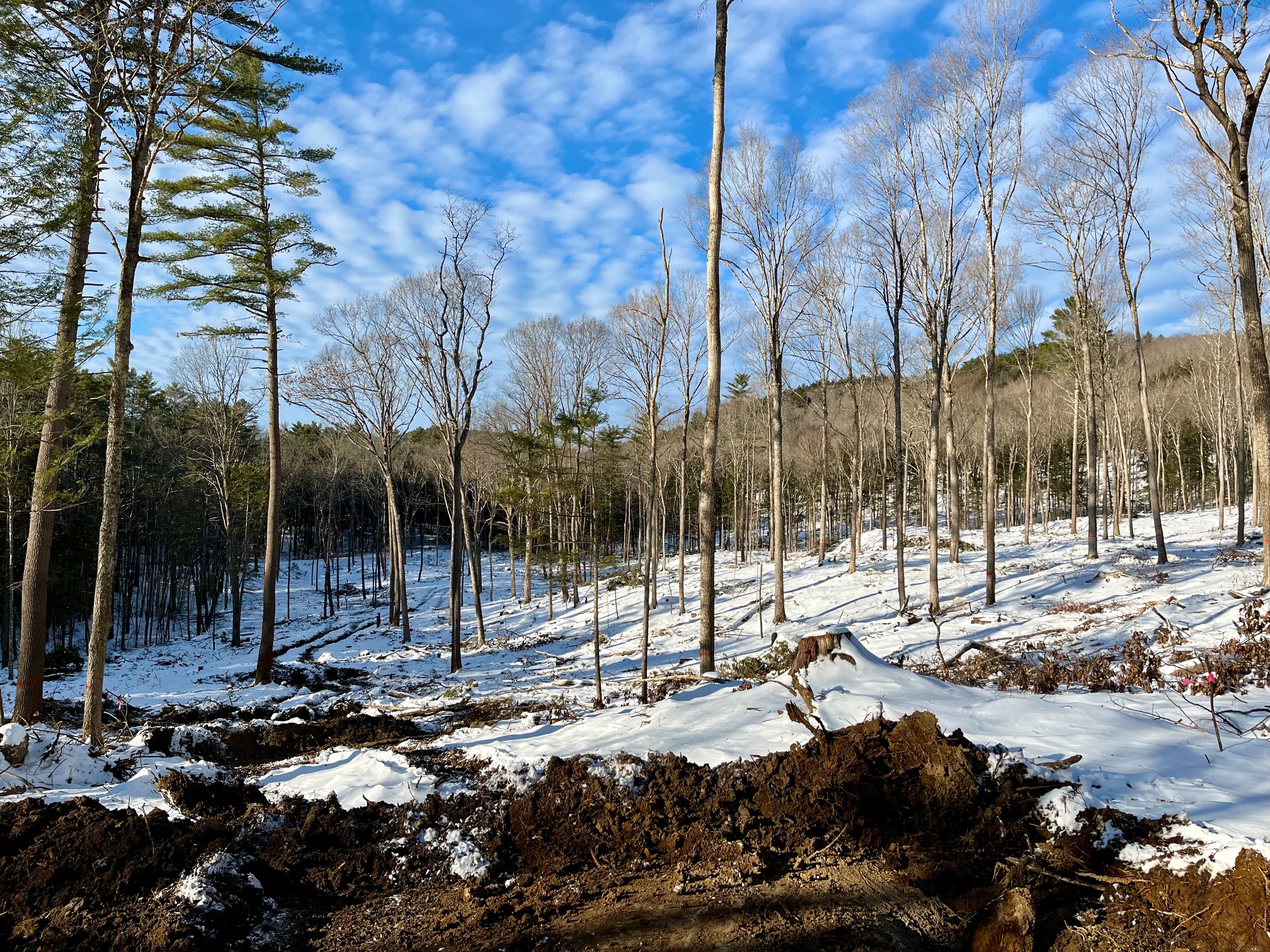
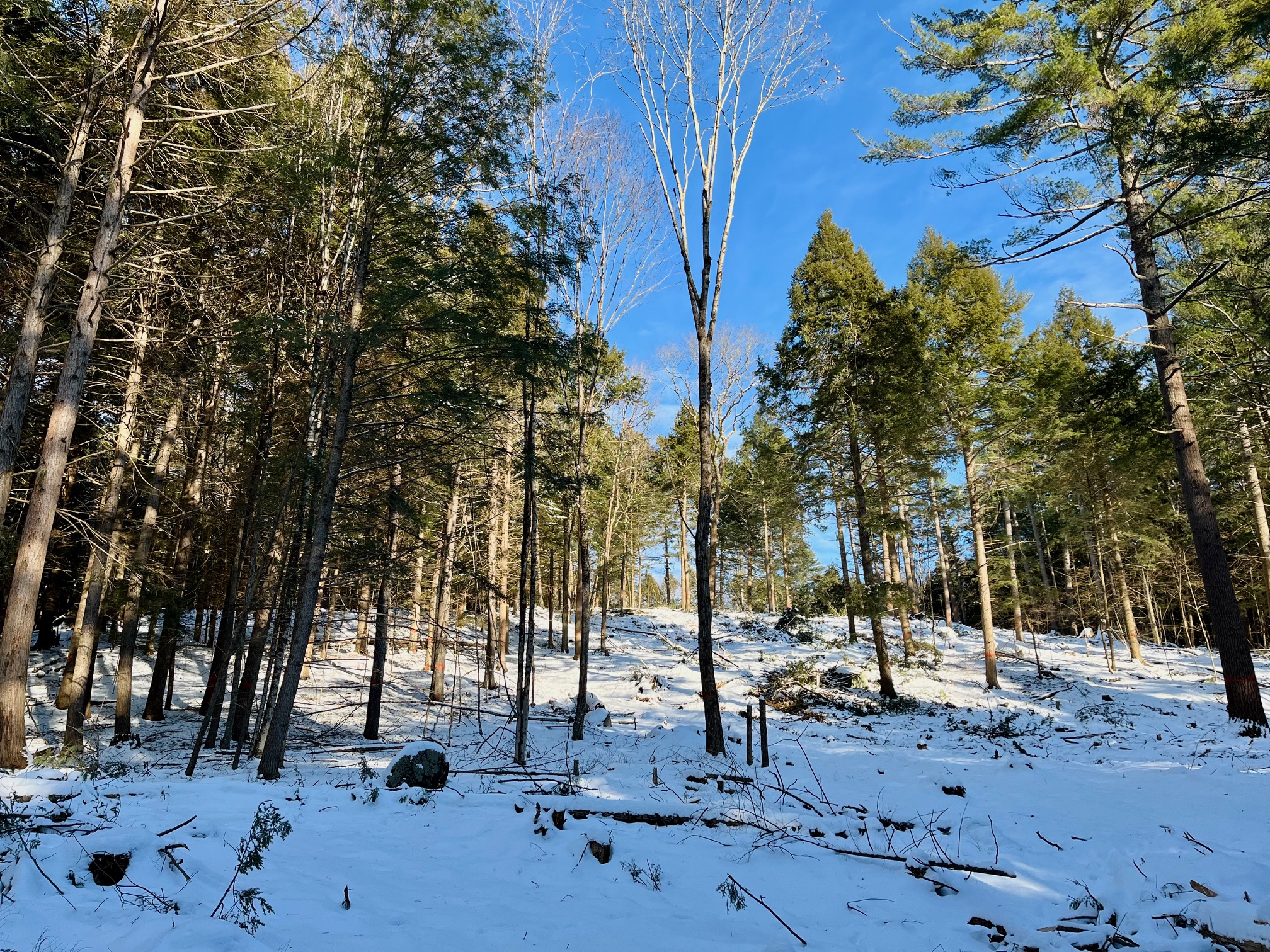
| Image caption | Irregular Shelterwood BMP |
| Lay Summary | The Spruce Mountain Climate Adaptation Demonstration showcases adaptive management for forest landowners, forestry professionals, and the public. By using silvicultural techniques that promote long-term health and biodiversity, the site can be more resilient to the impacts of climate change. Some areas have also been assigned transition treatments, which accelerate the forest composition shift towards the anticipated future climate conditions. The harvest started in Fall 2025 and will be completed during the winter of 2025-26. The site will have ongoing monitoring, research, and educational opportunities. |
| Location | Warrensburg, New York |
| Location Description | Located on the eastern side of Pack Demonstration Forest along US Route 9, a mile east of the Hudson River. |
| Latitude | 43.548075 |
| Longitude | -73.802047 |
| Directions | FROM I-87 NORTH - Take exit 23 for Warrensburg and travel North on Rt 9 to the main entrance of Pack Demonstration Forest. Study location is one tenth of a mile east from main parking lot, across Old Route 9. |
| Accessibility | The site is accessible by a short walk on foot from the main parking area. Vehicles can travel alongside the project area on Old Route 9, though parking is limited. A snowmobile runs through the center of the project area from Old Route 9 to US Rt 9. |
| Landowner Name | SUNY College of Environmental Science and Forestry (ESF) |
| Landowner email | forestproperties@esf.edu |
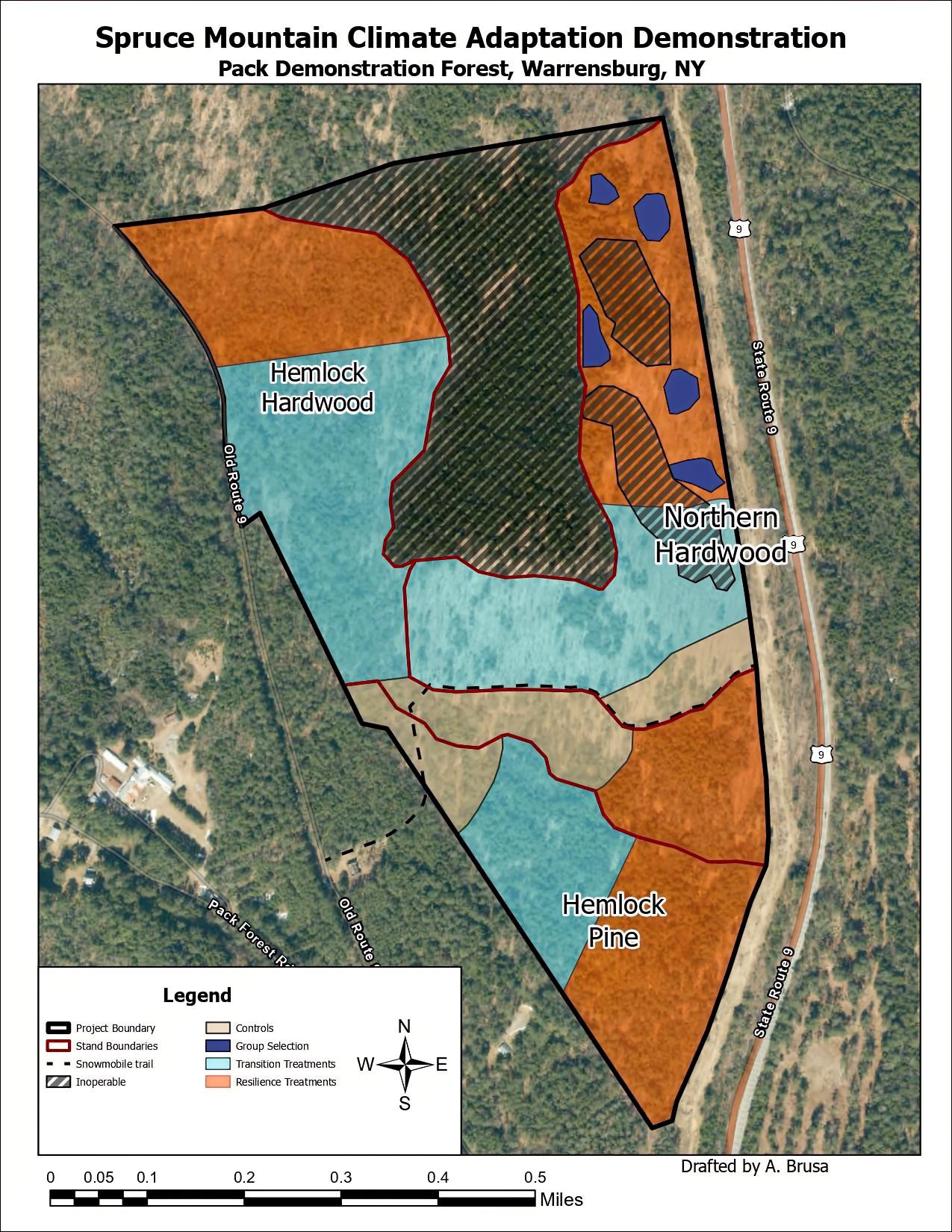
| Stand Area with Units | Hemlock hardwood- 30 acres; Northern Hardwood- 35 acres; Pine Hemlock- 35 acres; Inoperable/reserve- 28 acres |
| Cover Type | Mixedwoods |
| Plant Community/Habitat Class Growth Stage | Late-successional forest with mature to overmature trees |
| Primary Forest Health Threat | invasive plants/competing vegitation |
| Secondary Forest Health Threats | , |
| Primary Pests/Disease | beech bark disease |
| Secondary Pests/Disease | spongy moth |
| Soils | Consists of shallow soils and steep slopes, primarily cobbly sandy loam, steep rock outcrops, and very bouldery fine sandy loam |
| Start date | Wed, 08/27/2025 - 00:00 |
| End date | Sun, 03/01/2026 - 00:00 |
| Stand History | The project area, comprised of many forest stand types, likely regenerated naturally after logging in the early 1900s. There has not been active management in this area since the 1970s and 80s when small, selective harvests were carried out. |
| Pre-Treatment Species Composition | Basal Area Pre Harvest: Northern Hardwoods: 142 sqft/acre Hemlock Hardwood: 156 sqft/acre Pine Hemlock: 200 sqft/acre Reserve: 159 sqft/acre; % AGS by Basal Area ****: Northern Hardwoods: 47%, Hemlock Hardwood: 36%, Pine Hemlock: 56%, Reserve: 41%; Trees Per Acre Pre-Harvest: Northern Hardwoods: 279 TPA, Hemlock Hardwood: 242 TPA, Pine Hemlock: 287 TPA, Reserve: 215 TPA |
| Species 1 | Tsuga canadensis (eastern hemlock) |
| Species 2 | Pinus strobus (eastern white pine) |
| Species 3 | Acer saccharum (sugar maple) |
| Pre-Treatment Growth Stocking | Overstocked |
| Pre-Treatment Forest Health Issues | Repeated spongy moth defoliation heavily impacted northern red oak and sugar maple health |
| Case Overview | The project area is made up of multiple forest types and spans approximately 128 acres, 89 of which are operable for harvest. It has been divided into three stands: Hemlock-hardwood, Pine-hemlock, and Northern hardwood. Each stand has a been prescribed a resilience treatment, a transition treatment, and has a control (~5 acres). |
| Silviculture Objectives | We aim to promote diverse regeneration by creating canopy gaps that range in size, favoring both shade-tolerant and shade-intolerant species. Larger openings are focused to discourage American beech, which is affected by beech bark disease. Smaller openings are focused on hemlock, which we hope to conserve due to the impending threat of hemlock wooly adelgid. The resulting species diversity and structural diversity will subsequently enhance wildlife habitat and reduce vulnerability to the impacts of climate change. |
| Landowner Objectives | The mission for ESF’s forest properties is teaching, research, demonstration, and long-term stewardship. We are meeting this through silvicultural experimentation, monitoring, and the implementation of an interpretive trail and educational programming. |
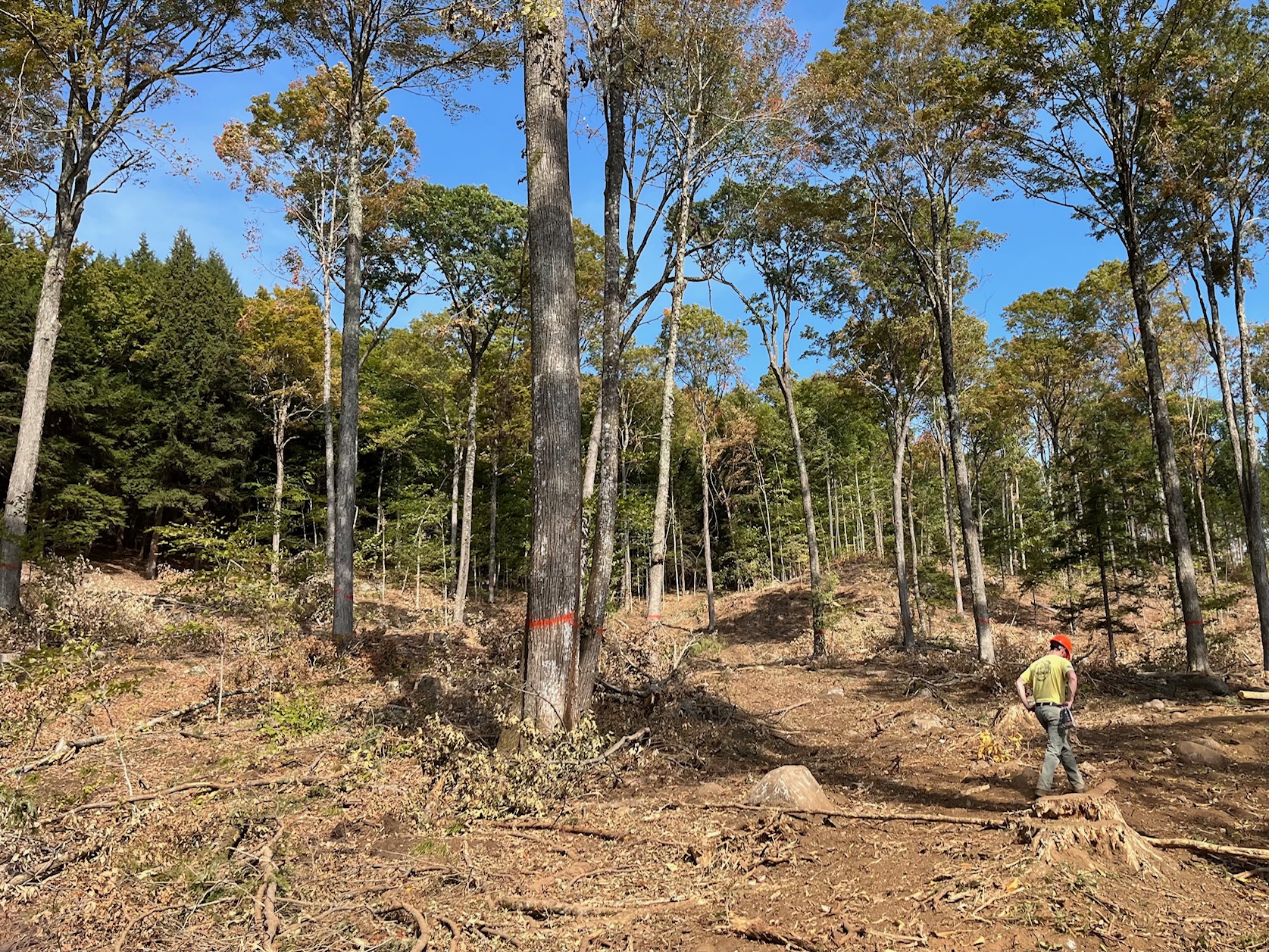
| Silviculture Prescription | Northern Hardwood Stand: A) Resilience treatment- Improving health and structure of northern hardwoods: Harvest approx. 25% of total land area by creating light gradients through ¼ - 1-acre groups; In areas outside the groups, thin from below to remove approximately 1/3 BA; Remove all understory and overstory beech; Retain species that are not as frequent on site for biodiversity such as black cherry, American basswood, eastern hophornbeam. B) Transition treatment- Low density shelterwood for oak management: Retain 30-50 sq ft / ac BA; Primarily favor healthy oak as residual seed trees and cut those that show signs of repeated damage and severely declining health from previous spongy moth outbreaks; Favor sugar maple as other residual seed tree; In half of the transition area, use prescribed fire, burning prior to seed establishment, using subsequent burns to favor oak regeneration; Remove understory and overstory beech. Pine - Hemlock Stand: A) Resilience treatment- Standard shelterwood to regenerate pine and hardwoods. Retain 80-100 sq ft/ac, favoring healthy white pine as seed trees; Leave hardwoods when possible; Retain some hemlock for biodiversity and spacing purposes. B) Transition treatment- Site preparation as a means of influencing species mix and establishment of regeneration. Retain 80-100 sq ft/ac, favoring healthy white pine as seed trees and leaving hardwood when possible; In half of the transition area, use prescribed fire, burning prior to white pine seed establishment and using subsequent burns to favor pine and oak regeneration; Use mechanical site preparation for the remaining transition area to encourage diversity and establishment of regeneration. Hemlock – Hardwood Stand: A) Resilience treament- Irregular shelterwood to promote diverse species mix. Retain 20-100 sq ft/acre with irregular spacing; Leave higher residual BA in hemlock areas with enough canopy gap to increase vigor but still maintain enough cover to promote hemlock regeneration; Leave lower residual BA in hardwood areas to promote hardwood regeneration; Remove understory and overstory beech. B) Transition treatment- Hemlock wooly adelgid (HWA) demo, hardwood management. Retain 30-80 sq ft/ acre with irregular spacing; In half of the transition area, remove all hemlock to convert stand to hardwood composition of mainly maple, birch, and oak; In half of the transition area, use prescribed fire, burning prior to seed establishment and using subsequent burns to favor oak regeneration; Remove understory and overstory beech. |
| Regeneration Method | Shelterwood; Irregular shelterwood |
| Factors Influencing Prescription Choice |
|
| Climate Adaptation Considerations | We chose to favor northern red oak with the expectation that it is better adapted to warmer future conditions than our northern hardwood species. Prescribed fire will also favor more fire-tolerant tree and herbaceous species, and future drought conditions could increase the frequency of fires in the area. Species and structural diversity will help maintain the forest’s ability to resist pests and pathogens. Increased potential for extreme weather further encouraged us to reduce ground disturbance and exclude steep and rocky slopes from harvest. See the link below to the NIACS adapation demonstration webpage for more information. |
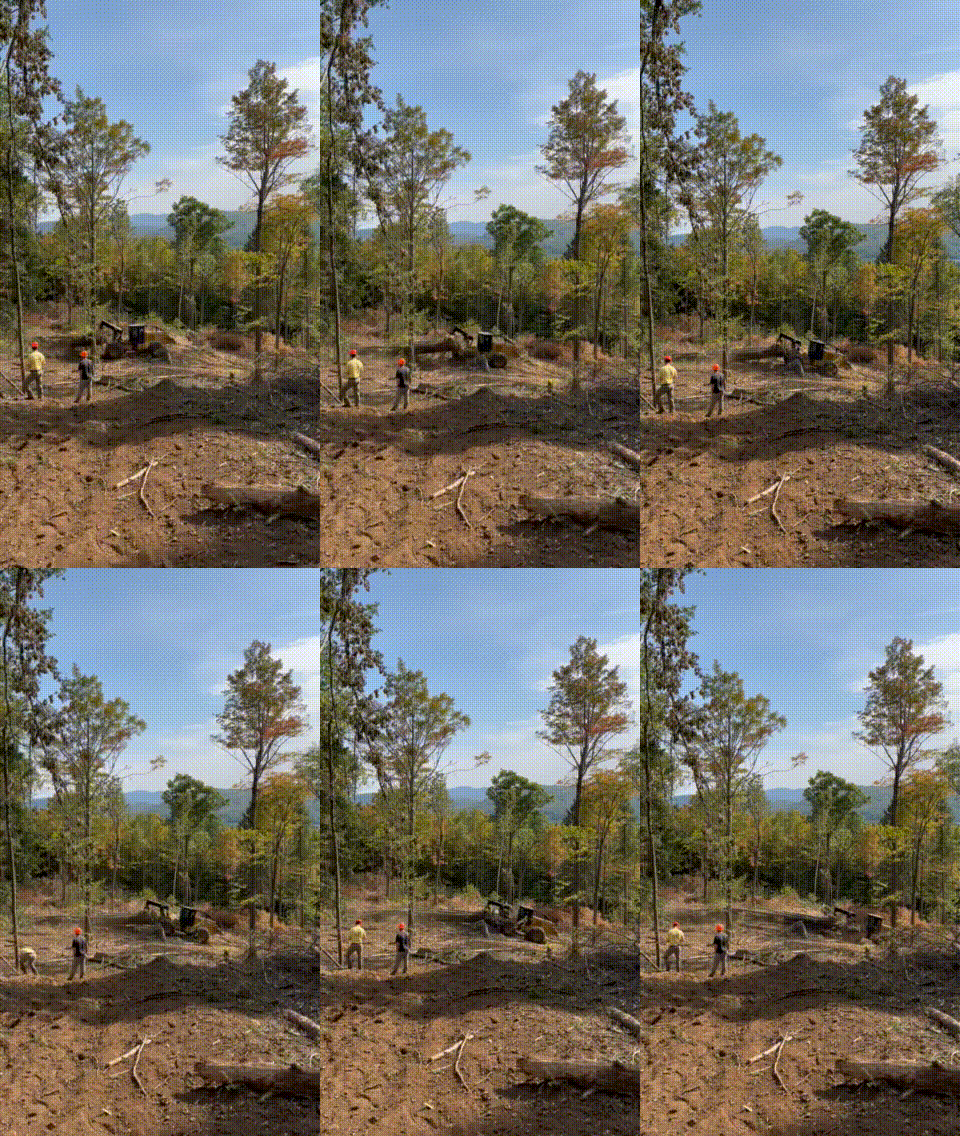
| Equipment used | Feller buncher, grapple skidder, log loader, chipper |
| Prescription Notes | The logging crew faced challenges on the very bouldery, steep ground, but persevered. Weather was cooperative and the ground was dry for most of the harvest, providing excellent scarification. Some areas were wetter than expected during harvest and required extra attention to regrade and clean-up before moving equipment. The crew paid attention to detail and was careful to reduce damage to residual trees. In hindsight, we may have kept some larger residual groups in the irregular shelterwood to maintain some areas of denser shade. Unforeseen changes in the pulpwood market has paused and prolonged the harvest, pushing the anticipated end date from early to late winter. |
| Additional Resources / External Links | https://forestadaptation.org/suny-esf-spruce-mountain |
| Post-Treatment Assessment Done | no |
| Post-Treatment Assessment Expected | yes |
| Future Treatment Plans | Ongoing monitoring of regeneration, wildlife, prescribed fire impacts on vegetation and wildlife, re-assessment |
| Additional Considerations/Key Details |
|
| Keyword(s) | Climate, adaptation, demonstration, research, prescribed fire |
| Primary Contact | SUNY ESF Forest Properties Staff |
| Contact Organization | SUNY College of Environmental Science and Forestry |
| Contact Email | forestproperties@esf.edu |
| Contact Address | 136 Pack Forest Road Warrensburg , New York. 12817 |
| Biography | The SUNY College of Environmental Science and Forestry (ESF) is a highly specialized public research university in Syracuse, New York that is focused on the environment and natural resources. The college maintains over 20,000 acres of forest lands in the Adirondack Park for teaching, research, and demonstration. Pack Demonstration Forest was donated by Charles Lathrop Pack in 1927 to serve as a living classroom, and today, it remains a working forest. The ESF department of Forest Properties employs foresters to help manage these lands, facilitate research, and further education and outreach efforts. |
| Additional Photo 1 |
|
| Caption 1 | Harvest |
| Additional Photo 2 |
|
| Caption 2 | Stand Map |
| Additional Photo 3 |
|
| Caption 3 | Low Density shelterwood after |
| Additional Photo 4 |
|
| Caption 4 | Pine Hemlock Shelterwood Uncut vs Cut |